Short answer
If you are asking "Why are competitors showing up in AI answers but not us?", the useful answer is to treat the page like a practical case study. Start with the question, compare the main factors, then turn the verdict into a plan.
This is one of the most useful AI visibility questions because it gives you a real comparison. The answer is not just about your website. It is about the difference between your source trail and the competitor source trail.
Reader question
"What is the one practical fix?"
Use the GEO / LLM SEO Planner to map the prompts first, then build the pages and sources around the prompts that matter most.
Table of Contents
I am going to show you how I would investigate competitors showing up in AI answers while your brand is missing.
This is one of the most useful AI visibility questions because it gives you a real comparison. The answer is not just about your website. It is about the difference between your source trail and the competitor source trail.
I would compare the gap across six aspects: category clarity, owned content, third-party proof, prompt fit, source repetition, and reporting.
Let's dive right in.
Category Clarity
The first aspect is category clarity. AI systems need to know what category a brand belongs in.
If a competitor is repeatedly described as an AI visibility platform, link building agency, local SEO tool, or SaaS analytics provider, the answer engine has clearer language to reuse. If your site uses broad positioning, you may be harder to place.
Check your homepage, service pages, about page, and schema. Do they all use the same category language? Do they say who the service is for? Do they explain what problem it solves?
Therefore, in terms of inclusion, clear category language beats broad branding.
Owned Content
The second aspect is owned content. Competitors often appear because their own pages answer the prompt better.
Open the pages that seem to support their visibility. Look at headings, definitions, FAQs, examples, comparison copy, and proof. Then compare your equivalent page.
If your page is thinner, less specific, or harder to cite, the fix starts there. A stronger service page can change the answer environment over time, especially when it is supported by internal links and related guides. If the issue is quoteability, run the page through the AI Citation Readiness Checker before building more outside sources.
So, in terms of controllable assets, owned content is the first place to improve.
Third-Party Proof
The third aspect is third-party proof. This is where many competitor gaps become obvious.
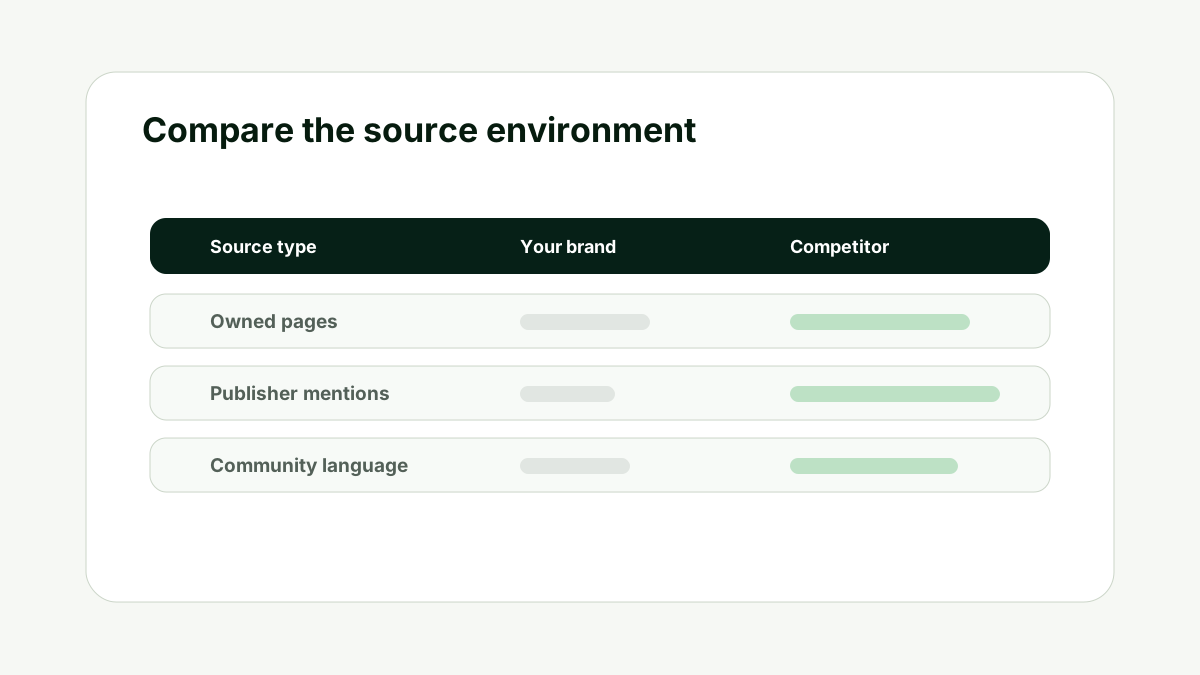
A competitor may appear in listicles, reviews, communities, podcasts, directories, partner pages, and publisher articles. Those references create repeated associations between the brand and the category.
Map the sources by type. Which sources rank? Which sources are relevant? Which sources describe the competitor clearly? Which ones could realistically include you or inspire a better source?
Therefore, in terms of AI answer confidence, third-party proof can create a major advantage.
Prompt Fit
The fourth aspect is prompt fit. Sometimes the competitor appears because the prompt fits them better.
A broad prompt may favor platforms. A niche prompt may favor specialists. A local prompt may favor nearby companies. A budget prompt may favor tools or freelancers. Before you chase a prompt, decide whether it is actually commercially useful for you.
Use the GEO / LLM SEO Planner to separate must-win prompts from monitor-only prompts. That keeps the campaign focused.
So, in terms of prioritization, the right prompt beats the biggest prompt.
Source Repetition
The fifth aspect is source repetition. AI systems often see repeated language across the web.
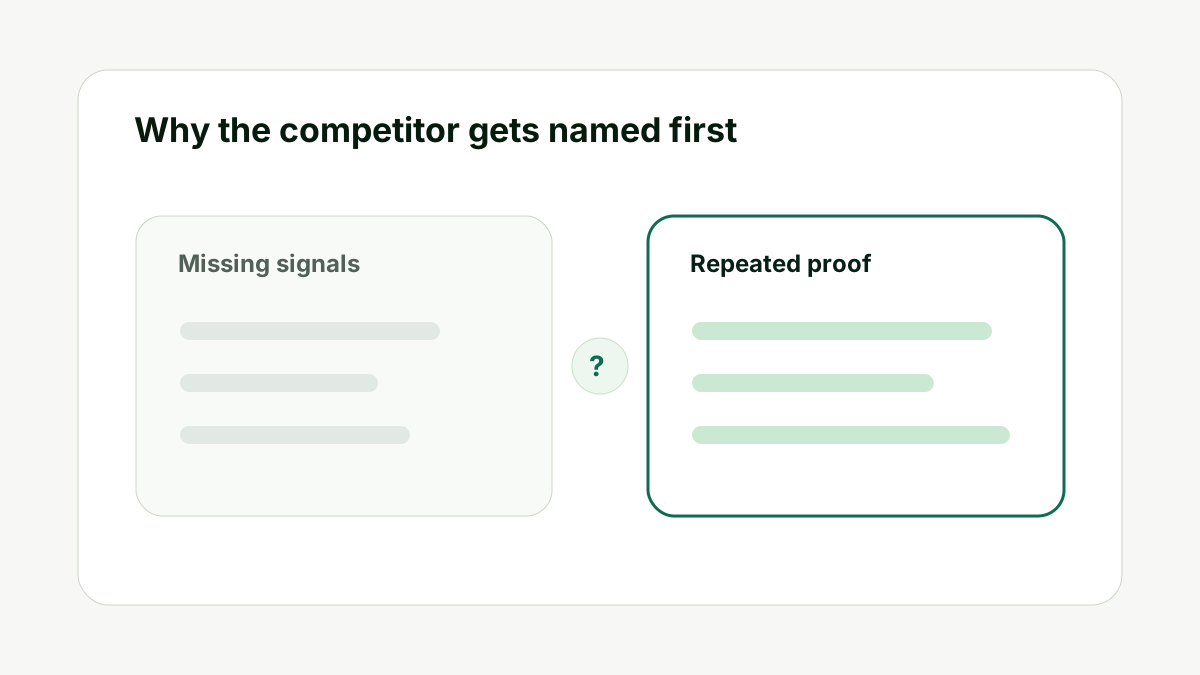
If ten different pages describe a competitor as a trusted provider for the same buyer and use case, that repetition can matter. If your brand is described inconsistently, the answer has less stable evidence.
This is why every source should repeat the same basic facts: brand name, category, audience, outcome, and proof. The wording does not need to be identical, but the meaning should be consistent.
Therefore, in terms of entity clarity, consistent repetition beats scattered mentions.
Reporting
The sixth aspect is reporting. The team needs a simple way to see the gap.
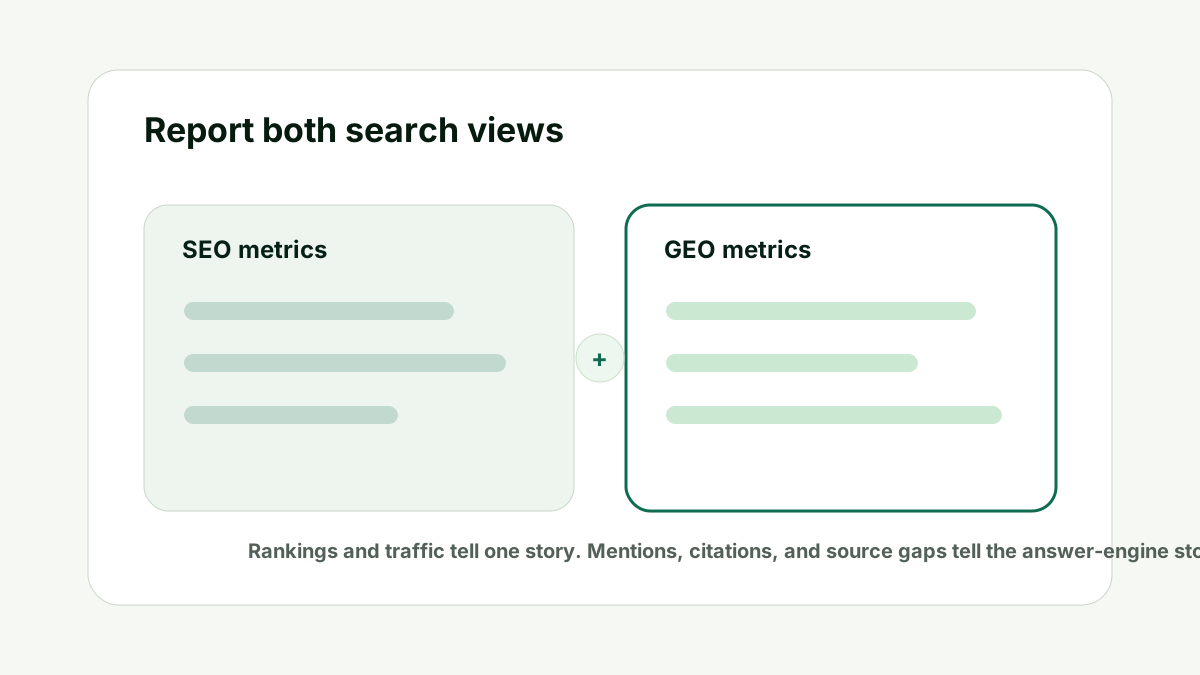
Use four columns: prompt, competitors appearing, source evidence, and next action. Add a simple brand score: absent, weak mention, clear mention, cited mention, or recommended mention.
If the competitor appears once, monitor it. If the competitor appears repeatedly across prompts and systems, treat it as an authority pattern and build a campaign around it.
So, in terms of action, a clear report beats a folder of screenshots.
A Simple Worked Example
Let me show you how I would use this in a real competitor review.
A founder asks, "why are competitors showing up in AI answers but not us?" I would not answer from opinion. I would build a small table. The first column is the prompt. The second column is the AI answer. The third column is the competitors named. The fourth column is the source evidence behind those competitors.
After three to five prompts, patterns usually appear. One competitor may be mentioned because several publisher pages call them a leader. Another may be mentioned because they have a strong comparison page. Another may appear because people talk about them in communities. This turns the problem into evidence.
Then I would compare the client's own source trail. Do they have the same category clarity? Do they have a page that answers the prompt? Do they have third-party sources in the same topic? Do they have case studies that prove the claim? If the competitor has all four and the client has one, the answer is not mysterious.
Next, I would choose one prompt to win first. Trying to win every prompt at once spreads the work too thin. I would choose the prompt with clear commercial value and a realistic source gap. Then I would improve the owned page, add a supporting guide, and build one or two relevant third-party sources.
After that, I would retest the exact same prompt. If the brand is still missing, I would inspect the answer again and ask what source is still stronger for the competitor. This makes the competitor gap useful. It becomes a roadmap, not just a frustration.
Practical action checklist
- Write the exact buyer question the page needs to answer.
- Compare the main factors one by one instead of covering everything at once.
- Use the verdict from each section to create an assigned SEO or GEO action.
- Add a contextual tool link only when it gives the reader a clear next action.
- Retest the same prompts after the page or source updates go live.
What I Would Do Next
If competitors are already showing up, I would use them as a map.
First, I would separate the competitors by prompt type. Some may win broad category prompts. Others may win niche prompts. Others may only appear when the prompt asks for a cheap tool, local provider, or enterprise platform. That separation matters.
Second, I would inspect the source trail behind each competitor. Are they being supported by their own pages, publisher lists, review sites, forum discussions, or comparison content? The source type tells you what kind of gap you need to close.
Third, I would compare the brand page against the competitor page. If the competitor page is clearer, fix the owned content first. If the competitor has better outside sources, build the third-party proof. If the prompt is not actually relevant, leave it as a monitoring prompt.
Finally, I would choose one prompt to win before expanding. A narrow win teaches the team which source changes matter. Then the same method can be repeated across the wider cluster.
I would also keep a small notes column for answer language. The exact words used to describe competitors can reveal the category you are losing. If the answer calls them a specialist, platform, marketplace, or agency, that label should shape your page updates and source-building plan.
That one detail often changes the brief.
Conclusion
In this competitor investigation, I compared category clarity, owned content, third-party proof, prompt fit, source repetition, and reporting.
My conclusion is that competitors usually show up because the web gives AI systems clearer evidence for them. The fix is to build clearer evidence for you.
Start with the page you control. Then build the source proof you can influence. Then retest the prompts. That is how you turn competitor visibility into a practical roadmap.
FAQ
Why do competitors appear in AI answers first?
They often have clearer category language, stronger third-party mentions, better source pages, or more content that directly answers buyer prompts.
Should I copy competitor content?
No. Use competitor visibility to identify missing evidence, then build stronger pages and sources that fit your own positioning.
How do I know which prompts to chase?
Prioritize prompts that match your buyer, offer, and conversion path. Broad prompts can be monitored, but they should not always drive the roadmap.
What is the fastest fix?
The fastest useful fix is usually improving the page that defines your offer and linking it to supporting proof. Durable fixes require third-party source building too.

Adam O'neil
1stpage Editorial Team
Our 1stpage editorial team combines hands-on SEO agency experience with evidence-backed search performance guidance. These posts are built from real search wins, audit-grade insight, and conversion-tested tactics designed to help agencies, founders, and search teams earn more traffic and trust.