Short answer
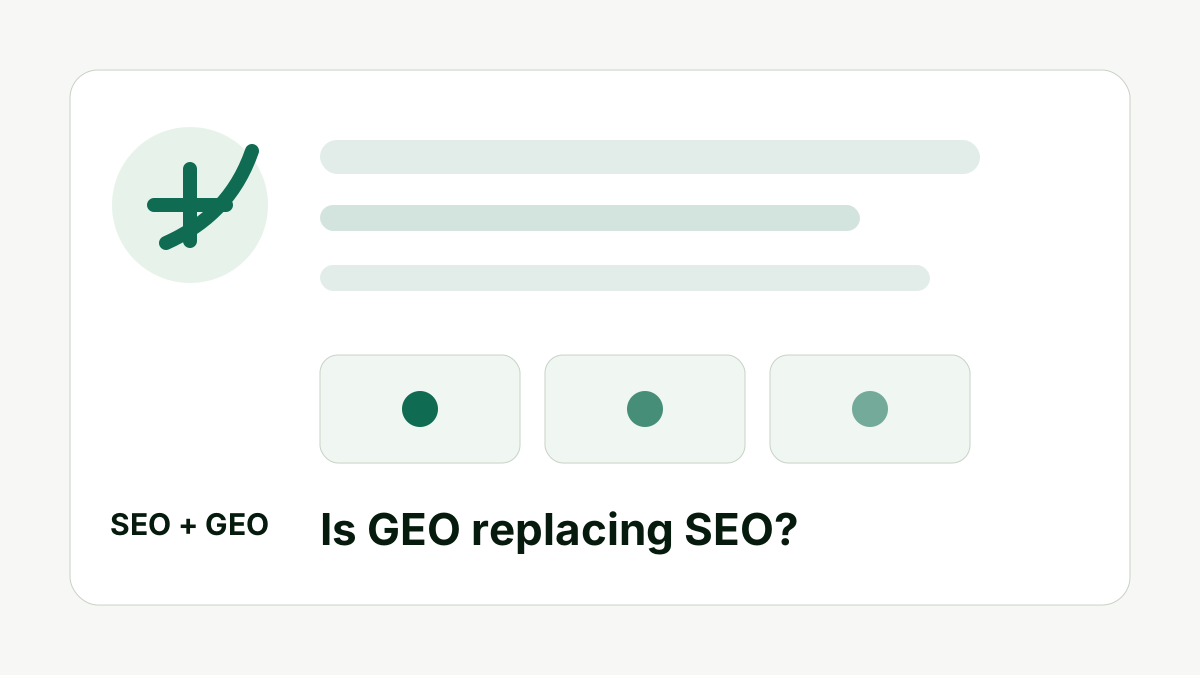
If you are asking "Is GEO replacing SEO?", the useful answer is to treat the page like a practical case study. Start with the question, compare the main factors, then turn the verdict into a plan.
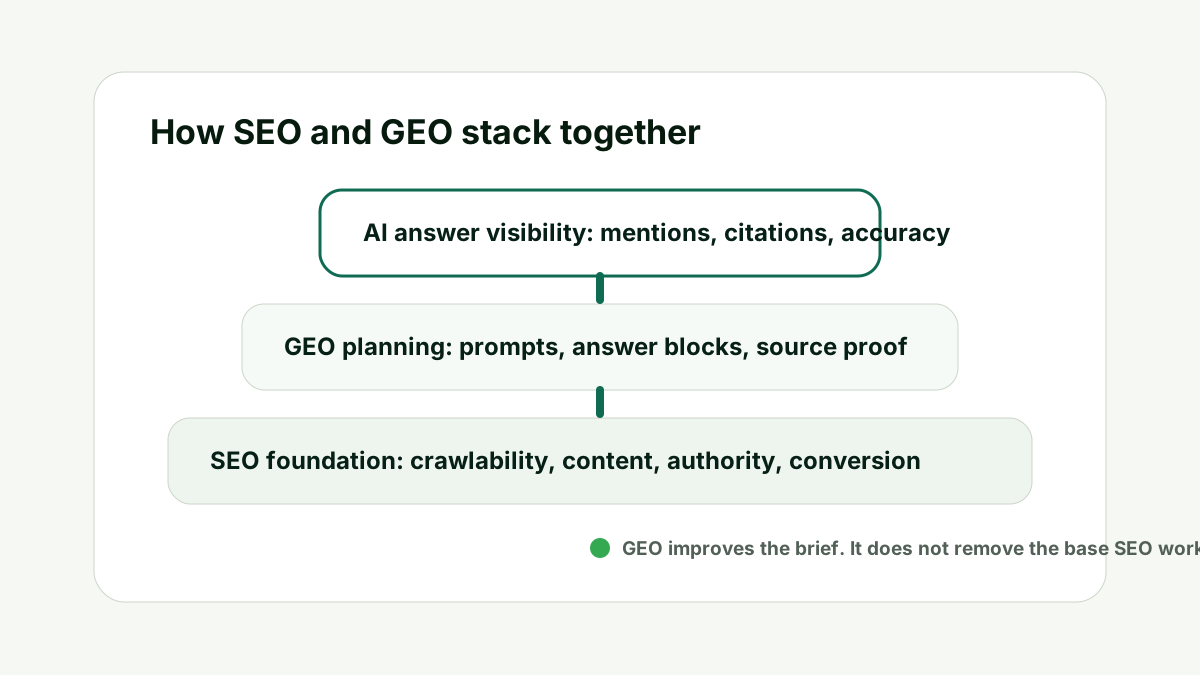
The short answer is no. But that answer is too shallow on its own. GEO is changing the way SEO work is planned, measured, and explained. It adds an answer-engine layer on top of classic search work.
Reader question
"What is the one practical fix?"
Use the GEO / LLM SEO Planner to map the prompts first, then build the pages and sources around the prompts that matter most.
Table of Contents
I am going to answer a question that keeps coming up in SEO conversations: is GEO replacing SEO?
The short answer is no. But that answer is too shallow on its own. GEO is changing the way SEO work is planned, measured, and explained. It adds an answer-engine layer on top of classic search work.
To make the difference clear, I will compare SEO and GEO across six aspects: discovery, keywords, prompts, pages, sources, and reporting.
Let's dive right in.
Discovery
The first aspect is discovery. SEO has traditionally focused on search results pages. GEO focuses on how a brand appears inside generated answers.
Buyers still use Google. They still click pages. They still compare vendors. But they also ask AI systems for recommendations, summaries, alternatives, and explanations before they visit a site.
So SEO is still a discovery channel. GEO is not replacing that. GEO is adding another discovery layer where the output is an answer instead of a list of links.
Therefore, in terms of discovery, SEO and GEO should work together. One does not make the other disappear.
Keywords
The second aspect is keywords. SEO uses keywords to understand demand. That is still useful.
Search volume, difficulty, SERP shape, and ranking competitors still tell you how a market talks. If people search for a topic, that language can inform pages, headings, internal links, and content briefs.
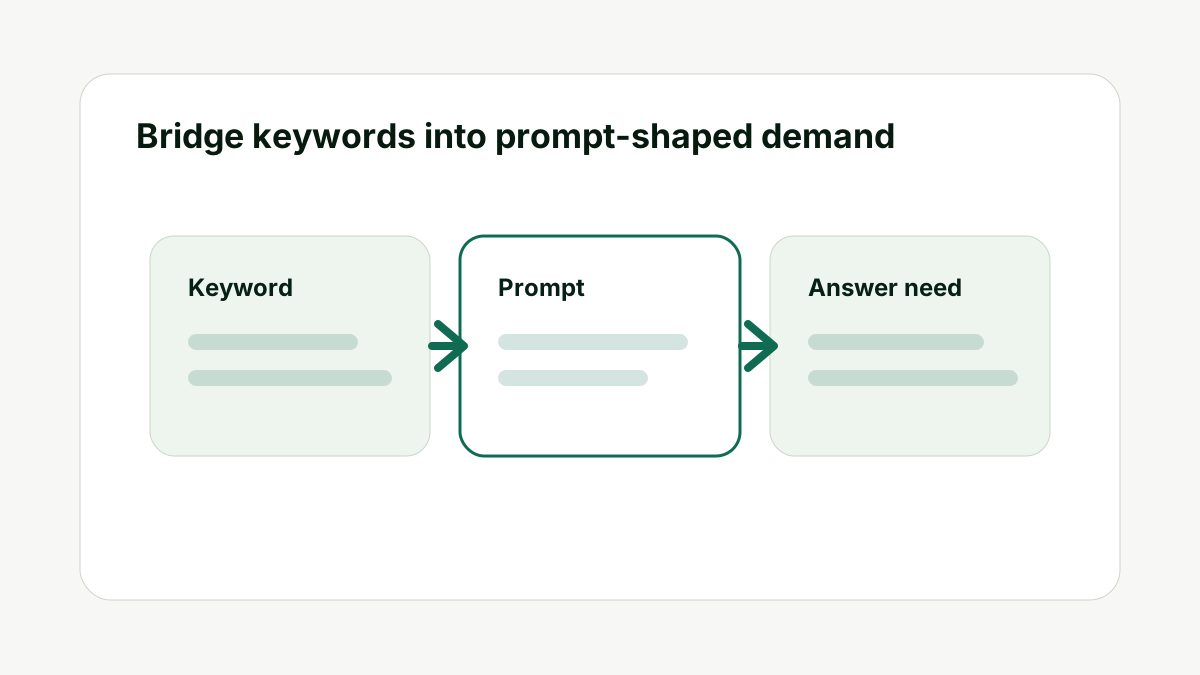
However, keywords do not capture every AI prompt. A buyer can ask a long, messy, conversational question that never shows up cleanly in a keyword tool. GEO catches that layer.
So, in terms of demand research, keywords still matter, but they are not enough on their own.
Prompts
The third aspect is prompts. This is where GEO becomes different.
A prompt can ask for a shortlist, a comparison, an explanation, a warning, or a step-by-step plan. Each prompt creates a different answer shape. If your content only targets one keyword, it may miss the answer the buyer actually wants.
The GEO / LLM SEO Planner is useful here because it forces you to map prompts before you create content. That is the planning step many SEO calendars are missing.
Therefore, in terms of answer planning, GEO adds something SEO did not always formalize.
Pages
The fourth aspect is pages. SEO pages need to rank. GEO pages also need to be easy to quote and summarize.
A page can rank because it has authority, links, and enough topical relevance. But if that page does not explain the answer clearly, AI systems may not reuse it well. That is why citation readiness matters.
I would not replace SEO pages with GEO pages. I would improve SEO pages so they also work as answer sources. That means better definitions, clearer sections, useful examples, and stronger internal links.
So, in terms of pages, GEO should upgrade SEO content, not replace it.
Sources
The fifth aspect is sources. SEO has always cared about links and authority. GEO cares about the source environment around the brand.
That includes backlinks, mentions, articles, listicles, reviews, communities, partner pages, and any page that helps an AI system understand why the brand belongs in a category.
This is where LLMentioned style work matters. You need to know who is being mentioned, where they are being cited, and which sources are shaping the answer.
Therefore, in terms of authority, GEO makes source context more visible.
Reporting
The sixth aspect is reporting. SEO reports rankings, traffic, impressions, links, conversions, and technical health.
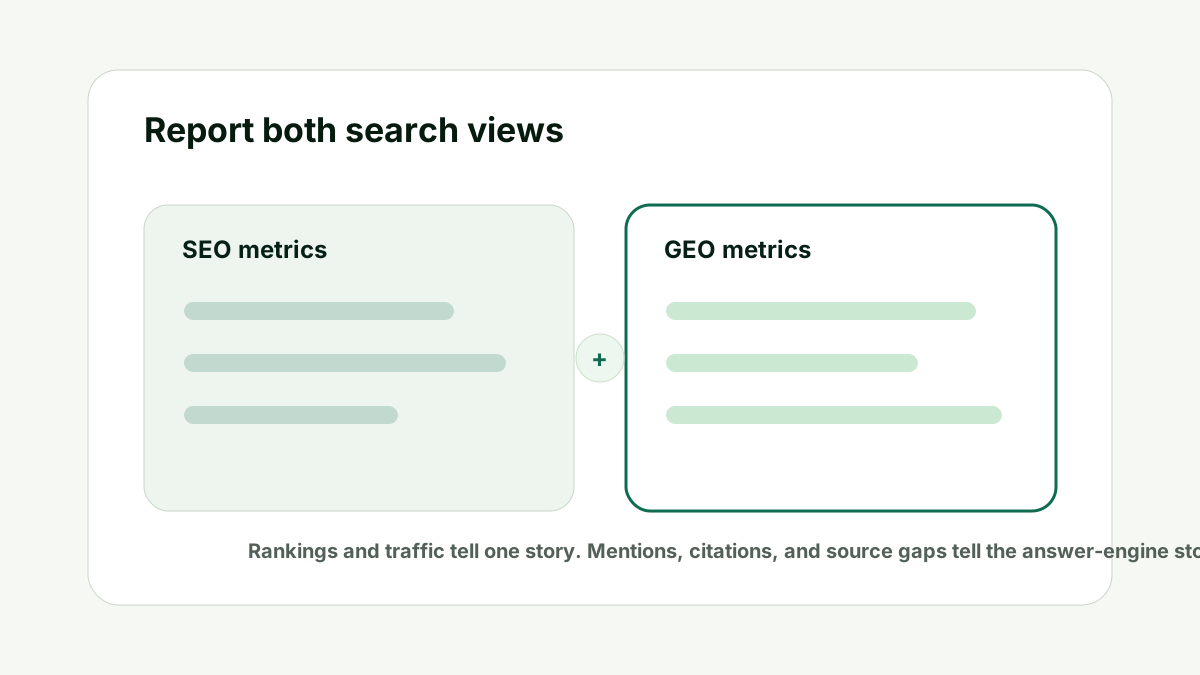
GEO adds prompt share of voice, brand mentions, competitor mentions, citation quality, answer accuracy, and source gaps. These are not replacements for SEO metrics. They are additional views of the same market.
A strong report should show both. If rankings are improving but AI answers still ignore the brand, you have a source or prompt gap. If AI mentions are improving but conversions are flat, you may have a page or offer gap.
So, in terms of reporting, GEO expands the dashboard. It does not delete the old one.
A Simple Worked Example
Here is a simple way to see why GEO is not replacing SEO.
Imagine a company sells a specialist link building service. In classic SEO, the team wants a service page that can rank for relevant keywords. They care about indexation, headings, internal links, backlinks, technical performance, and conversion. None of that goes away because AI search exists.
Now add the GEO layer. The same team also wants the brand to appear when a buyer asks an AI system for trusted link building options, safe link building vendors, or agencies that help with AI visibility. That requires a different planning step. The team has to map prompts, check whether the brand is mentioned, compare competitors, and find the source gaps.
If the page is not indexed, SEO has a problem. If the page ranks but AI answers cite competitors, GEO has found a second problem. If the brand appears in AI answers but the site does not convert, the landing page still needs SEO and CRO work. These issues overlap, but they are not the same issue.
That is why I would not move the budget from SEO to GEO as if one replaces the other. I would keep the SEO base and add GEO checks to the workflow. Every important page should have a keyword target and a prompt target. Every content cluster should have ranking goals and answer-visibility goals. Every authority campaign should think about links and the surrounding source context.
So when someone asks whether GEO is replacing SEO, I would say no. GEO is the new planning layer that sits on top of SEO. It makes SEO sharper because it shows whether the work is helping the brand become part of the answer, not just part of the results page.
Practical action checklist
- Write the exact buyer question the page needs to answer.
- Compare the main factors one by one instead of covering everything at once.
- Use the verdict from each section to create an assigned SEO or GEO action.
- Add a contextual tool link only when it gives the reader a clear next action.
- Retest the same prompts after the page or source updates go live.
What I Would Do Next
If I were updating an SEO program for GEO, I would not rename the whole strategy. I would add a GEO layer to the existing workflow.
First, I would keep the technical SEO checks in place. The site still needs indexable pages, clean canonicals, fast templates, internal links, and useful content. If the foundation is weak, AI visibility work sits on weak ground.
Second, I would add prompt targets to the content brief. Every important page should have a keyword target and a prompt target. The keyword shows classic demand. The prompt shows how a buyer may ask for an answer or recommendation.
Third, I would add source-gap notes to authority work. A link is more useful when the page around it explains the brand in the right category. That means link building, PR, and content should share the same positioning language.
Finally, I would report both views. Rankings show whether pages are visible in search. Prompt snapshots show whether the brand is visible in answers. When both move together, the strategy is stronger.
This keeps the team focused on evidence instead of terminology.
Conclusion
In this comparison, I looked at discovery, keywords, prompts, pages, sources, and reporting.
My conclusion is that GEO is not replacing SEO. GEO is changing the brief. SEO still builds the foundation. GEO helps the same foundation work inside AI answers.
The smartest move is not to choose one. Keep doing the SEO work that makes pages crawlable, useful, and authoritative. Then add GEO planning so those pages can also support prompts, citations, and AI recommendations.
FAQ
Is GEO replacing SEO completely?
No. GEO adds a layer for AI answer planning and measurement, but SEO fundamentals still support visibility, crawlability, authority, and conversion.
Should I change my SEO calendar for GEO?
Yes, but do not abandon it. Add prompt targets, source requirements, and AI visibility checks to each important content asset.
What is the biggest GEO mistake?
The biggest mistake is chasing AI visibility without clear pages or source proof. AI answers need evidence, not only intent.
Which tool should I use first?
Use the GEO / LLM SEO Planner when you need a roadmap, then use visibility and citation checks to measure and improve the assets.

Adam O'neil
1stpage Editorial Team
Our 1stpage editorial team combines hands-on SEO agency experience with evidence-backed search performance guidance. These posts are built from real search wins, audit-grade insight, and conversion-tested tactics designed to help agencies, founders, and search teams earn more traffic and trust.