Short answer
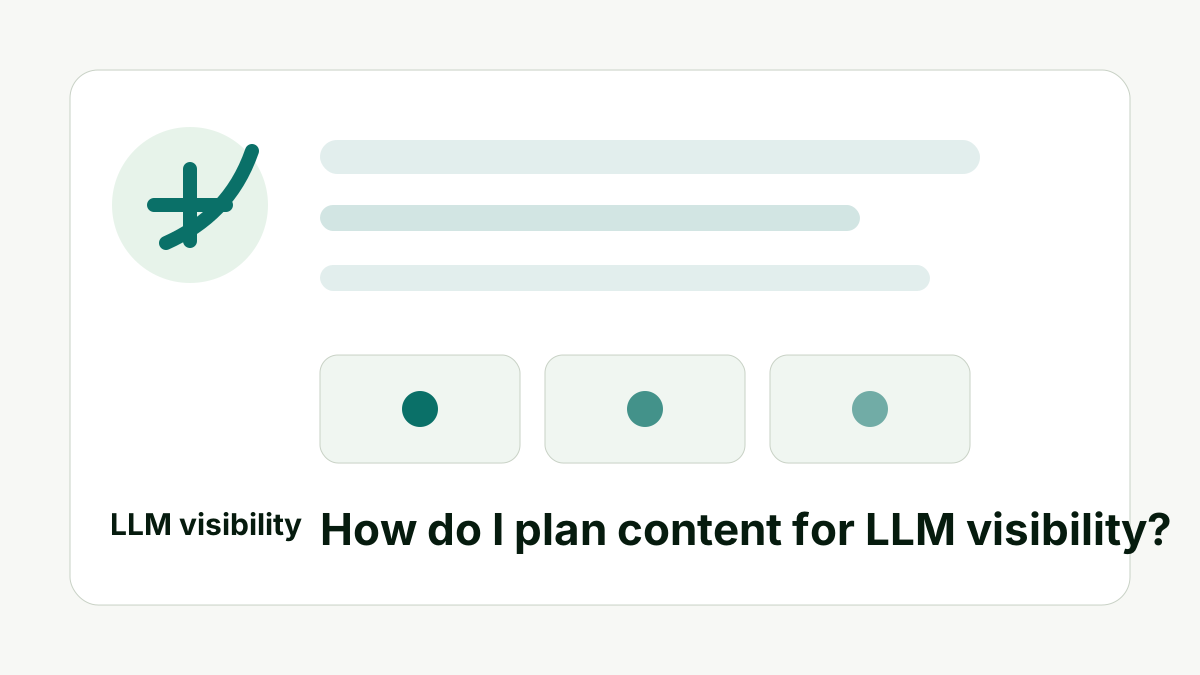
If you are asking "How do I plan content for LLM visibility?", the useful answer is to treat the page like a practical case study. Start with the question, compare the main factors, then turn the verdict into a plan.
The old content plan starts with keywords. A better AI-era content plan starts with questions, prompts, source gaps, and the pages that can become useful answer material.
Reader question
"What is the one practical fix?"
Use the GEO / LLM SEO Planner to map the prompts first, then build the pages and sources around the prompts that matter most.
Table of Contents
I am going to show you how I would plan content if the goal is LLM visibility, not just search traffic.
The old content plan starts with keywords. A better AI-era content plan starts with questions, prompts, source gaps, and the pages that can become useful answer material.
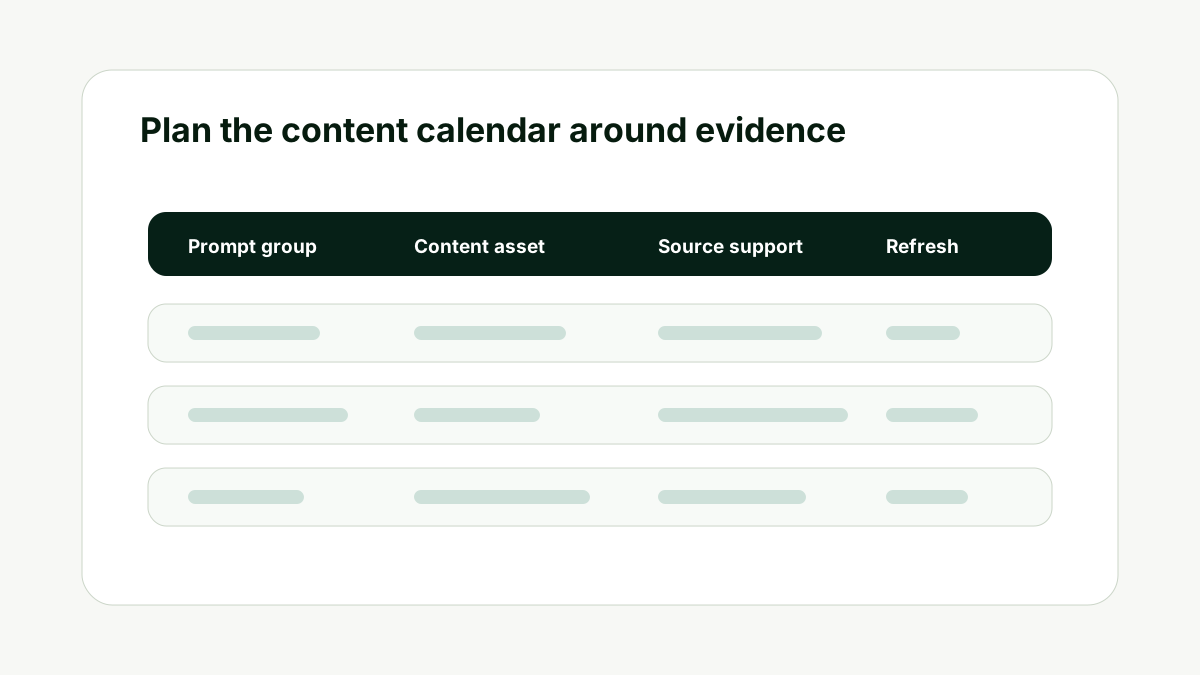
I would plan the work across six aspects: prompt groups, asset types, answer blocks, source support, cluster links, and refresh cycles.
Let's dive right in.
Prompt Groups
The first aspect is prompt groups. LLM visibility starts with the way buyers ask questions.
Some prompts ask for recommendations. Some ask for comparisons. Some ask for examples. Some ask for warnings. Some ask for a process. Each type of prompt needs a different content asset.
I would group prompts before I assign articles. That prevents the team from writing six versions of the same post. Each article should answer a different question in the cluster.
Therefore, prompt groups beat random topic lists.
Asset Types
The second aspect is asset types. Not every prompt should become a blog post.
Recommendation prompts may need service pages, proof pages, and third-party mentions. Comparison prompts may need alternatives pages. Process prompts may need tutorials. Trust prompts may need case studies, policies, and author pages.
Choose the asset type based on the job. If the user wants a checklist, write a checklist. If the user wants a comparison, compare. If the user wants a diagnosis, show the diagnosis steps.
So, in terms of usefulness, format should follow intent.
Answer Blocks
The third aspect is answer blocks. A page should include sections that can stand alone.
That means clear definitions, short answers, steps, examples, tables, and FAQs. These blocks help human readers and make the page easier to summarize.
The DR vs DA style is useful because each section explains one aspect and gives a clear verdict. That is the rhythm I would use for LLM visibility content too.
Therefore, answer blocks beat vague long-form copy.
Source Support
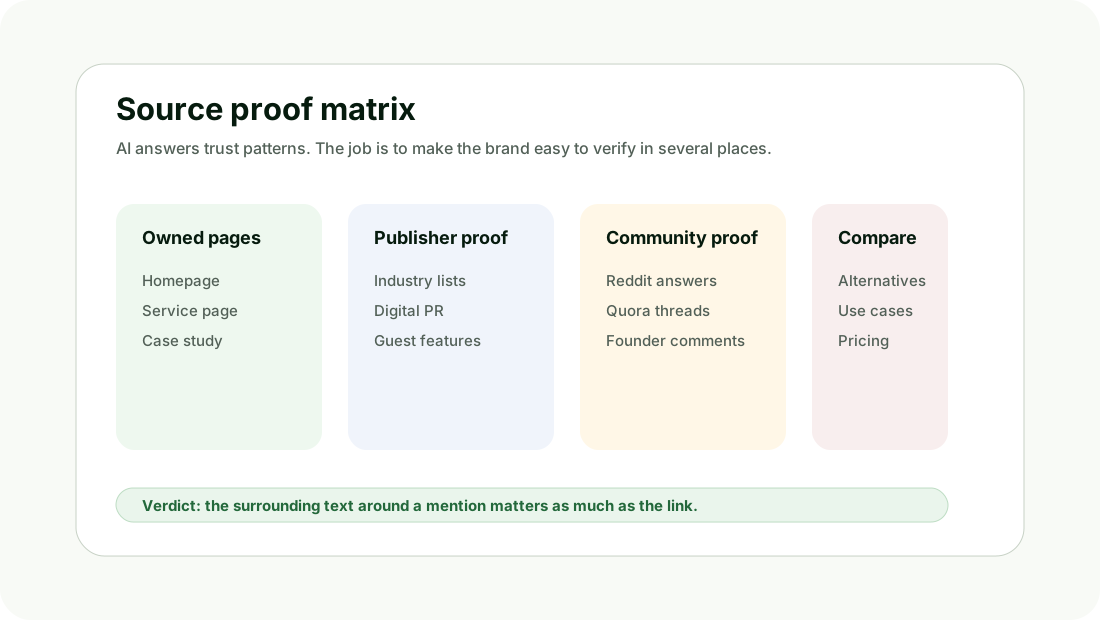
The fourth aspect is source support. Owned content is stronger when outside sources support the same claim.
If your page says you are a specialist but the rest of the web is silent, the evidence trail is thin. If credible sources describe you in the same category, the signal is stronger.
For each cluster, list the source support you already have and the sources you need to build. This may include guest posts, digital PR, partner pages, listicle inclusion, community answers, or case studies.
So, in terms of LLM visibility, source support turns content into evidence.
Cluster Links
The fifth aspect is cluster links. A single post is weaker than a connected cluster.
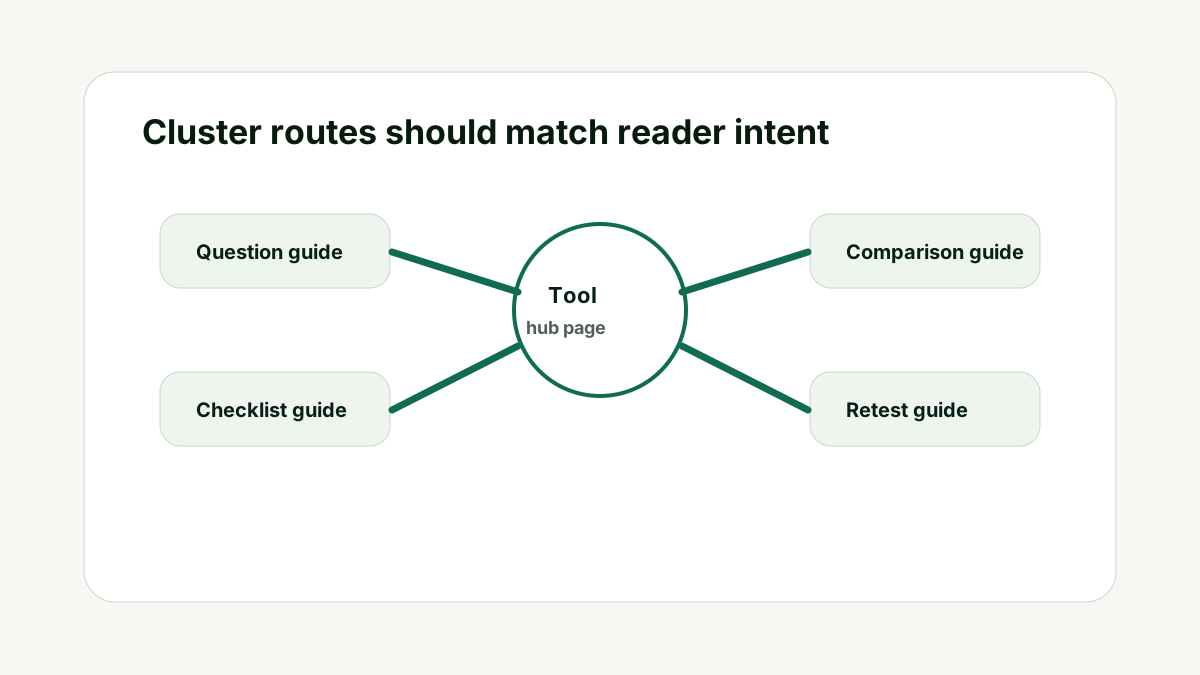
Each article should have a clear job in the cluster. Link to the tool when the reader is ready to use it. Link to the next guide when the current article naturally raises the next question. Avoid links that interrupt the explanation.
For this cluster, the hub is the GEO / LLM SEO Planner. The supporting posts answer the questions around it. That is the hierarchy.
Therefore, connected clusters beat isolated posts.
Refresh Cycles
The sixth aspect is refresh cycles. LLM visibility changes as sources, models, and competitors change.
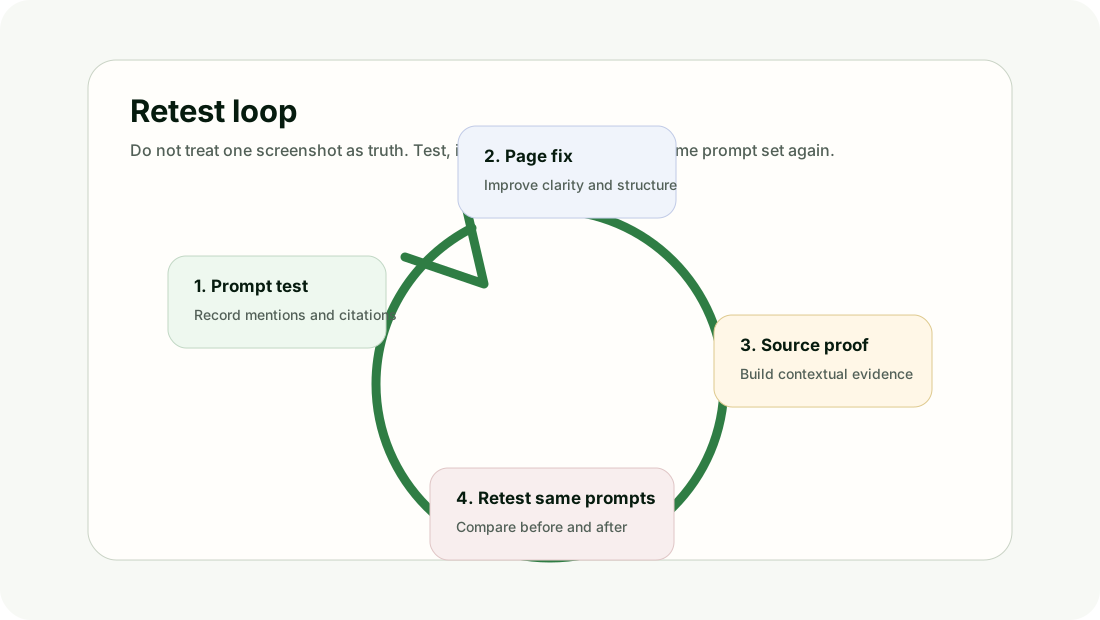
After a cluster is live, run prompt checks. If answers misunderstand the brand, update pages. If competitors dominate a source type, build better proof. If a post is getting impressions but not helping the cluster, improve the internal links and answer blocks.
Use LLM Visibility Checker snapshots to decide what to refresh first. That keeps updates tied to evidence.
So, in terms of long-term value, refresh cycles beat one-time publishing.
A Simple Worked Example
Here is how I would plan one LLM visibility cluster from scratch.
Let us say the tool is an AI visibility checker. The first mistake would be to write ten articles that all say roughly the same thing. That creates crawl waste and weak topical coverage. Instead, I would start with six different buyer questions.
One question might be "how do I check if my brand appears in AI answers?" Another might be "why is my brand not showing up in ChatGPT recommendations?" Another might be "how do I track AI brand mentions across prompts?" Each question deserves a different article because each has a different job.
Then I would map asset types. A diagnosis question becomes a troubleshooting post. A process question becomes a workflow post. A comparison question becomes a comparison post. A checklist question becomes a checklist. This keeps the cluster useful rather than repetitive.
Next, I would decide which source proof each article needs. Some posts need a tool output. Some need a chart. Some need a comparison table. Some need internal links to a service page or a related tool. The brief should name those needs before the writer starts.
Finally, I would connect the cluster. Every article links to the tool. The tool links back to the guides. The guides link to each other where the next step is obvious. After publishing, I would run prompt checks to see which pages are helping and which still need stronger source support.
That is the practical difference between a content calendar and an LLM visibility plan. One publishes posts. The other builds a source system around real prompts.
Practical action checklist
- Write the exact buyer question the page needs to answer.
- Compare the main factors one by one instead of covering everything at once.
- Use the verdict from each section to create an assigned SEO or GEO action.
- Add a contextual tool link only when it gives the reader a clear next action.
- Retest the same prompts after the page or source updates go live.
What I Would Do Next
If I were planning content for LLM visibility, I would start with a six-article cluster instead of a long list of random ideas.
First, I would choose six distinct questions. One should diagnose the problem. One should show the workflow. One should provide a checklist. One should compare the old method with the new method. One should troubleshoot mistakes. One should show a use case.
Second, I would assign each article to a tool page. The tool page is the hub. The articles are the support pages. This keeps the site architecture simple and gives crawlers a clear relationship between the free tool and the advice around it.
Third, I would write each article in the case-study style. That means a clear question, short paragraphs, comparison sections, practical verdicts, and a simple conclusion. This style is easier to read and easier to turn into answer blocks.
Finally, I would retest the prompts after the cluster is live. If the brand still does not appear, the next step is not more random content. The next step is source proof, stronger internal links, or clearer positioning.
I would also keep a lightweight refresh log. Note the date the article went live, the prompt it supports, the sources added, and the next retest date. That simple log makes it easier to improve the cluster later without guessing why a page was created.
The refresh log also protects the cluster from drift. If a prompt changes, a competitor starts appearing, or a new source is earned, the team can update the right page instead of publishing another near-duplicate article. That keeps the content library useful as it grows.
Conclusion
In this planning guide, I compared prompt groups, asset types, answer blocks, source support, cluster links, and refresh cycles.
My conclusion is that LLM visibility content should be planned like an evidence system. Each article should answer a real question, support a prompt, link into the cluster, and make the brand easier to understand.
Start with the prompts. Choose the asset type. Write clear answer blocks. Build source support. Link the cluster. Then refresh based on prompt checks. That is the workflow.
FAQ
How is LLM visibility content different from SEO content?
It still needs SEO fundamentals, but it is planned around prompts, source proof, answer blocks, competitor mentions, and whether AI systems can reuse the page.
How many prompt targets should one article have?
One article should have one primary prompt target and a few supporting questions. Too many targets make the page unfocused.
Should every article link to the tool?
For a tool cluster, yes. Every supporting article should link back to the tool, and the tool should link back to the strongest guides.
Can one article make us visible in LLMs?
One article can help, but durable visibility usually comes from a cluster of owned pages plus third-party sources and repeated measurement.

Adam O'neil
1stpage Editorial Team
Our 1stpage editorial team combines hands-on SEO agency experience with evidence-backed search performance guidance. These posts are built from real search wins, audit-grade insight, and conversion-tested tactics designed to help agencies, founders, and search teams earn more traffic and trust.