Short answer
If you are asking "How do I optimize my website for AI search?", the useful answer is to treat the page like a practical case study. Start with the question, compare the main factors, then turn the verdict into a plan.
The question sounds simple, but it changes how you plan pages, sources, internal links, and authority signals. In normal SEO, you might start with a keyword and a target page. In AI search, you also need to think about the prompt, the answer that might be generated, and the evidence an answer engine can reuse.
Reader question
"What is the one practical fix?"
Use the GEO / LLM SEO Planner to map the prompts first, then build the pages and sources around the prompts that matter most.
Table of Contents
I am going to show you a practical use case for optimizing a website for AI search, not just classic search rankings.
The question sounds simple, but it changes how you plan pages, sources, internal links, and authority signals. In normal SEO, you might start with a keyword and a target page. In AI search, you also need to think about the prompt, the answer that might be generated, and the evidence an answer engine can reuse.
That is what I am going to break down here. I will compare the work across six aspects: prompts, owned pages, citation readiness, third-party proof, answer structure, and retesting.
Let's dive right in.
Prompt Map
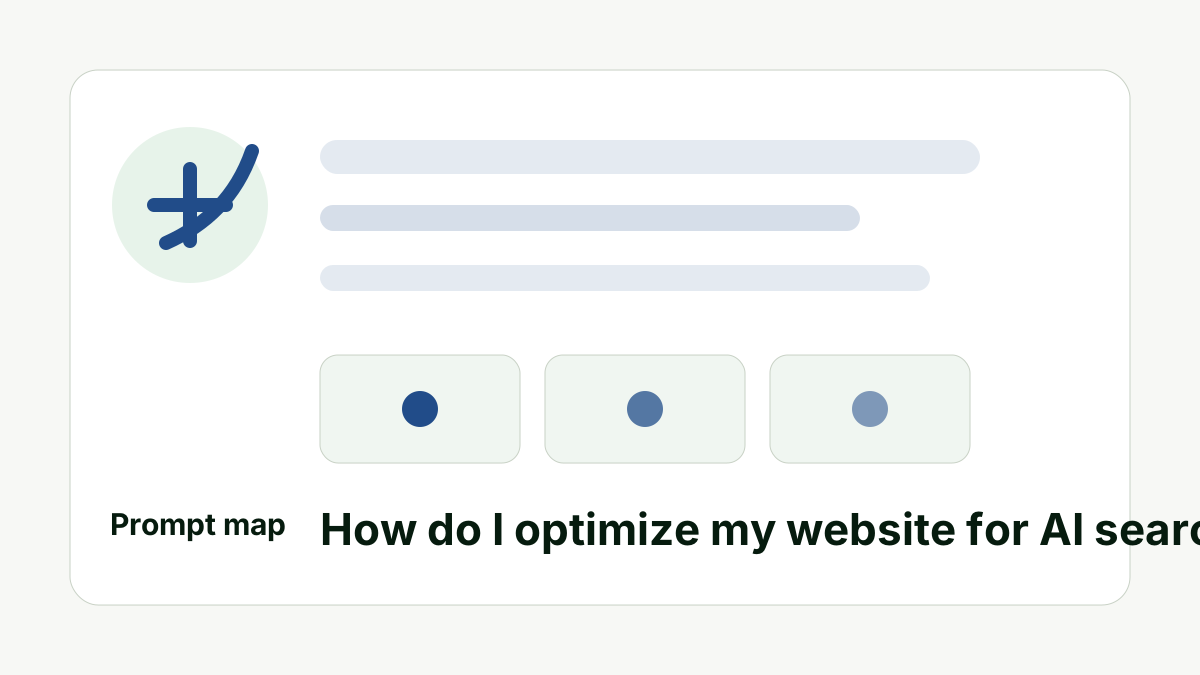
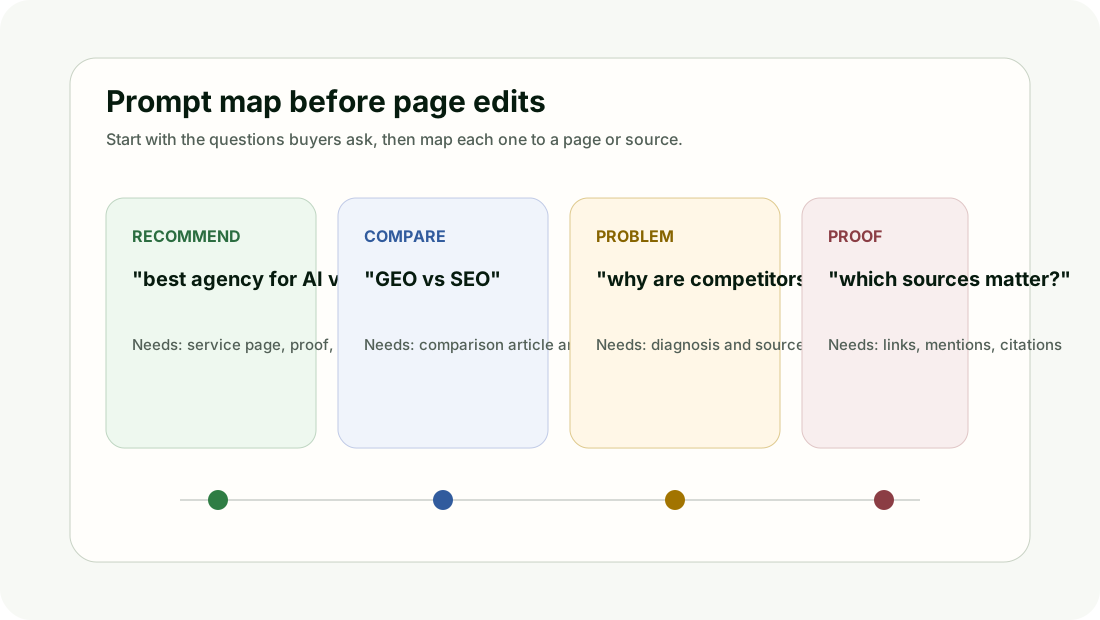
The first aspect is the prompt map. This refers to the real questions buyers ask inside ChatGPT, Gemini, Perplexity, AI Overviews, and other answer systems.
For example, a buyer may not type "AI visibility service" the way they type a Google keyword. They may ask, "what agency can help my brand appear in ChatGPT recommendations?" or "how do I check if competitors are being mentioned in AI answers?" Those are prompt-shaped discovery moments.
So before I change a page, I would list the prompts first. I would group them into recommendation prompts, comparison prompts, problem prompts, and proof prompts. Then I would connect each prompt to a page or source that can support the answer. If you need a related measurement workflow, the guide on how to check if your brand appears in AI answers is the natural next read.
Based on this, prompt mapping wins over guessing. If you do not know the prompts, you do not know what answer you are trying to influence.
Owned Pages
The second aspect is owned pages. These are the pages on your own website that explain who you are, what you do, who you serve, and why you should be trusted.
In classic SEO, a service page can sometimes rank even when the brand explanation is not perfect. In AI search, vague positioning becomes a bigger problem because the answer engine has to summarize the brand. If your own pages do not give it clean language, it may describe you poorly or ignore you.
I would start with the homepage, about page, service page, case study page, and any tool page that supports the same offer. Each page should say the category clearly. Each page should show the audience clearly. Each page should include proof, examples, and links to the next useful source when the reader naturally needs that next step. The goal is not to connect every page to every other page. The goal is to make the brand easy to understand from any important entry point.
Therefore, owned pages are the foundation. They do not guarantee AI visibility, but weak owned pages make everything else harder.
Citation Readiness
The third aspect is citation readiness. This is the difference between a page that exists and a page that can be quoted, summarized, or used as evidence.
A citation-ready page answers the main question early. It has clear headings. It explains definitions. It includes examples. It handles objections. It links to related resources. It does not hide the important answer inside vague paragraphs.
This is where the AI Citation Readiness Checker becomes useful. I would run important pages through it after the prompt map is ready, because a page should be judged against the job it needs to do. For technical support, I would also check crawl and canonical issues with the Indexability and Canonical Checker before blaming AI systems for missing a page.
So, in terms of answer usability, citation-ready pages beat long pages. Length is not the same as clarity.
Third-Party Proof
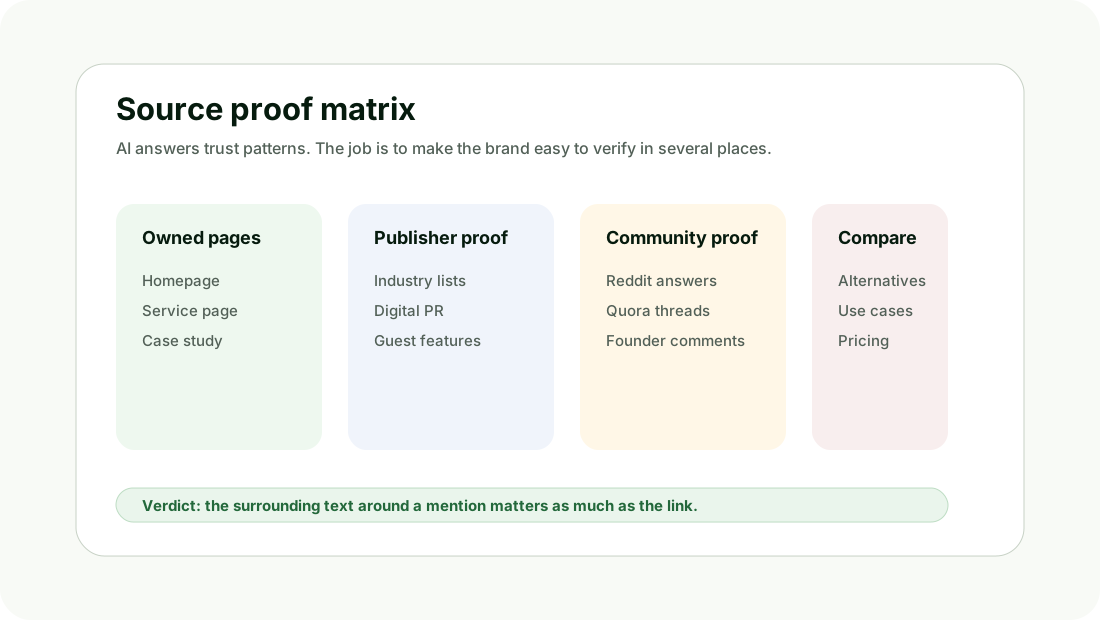
The fourth aspect is third-party proof. This refers to the external sources that repeat and validate the same positioning your own pages claim.
If competitors are mentioned in publisher lists, comparison posts, community discussions, partner pages, and review-style pages, AI systems may have more reasons to include them in an answer. If your brand only talks about itself on its own site, the evidence trail can look weaker.
The fix is not to chase random mentions. The fix is to build relevant, crawlable, category-specific sources. A good external mention should say what the brand does, who it is for, and why it belongs in the market. That is more useful than a link sitting in unrelated copy. This is also why the article on why competitors show up in AI answers belongs in the same cluster.
Therefore, third-party proof is where link building, digital PR, and GEO planning meet. The context around the mention matters as much as the link.
Answer Structure
The fifth aspect is answer structure. AI search often reuses small blocks of information, not whole pages.
That means your page should include self-contained explanations. A definition should make sense by itself. A checklist should be clear. A comparison should have criteria. A FAQ answer should be direct. This makes the page easier for humans to scan and easier for answer systems to reuse.
This does not mean writing robotic content. The DR vs DA style works because it explains one aspect at a time, gives context, then gives a practical verdict. That is the same rhythm I would use for AI search pages. If the page needs a broader content plan, use the related guide on what to include in a GEO content plan.
So, in terms of clarity, structured answer blocks win over loose essays.
Retesting
The sixth aspect is retesting. AI search optimization is not finished when the page is published.
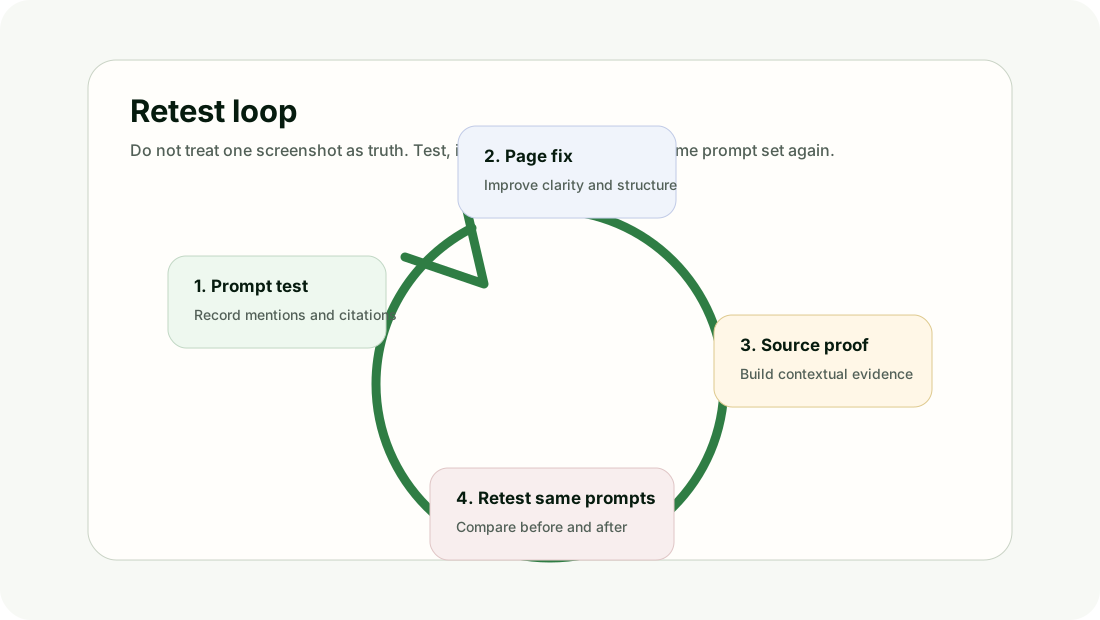
After you improve pages and source proof, run the same prompts again. Record whether your brand appears, whether it is cited, how competitors are described, and whether the answer is accurate. Do not rely on one screenshot. Look for repeated patterns across prompts.
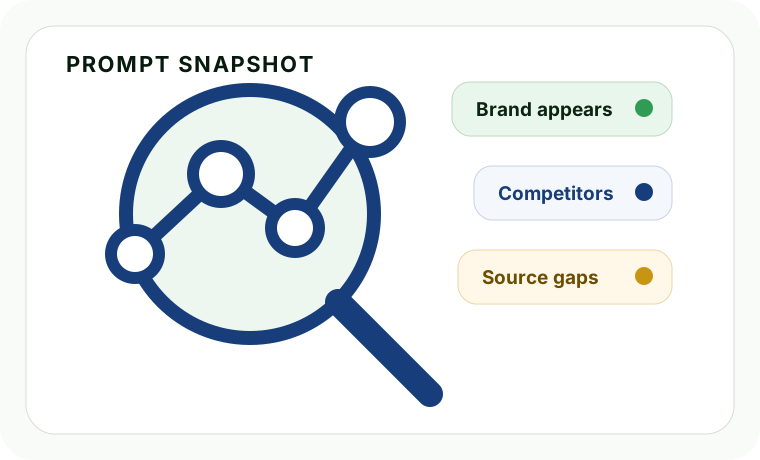
Use the GEO / LLM SEO Planner to build the roadmap, then use the LLM Visibility Checker to test the prompt layer. That gives you a before-and-after workflow instead of guesswork. For ongoing monitoring, connect the same logic to LLMentioned so brand mentions, competitor pressure, and source gaps are tracked as a campaign.
Therefore, retesting wins over assumptions. If you do not measure the answer again, you do not know whether the work changed anything.
A Simple Worked Example
Let me make this practical.
Imagine a B2B service company wants to appear when a buyer asks, "what is the best agency for AI visibility?" The old SEO way would be to create a page targeting "AI visibility agency" and then build links to that page. That is still useful, but it is not enough for AI search.
The first thing I would do is write down the prompts around that buyer journey. One prompt might ask for the best agency. Another might ask how to check AI visibility. Another might ask why a brand is missing from ChatGPT. Another might ask which sources AI systems trust. Those prompts tell us what pages and sources we need.
Then I would inspect the owned pages. Does the homepage clearly say the company works on AI visibility? Does the service page explain the workflow? Does the about page support the brand story? Does the case study show proof? If the answer is no, the site is asking AI systems to infer too much. For a deeper brand-level review, I would pair this with the Brand-in-AI Snapshot.
Next, I would look outside the site. Are there publisher mentions, comparison pages, community answers, or partner articles that describe the company in the same category? If not, the source trail is weak. A competitor with fewer services but clearer sources may still show up first.
Finally, I would retest. I would run the same prompts before and after the changes. If the brand appears more often, the evidence trail is improving. If it still does not appear, I would look at the competitors that appear and ask which source signals they have that we still lack.
That is the practical difference. AI search optimization is not just writing a better page. It is building a clearer path from buyer prompt to brand evidence.
Practical action checklist
- Write the exact buyer question the page needs to answer.
- Compare the main factors one by one instead of covering everything at once.
- Use the verdict from each section to create an assigned SEO or GEO action.
- Add a contextual tool link only when it gives the reader a clear next action.
- Retest the same prompts after the page or source updates go live.
Conclusion
In this use case, I compared AI search optimization across six aspects: prompts, owned pages, citation readiness, third-party proof, answer structure, and retesting.
My conclusion is simple: optimizing for AI search is not one trick. It is a system. The strongest websites make the category clear, answer buyer prompts directly, support claims with sources, and keep testing whether the brand is actually appearing.
So if you are asking how to optimize your website for AI search, start with the prompt map. Then improve the pages. Then build the proof. Then retest the answers. That is the practical order.
FAQ
Is AI search optimization the same as SEO?
No. AI search optimization overlaps with SEO, but it focuses more directly on prompts, summaries, citations, source proof, and whether a brand becomes part of an AI answer.
What should I optimize first?
Start with prompt mapping and your core entity pages. Then improve citation readiness and build third-party proof around the prompts that matter most.
Do links still matter for AI search?
Links can still matter because links, mentions, and third-party pages help create the source environment around a brand. The context of the source is as important as the link itself.
How often should I retest?
Most brands can retest monthly. High-value categories or active campaigns should retest after major page updates, digital PR wins, or link-building work.

Adam O'neil
1stpage Editorial Team
Our 1stpage editorial team combines hands-on SEO agency experience with evidence-backed search performance guidance. These posts are built from real search wins, audit-grade insight, and conversion-tested tactics designed to help agencies, founders, and search teams earn more traffic and trust.