Short answer
If you are asking "What should I include in a GEO content plan?", the useful answer is to treat the page like a practical case study. Start with the question, compare the main factors, then turn the verdict into a plan.
A normal content brief might include a keyword, title, outline, and word count. That is not enough for GEO. A GEO brief has to connect the keyword to prompts, source proof, answer blocks, internal links, and a retesting plan.
Reader question
"What is the one practical fix?"
Use the GEO / LLM SEO Planner to map the prompts first, then build the pages and sources around the prompts that matter most.
Table of Contents
I am going to show you what I would include in a GEO content plan before a page is written.
A normal content brief might include a keyword, title, outline, and word count. That is not enough for GEO. A GEO brief has to connect the keyword to prompts, source proof, answer blocks, internal links, and a retesting plan.
I would build the plan around six parts: the question, the prompt set, the page structure, the source proof, the internal links, and the measurement step.
Let's dive right in.
Core Question
The first part is the core question. Every GEO article should answer one clear buyer question.
This is where the forum-style title approach helps. If people ask "what should I include in a GEO content plan?", the article should not wander into a generic definition of content marketing. It should answer that exact question.
Write the question at the top of the brief. Then write the short answer underneath it. If the page cannot answer the question in two or three sentences, the topic is probably too broad.
Therefore, the core question wins over a loose topic idea.
Prompt Set
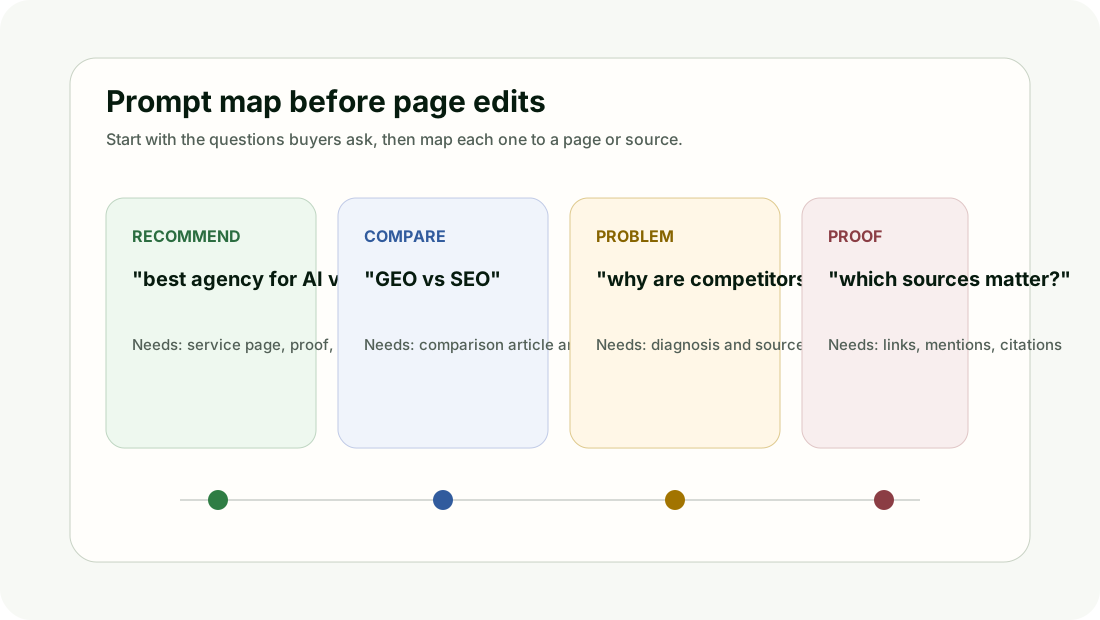
The second part is the prompt set. This is the AI-search layer of the brief.
Add three to five prompts a buyer might ask. Include one recommendation prompt, one comparison prompt, one problem prompt, and one proof prompt if the topic supports it.
For example, a page about AI visibility may target a keyword, but it should also answer prompts like "how do I know if my brand appears in AI answers?" and "why do competitors show up in ChatGPT but not us?"
So, in terms of GEO planning, prompts turn the brief into an answer strategy.
Page Structure
The third part is page structure. This is how the article becomes easy to read and easy to reuse.
I would use a direct introduction, a short answer, a collapsed table of contents, practical H2 sections, examples, a checklist, and a FAQ. The structure should help the reader move from diagnosis to action.
The DR vs DA pattern is useful here because it compares one aspect at a time. That rhythm keeps the article focused and makes each section quotable.
Therefore, structure beats volume. A 1600-word article with clear sections is better than a 3000-word article that hides the answer.
Source Proof
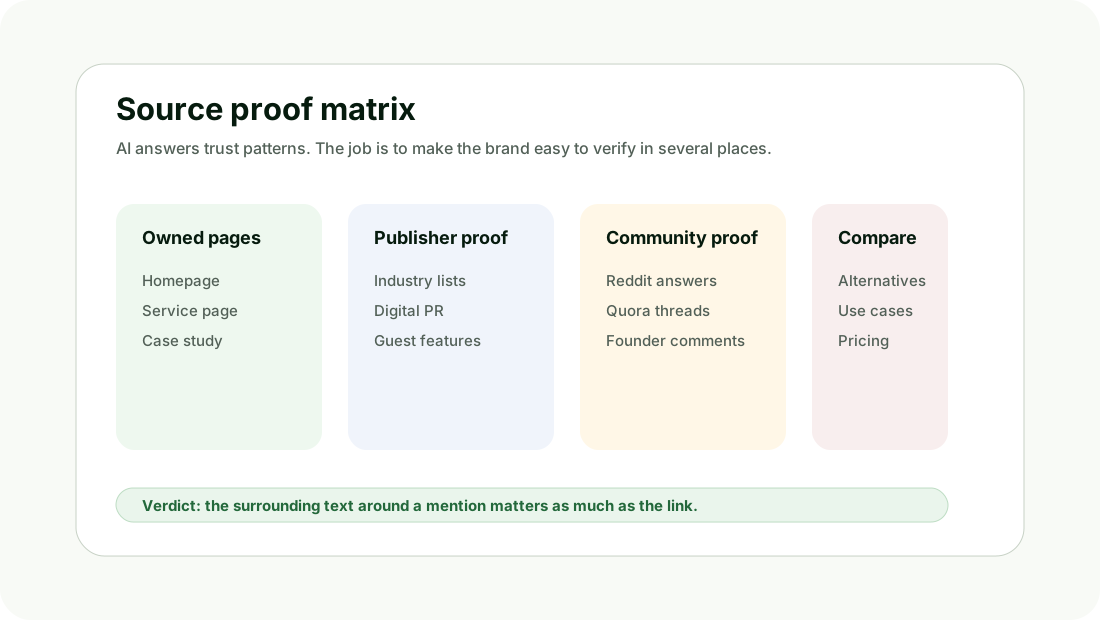
The fourth part is source proof. Each important claim needs some kind of support.
That support can be internal data, a case study, a tool output, a public source, a publisher mention, a comparison, or a practical example. The point is that the page should not ask the reader or the model to trust vague claims.
In a brief, I would list existing proof and missing proof. Missing proof becomes a task for link building, PR, research, or future content.
So, in terms of trust, source proof makes the article stronger for humans and AI systems.
Internal Links
The fifth part is internal links. A GEO article should not sit alone.
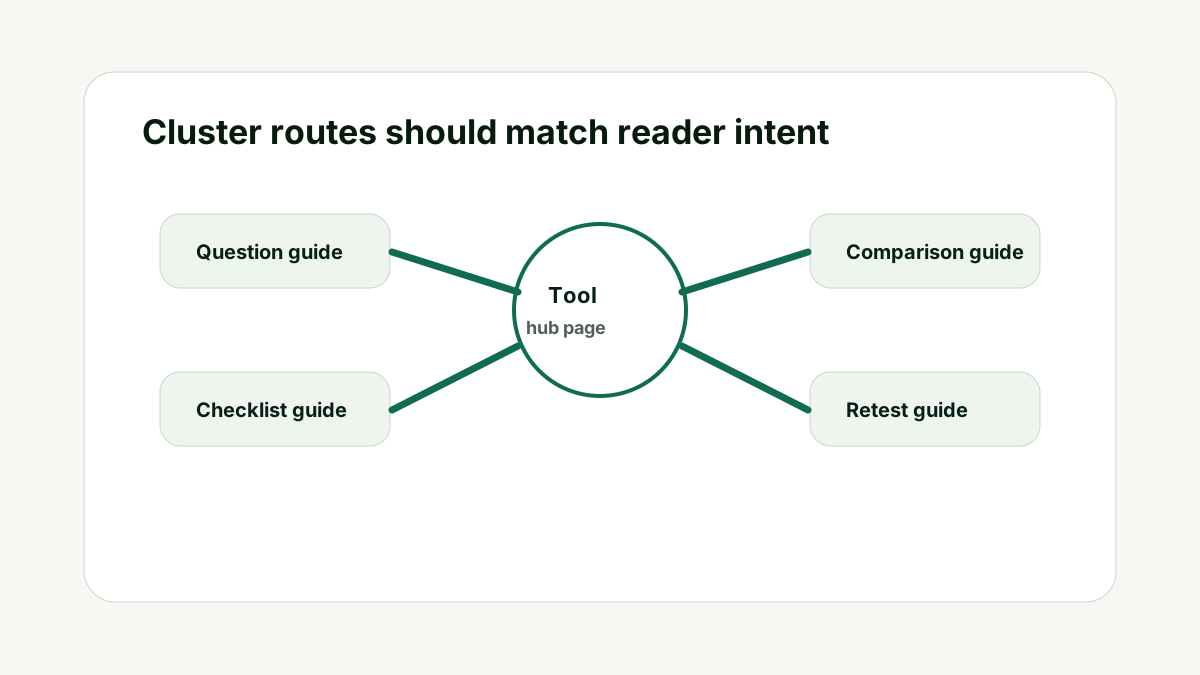
Each supporting article should have a clear place in the cluster. Link to the tool when the reader can use it to act on the advice. Link to a sibling article when the next question is genuinely a better fit there. Skip links that only exist to fill a quota.
For this topic, the GEO / LLM SEO Planner belongs where the reader is ready to turn prompts into a roadmap. If the reader is measuring live answers instead, the LLM Visibility Checker is the more natural next step.
Therefore, internal links turn one article into a cluster.
Measurement
The sixth part is measurement. Publishing is not the end of the GEO plan.
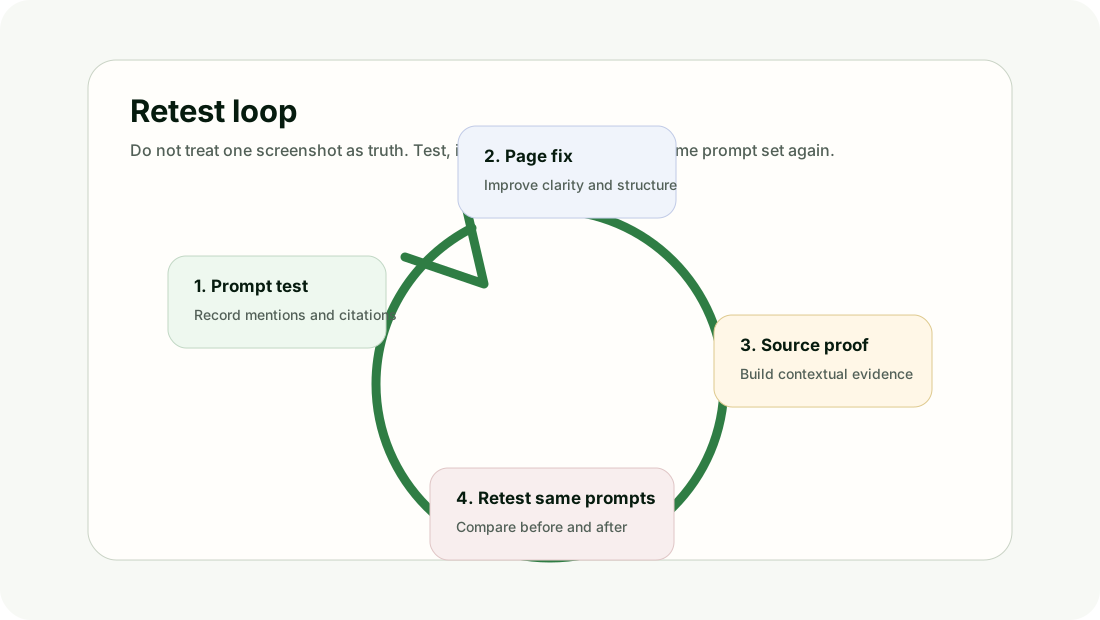
Add a retesting step to the brief. Which prompts will be checked after publication? Which brand mentions should improve? Which competitor answers should be monitored? Which source gaps should close?
This does not need to be complicated. A simple spreadsheet with prompt, answer, brand mention, competitor mention, source note, and next action is enough to start.
So, in terms of campaign discipline, measurement beats hope.
A Simple Worked Example
Here is how I would build a GEO content plan for one tool page.
First, I would write the core question. For example: "How do I check if my brand appears in AI answers?" That question becomes the article target. It is not just a keyword. It is the exact problem the page should solve.
Second, I would write the prompt set. I might include "does my brand appear in ChatGPT?", "why is my competitor showing up in AI answers?", "how do I track AI brand mentions?", and "what sources help AI systems recommend a brand?" These prompts show the surrounding cluster.
Third, I would choose the asset type. If the question is diagnostic, I would write a diagnosis guide. If it is procedural, I would write a workflow. If it is comparative, I would write a comparison. The format should match the user's intent.
Fourth, I would add source requirements. The page may need screenshots, tool outputs, examples, internal case notes, public references, or third-party mentions. If those are missing, the brief should say so. A content plan that ignores source proof is not a GEO content plan.
Fifth, I would map internal links. The article should link to the tool, a sibling article, and the relevant service page. The tool page should link back to the article when it is useful. This creates a crawlable cluster instead of isolated posts.
Finally, I would add the retesting step. After the page is live, which prompts will we test again? What would count as improvement? Which competitor appearances are we watching? That measurement note keeps the content tied to visibility rather than just publication.
Practical action checklist
- Write the exact buyer question the page needs to answer.
- Compare the main factors one by one instead of covering everything at once.
- Use the verdict from each section to create an assigned SEO or GEO action.
- Add a contextual tool link only when it gives the reader a clear next action.
- Retest the same prompts after the page or source updates go live.
What I Would Do Next
If I were building this plan for a live site, I would turn it into a production checklist.
First, I would create one row for each article in the cluster. Each row would include the exact question, URL slug, tool link, target prompt, related service page, required image, and source proof needed.
Second, I would add a quality check before publication. The article should answer the question early, include a useful visual, link back to the tool, include FAQ schema, and keep the title aligned with the user question.
Third, I would add a post-publish check. The URL should be in the sitemap, indexing list, blog manifest, and tool sidebar where relevant. This avoids a common problem where good content exists but is poorly connected.
Fourth, I would add a retest date. A GEO content plan should not stop when the article goes live. It should say when the prompt set will be checked again and what improvement would look like.
That is how the plan becomes an operating system rather than a document.
Conclusion
In this checklist, I covered the six parts I would include in a GEO content plan: question, prompts, structure, source proof, internal links, and measurement.
My conclusion is that a GEO content plan is not just a writing brief. It is a visibility brief. It tells the writer what question to answer, the SEO what page to build, the authority team what proof to earn, and the analyst what to retest.
If you want to build these faster, start with the GEO Planner and use the output as the first draft of the brief. Then edit it like a human.
FAQ
How many articles should a GEO cluster include?
Start with six strong supporting articles per tool, then expand to eight or ten if the topic has enough demand and unique questions.
Should every article include images?
Yes, when the image helps. Use diagrams, charts, checklists, and workflow visuals instead of decorative images.
Should the tool page link back to the posts?
Yes. The tool page should link to the most useful supporting guides, and each guide should link back to the tool.
What is the minimum word count?
For this site, supporting posts should usually be about 1600 words or more, with enough depth to answer the question properly.

Adam O'neil
1stpage Editorial Team
Our 1stpage editorial team combines hands-on SEO agency experience with evidence-backed search performance guidance. These posts are built from real search wins, audit-grade insight, and conversion-tested tactics designed to help agencies, founders, and search teams earn more traffic and trust.