Short answer
If you are asking "How do I make my brand show up in ChatGPT recommendations?", the useful answer is to treat the page like a practical case study. Start with the question, compare the main factors, then turn the verdict into a plan.
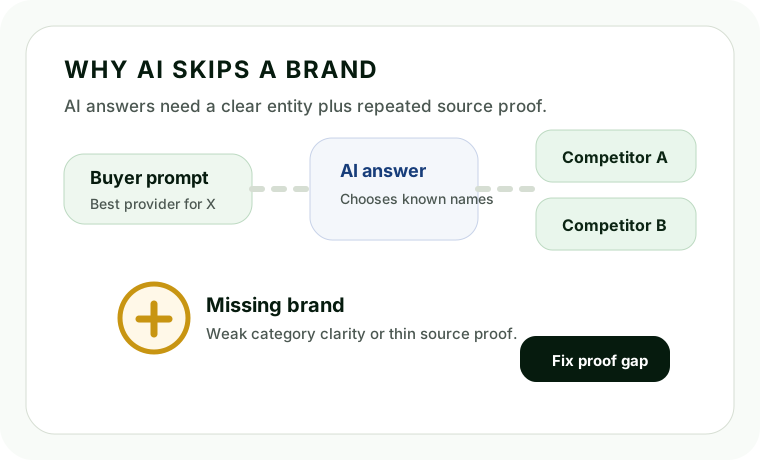
The important point is that ChatGPT recommendations are not a directory listing. You do not simply add your company to one place and wait for every answer to include it. The model needs enough source evidence to connect your brand with the category in the prompt.
Reader question
"What is the one practical fix?"
Use the GEO / LLM SEO Planner to map the prompts first, then build the pages and sources around the prompts that matter most.
Table of Contents
I am going to show you how I would diagnose a brand that is missing from ChatGPT recommendations.
The important point is that ChatGPT recommendations are not a directory listing. You do not simply add your company to one place and wait for every answer to include it. The model needs enough source evidence to connect your brand with the category in the prompt.
So I would look at six aspects: prompt fit, brand clarity, owned pages, third-party proof, community language, and retesting.
Let's dive right in.
Prompt Fit
The first aspect is prompt fit. Not every prompt is worth chasing.
If someone asks for the best enterprise software and you sell a boutique service, you may not deserve that answer. But if someone asks for a specialist provider in your exact category, you should at least be considered.
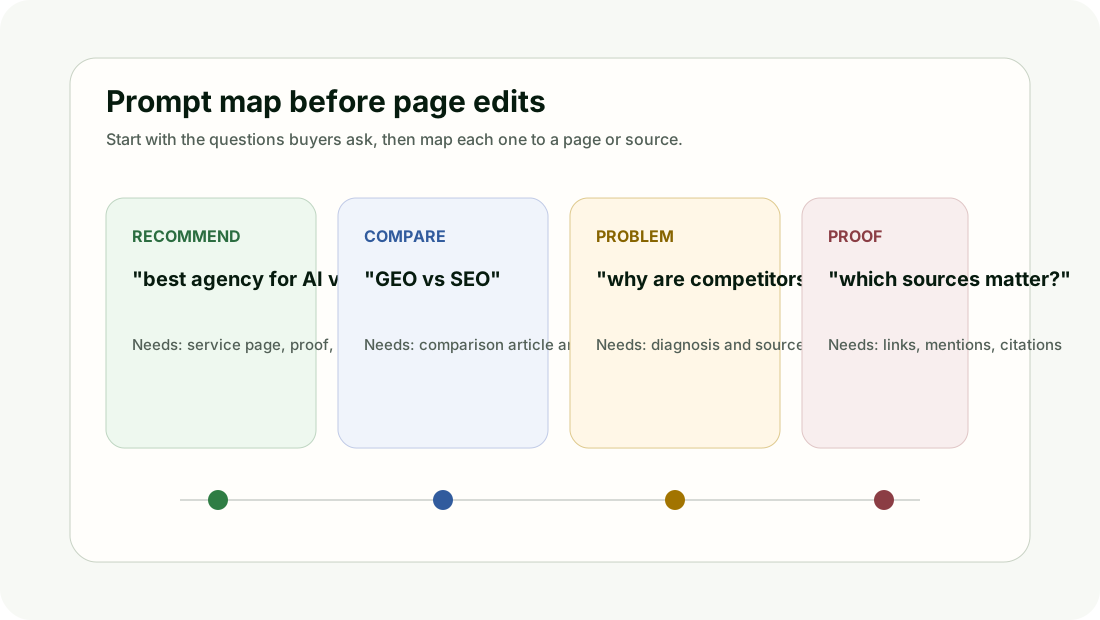
That is why I would build a prompt set before changing anything. I would include broad recommendation prompts, niche recommendation prompts, comparison prompts, and problem prompts. Then I would record where the brand appears and where competitors appear.
Therefore, prompt fit comes first. You cannot fix a visibility gap until you know which answer you are trying to win.
Brand Clarity
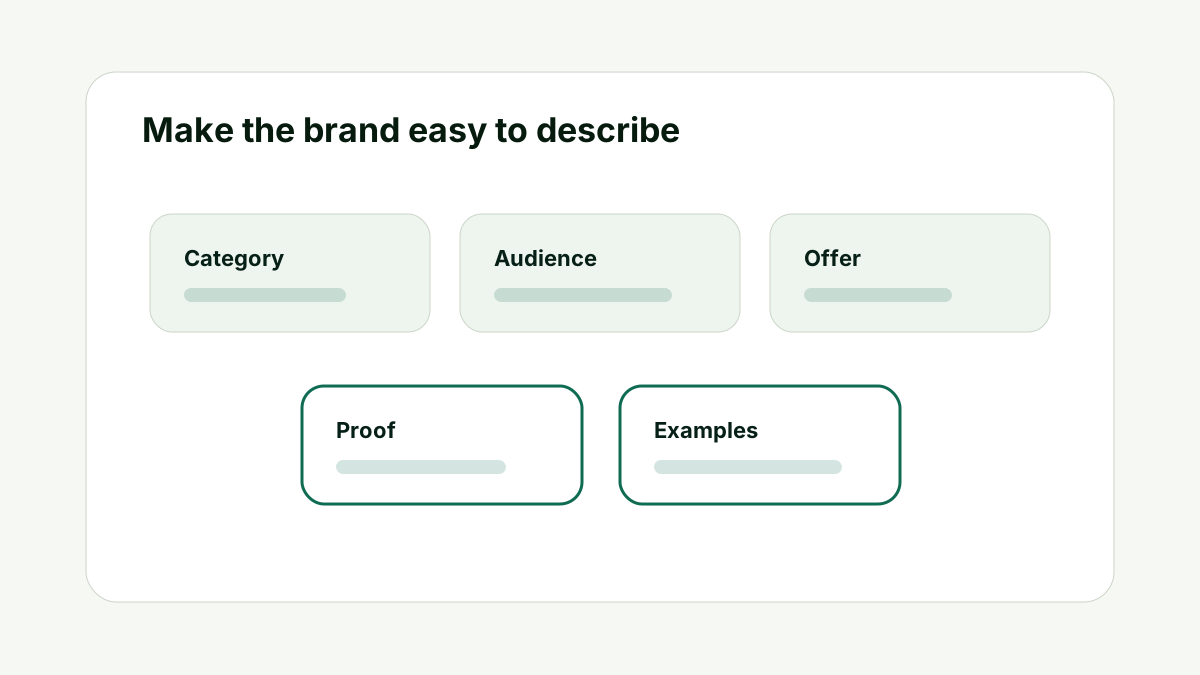
The second aspect is brand clarity. AI systems need to understand what the company is.
If your site describes the brand as a growth partner, marketing platform, AI solution, and consultancy all in different places, the answer engine has to guess. Competitors with cleaner category language can be easier to recommend.
I would make the brand name, service category, audience, and outcome consistent across the homepage, service pages, about page, case studies, and FAQs.
So, in terms of brand clarity, plain language beats clever positioning.
Owned Pages
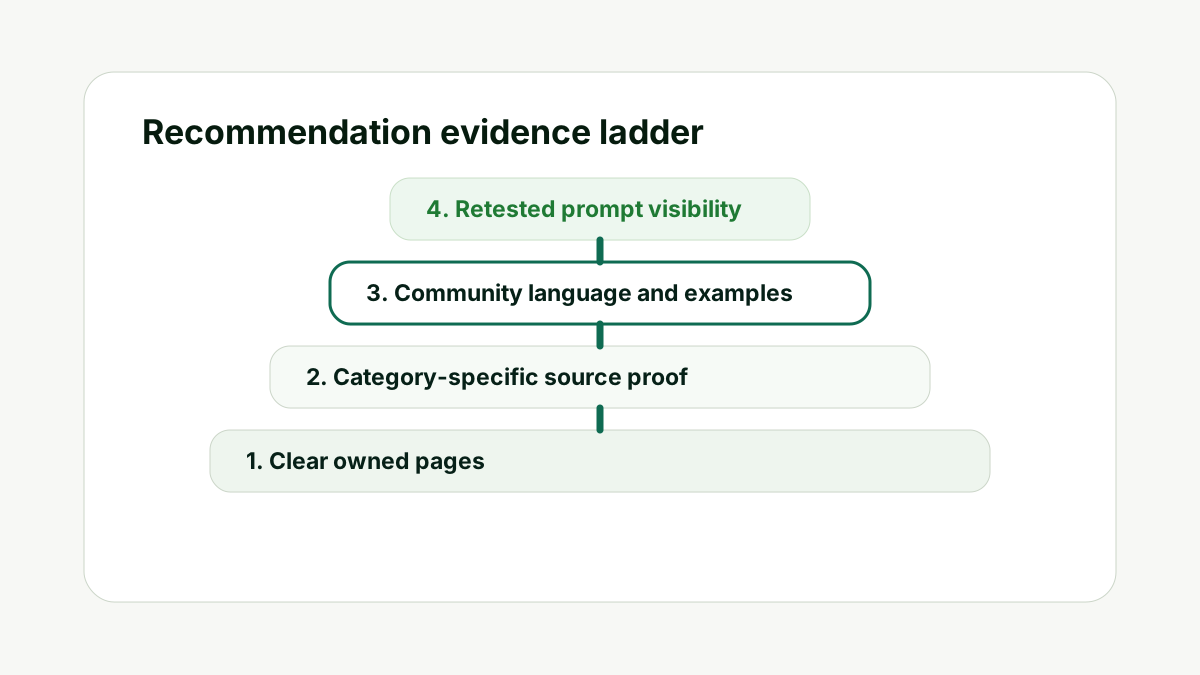
The third aspect is owned pages. These pages should give ChatGPT enough material to describe the brand accurately.
A strong service page explains who the offer is for, what problem it solves, how it works, what proof exists, and what a buyer should do next. A weak page uses vague claims and expects the reader to infer the rest.
Use the AI Citation Readiness Checker on the pages that define the offer. If the page is hard to cite, it is probably also hard to recommend.
Therefore, owned pages are the first controllable fix.
Third-Party Proof
The fourth aspect is third-party proof. This is often why competitors appear first.
If other websites, lists, interviews, directories, reviews, or community pages describe a competitor in the exact category, they create repeated evidence. That evidence can make the competitor easier to include in a recommendation answer.
I would look for the sources that appear around the competitors. Then I would build a cleaner source plan for the brand: relevant publisher mentions, useful guest content, comparison inclusion, partner pages, and genuine community answers. If the gap is competitor-specific, the companion guide on why competitors show up in AI answers is the better next diagnosis.
So, in terms of recommendation confidence, third-party proof can beat self-description.
Community Language
The fifth aspect is community language. People often ask for recommendations in messy language.
Reddit, Quora, forums, Slack communities, and social posts show how buyers phrase the problem before they know the category. That language should feed your content brief. If your pages use terms nobody uses, the brand can miss the prompt.
The Reddit GEO Thread Finder can help with this research. The goal is not to spam forums. The goal is to understand the questions and answer them better on your own site and in useful public contributions.
Therefore, community language is a research asset.
Retesting
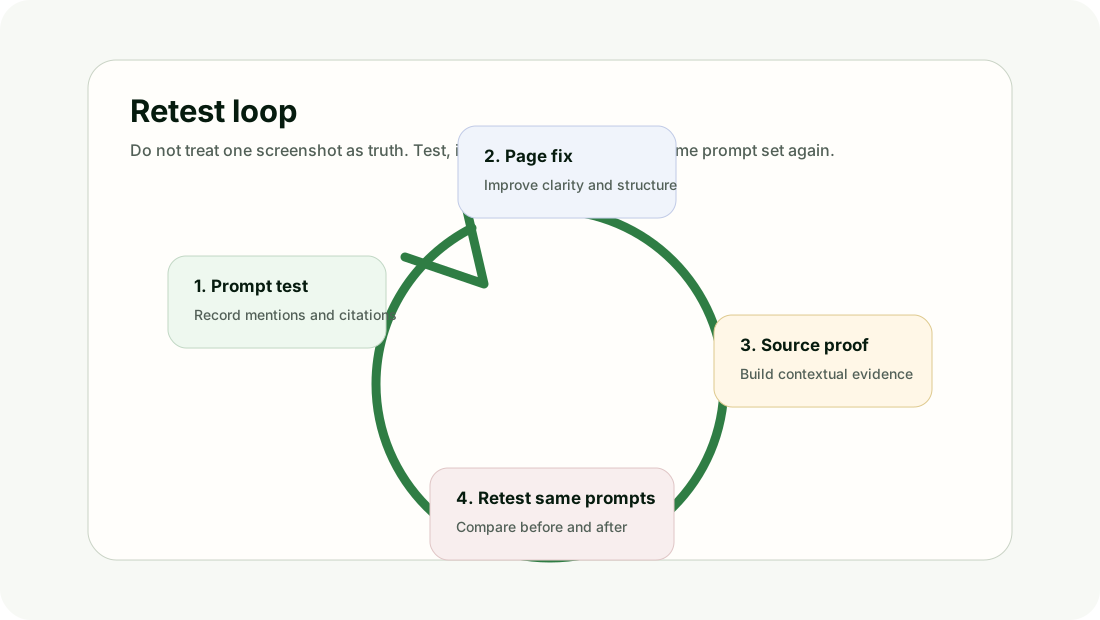
The sixth aspect is retesting. One answer is not proof.
After you improve the pages and source proof, run the same prompts again. Record whether the brand is named, whether it is cited, how it is described, and which competitors still appear.
If the brand appears but is described poorly, fix the source gap. If the brand is still missing, check whether the category language and third-party evidence are strong enough.
So, in terms of progress, repeated snapshots beat random screenshots.
A Simple Worked Example
Let me walk through a practical example.
Say a SaaS company asks why ChatGPT recommends three competitors but never mentions them. The first reaction might be to create more blog posts. I would not start there. I would start by collecting the prompts where the competitors appear.
For each prompt, I would record the answer, the brands mentioned, the order of the brands, and the reason the answer gives. If the answer says a competitor is known for a specific use case, that phrase matters. It tells us what category association the competitor owns.
Then I would open the competitor sources. Maybe they have a comparison page. Maybe they are included in several "best tools" articles. Maybe Reddit users mention them in a specific workflow. Maybe their own homepage uses clearer language. The job is to find the source pattern, not just complain about the answer.
After that, I would check the client's owned pages. Does the service page use the same category language? Does it include proof? Does it answer the buyer prompt directly? Does it link to a case study or a comparison page? If not, we have a page gap.
Then I would build the missing source proof. That might mean a better comparison article, a clearer service page, a guest article, a partner mention, a listicle inclusion, or a useful community answer. The important thing is that the source has to connect the brand to the prompt category.
Finally, I would retest the same prompt set. I would not expect every answer to change overnight, but I would expect the source trail to become stronger. That is how you move from "ChatGPT ignores us" to a real action plan.
Practical action checklist
- Write the exact buyer question the page needs to answer.
- Compare the main factors one by one instead of covering everything at once.
- Use the verdict from each section to create an assigned SEO or GEO action.
- Add a contextual tool link only when it gives the reader a clear next action.
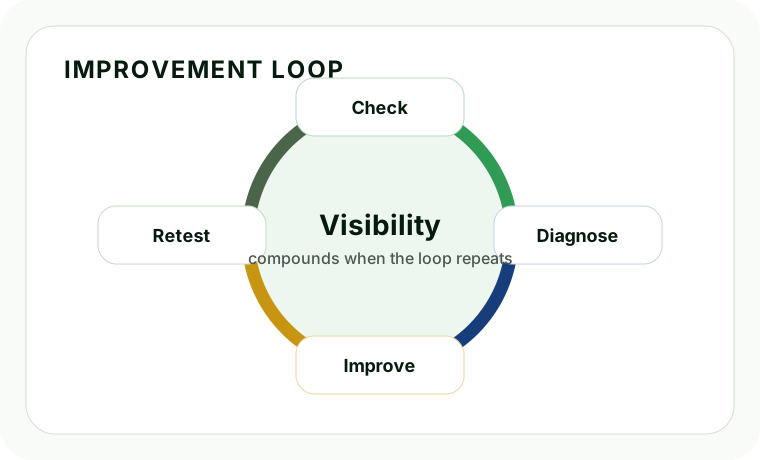
- Retest the same prompts after the page or source updates go live.
What I Would Do Next
If the brand is missing from ChatGPT recommendations, I would create a 30-day source-gap sprint.
First, I would choose ten prompts that matter commercially. I would not include vanity prompts that only ask about the brand name. I would use prompts where a buyer asks for a recommendation, comparison, or solution.
Second, I would record the answers and competitor mentions. This gives the team a baseline. Without a baseline, every screenshot feels urgent and no one knows whether the work is improving anything.
Third, I would fix the owned pages that define the brand. The homepage, service page, about page, and proof pages should all use consistent language. They should make the category obvious.
Fourth, I would build or earn outside sources that repeat that category. One strong contextual mention is better than several weak mentions. The goal is to make the brand easier to verify, not just easier to find.
At the end of the sprint, I would rerun the prompt set and compare the answers. That gives the next sprint a clear direction.
This turns recommendation visibility into repeatable work instead of a waiting game.
Conclusion
In this diagnosis, I looked at prompt fit, brand clarity, owned pages, third-party proof, community language, and retesting.
My conclusion is that you make a brand show up in ChatGPT recommendations by making the brand easier to understand, easier to verify, and easier to connect to the buyer prompt.
Start with the GEO / LLM SEO Planner. Build the prompt map. Fix the pages. Strengthen the sources. Then retest the answers. That is the practical workflow.
FAQ
Can I submit my brand to ChatGPT recommendations?
There is no normal SEO-style submission that guarantees recommendation inclusion. You need a stronger source trail across owned and third-party pages.
How long does it take to appear?
It depends on the market, model, sources, and freshness. Measure monthly after meaningful content, citation, and authority updates.
Do backlinks help ChatGPT recommendations?
Backlinks can help when they come from relevant, crawlable pages that describe the brand in the right category context. Generic links are weaker.
What should I fix first?
Fix unclear owned pages first, then build third-party proof around the prompt categories where competitors are already appearing.

Adam O'neil
1stpage Editorial Team
Our 1stpage editorial team combines hands-on SEO agency experience with evidence-backed search performance guidance. These posts are built from real search wins, audit-grade insight, and conversion-tested tactics designed to help agencies, founders, and search teams earn more traffic and trust.