Short answer
Llms.txt can help systems that choose to read it understand your site faster, but it does not guarantee that ChatGPT will fetch, cite, or recommend your site. The practical value is that it gives your best pages a cleaner context path.
The useful way to think about this is not "will one file make AI systems recommend me?" The better question is whether your site gives crawlers, retrieval tools, and human reviewers a clean route to the pages that matter.
Reader question
"What should I expect?"
Use the Free LLMs.txt Generator to create the context file, then use the LLM Visibility Checker to test whether prompts actually mention the brand.
Table of Contents
I am going to answer this as a practical website-operations question, not as a hype cycle question.
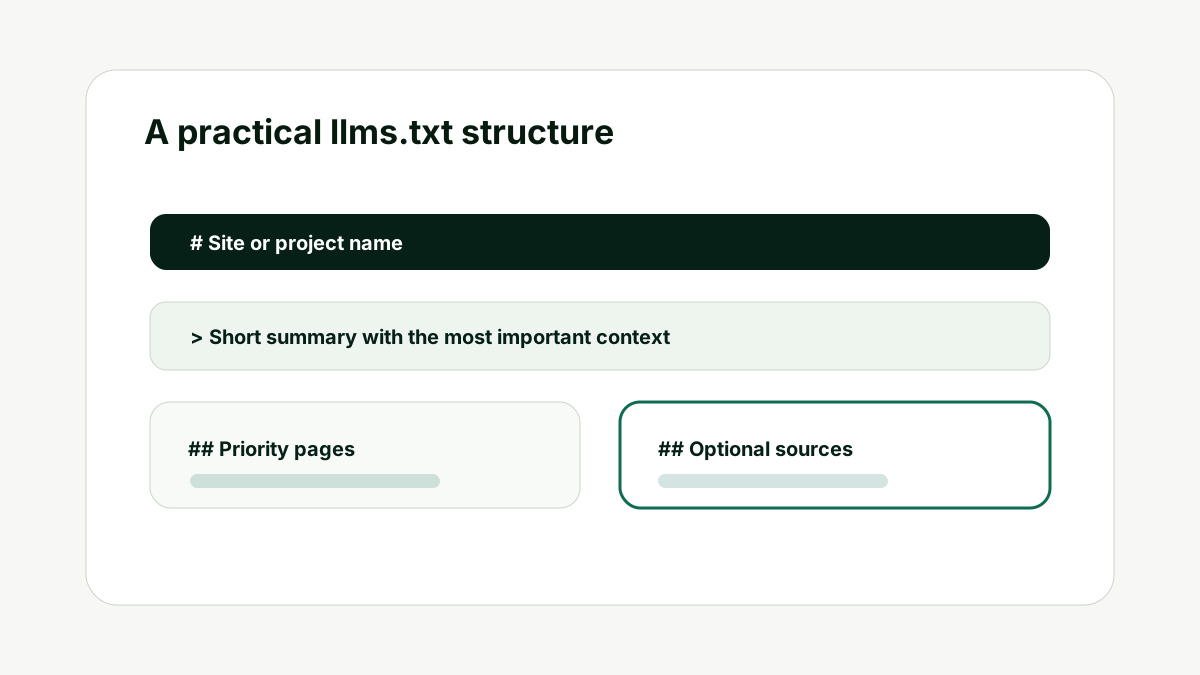
An llms.txt file can be useful, but it works best when the surrounding site is already clear. The file should describe the site, point to important pages, and reduce ambiguity. It should not become a shortcut around weak content, blocked pages, or missing proof.
Here is how I would evaluate it across the parts that matter.
What It Can Do
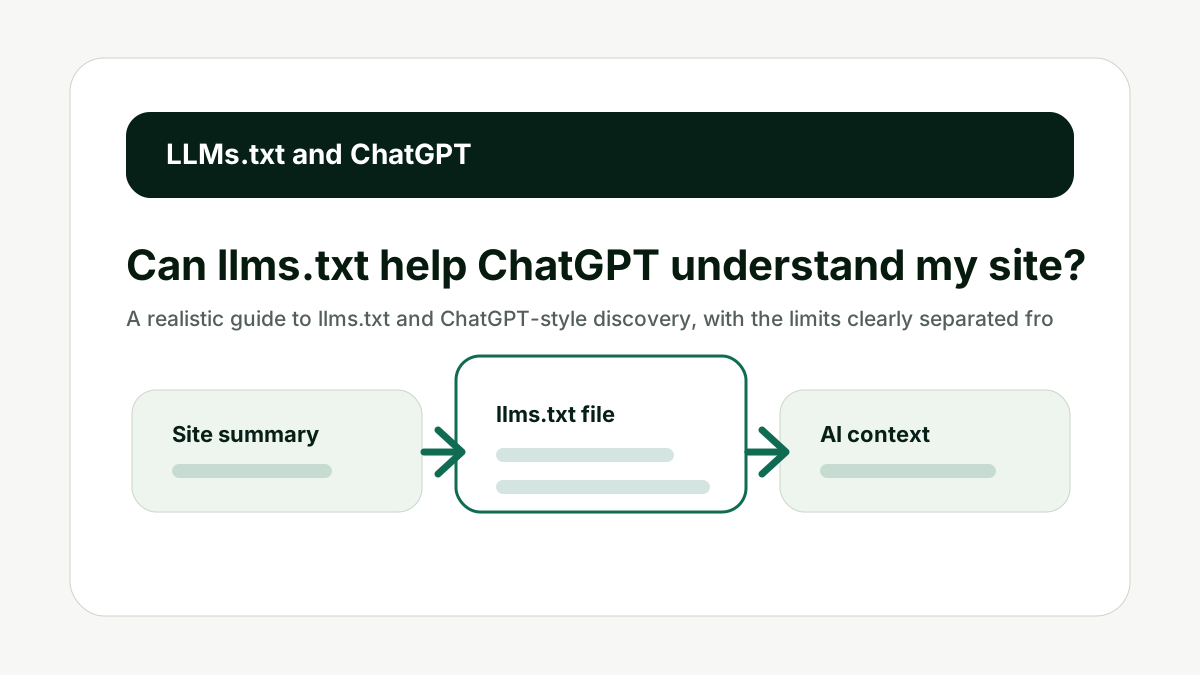
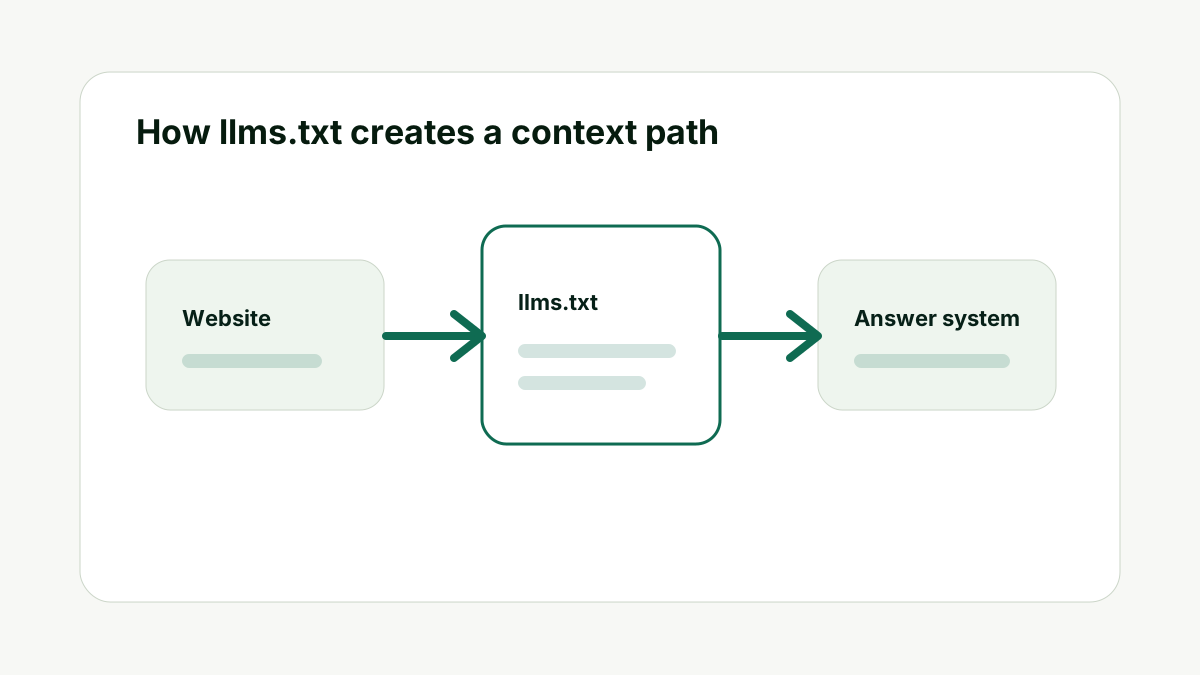
Llms.txt can explain the site in one place. It can point to the pages that should define the brand, product, service, documentation, or policies. That alone can make the site easier to interpret for tools that look for the file.
It can also reduce ambiguity. If your site has old posts, product variants, or multiple audiences, the file can tell readers which pages are current and which sources are optional.
That is useful for AI search preparation because answer systems often work from summaries, snippets, and source trails.
The file can create a cleaner context path. That is useful even when it is not a guarantee.
What It Cannot Do
Llms.txt cannot force ChatGPT to recommend your brand. It cannot override weak pages, missing source proof, or inaccurate third-party descriptions.
It also cannot guarantee that every AI system will fetch the file. Some systems may use search indexes, some may use browsing, some may use partners, and some may not use your file at all.
So the right expectation is preparation, not control. The file is part of an AI-readiness workflow.
Do not sell the file to yourself as control. Treat it as a clarity asset.
Page Summaries
The file is strongest when it points to pages that already summarize themselves well. If a priority page has a vague title, weak headings, and no direct answer, the file can only point to a weak source.
This is why page summaries matter. Each priority page should answer its own question early and make the brand, audience, offer, and proof clear.
If you need to check that layer, use the AI Citation Readiness Checker on the pages you plan to include.
The file points to pages. The pages still need to earn their place.
Source Links
For commercial brands, source links matter beyond the site. AI answers often reflect public pages, comparisons, mentions, reviews, and community discussions.
Your llms.txt file can clarify your own site, but a wider source gap can still affect how the brand is described. If other pages describe competitors more clearly, those competitors may still appear more often.
This is where the guide on why competitors show up in AI answers becomes relevant.
Owned context helps, but external source context still shapes AI answers.
Entity Clarity
A good file should reinforce entity clarity. It should make the brand name, website, category, audience, and key pages consistent.
If the file says one thing, the homepage says another, and third-party sources say something else, an AI answer system has to reconcile conflicting signals.
Use the file as a forcing function. If you cannot describe the entity cleanly in a short summary, the site probably needs stronger positioning.
Entity clarity is the real win. The file should match the site and the sources around it.
Testing
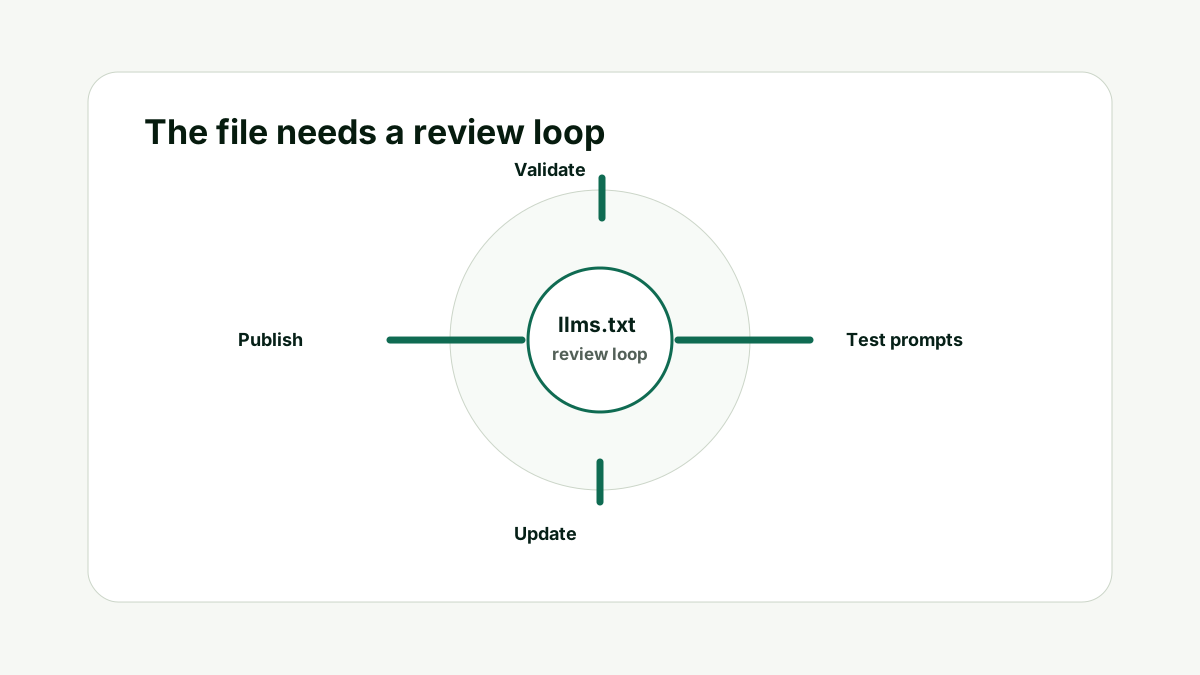
After publishing the file, test prompts. Ask questions that a buyer would ask, not only brand-name prompts. Record whether the brand appears, how it is described, and what sources seem to support the answer.
If the answer improves, the file may be part of the cleaner source trail. If nothing changes, inspect the pages and external sources rather than assuming the file failed.
For ongoing monitoring, LLMentioned is the service layer when a brand needs recurring prompt tracking, source-gap analysis, and competitor pressure reporting.
Testing keeps the claim honest. Visibility is measured in answers, not in the existence of a file.
How This Fits the Wider AI Search Workflow
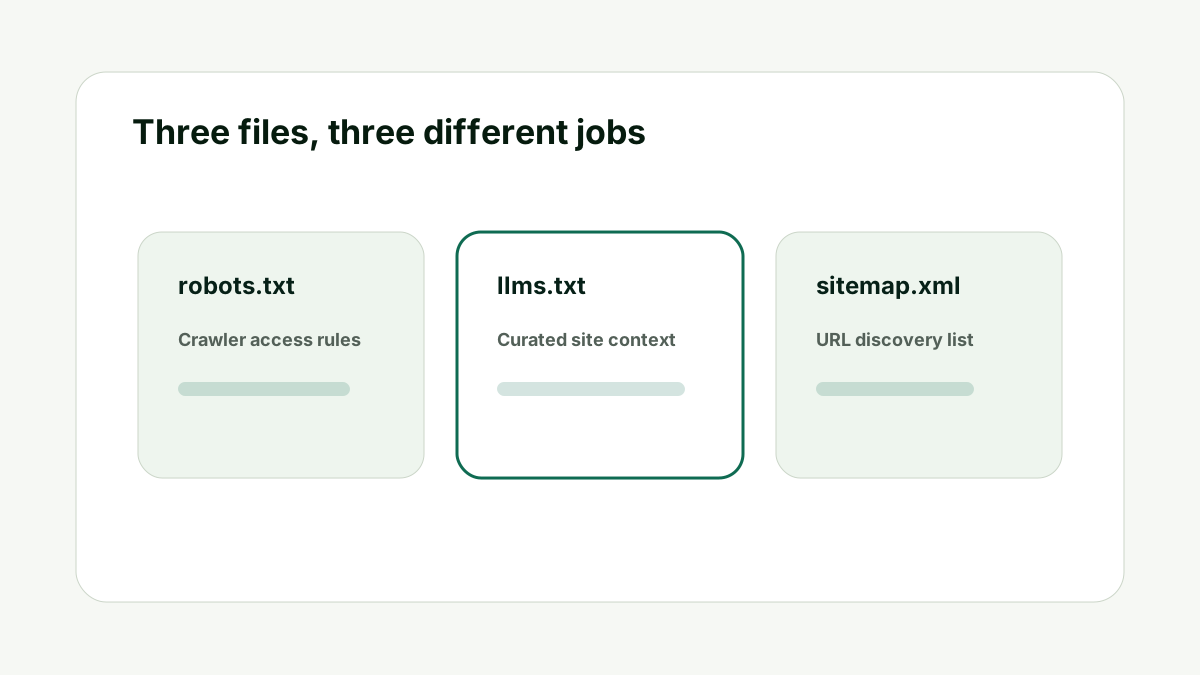
The important thing with Can llms.txt help ChatGPT understand my site? is to avoid treating the file as an isolated SEO task. It belongs inside a wider workflow that starts with crawlability, moves into page clarity, then uses llms.txt as the curated map for the pages that deserve attention.
That order matters. If the page is blocked, the file cannot make it accessible. If the page is vague, the file cannot make it authoritative. If outside sources describe the brand differently, the file cannot erase the wider source gap. The file is useful because it makes the intended site structure visible, but it still depends on the quality of the pages and sources it points to.
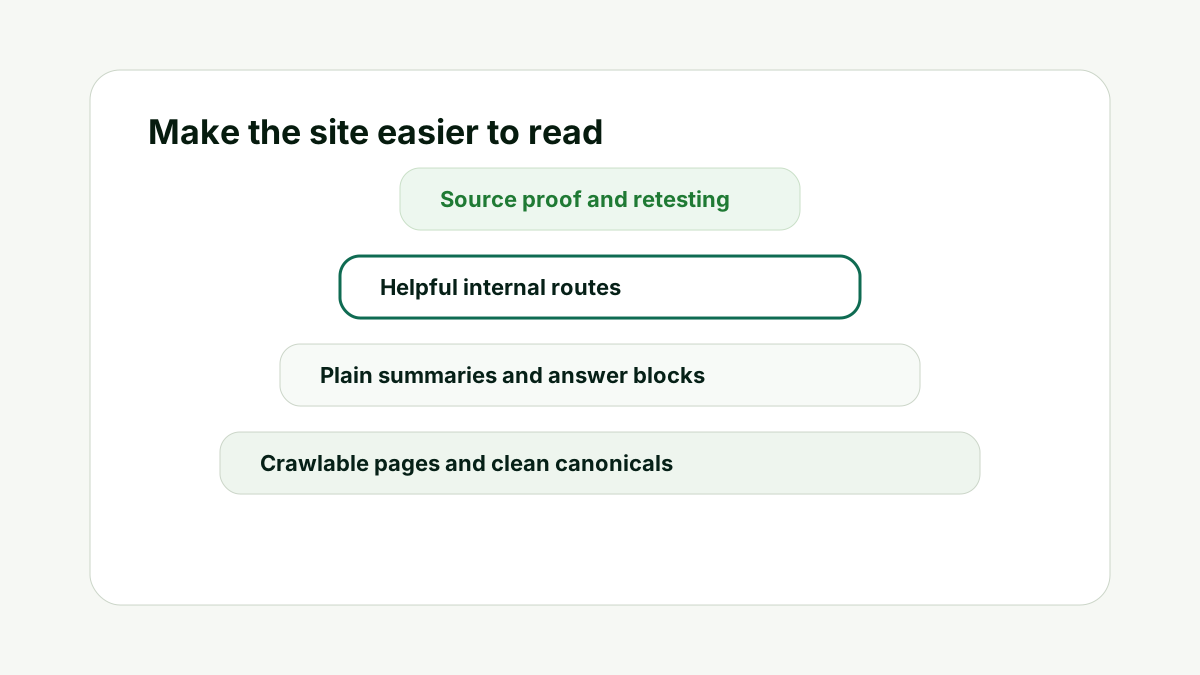
In practice, I would use the file as a checkpoint. If a URL is important enough to include in llms.txt, it should also be strong enough to answer its core question clearly. It should have a stable canonical URL, a useful title, headings that match the topic, and enough proof to support the claims. If a page fails that check, improve the page before making it a priority source.
I would also connect the file to measurement. After publishing or updating it, run the prompts that matter to the business. Check whether the brand appears, whether the description is accurate, and whether the answer seems to rely on better sources. If the answers do not improve, the next step is not to stuff the file with more URLs. The next step is to improve the pages, source proof, and internal routes that support the file.
For teams, this also gives the file a clear owner. Someone should know which URLs are approved, which pages are optional, and which claims are no longer current. Without that owner, llms.txt can quietly drift away from the site it is supposed to explain.
That is why llms.txt should feel boring in the best way. It should be clear, current, and useful. The strategy is not to impress a model with a clever file. The strategy is to make your website easier to understand from the strongest available evidence.
A Simple Worked Example
A founder asks whether an llms.txt file will make ChatGPT understand the site. I would answer carefully. If the current site is confusing, the file can help organize the best context. But if the market does not talk about the brand, the file will not create public reputation by itself.
The practical workflow starts with the file. Generate it, include current priority pages, and upload it. Then check the pages it links to. If those pages are weak, improve them. Then check whether external sources support the same category language.
After that, run prompts. Do not only ask "what is my brand?" Ask recommendation, comparison, and problem prompts. If the brand is missing, the source trail still needs work. If the brand appears but is described incorrectly, the summary, pages, or third-party sources may be misaligned.
That is how to use llms.txt without overclaiming it. It is a helpful piece of the workflow, not the whole workflow.
Practical action checklist
- Write the exact site context the file should clarify.
- List only the priority URLs that support that context.
- Check crawlability before blaming AI systems for missing the page.
- Add contextual internal links only when they help the reader take the next step.
- Review the file after major site, product, or positioning changes.
What I Would Do Next
Create the file and publish it at the root path.
Improve the priority pages it points to so they are concise, quotable, and current.
Run prompt checks before and after major changes so the team can see whether AI descriptions improve.
Conclusion
Can llms.txt help ChatGPT understand my site? is a useful question because it separates AI-search preparation from guesswork.
The practical answer is to make the site easy to understand first, then use llms.txt as the concise map. Keep the file current, point it to strong pages, and test whether the answers around your brand improve over time.
That gives your team a better workflow than publishing a file once and hoping an AI system does the rest.
FAQ
Will ChatGPT always read my llms.txt file?
No. Different AI systems use different retrieval methods. The file prepares your site for systems that use it, but it does not guarantee usage.
Can llms.txt improve AI recommendations?
It can support clarity, but recommendations also depend on page quality, source proof, public mentions, and prompt fit.
Should I mention ChatGPT in the file?
Usually no. The file should describe your site and sources, not target one model with unsupported instructions.
How do I know whether it helped?
Use repeatable prompt testing and compare answer quality, brand mentions, citations, and competitor appearances over time.

Adam O'neil
1stpage Editorial Team
Our 1stpage editorial team combines hands-on SEO agency experience with evidence-backed search performance guidance. These posts are built from real search wins, audit-grade insight, and conversion-tested tactics designed to help agencies, founders, and search teams earn more traffic and trust.