Short answer
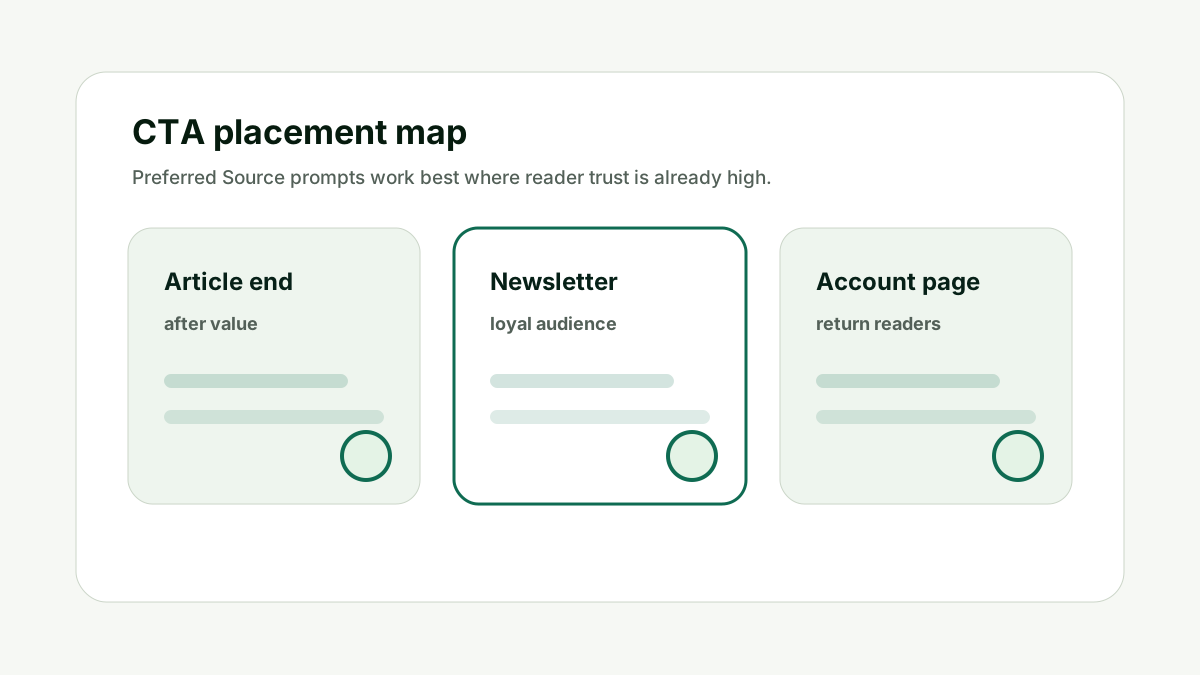
Place a Google Preferred Source button where the reader has just received value or already has a relationship with the publication. Article endings, newsletter footers, subscriber onboarding, app prompts, and social posts usually make more sense than intrusive popups.
Google's own publisher guidance frames this as a way to help readers select a site they want to see more often in eligible Search surfaces. That is useful, but it still depends on user choice, relevant content, and the eligible Google experience.
For the platform details, use Google's Search Central preferred sources guide and Google's Preferred Sources announcement as the source of truth.
Reader question
"Where should I put the first button?"
Start with one high-trust placement, then use the Google Preferred Source Generator to create consistent button copy and embed HTML before expanding across the site.
Table of Contents
I am going to answer this as a publisher workflow, not as a magic search lever.
The useful question is not only whether a Preferred Source button exists. The better question is whether the button appears at a moment when the reader already trusts the source and understands the benefit.
Here is the framework I would use for a publisher has the link but needs to decide where the button belongs without damaging the reading experience.
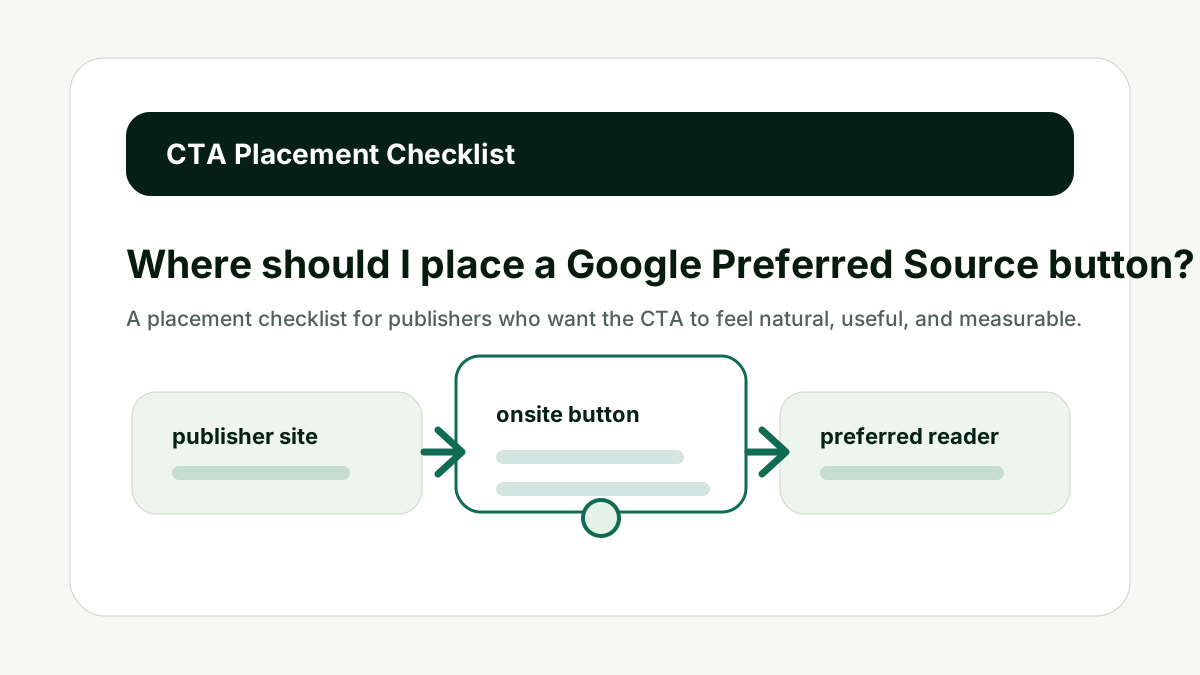
Article Endings
For Where should I place a Google Preferred Source button?, article endings matters because the reader has already received the reporting, analysis, or utility before seeing the ask. This is not just a button decision. It affects how much friction the reader feels, how clearly the campaign can be explained, and how honestly your team can report the result.
This is usually the cleanest first placement. The CTA can say: "Want to see more of our reporting in Google? Add us as a Preferred Source." It feels connected to the article value the reader just consumed.
Do not place the button so high that it interrupts the article before trust is established. Preferred Sources work best when the ask is specific, the page has already earned trust, and the reader can understand the action before leaving your site.
The practical test is simple: if a loyal reader saw this CTA out of context, would they know what they are adding, why it benefits them, and why your publication deserves that preference? If the answer is no, tighten the page, the copy, or the placement before scaling the campaign.
Article Endings is one of the practical decisions that makes a Preferred Source campaign easier to trust and measure.
Newsletter Footers
For Where should I place a Google Preferred Source button?, newsletter footers matters because newsletter subscribers are already asking to hear from the publication again. This is not just a button decision. It affects how much friction the reader feels, how clearly the campaign can be explained, and how honestly your team can report the result.
A short Preferred Source link in the footer or post-send landing page can work because the audience already understands the editorial promise. It is also easy to segment and measure.
Do not overload every newsletter with a large promo block if a compact text CTA is enough. Preferred Sources work best when the ask is specific, the page has already earned trust, and the reader can understand the action before leaving your site.
The practical test is simple: if a loyal reader saw this CTA out of context, would they know what they are adding, why it benefits them, and why your publication deserves that preference? If the answer is no, tighten the page, the copy, or the placement before scaling the campaign.
Newsletter Footers is one of the practical decisions that makes a Preferred Source campaign easier to trust and measure.
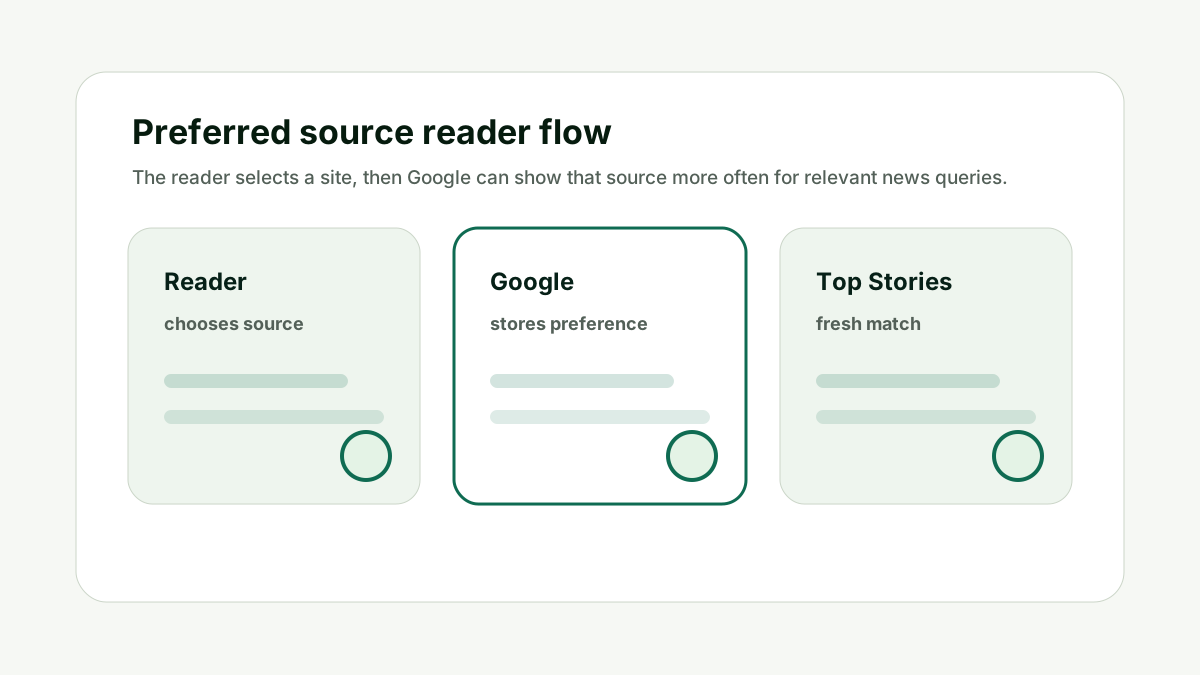
Subscriber Onboarding
For Where should I place a Google Preferred Source button?, subscriber onboarding matters because new subscribers are in a moment of active preference-setting. This is not just a button decision. It affects how much friction the reader feels, how clearly the campaign can be explained, and how honestly your team can report the result.
After a reader joins, signs in, or confirms a subscription, a Preferred Source CTA can sit next to app, newsletter, or social-follow prompts. This makes it part of audience setup instead of an unrelated advertisement.
Do not make it look mandatory for account access or payment completion. Preferred Sources work best when the ask is specific, the page has already earned trust, and the reader can understand the action before leaving your site.
The practical test is simple: if a loyal reader saw this CTA out of context, would they know what they are adding, why it benefits them, and why your publication deserves that preference? If the answer is no, tighten the page, the copy, or the placement before scaling the campaign.
Subscriber Onboarding is one of the practical decisions that makes a Preferred Source campaign easier to trust and measure.
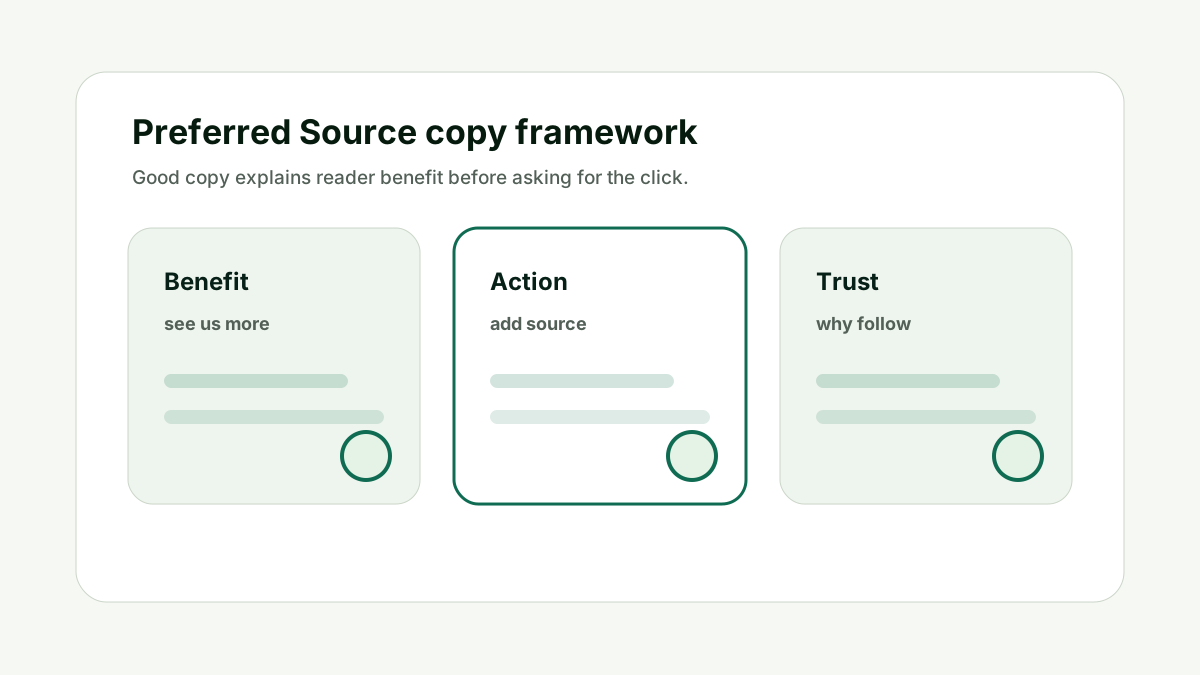
Topical Hubs
For Where should I place a Google Preferred Source button?, topical hubs matters because category and beat pages are useful when readers follow a recurring topic like local politics, sports, markets, or product reviews. This is not just a button decision. It affects how much friction the reader feels, how clearly the campaign can be explained, and how honestly your team can report the result.
A small CTA on a hub page can explain that readers who follow this beat can add the publication in Google. This is especially useful for sites with multiple strong verticals.
Do not make one generic CTA do all the work if different beats have different reader motivations. Preferred Sources work best when the ask is specific, the page has already earned trust, and the reader can understand the action before leaving your site.
The practical test is simple: if a loyal reader saw this CTA out of context, would they know what they are adding, why it benefits them, and why your publication deserves that preference? If the answer is no, tighten the page, the copy, or the placement before scaling the campaign.
Topical Hubs is one of the practical decisions that makes a Preferred Source campaign easier to trust and measure.
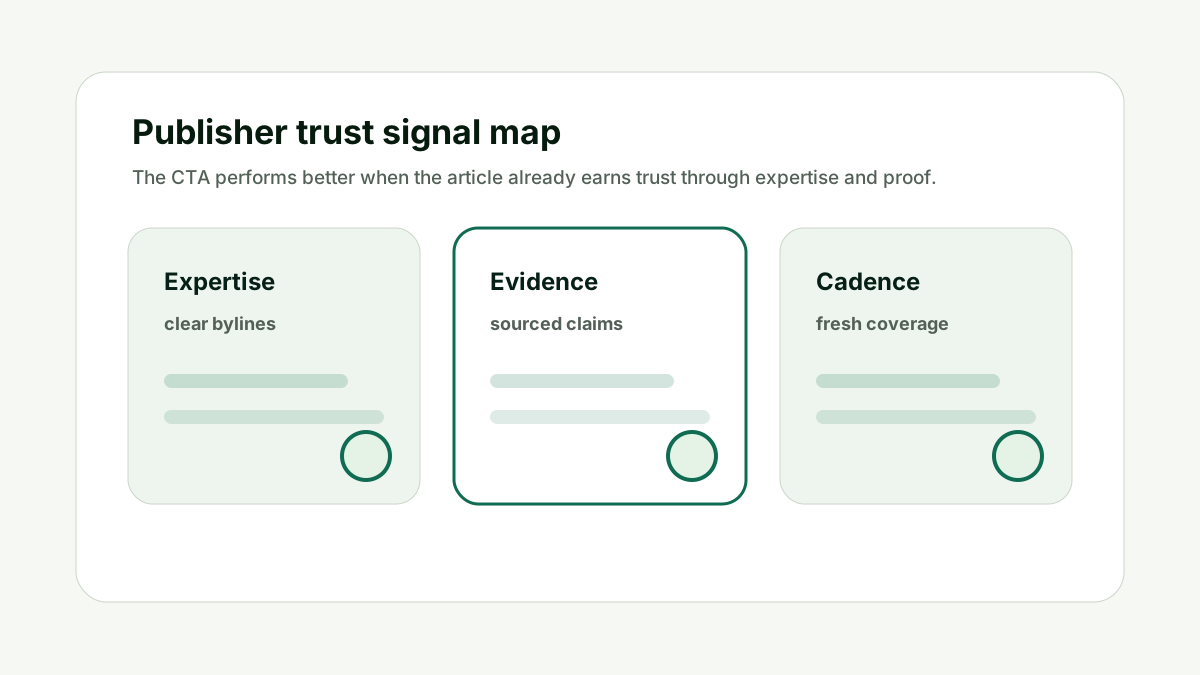
Social Posts
For Where should I place a Google Preferred Source button?, social posts matters because social followers are often loyal enough to take a simple preference action, especially after strong coverage. This is not just a button decision. It affects how much friction the reader feels, how clearly the campaign can be explained, and how honestly your team can report the result.
Use the deeplink in occasional posts after major stories or explainers. The copy should be direct and low-pressure. Social is a reminder channel, not the only campaign surface.
Do not repeat the ask so often that followers tune it out. Preferred Sources work best when the ask is specific, the page has already earned trust, and the reader can understand the action before leaving your site.
The practical test is simple: if a loyal reader saw this CTA out of context, would they know what they are adding, why it benefits them, and why your publication deserves that preference? If the answer is no, tighten the page, the copy, or the placement before scaling the campaign.
Social Posts is one of the practical decisions that makes a Preferred Source campaign easier to trust and measure.
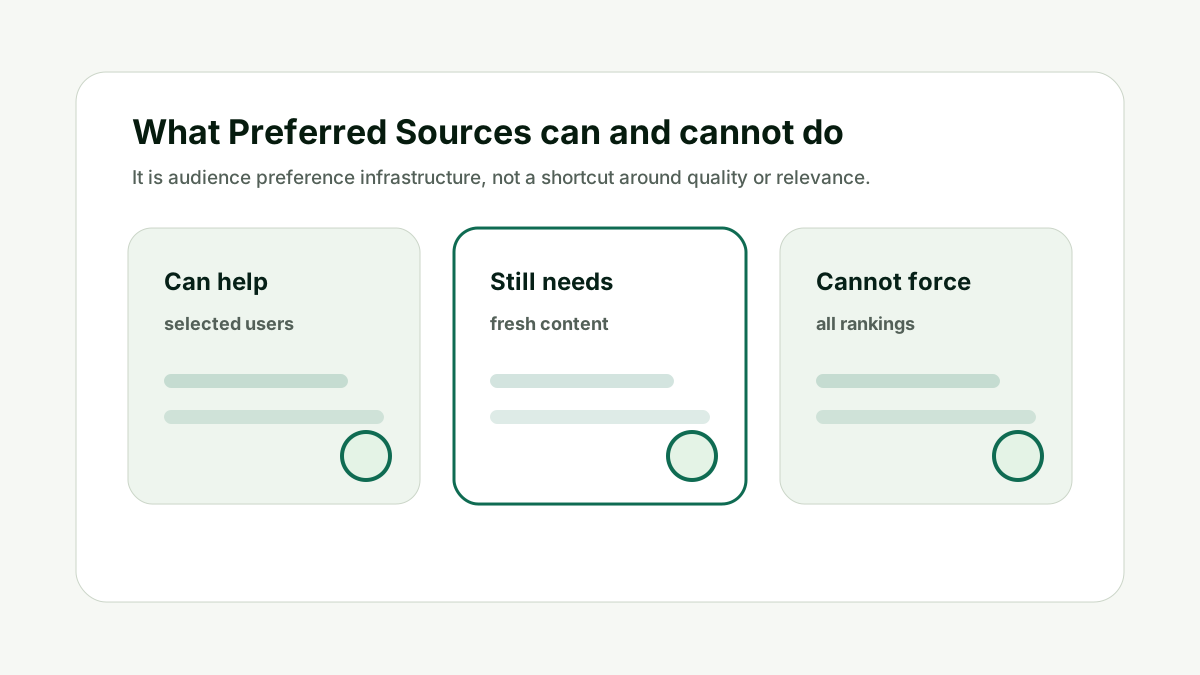
Measurement-Friendly Layout
For Where should I place a Google Preferred Source button?, measurement-friendly layout matters because the best placement is not just visible. It is also measurable. This is not just a button decision. It affects how much friction the reader feels, how clearly the campaign can be explained, and how honestly your team can report the result.
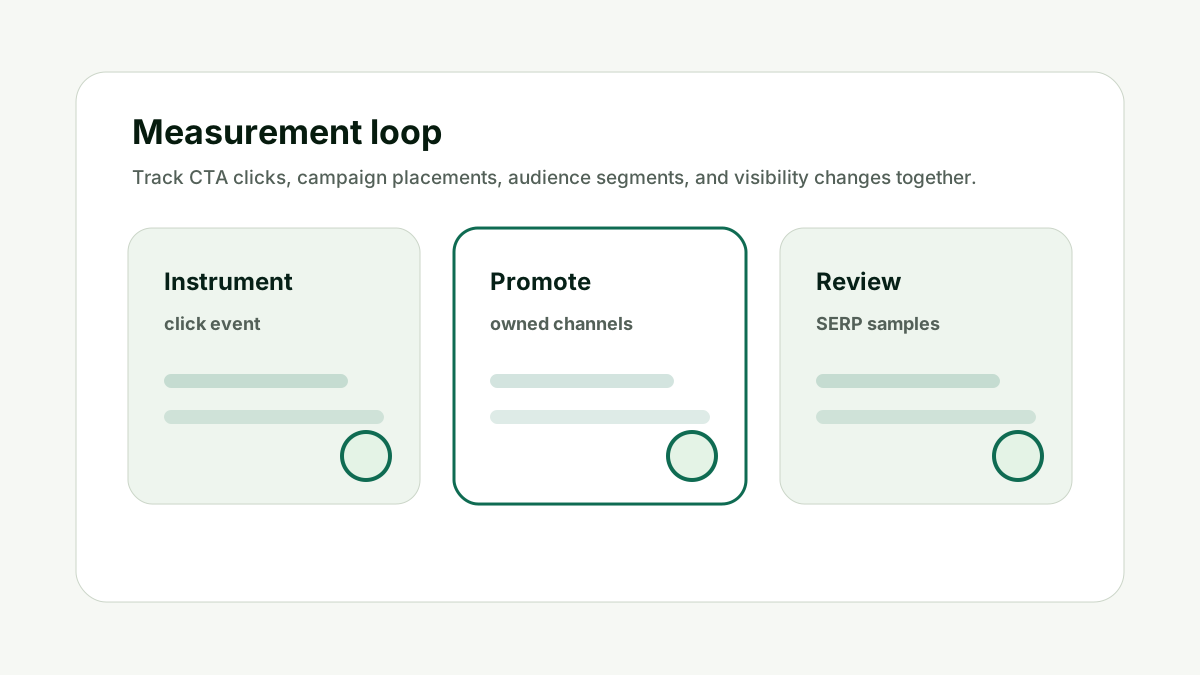
Use event tracking, placement labels, and campaign parameters on the page that hosts the CTA where appropriate. Compare article-end clicks with newsletter clicks and subscriber-flow clicks before scaling.
Do not deploy five placements at once if you need to learn which one works. Preferred Sources work best when the ask is specific, the page has already earned trust, and the reader can understand the action before leaving your site.
The practical test is simple: if a loyal reader saw this CTA out of context, would they know what they are adding, why it benefits them, and why your publication deserves that preference? If the answer is no, tighten the page, the copy, or the placement before scaling the campaign.
Measurement-Friendly Layout is one of the practical decisions that makes a Preferred Source campaign easier to trust and measure.
How This Fits the Wider SEO and AI Search Workflow
The important thing with Where should I place a Google Preferred Source button? is to treat Preferred Sources as audience infrastructure, not a shortcut around search quality. The real job is matching Preferred Source CTAs to moments of reader trust, while keeping classic SEO, article quality, and AI visibility work in their own lanes.
That order matters because a Preferred Source CTA can create reader intent only after the publication gives readers a reason to care. If the article is thin, stale, anonymous, or technically messy, the button is doing work the content should have done first.
I would use the generator as a production tool, not as the strategy itself. It helps create the deeplink, button, instructions, and copy variants. The strategic work is choosing the audience, the pages, the channel, and the reporting language.
This is also where internal links should stay natural. A guide about source preference does not need ten unrelated links. It needs the next useful resource: the generator when the reader needs an asset, citation readiness when the page needs more proof, and LLMentioned when the question moves from Google preference into broader AI visibility.
Create one button style and one text-link variant, then test them in article endings and newsletter placements before sitewide rollout. After the CTA is live, review both the campaign data and the underlying content. A strong campaign asks readers to prefer a source they already trust. A weak campaign asks readers to compensate for unclear publishing.
The most durable outcome is not a one-time spike in clicks. It is a repeatable reader-preference system that supports fresh coverage, cleaner reporting, and a stronger relationship between the publication and the audience.
A Simple Worked Example
A sports publisher wants readers to prefer its football coverage in Google. The team first adds a compact button at the end of football match reports and a text link in the football newsletter.
Both placements make sense because the reader is already engaging with that beat. The team does not launch a full-screen popup, because that would turn a preference prompt into an interruption.
After two weeks, article endings drive more total clicks, while newsletter footers drive a higher click rate. The publisher keeps both, but reserves the bigger visual button for article endings and uses a quieter link in newsletters.
That is a good placement decision because it follows reader context rather than copying the same CTA everywhere.
Practical action checklist
- Start at the end of valuable articles, not before the reader gets value.
- Add a compact CTA to newsletters for loyal readers.
- Use onboarding moments carefully and never imply selection is required.
- Tailor topical-hub copy to the beat the reader follows.
- Track placement performance before scaling sitewide.
What I Would Do Next
Pick one article-ending placement and one owned-channel placement.
Set event names that identify exactly where the click happened.
Review results before adding the button to more templates.
Conclusion
Where should I place a Google Preferred Source button? is a useful question because it forces the publisher to separate reader preference, Google Search presentation, and broader SEO strategy.
The practical answer is to make the action easy, truthful, and measurable. Give readers a direct path, explain why the source is worth following, and report clicks separately from rankings.
That gives your team a cleaner campaign than a generic button with vague promises.
FAQ
Should the button be above the fold?
Usually no. It works best after the reader understands the value of the publication.
Can I put it in a popup?
You can, but it is usually a worse experience. A contextual CTA is safer and more trustworthy.
Should every vertical use the same copy?
Not always. A sports reader, finance reader, and local-news reader may need different benefit language.
How many placements should I test first?
Start with one or two. Too many placements make measurement harder.

Adam O'neil
1stpage Editorial Team
Our 1stpage editorial team combines hands-on SEO agency experience with evidence-backed search performance guidance. These posts are built from real search wins, audit-grade insight, and conversion-tested tactics designed to help agencies, founders, and search teams earn more traffic and trust.