Short answer
You get readers to add your site as a Google Preferred Source by creating the correct Google source-preferences link, placing the CTA where readers already trust your coverage, explaining the benefit plainly, and measuring clicks separately from rankings. The goal is not to trick Google. The goal is to help loyal readers choose your publication inside Google Search.
Google's own publisher guidance frames this as a way to help readers select a site they want to see more often in eligible Search surfaces. That is useful, but it still depends on user choice, relevant content, and the eligible Google experience.
For the platform details, use Google's Search Central preferred sources guide and Google's Preferred Sources announcement as the source of truth.
Reader question
"What is the fastest practical setup?"
Use the Google Preferred Source Generator to create the deeplink, CTA copy, and embed HTML, then place that CTA in a high-trust spot like the end of news articles, newsletter landing pages, and subscriber onboarding.
Table of Contents
I am going to answer this as a publisher workflow, not as a magic search lever.
The useful question is not only whether a Preferred Source button exists. The better question is whether the button appears at a moment when the reader already trusts the source and understands the benefit.
Here is the framework I would use for a publisher wants loyal readers to see more of its coverage in Google Search without turning the ask into a spammy ranking claim.
Check Source Eligibility
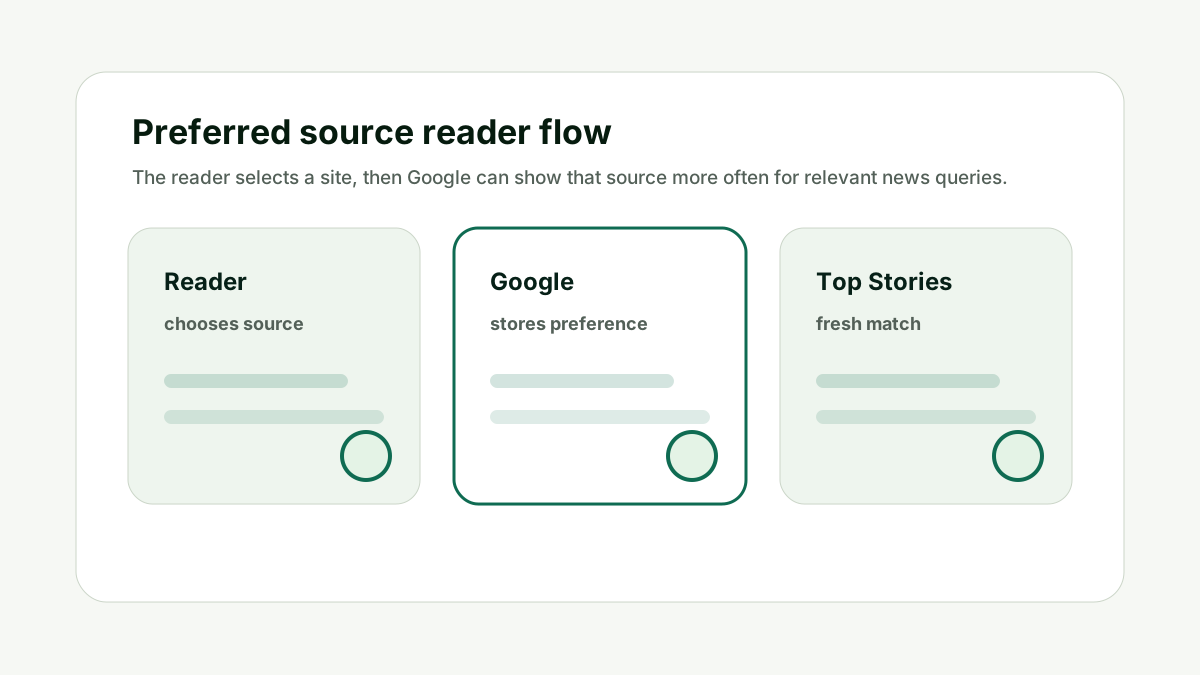
For How do I get readers to add my site as a Google Preferred Source?, check source eligibility matters because Google says domain-level and subdomain-level sites can be eligible in the source preferences tool, while subdirectories are not. That means a publisher should test the root domain or subdomain before building a large campaign around the link. This is not just a button decision. It affects how much friction the reader feels, how clearly the campaign can be explained, and how honestly your team can report the result.
Start by checking the exact site you want readers to select. If your editorial site lives on a subdomain, test that subdomain. If it lives in a subfolder, do not assume that folder can become its own selectable source.
Do not launch a button that points readers to the wrong version of the site. A confusing source name or missing domain creates friction before the reader can act. Preferred Sources work best when the ask is specific, the page has already earned trust, and the reader can understand the action before leaving your site.
The practical test is simple: if a loyal reader saw this CTA out of context, would they know what they are adding, why it benefits them, and why your publication deserves that preference? If the answer is no, tighten the page, the copy, or the placement before scaling the campaign.
Check Source Eligibility is one of the practical decisions that makes a Preferred Source campaign easier to trust and measure.
Build the Deeplink
For How do I get readers to add my site as a Google Preferred Source?, build the deeplink matters because the deeplink is the practical asset that makes the campaign usable across article pages, newsletters, social posts, and subscriber flows. This is not just a button decision. It affects how much friction the reader feels, how clearly the campaign can be explained, and how honestly your team can report the result.
Google documents the source-preferences URL format as a query parameter containing the site URL. The safest campaign workflow is to create one clean link, test it while signed in to Google, then reuse it consistently.
Do not make readers search for your brand manually if a direct link can take them to the selection tool faster. Preferred Sources work best when the ask is specific, the page has already earned trust, and the reader can understand the action before leaving your site.
The practical test is simple: if a loyal reader saw this CTA out of context, would they know what they are adding, why it benefits them, and why your publication deserves that preference? If the answer is no, tighten the page, the copy, or the placement before scaling the campaign.
Build the Deeplink is one of the practical decisions that makes a Preferred Source campaign easier to trust and measure.
Place the CTA After Trust
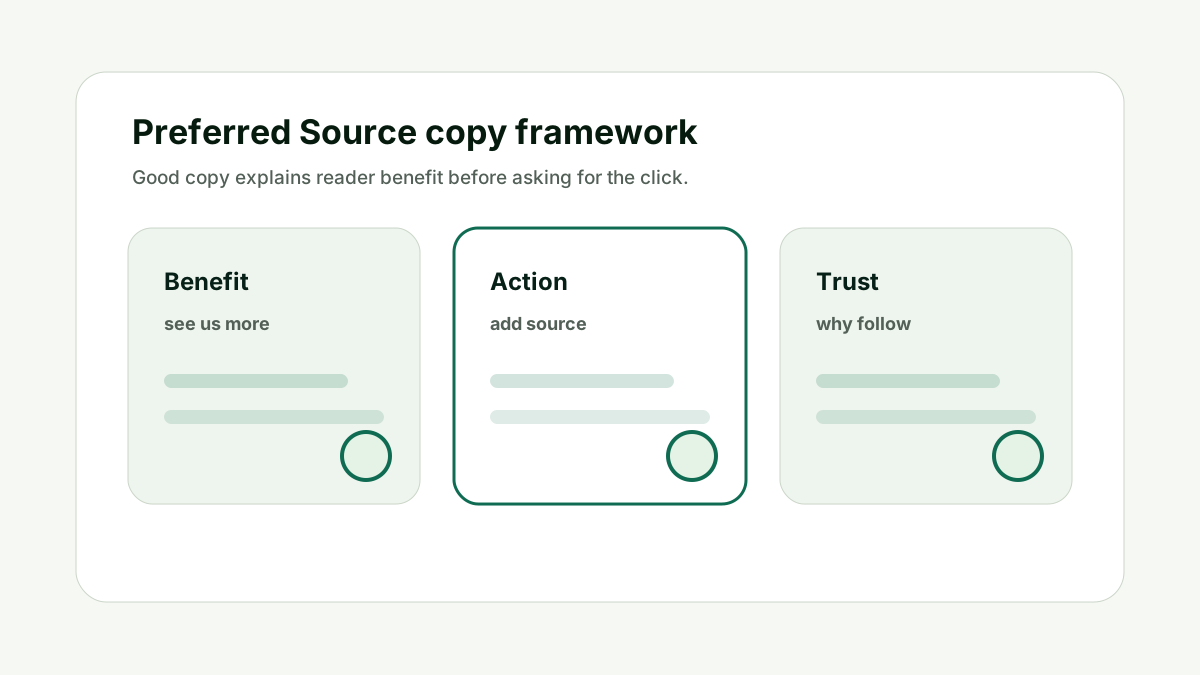
For How do I get readers to add my site as a Google Preferred Source?, place the cta after trust matters because readers are more likely to act after they have received useful coverage, not before they understand why the publication matters. This is not just a button decision. It affects how much friction the reader feels, how clearly the campaign can be explained, and how honestly your team can report the result.
Put the CTA near moments of trust: after a strong article, inside a newsletter footer, on a subscriber thank-you page, or in a sitewide account area for logged-in readers. Treat it like a reader loyalty prompt, not a banner ad.
Do not place the CTA in a way that blocks content or looks like a fake Google endorsement. Preferred Sources work best when the ask is specific, the page has already earned trust, and the reader can understand the action before leaving your site.
The practical test is simple: if a loyal reader saw this CTA out of context, would they know what they are adding, why it benefits them, and why your publication deserves that preference? If the answer is no, tighten the page, the copy, or the placement before scaling the campaign.
Place the CTA After Trust is one of the practical decisions that makes a Preferred Source campaign easier to trust and measure.
Write Reader-First Copy
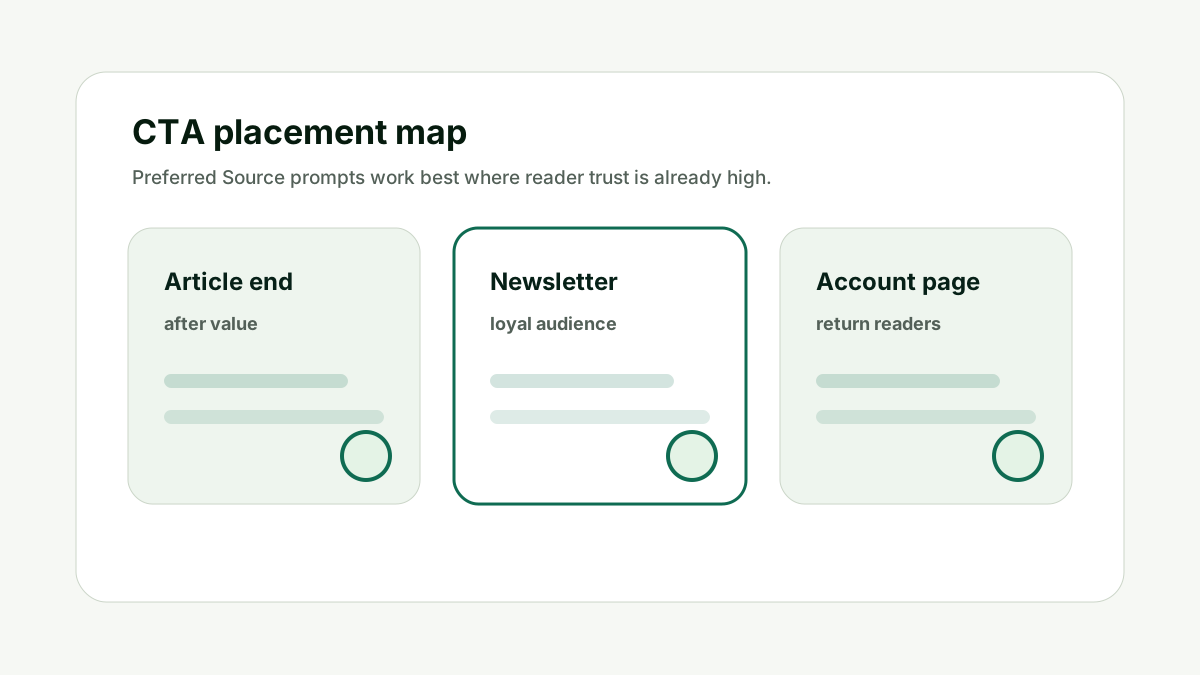
For How do I get readers to add my site as a Google Preferred Source?, write reader-first copy matters because the best copy explains the reader benefit in plain language before asking for the click. This is not just a button decision. It affects how much friction the reader feels, how clearly the campaign can be explained, and how honestly your team can report the result.
Say something like: "Want to see more of our coverage in Google? Add us as a Preferred Source." Then add one sentence about your editorial focus. This is clearer than promising better rankings or guaranteed placement.
Do not tell readers that adding you will make you rank number one. That is not what the feature does. Preferred Sources work best when the ask is specific, the page has already earned trust, and the reader can understand the action before leaving your site.
The practical test is simple: if a loyal reader saw this CTA out of context, would they know what they are adding, why it benefits them, and why your publication deserves that preference? If the answer is no, tighten the page, the copy, or the placement before scaling the campaign.
Write Reader-First Copy is one of the practical decisions that makes a Preferred Source campaign easier to trust and measure.
Strengthen the Page Itself
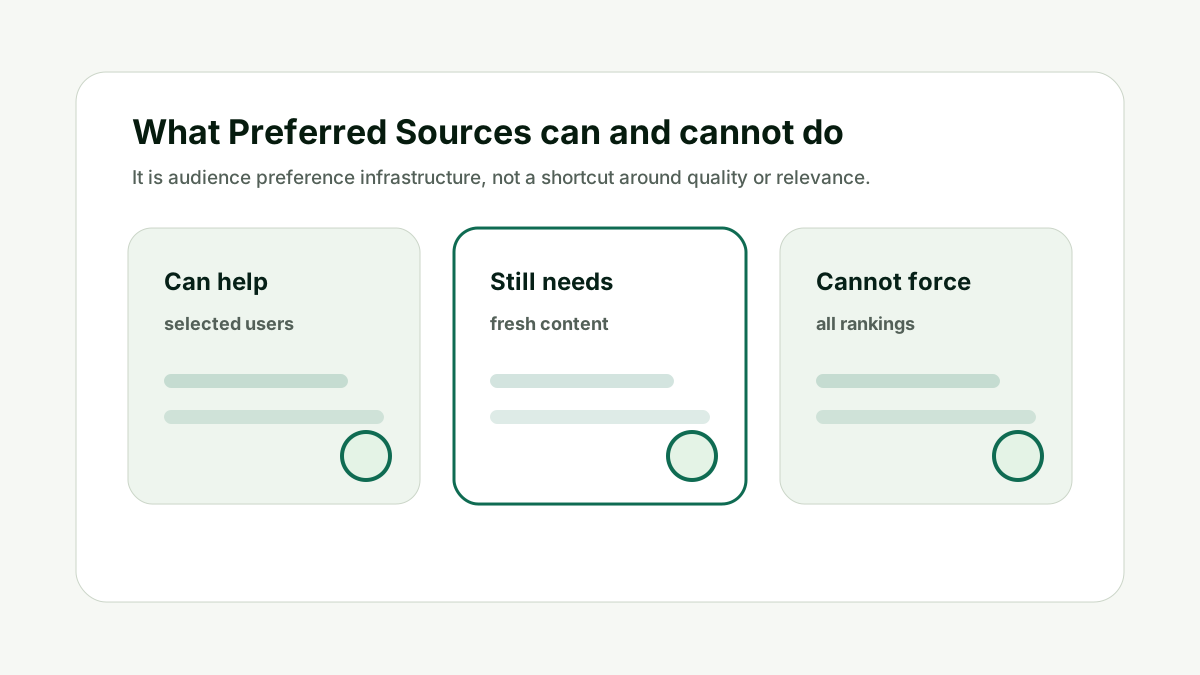
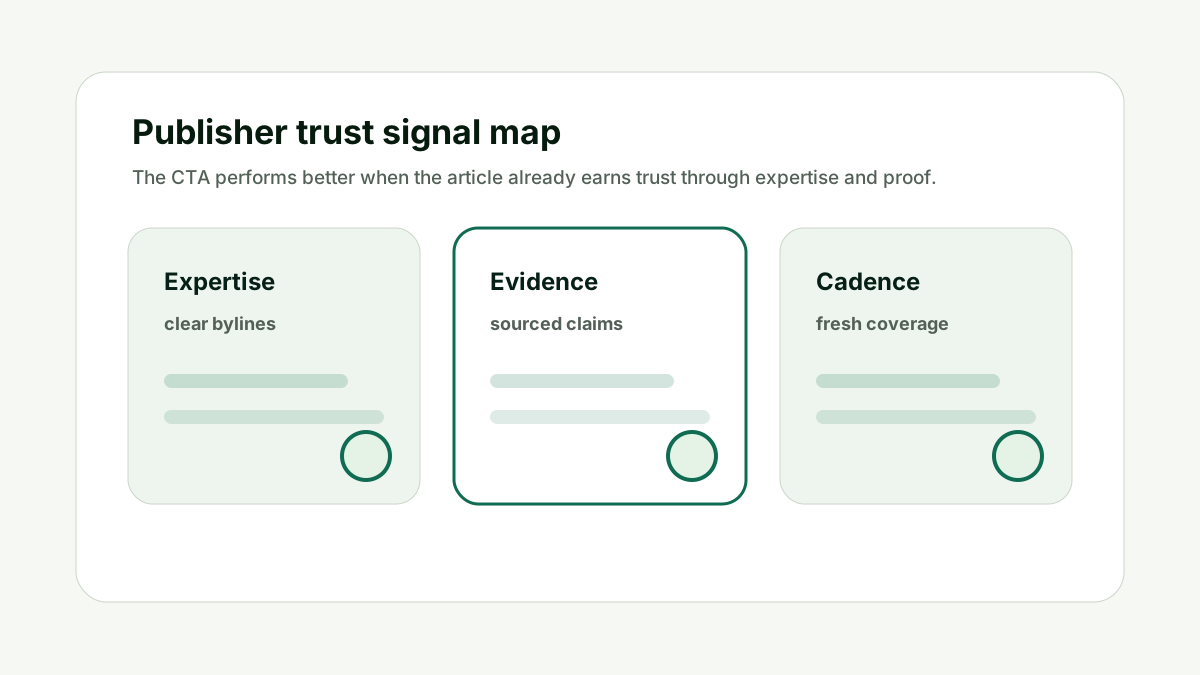
For How do I get readers to add my site as a Google Preferred Source?, strengthen the page itself matters because a Preferred Source CTA works better when the article already shows expertise, bylines, sourcing, and a reason to follow the publication. This is not just a button decision. It affects how much friction the reader feels, how clearly the campaign can be explained, and how honestly your team can report the result.
Before pushing the CTA broadly, review the pages where it appears. If the page is thin, anonymous, outdated, or unclear, use the AI Citation Readiness Checker to improve source clarity before asking for reader commitment.
Do not ask readers to prefer a source before the page has earned that preference. Preferred Sources work best when the ask is specific, the page has already earned trust, and the reader can understand the action before leaving your site.
The practical test is simple: if a loyal reader saw this CTA out of context, would they know what they are adding, why it benefits them, and why your publication deserves that preference? If the answer is no, tighten the page, the copy, or the placement before scaling the campaign.
Strengthen the Page Itself is one of the practical decisions that makes a Preferred Source campaign easier to trust and measure.
Measure the Campaign
For How do I get readers to add my site as a Google Preferred Source?, measure the campaign matters because the selection happens inside Google, so your site will not always see the final preference state. You can still measure the campaign responsibly. This is not just a button decision. It affects how much friction the reader feels, how clearly the campaign can be explained, and how honestly your team can report the result.
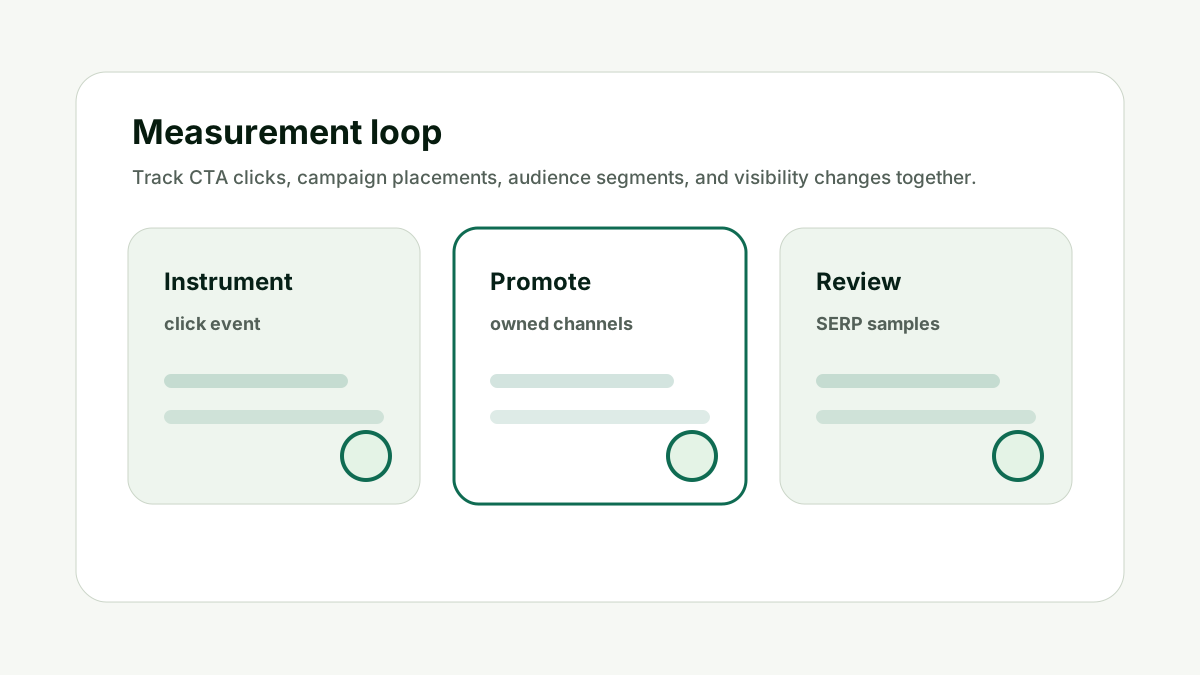
Track CTA clicks, placement locations, audience segments, newsletter sends, and changes in repeat search visibility. Use those signals as directional evidence, not as a claim that each click became a confirmed Google preference.
Do not report Preferred Source campaigns like direct SEO ranking experiments. Measure the reader action you can observe, then sample visibility separately. Preferred Sources work best when the ask is specific, the page has already earned trust, and the reader can understand the action before leaving your site.
The practical test is simple: if a loyal reader saw this CTA out of context, would they know what they are adding, why it benefits them, and why your publication deserves that preference? If the answer is no, tighten the page, the copy, or the placement before scaling the campaign.
Measure the Campaign is one of the practical decisions that makes a Preferred Source campaign easier to trust and measure.
How This Fits the Wider SEO and AI Search Workflow
The important thing with How do I get readers to add my site as a Google Preferred Source? is to treat Preferred Sources as audience infrastructure, not a shortcut around search quality. The real job is turning a reader preference feature into a clean audience-development workflow, while keeping classic SEO, article quality, and AI visibility work in their own lanes.
That order matters because a Preferred Source CTA can create reader intent only after the publication gives readers a reason to care. If the article is thin, stale, anonymous, or technically messy, the button is doing work the content should have done first.
I would use the generator as a production tool, not as the strategy itself. It helps create the deeplink, button, instructions, and copy variants. The strategic work is choosing the audience, the pages, the channel, and the reporting language.
This is also where internal links should stay natural. A guide about source preference does not need ten unrelated links. It needs the next useful resource: the generator when the reader needs an asset, citation readiness when the page needs more proof, and LLMentioned when the question moves from Google preference into broader AI visibility.
Create the deeplink first, then write a CTA that explains what the reader gets and where Google may show the preference. After the CTA is live, review both the campaign data and the underlying content. A strong campaign asks readers to prefer a source they already trust. A weak campaign asks readers to compensate for unclear publishing.
The most durable outcome is not a one-time spike in clicks. It is a repeatable reader-preference system that supports fresh coverage, cleaner reporting, and a stronger relationship between the publication and the audience.
A Simple Worked Example
Imagine a regional business publication wants more loyal readers to see its breaking local coverage in Google. The team creates a Preferred Source deeplink for the root domain, tests it, and adds one CTA at the end of high-performing news articles.
The copy is restrained: "Want to see more of our local business coverage in Google? Add us as a Preferred Source." That tells readers exactly what action they are taking without suggesting the publication can force every result.
The team also adds the CTA to the newsletter footer because subscribers already have a reason to trust the brand. It records click events by placement, then samples whether branded and topical news queries show more "from your sources" or preferred-source visibility for signed-in test accounts.
That is a clean campaign because it respects the user, uses the documented Google flow, and separates observable clicks from search visibility outcomes.
Practical action checklist
- Test the exact domain or subdomain in Google source preferences before campaign launch.
- Generate one clean Preferred Source deeplink and keep it consistent.
- Place the CTA after article value, in newsletters, or in subscriber flows.
- Use reader-benefit copy, not ranking-guarantee copy.
- Track CTA clicks and sample visibility separately.
What I Would Do Next
Create and test the source-preferences link for the exact publication domain.
Choose two high-trust placements before adding the CTA sitewide.
Use simple copy that explains the reader benefit and avoids ranking claims.
Conclusion
How do I get readers to add my site as a Google Preferred Source? is a useful question because it forces the publisher to separate reader preference, Google Search presentation, and broader SEO strategy.
The practical answer is to make the action easy, truthful, and measurable. Give readers a direct path, explain why the source is worth following, and report clicks separately from rankings.
That gives your team a cleaner campaign than a generic button with vague promises.
FAQ
Can any site ask readers to add it as a Preferred Source?
A site should first appear in Google source preferences. Google documents domain-level and subdomain-level eligibility, not subdirectory-level eligibility.
Should I put the button on every page?
Start with high-trust placements first. Article endings, newsletter pages, and subscriber flows are usually better than aggressive popups.
Can I track who actually selected my site in Google?
Usually you can track clicks to your CTA, but the final preference action happens in Google. Treat your site analytics as directional campaign measurement.
Is this only for news publishers?
The feature is tied to news-oriented surfaces like Top Stories, so it is most relevant to publishers and sites that produce timely coverage.

Adam O'neil
1stpage Editorial Team
Our 1stpage editorial team combines hands-on SEO agency experience with evidence-backed search performance guidance. These posts are built from real search wins, audit-grade insight, and conversion-tested tactics designed to help agencies, founders, and search teams earn more traffic and trust.