Short answer
Google Preferred Sources lets signed-in users select publications they want to see more often in eligible Google Search surfaces. For publishers, it matters because it gives loyal readers a direct preference action. It does not replace SEO, helpful content, editorial authority, or freshness.
Google's own publisher guidance frames this as a way to help readers select a site they want to see more often in eligible Search surfaces. That is useful, but it still depends on user choice, relevant content, and the eligible Google experience.
For the platform details, use Google's Search Central preferred sources guide and Google's Preferred Sources announcement as the source of truth.
Reader question
"Should my publication care about this?"
Care if you publish timely content and already have loyal readers. The Google Preferred Source Generator is useful when you want a compliant link, button, and CTA set without writing the flow from scratch.
Table of Contents
I am going to answer this as a publisher workflow, not as a magic search lever.
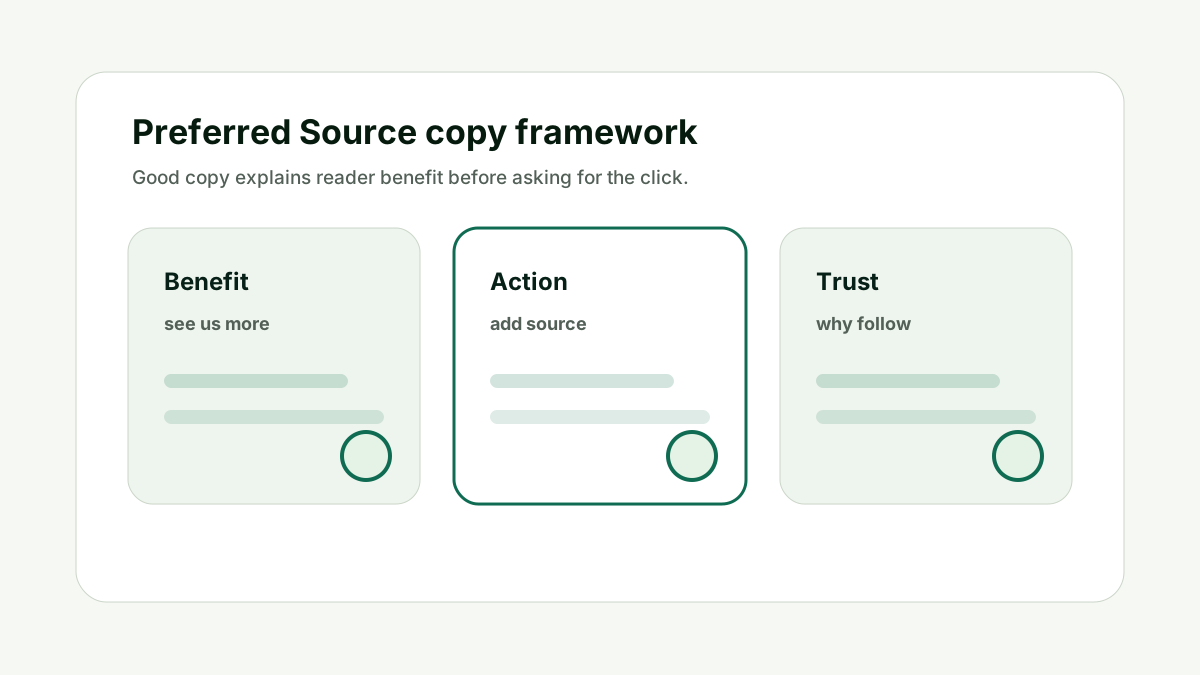
The useful question is not only whether a Preferred Source button exists. The better question is whether the button appears at a moment when the reader already trusts the source and understands the benefit.
Here is the framework I would use for a publisher hears about Preferred Sources and needs to decide whether it is a serious workflow or just another button.
What the Feature Does
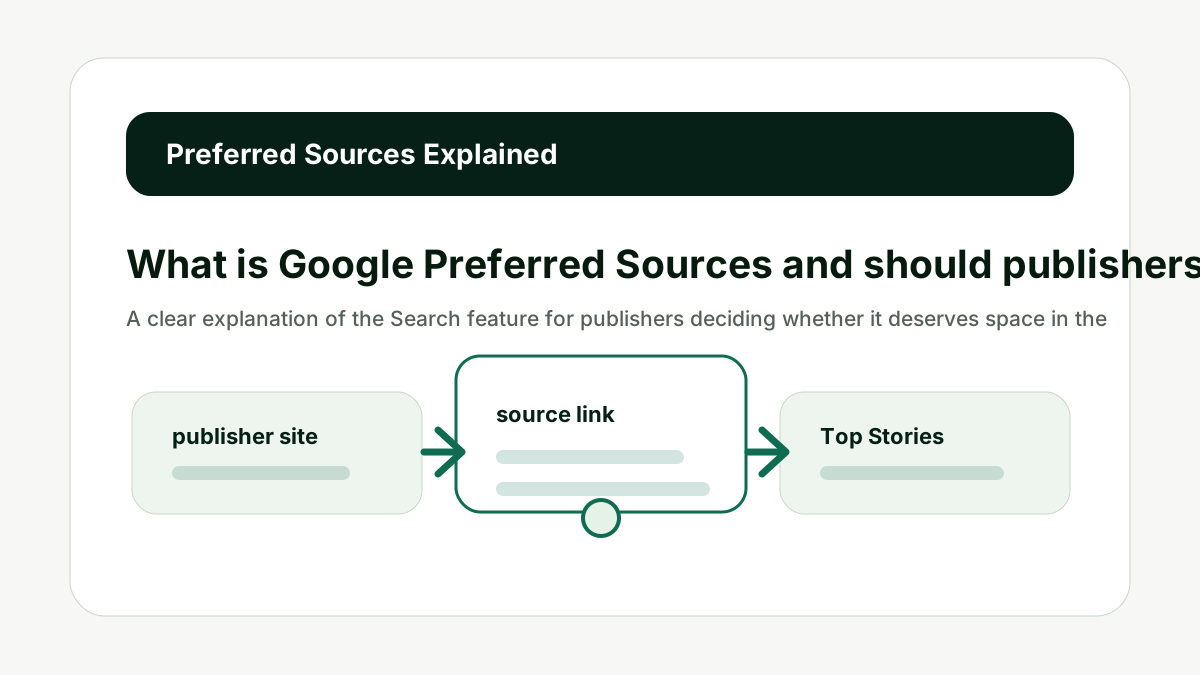
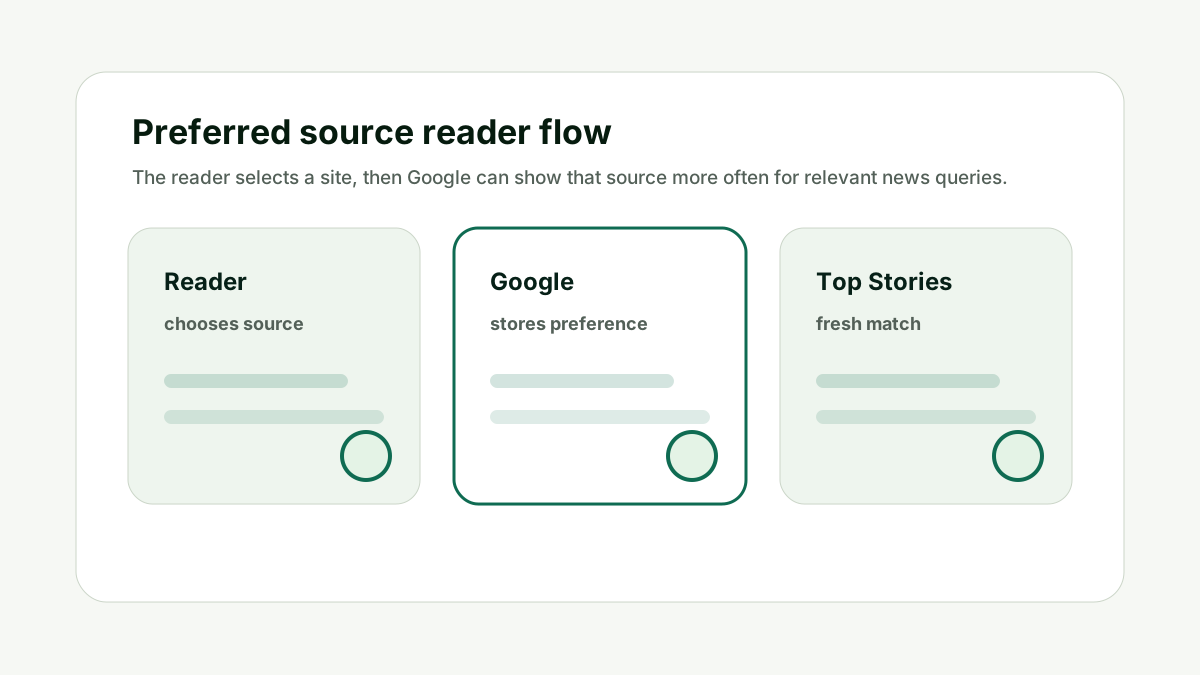
For What is Google Preferred Sources and should publishers care?, what the feature does matters because Google describes Preferred Sources as a way for users to customize Top Stories so selected sites appear more often when the source has fresh and relevant content. This is not just a button decision. It affects how much friction the reader feels, how clearly the campaign can be explained, and how honestly your team can report the result.
The key phrase is user selection. A publisher can invite readers to choose the site, but the reader controls the preference and Google still evaluates relevance and freshness.
Do not describe the feature as a publisher-side ranking switch. Preferred Sources work best when the ask is specific, the page has already earned trust, and the reader can understand the action before leaving your site.
The practical test is simple: if a loyal reader saw this CTA out of context, would they know what they are adding, why it benefits them, and why your publication deserves that preference? If the answer is no, tighten the page, the copy, or the placement before scaling the campaign.
What the Feature Does is one of the practical decisions that makes a Preferred Source campaign easier to trust and measure.
Where It Can Appear
For What is Google Preferred Sources and should publishers care?, where it can appear matters because Google documentation says preferred sources can show in Top Stories and can be highlighted with a preferred badge in AI Mode and AI Overviews where those features are available. This is not just a button decision. It affects how much friction the reader feels, how clearly the campaign can be explained, and how honestly your team can report the result.
This makes the workflow relevant to publishers thinking about both classic search discovery and AI-search presentation. It is still tied to eligible surfaces and selected users.
Do not assume the CTA changes every ordinary organic result for every searcher. Preferred Sources work best when the ask is specific, the page has already earned trust, and the reader can understand the action before leaving your site.
The practical test is simple: if a loyal reader saw this CTA out of context, would they know what they are adding, why it benefits them, and why your publication deserves that preference? If the answer is no, tighten the page, the copy, or the placement before scaling the campaign.
Where It Can Appear is one of the practical decisions that makes a Preferred Source campaign easier to trust and measure.
Who Controls the Preference
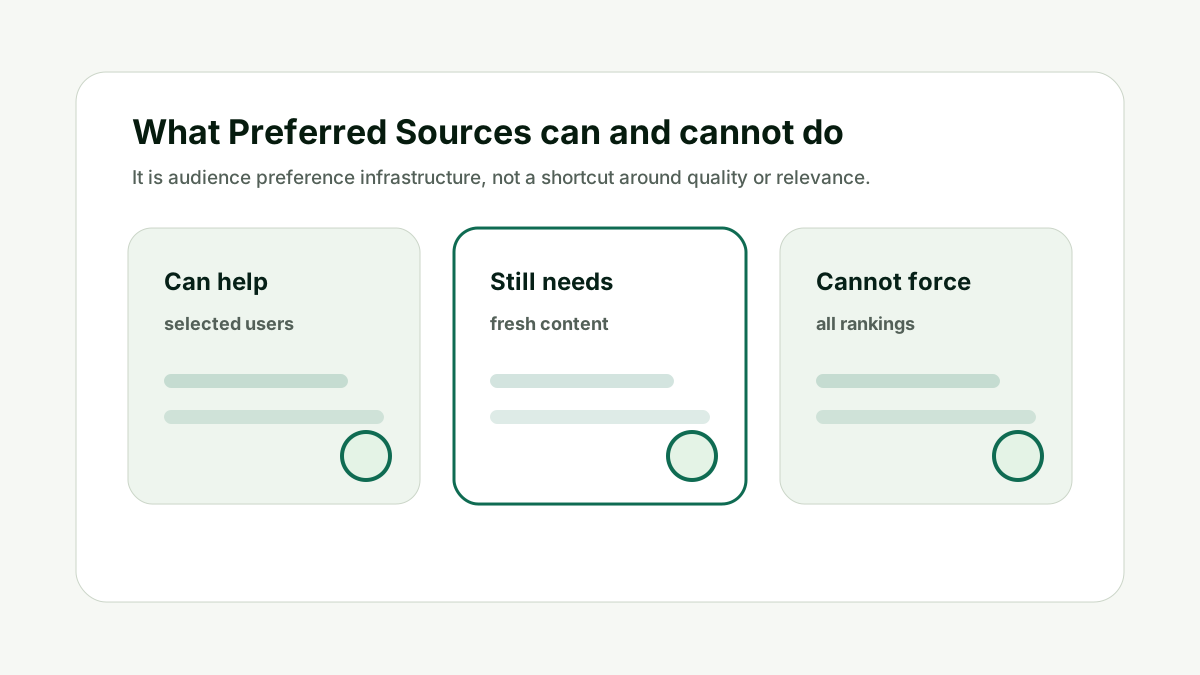
For What is Google Preferred Sources and should publishers care?, who controls the preference matters because the reader controls the preference, not the publisher. That changes the tone of the campaign. This is not just a button decision. It affects how much friction the reader feels, how clearly the campaign can be explained, and how honestly your team can report the result.
Your role is to make the action easy and explain why your coverage is worth following. The reader chooses whether to add you, keep you, or remove you later.
Do not hide the fact that this is a reader preference action inside Google. Preferred Sources work best when the ask is specific, the page has already earned trust, and the reader can understand the action before leaving your site.
The practical test is simple: if a loyal reader saw this CTA out of context, would they know what they are adding, why it benefits them, and why your publication deserves that preference? If the answer is no, tighten the page, the copy, or the placement before scaling the campaign.
Who Controls the Preference is one of the practical decisions that makes a Preferred Source campaign easier to trust and measure.
Who Benefits Most
For What is Google Preferred Sources and should publishers care?, who benefits most matters because the feature is strongest for publishers with repeat coverage in a niche, city, industry, sport, or beat where readers actively want the same source again. This is not just a button decision. It affects how much friction the reader feels, how clearly the campaign can be explained, and how honestly your team can report the result.
A national publisher, local news site, trade blog, sports site, shopping publication, or analyst outlet may all benefit if they publish fresh stories readers seek repeatedly.
Do not expect one evergreen service page with no news cadence to behave like a publisher feed. Preferred Sources work best when the ask is specific, the page has already earned trust, and the reader can understand the action before leaving your site.
The practical test is simple: if a loyal reader saw this CTA out of context, would they know what they are adding, why it benefits them, and why your publication deserves that preference? If the answer is no, tighten the page, the copy, or the placement before scaling the campaign.
Who Benefits Most is one of the practical decisions that makes a Preferred Source campaign easier to trust and measure.
What Publishers Can Control
For What is Google Preferred Sources and should publishers care?, what publishers can control matters because publishers can control the deeplink, placement, message, creative, and measurement plan. This is not just a button decision. It affects how much friction the reader feels, how clearly the campaign can be explained, and how honestly your team can report the result.
They cannot control whether Google shows a specific article for every query. So the operational work is owned-channel distribution, reader trust, article quality, and post-click analytics.
Do not turn the project into a technical SEO hack. It is closer to audience development. Preferred Sources work best when the ask is specific, the page has already earned trust, and the reader can understand the action before leaving your site.
The practical test is simple: if a loyal reader saw this CTA out of context, would they know what they are adding, why it benefits them, and why your publication deserves that preference? If the answer is no, tighten the page, the copy, or the placement before scaling the campaign.
What Publishers Can Control is one of the practical decisions that makes a Preferred Source campaign easier to trust and measure.
How It Fits AI Search
For What is Google Preferred Sources and should publishers care?, how it fits ai search matters because Google now notes preferred badges in AI Mode and AI Overviews for users who selected a site, so the workflow sits near AI visibility without being the same as LLM optimization. This is not just a button decision. It affects how much friction the reader feels, how clearly the campaign can be explained, and how honestly your team can report the result.
If AI answer visibility is the bigger question, pair this with the LLM Visibility Checker or LLMentioned rather than expecting Preferred Sources to solve every AI citation problem.
Do not blur Preferred Sources, AI citations, and rankings into one promise. Preferred Sources work best when the ask is specific, the page has already earned trust, and the reader can understand the action before leaving your site.
The practical test is simple: if a loyal reader saw this CTA out of context, would they know what they are adding, why it benefits them, and why your publication deserves that preference? If the answer is no, tighten the page, the copy, or the placement before scaling the campaign.
How It Fits AI Search is one of the practical decisions that makes a Preferred Source campaign easier to trust and measure.
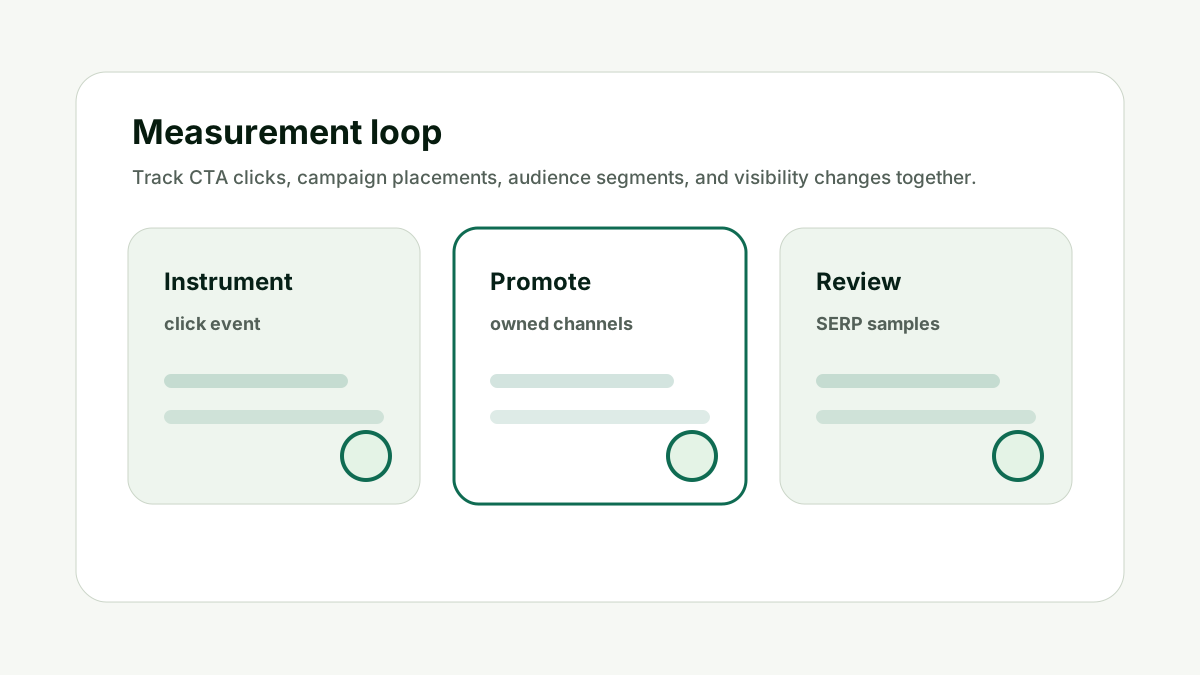
How This Fits the Wider SEO and AI Search Workflow
The important thing with What is Google Preferred Sources and should publishers care? is to treat Preferred Sources as audience infrastructure, not a shortcut around search quality. The real job is separating the user preference feature from broader SEO and AI search strategy, while keeping classic SEO, article quality, and AI visibility work in their own lanes.
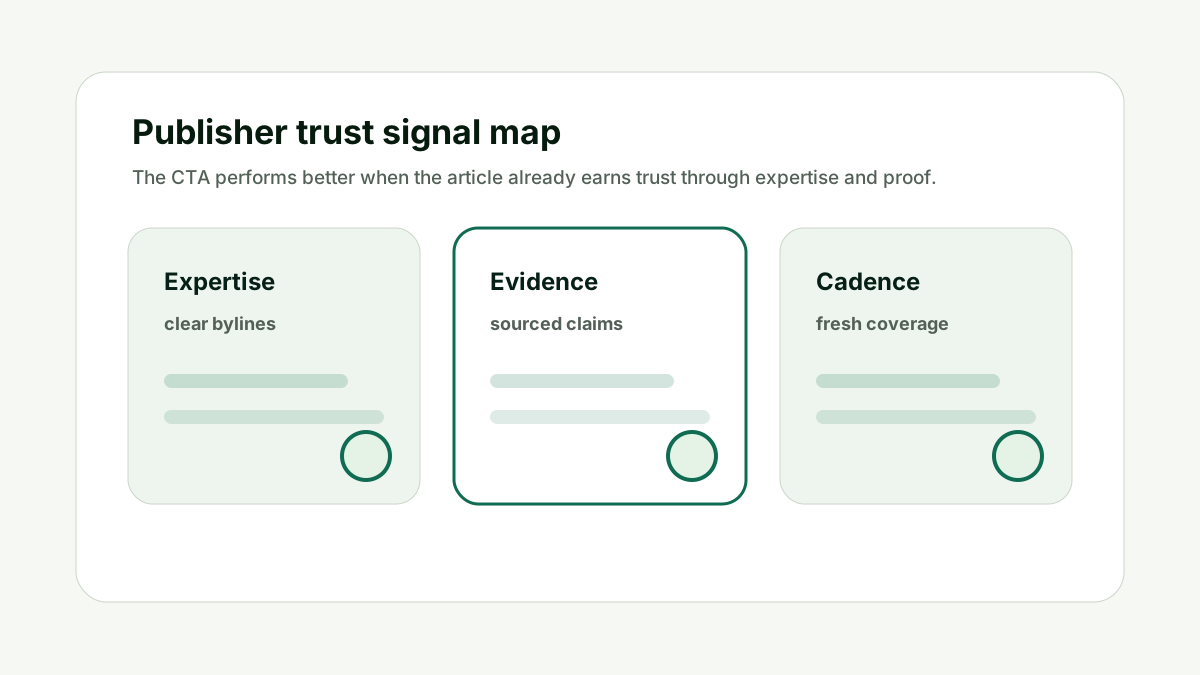
That order matters because a Preferred Source CTA can create reader intent only after the publication gives readers a reason to care. If the article is thin, stale, anonymous, or technically messy, the button is doing work the content should have done first.
I would use the generator as a production tool, not as the strategy itself. It helps create the deeplink, button, instructions, and copy variants. The strategic work is choosing the audience, the pages, the channel, and the reporting language.
This is also where internal links should stay natural. A guide about source preference does not need ten unrelated links. It needs the next useful resource: the generator when the reader needs an asset, citation readiness when the page needs more proof, and LLMentioned when the question moves from Google preference into broader AI visibility.
Use the generator only after you know which site readers should select and where the CTA belongs. After the CTA is live, review both the campaign data and the underlying content. A strong campaign asks readers to prefer a source they already trust. A weak campaign asks readers to compensate for unclear publishing.
The most durable outcome is not a one-time spike in clicks. It is a repeatable reader-preference system that supports fresh coverage, cleaner reporting, and a stronger relationship between the publication and the audience.
A Simple Worked Example
A publisher covering personal finance has loyal newsletter readers, but many of those readers still discover daily stories through Google. Preferred Sources gives the publisher a simple ask: if you already trust us, tell Google you want to see us more often.
The publisher should not frame that as "make us rank first." A better explanation is: "Add us as a Preferred Source so our fresh personal finance coverage is easier to find in eligible Google news results."
That positioning respects the reader and the platform. It also sets up better internal measurement because the team is tracking a loyalty action, not pretending it controls all rankings.
This is why publishers should care: not because the feature replaces SEO, but because it gives a visible preference action to readers who already trust the brand.
Practical action checklist
- Confirm the site publishes timely content that can appear in news-oriented surfaces.
- Make sure readers know why the publication is worth following.
- Use a direct source-preferences link where possible.
- Keep the CTA honest about what the feature can do.
- Pair it with article quality, source credibility, and audience retention work.
What I Would Do Next
Decide whether your site has a real repeat-reader use case.
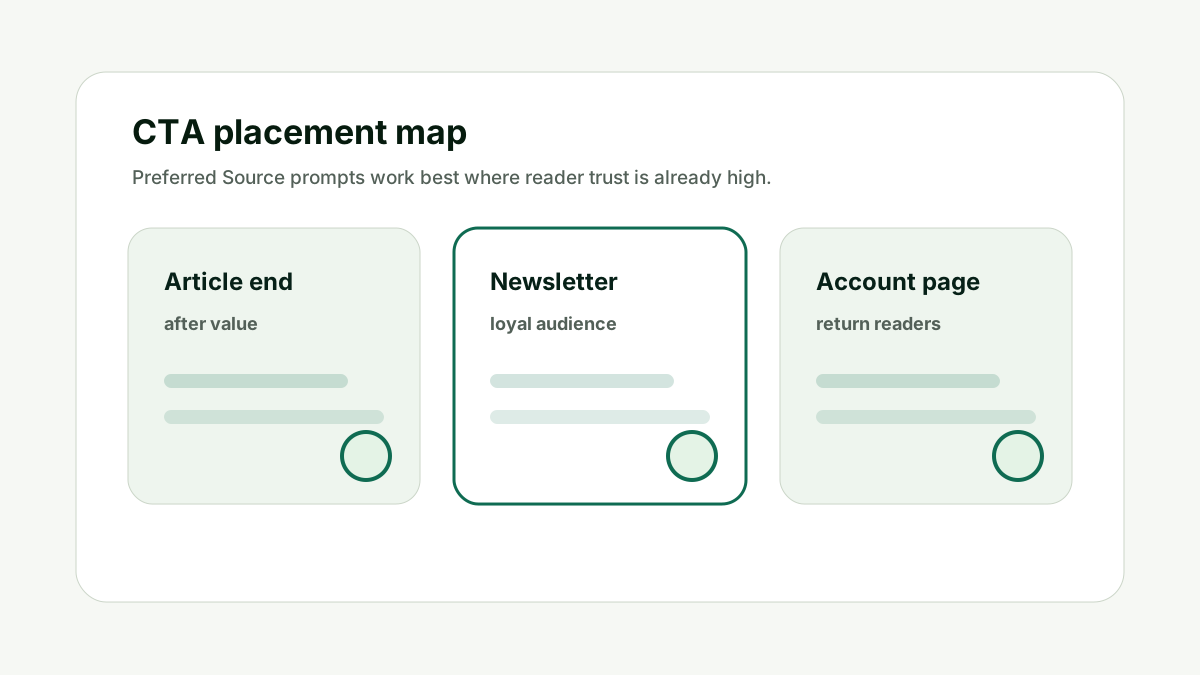
Map the CTA to the audience channels where trust is already strongest.
Use broader AI visibility tools only for answer inclusion and citation questions.
Conclusion
What is Google Preferred Sources and should publishers care? is a useful question because it forces the publisher to separate reader preference, Google Search presentation, and broader SEO strategy.
The practical answer is to make the action easy, truthful, and measurable. Give readers a direct path, explain why the source is worth following, and report clicks separately from rankings.
That gives your team a cleaner campaign than a generic button with vague promises.
FAQ
Is Google Preferred Sources a ranking factor?
It is better understood as a user preference feature for selected sources in eligible surfaces, not a broad publisher-controlled ranking factor.
Can selected sources still be replaced by other sites?
Yes. Google still considers relevance, freshness, and other systems. Users also still see content from other sources.
Does it work in AI Overviews?
Google documentation says preferred sources can be highlighted with a preferred badge in AI Mode and AI Overviews where those features are available.
Should every business add this CTA?
No. It is most useful for publishers or sites with timely editorial coverage and repeat readers.

Adam O'neil
1stpage Editorial Team
Our 1stpage editorial team combines hands-on SEO agency experience with evidence-backed search performance guidance. These posts are built from real search wins, audit-grade insight, and conversion-tested tactics designed to help agencies, founders, and search teams earn more traffic and trust.