Short answer
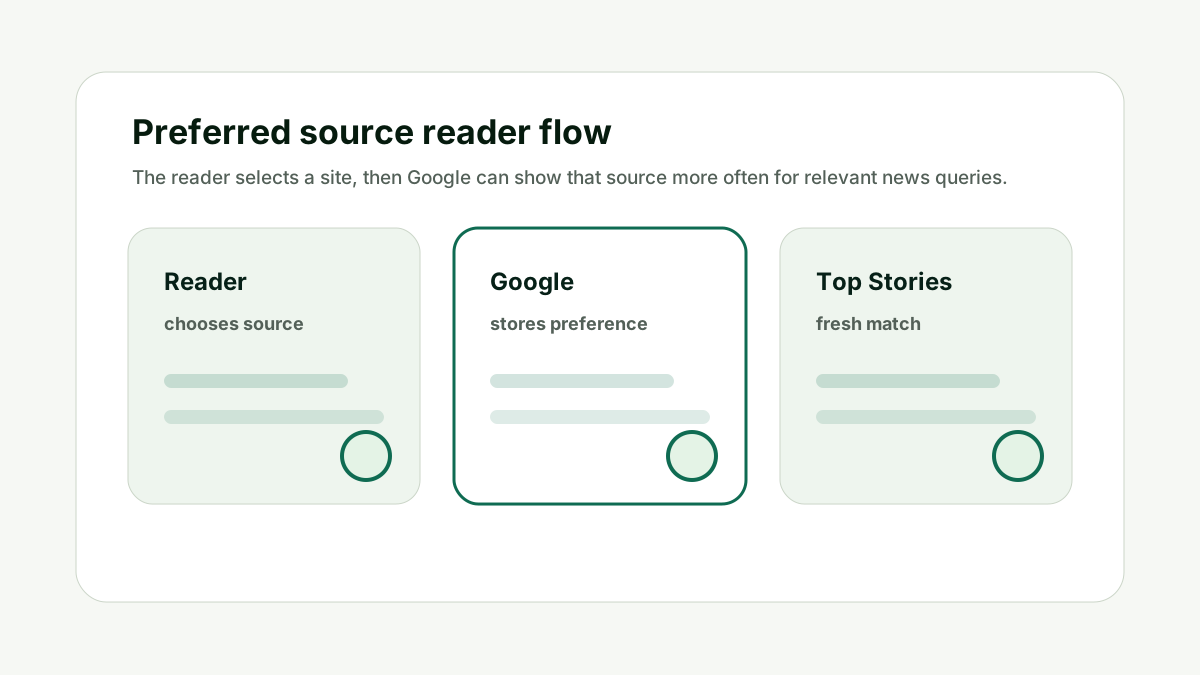
Google Preferred Source should not be sold as a direct SEO ranking boost. It can help selected users see more from a chosen source in eligible surfaces when fresh and relevant content exists. That is different from improving rankings for every user, every page, and every query.
Google's own publisher guidance frames this as a way to help readers select a site they want to see more often in eligible Search surfaces. That is useful, but it still depends on user choice, relevant content, and the eligible Google experience.
For the platform details, use Google's Search Central preferred sources guide and Google's Preferred Sources announcement as the source of truth.
Reader question
"Can I tell readers this will improve our rankings?"
No. Use the Google Preferred Source Generator to create safer wording that says readers can choose to see more of your coverage, not that they can force your site to rank.
Table of Contents
I am going to answer this as a publisher workflow, not as a magic search lever.
The useful question is not only whether a Preferred Source button exists. The better question is whether the button appears at a moment when the reader already trusts the source and understands the benefit.
Here is the framework I would use for a marketing team wants to promote a Preferred Source CTA but needs language that will not overstate the SEO impact.
Not a Ranking Switch
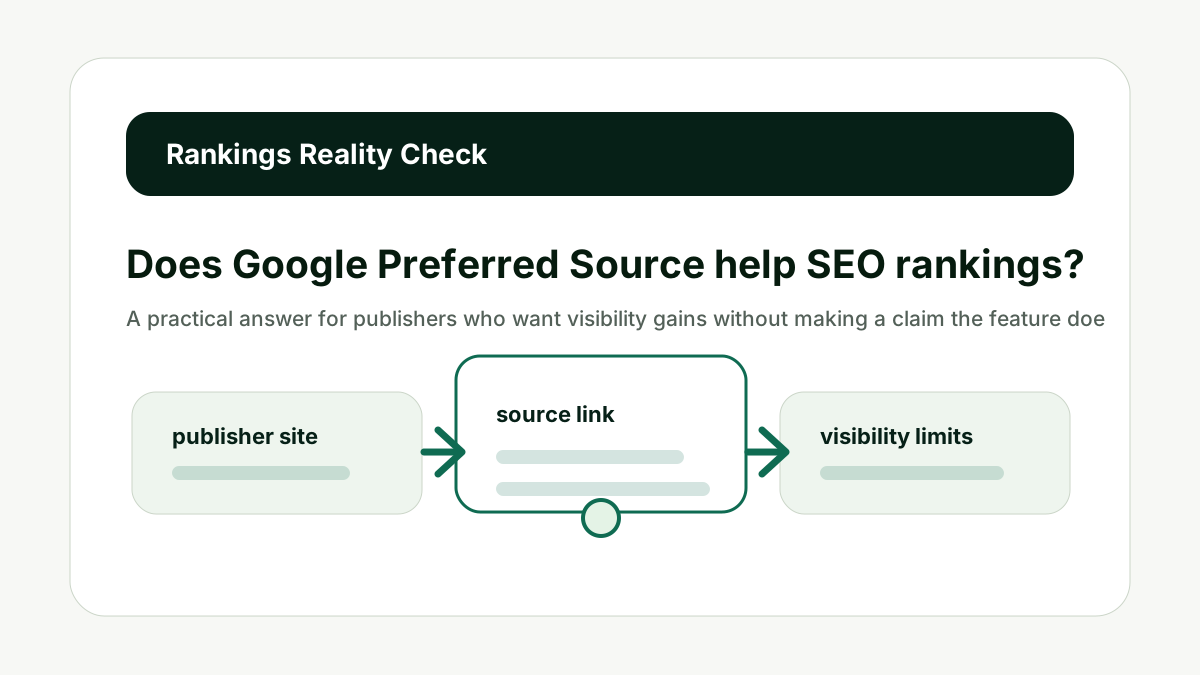
For Does Google Preferred Source help SEO rankings?, not a ranking switch matters because the feature depends on a user selecting a source and on Google finding fresh, relevant content for the query. This is not just a button decision. It affects how much friction the reader feels, how clearly the campaign can be explained, and how honestly your team can report the result.
That makes it materially different from a ranking factor you can optimize across the open web. It is closer to personalization and reader preference than classic SEO.
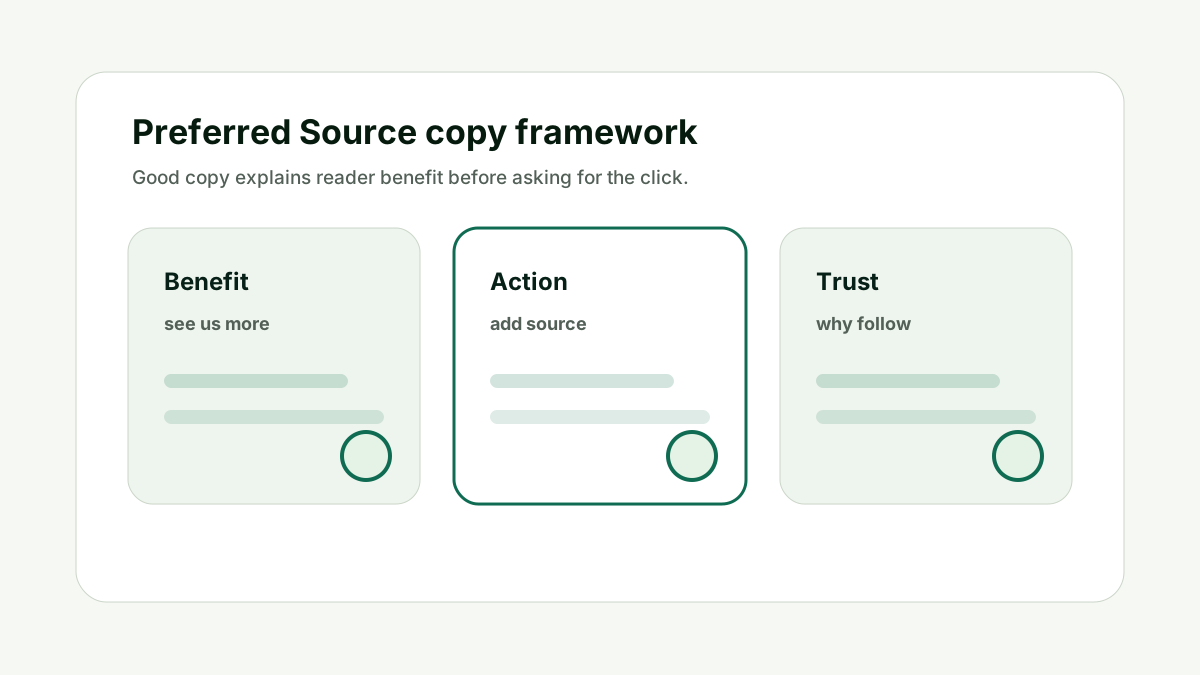
Do not write copy that says readers can make your site rank first. Preferred Sources work best when the ask is specific, the page has already earned trust, and the reader can understand the action before leaving your site.
The practical test is simple: if a loyal reader saw this CTA out of context, would they know what they are adding, why it benefits them, and why your publication deserves that preference? If the answer is no, tighten the page, the copy, or the placement before scaling the campaign.
Not a Ranking Switch is one of the practical decisions that makes a Preferred Source campaign easier to trust and measure.
Selected User Context
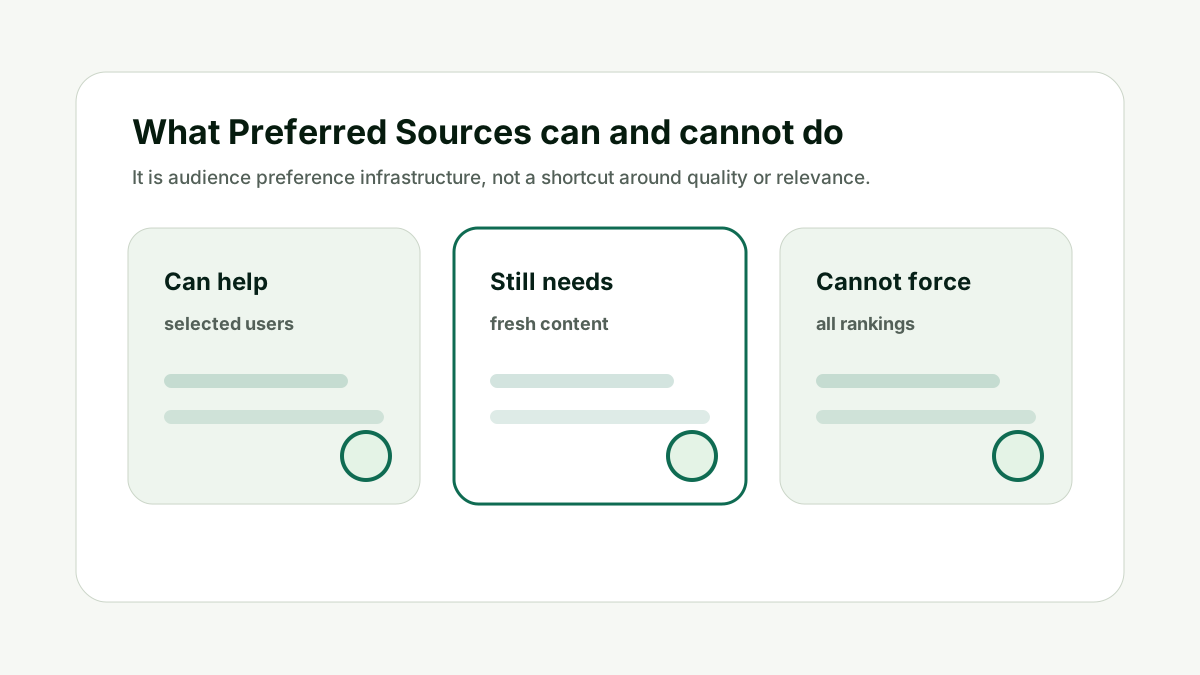
For Does Google Preferred Source help SEO rankings?, selected user context matters because the likely impact is tied to users who selected the source, not every person searching Google. This is not just a button decision. It affects how much friction the reader feels, how clearly the campaign can be explained, and how honestly your team can report the result.
When you analyze results, separate signed-in test scenarios from anonymous ranking checks. The same article may behave differently depending on whether the user has selected the site.
Do not blend selected-user visibility with normal rank tracking as if they were the same dataset. Preferred Sources work best when the ask is specific, the page has already earned trust, and the reader can understand the action before leaving your site.
The practical test is simple: if a loyal reader saw this CTA out of context, would they know what they are adding, why it benefits them, and why your publication deserves that preference? If the answer is no, tighten the page, the copy, or the placement before scaling the campaign.
Selected User Context is one of the practical decisions that makes a Preferred Source campaign easier to trust and measure.
Freshness Still Matters
For Does Google Preferred Source help SEO rankings?, freshness still matters matters because Google says preferred sources appear when those sources have published fresh and relevant content for the search. This is not just a button decision. It affects how much friction the reader feels, how clearly the campaign can be explained, and how honestly your team can report the result.
That means editorial cadence and topical relevance still matter. A selected source with no fresh story on a news query should not expect preferential visibility for unrelated old content.
Do not treat the CTA as a substitute for publishing timely, useful coverage. Preferred Sources work best when the ask is specific, the page has already earned trust, and the reader can understand the action before leaving your site.
The practical test is simple: if a loyal reader saw this CTA out of context, would they know what they are adding, why it benefits them, and why your publication deserves that preference? If the answer is no, tighten the page, the copy, or the placement before scaling the campaign.
Freshness Still Matters is one of the practical decisions that makes a Preferred Source campaign easier to trust and measure.
SEO Still Needed
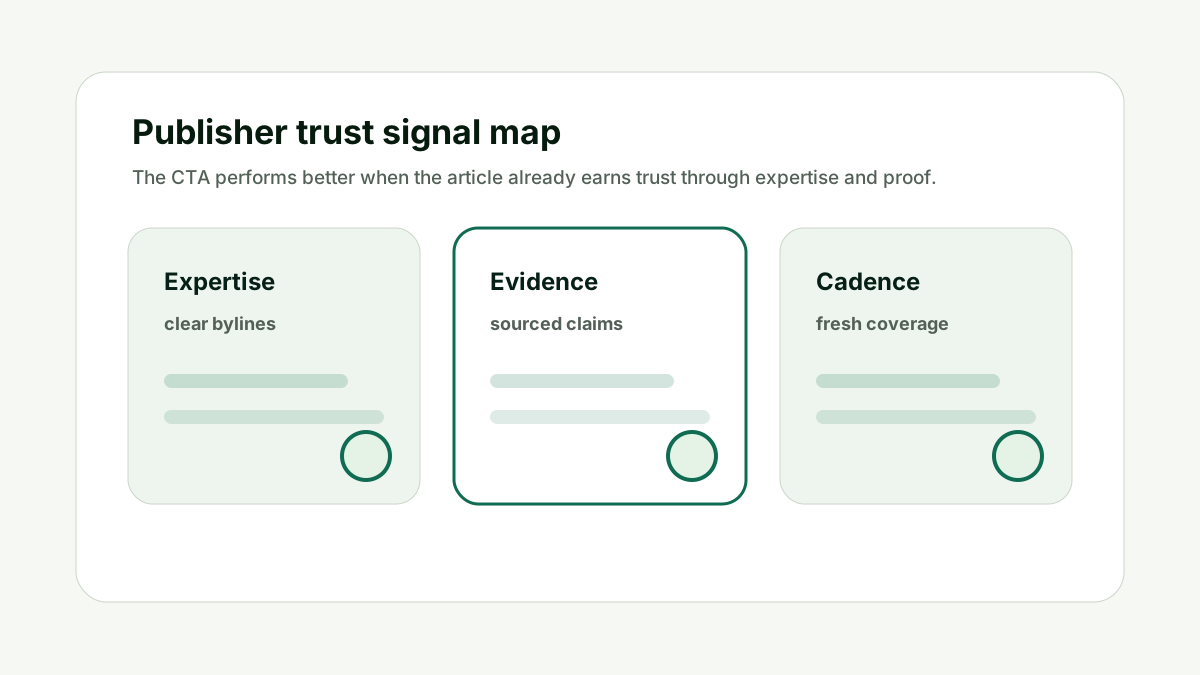
For Does Google Preferred Source help SEO rankings?, seo still needed matters because technical SEO, article quality, bylines, sourcing, page speed, internal links, and structured data still support whether a page can compete. This is not just a button decision. It affects how much friction the reader feels, how clearly the campaign can be explained, and how honestly your team can report the result.
If a publication has crawl issues or weak article structure, fix those before chasing reader preference prompts. The Indexability and Canonical Checker can help separate technical blockers from campaign performance.
Do not use Preferred Sources to cover up basic search hygiene problems. Preferred Sources work best when the ask is specific, the page has already earned trust, and the reader can understand the action before leaving your site.
The practical test is simple: if a loyal reader saw this CTA out of context, would they know what they are adding, why it benefits them, and why your publication deserves that preference? If the answer is no, tighten the page, the copy, or the placement before scaling the campaign.
SEO Still Needed is one of the practical decisions that makes a Preferred Source campaign easier to trust and measure.
AI Visibility Difference
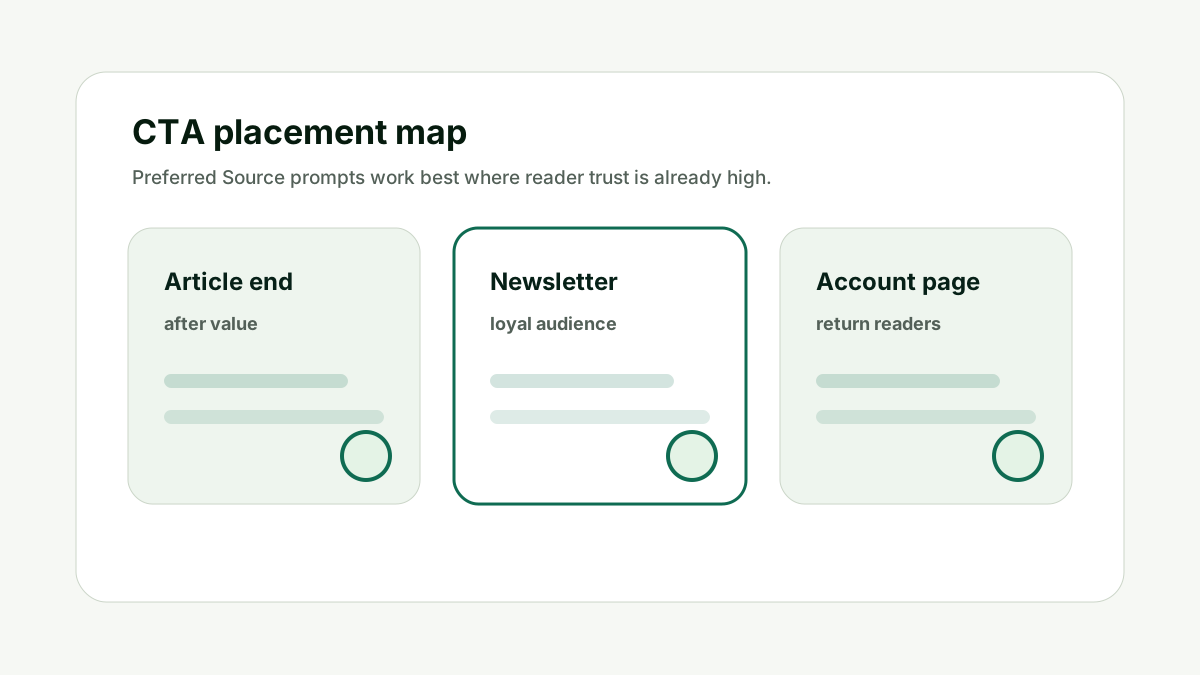
For Does Google Preferred Source help SEO rankings?, ai visibility difference matters because preferred badges in AI experiences are not the same as becoming the cited source in every AI answer. This is not just a button decision. It affects how much friction the reader feels, how clearly the campaign can be explained, and how honestly your team can report the result.
If the issue is that AI answer engines never mention or cite the brand, run an AI visibility or citation readiness workflow separately. Preferred Sources may complement that work, but it does not replace it.
Do not report a Preferred Source click as proof of AI answer visibility. Preferred Sources work best when the ask is specific, the page has already earned trust, and the reader can understand the action before leaving your site.
The practical test is simple: if a loyal reader saw this CTA out of context, would they know what they are adding, why it benefits them, and why your publication deserves that preference? If the answer is no, tighten the page, the copy, or the placement before scaling the campaign.
AI Visibility Difference is one of the practical decisions that makes a Preferred Source campaign easier to trust and measure.
Reporting Language
For Does Google Preferred Source help SEO rankings?, reporting language matters because stakeholders need a clean distinction between what you can observe and what you infer. This is not just a button decision. It affects how much friction the reader feels, how clearly the campaign can be explained, and how honestly your team can report the result.
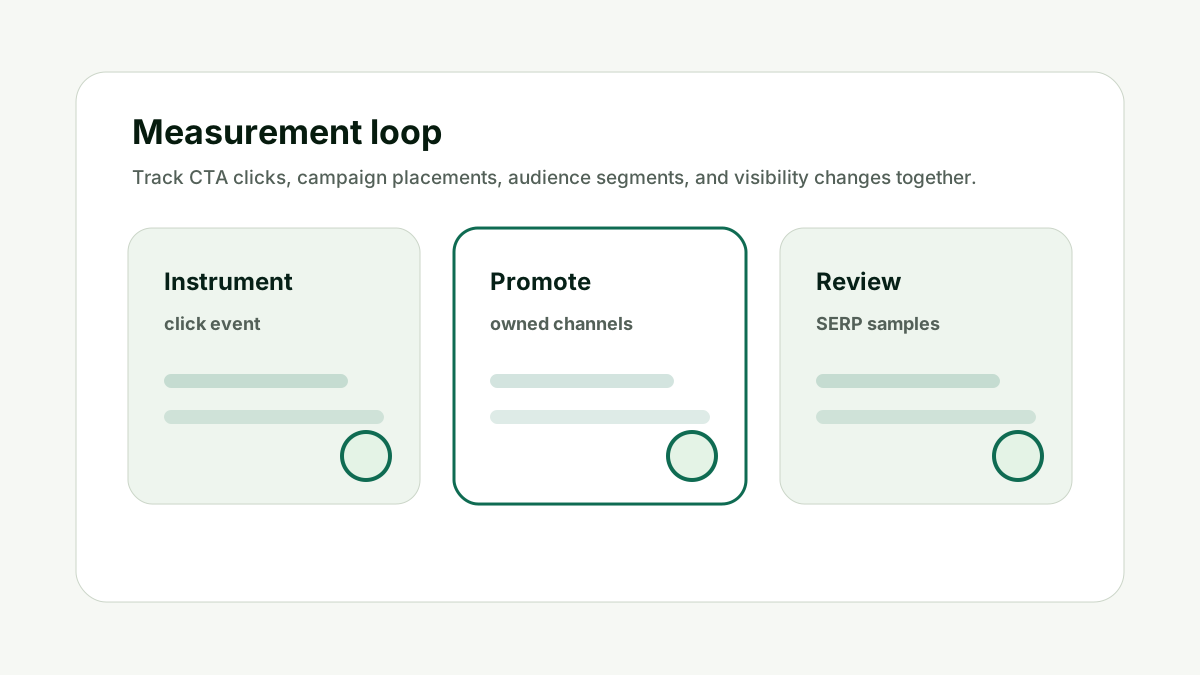
Report CTA clicks, placement, campaign channel, and visibility samples. Use careful language like "selected users may see more of our fresh coverage" rather than "this improves our SEO rankings."
Do not inflate directional evidence into a guaranteed ranking claim. Preferred Sources work best when the ask is specific, the page has already earned trust, and the reader can understand the action before leaving your site.
The practical test is simple: if a loyal reader saw this CTA out of context, would they know what they are adding, why it benefits them, and why your publication deserves that preference? If the answer is no, tighten the page, the copy, or the placement before scaling the campaign.
Reporting Language is one of the practical decisions that makes a Preferred Source campaign easier to trust and measure.
How This Fits the Wider SEO and AI Search Workflow
The important thing with Does Google Preferred Source help SEO rankings? is to treat Preferred Sources as audience infrastructure, not a shortcut around search quality. The real job is keeping Preferred Source campaigns truthful while still commercially useful, while keeping classic SEO, article quality, and AI visibility work in their own lanes.
That order matters because a Preferred Source CTA can create reader intent only after the publication gives readers a reason to care. If the article is thin, stale, anonymous, or technically messy, the button is doing work the content should have done first.
I would use the generator as a production tool, not as the strategy itself. It helps create the deeplink, button, instructions, and copy variants. The strategic work is choosing the audience, the pages, the channel, and the reporting language.
This is also where internal links should stay natural. A guide about source preference does not need ten unrelated links. It needs the next useful resource: the generator when the reader needs an asset, citation readiness when the page needs more proof, and LLMentioned when the question moves from Google preference into broader AI visibility.
Use Preferred Source copy for reader preference, then use SEO and AI visibility tools for ranking, citation, and answer-share questions. After the CTA is live, review both the campaign data and the underlying content. A strong campaign asks readers to prefer a source they already trust. A weak campaign asks readers to compensate for unclear publishing.
The most durable outcome is not a one-time spike in clicks. It is a repeatable reader-preference system that supports fresh coverage, cleaner reporting, and a stronger relationship between the publication and the audience.
A Simple Worked Example
A publisher adds a Preferred Source CTA to ten articles and sees 1,200 clicks in the first month. That is a useful audience signal, but it is not the same as 1,200 confirmed source selections or a ranking lift across the domain.
A better report says: "The CTA generated 1,200 source-preferences clicks across article endings and newsletter placements. We will now sample selected-user searches for relevant breaking topics and compare click behavior over time."
That framing protects the team from overclaiming. It also makes the campaign easier to improve because the team can see which placement earned the click and which articles had fresh enough coverage to show in eligible surfaces.
This is the core ranking answer: Preferred Sources can be useful, but only if you measure it as a reader-preference workflow and keep SEO measurement separate.
Practical action checklist
- Do not call Preferred Sources a broad ranking factor.
- Separate selected-user visibility from normal rank tracking.
- Keep publishing fresh and relevant content in the chosen beat.
- Fix technical SEO before judging Preferred Source campaign impact.
- Report clicks and visibility samples with careful language.
What I Would Do Next
Rewrite any ranking-claim CTA into reader-preference language.
Create a separate measurement view for CTA clicks and selected-user checks.
Use SEO diagnostics for classic ranking problems and AI visibility checks for answer inclusion.
Conclusion
Does Google Preferred Source help SEO rankings? is a useful question because it forces the publisher to separate reader preference, Google Search presentation, and broader SEO strategy.
The practical answer is to make the action easy, truthful, and measurable. Give readers a direct path, explain why the source is worth following, and report clicks separately from rankings.
That gives your team a cleaner campaign than a generic button with vague promises.
FAQ
Will adding a Preferred Source CTA improve all my rankings?
No. It should not be presented as a broad ranking improvement mechanism.
Can Preferred Sources still help traffic?
Potentially, especially with loyal readers and timely coverage, but traffic impact should be measured carefully and separately from classic rankings.
Should SEO teams ignore it?
No. SEO teams should understand it because it affects search presentation for selected users, but they should not treat it as a replacement for SEO fundamentals.
What should I tell executives?
Say it is a reader preference feature that can support visibility for selected users in eligible Google surfaces, not a guaranteed ranking lever.

Adam O'neil
1stpage Editorial Team
Our 1stpage editorial team combines hands-on SEO agency experience with evidence-backed search performance guidance. These posts are built from real search wins, audit-grade insight, and conversion-tested tactics designed to help agencies, founders, and search teams earn more traffic and trust.