Short answer
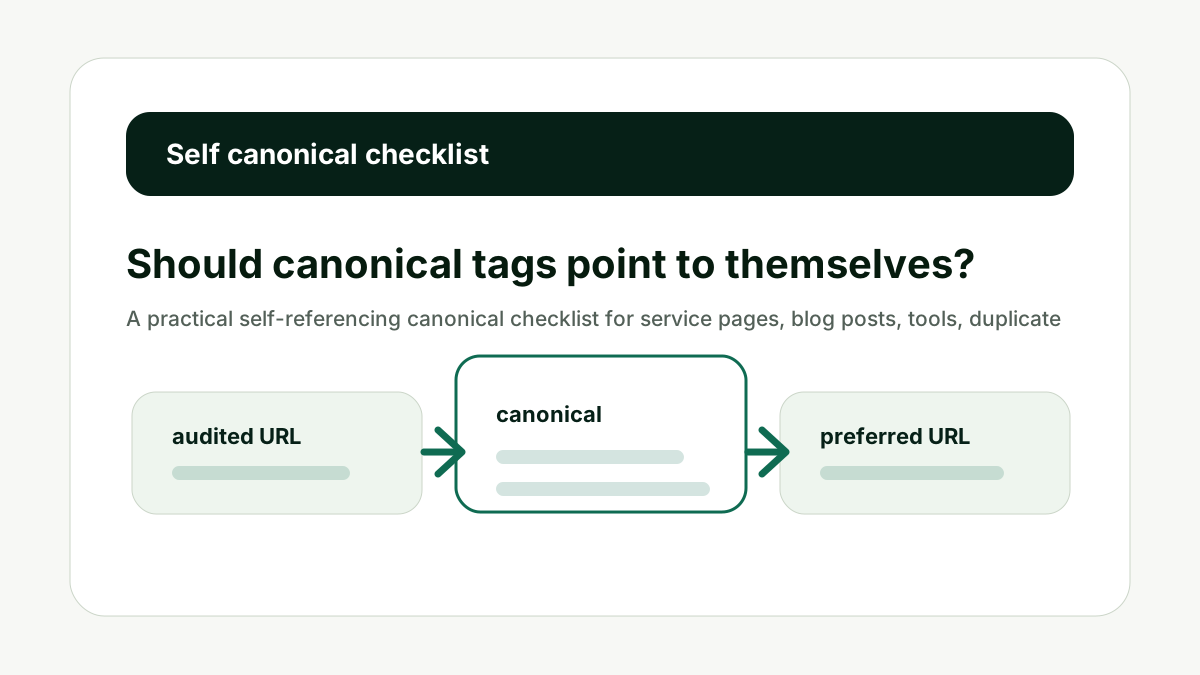
Most indexable pages that should appear in search should use a self-referencing canonical. Duplicate, filtered, tracking, print, sort, or alternate pages may intentionally canonicalize to another URL. The key is whether the audited URL is meant to be the preferred search result.
The useful way to think about this is not "what does one warning label mean?" The better question is whether every crawl, index, canonical, sitemap, and metadata signal supports the same URL outcome.
Reader question
"When is self-canonical wrong?"
Self-canonical is wrong when the page is a duplicate or alternate version that should consolidate into another URL. The Indexability and Canonical Checker helps spot whether the audited URL and canonical target match.
Table of Contents
I am going to answer this as a practical technical SEO workflow, not as a single-tag superstition.
Indexability is usually a stack of signals. The URL has to be reachable, allowed, canonical, internally supported, listed appropriately, and useful enough to be selected.
Here is the framework I would use for a site has service pages, blog posts, parameters, and duplicate variants with inconsistent canonical behavior.
Indexable Pages
For Should canonical tags point to themselves?, indexable pages matters because service pages, blog posts, tools, case studies, and guides usually need a stable preferred URL. This is where many audits go wrong: teams see one warning in a tool and start editing content before they know whether the page is even sending a clean crawl or canonical signal.
If the page is meant to rank or be shared, the canonical should usually point to the final live URL after redirects. That creates a clean self-reference.
Do not canonicalize a real page to a weaker generic page just because the topics overlap. The practical test is simple: would a crawler, sitemap, internal link, and canonical tag all point to the same intended outcome? If not, the signal needs cleanup before you move to content or authority work.
Indexable Pages is one of the signals that decides whether the page can be evaluated cleanly.
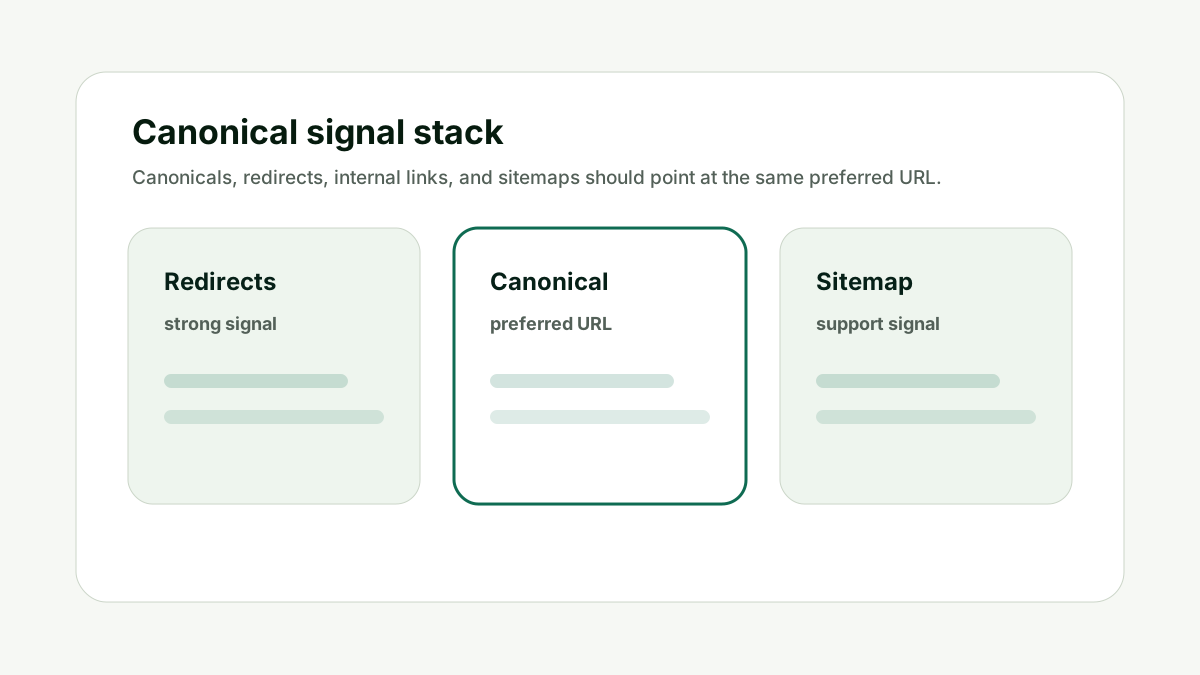
Duplicate Pages
For Should canonical tags point to themselves?, duplicate pages matters because duplicate pages exist to serve users or systems, but they should not all compete for indexing. This is where many audits go wrong: teams see one warning in a tool and start editing content before they know whether the page is even sending a clean crawl or canonical signal.
Use canonicals or redirects to consolidate duplicates into the preferred version. Examples include tracking parameters, print versions, session URLs, and filtered views.
Do not self-canonical every duplicate variant if you do not want every variant treated as an index candidate. The practical test is simple: would a crawler, sitemap, internal link, and canonical tag all point to the same intended outcome? If not, the signal needs cleanup before you move to content or authority work.
Duplicate Pages is one of the signals that decides whether the page can be evaluated cleanly.
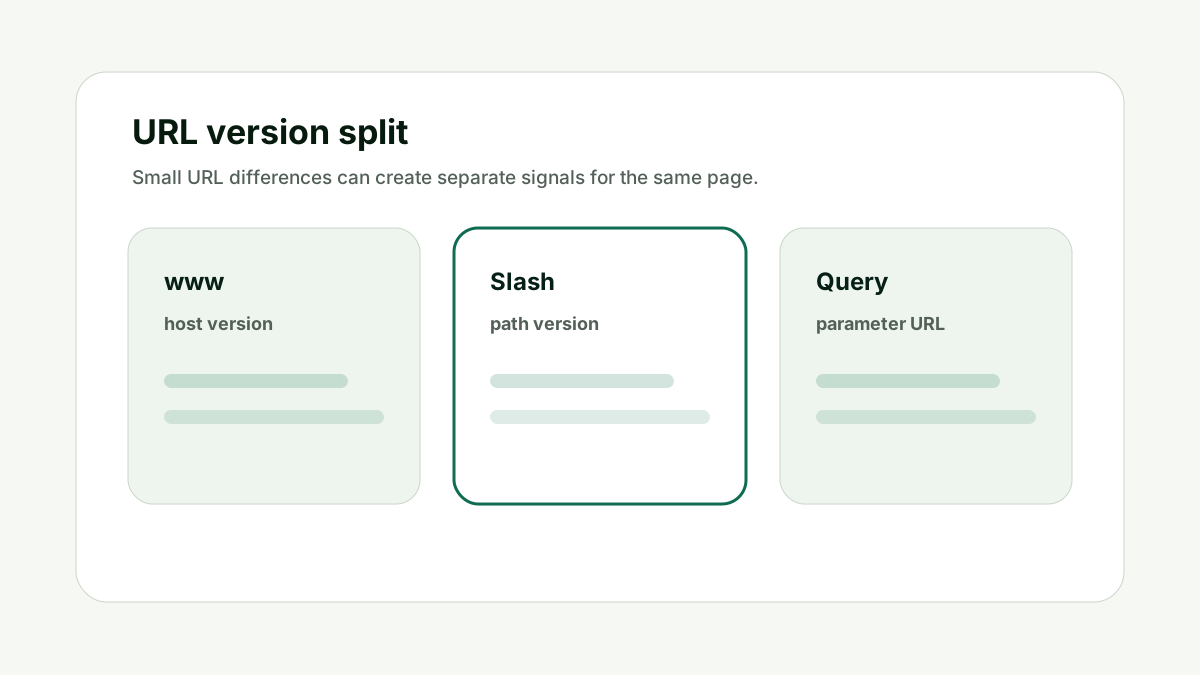
Parameter URLs
For Should canonical tags point to themselves?, parameter urls matters because query strings can create many URLs for the same underlying content. This is where many audits go wrong: teams see one warning in a tool and start editing content before they know whether the page is even sending a clean crawl or canonical signal.
If the parameter does not create unique search value, canonicalize or redirect it to the clean version. If it creates a genuinely distinct page, treat it as its own URL intentionally.
Do not let tracking parameters become canonical URLs in the sitemap or internal links. The practical test is simple: would a crawler, sitemap, internal link, and canonical tag all point to the same intended outcome? If not, the signal needs cleanup before you move to content or authority work.
Parameter URLs is one of the signals that decides whether the page can be evaluated cleanly.
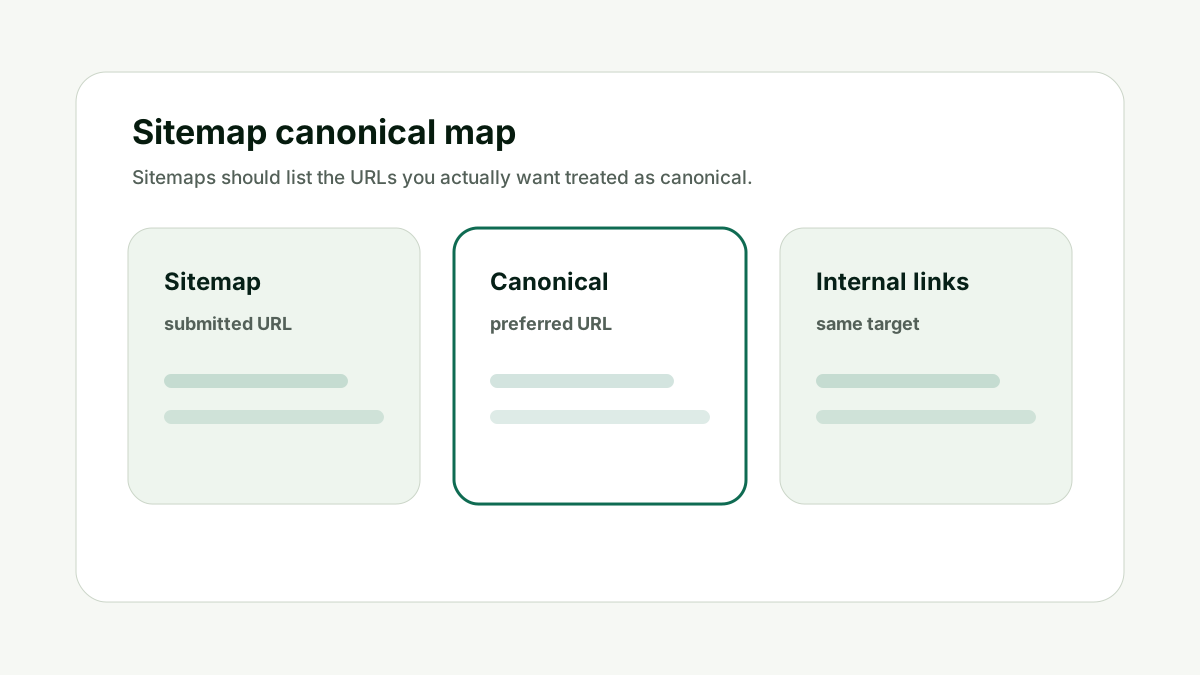
Cross-domain Canonicals
For Should canonical tags point to themselves?, cross-domain canonicals matters because some syndication or migration cases may point canonicals across domains. This is where many audits go wrong: teams see one warning in a tool and start editing content before they know whether the page is even sending a clean crawl or canonical signal.
Use cross-domain canonicals only when the relationship is intentional and the content is duplicate or syndicated. For most ordinary site pages, keep canonicals on the same preferred domain.
Do not use cross-domain canonicals casually; they can consolidate signals away from your own URL. The practical test is simple: would a crawler, sitemap, internal link, and canonical tag all point to the same intended outcome? If not, the signal needs cleanup before you move to content or authority work.
Cross-domain Canonicals is one of the signals that decides whether the page can be evaluated cleanly.
Noindex Conflicts
For Should canonical tags point to themselves?, noindex conflicts matters because noindex and canonical signals can create confusing outcomes when used together casually. This is where many audits go wrong: teams see one warning in a tool and start editing content before they know whether the page is even sending a clean crawl or canonical signal.
If a page should be removed from search, use noindex or access controls. If a duplicate should consolidate to another URL, use canonical or redirects. Keep the purpose clear.
Do not add noindex to a page just because you want another page selected as canonical. The practical test is simple: would a crawler, sitemap, internal link, and canonical tag all point to the same intended outcome? If not, the signal needs cleanup before you move to content or authority work.
Noindex Conflicts is one of the signals that decides whether the page can be evaluated cleanly.
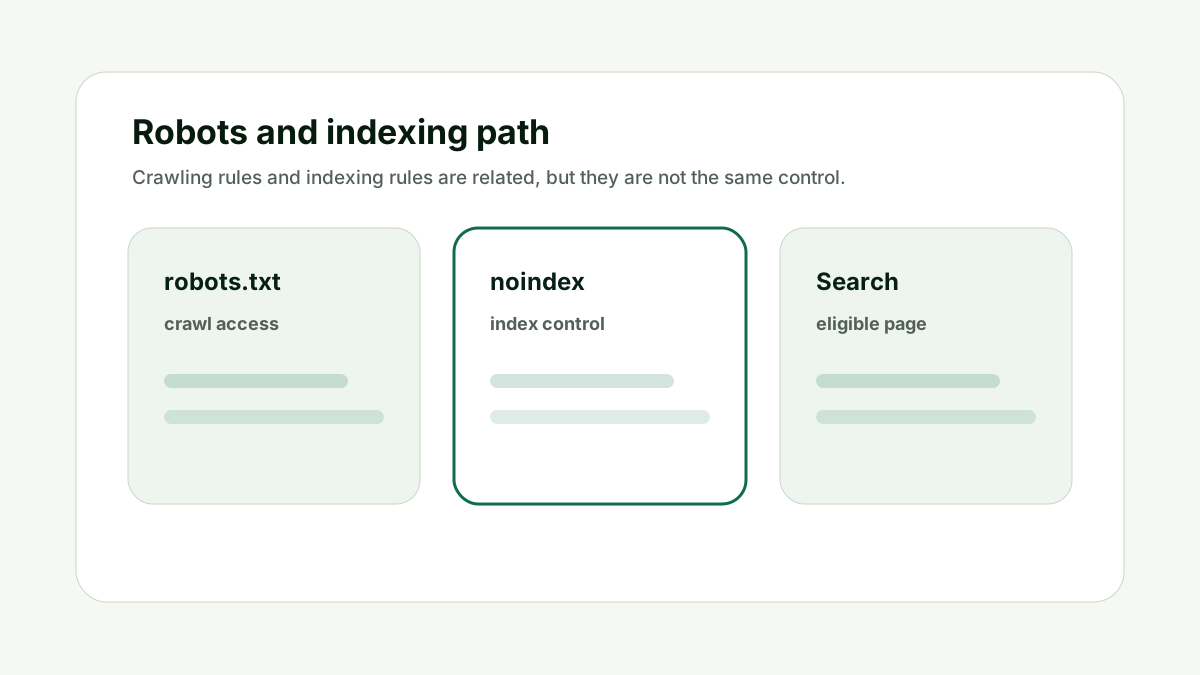
Validation
For Should canonical tags point to themselves?, validation matters because the decision is only useful if the live source matches it. This is where many audits go wrong: teams see one warning in a tool and start editing content before they know whether the page is even sending a clean crawl or canonical signal.
Validate the final HTML source, rendered source where relevant, sitemap, internal links, and Open Graph URL. These should all support the same preferred URL.
Do not rely on CMS settings alone. Check what the page actually outputs. The practical test is simple: would a crawler, sitemap, internal link, and canonical tag all point to the same intended outcome? If not, the signal needs cleanup before you move to content or authority work.
Validation is one of the signals that decides whether the page can be evaluated cleanly.
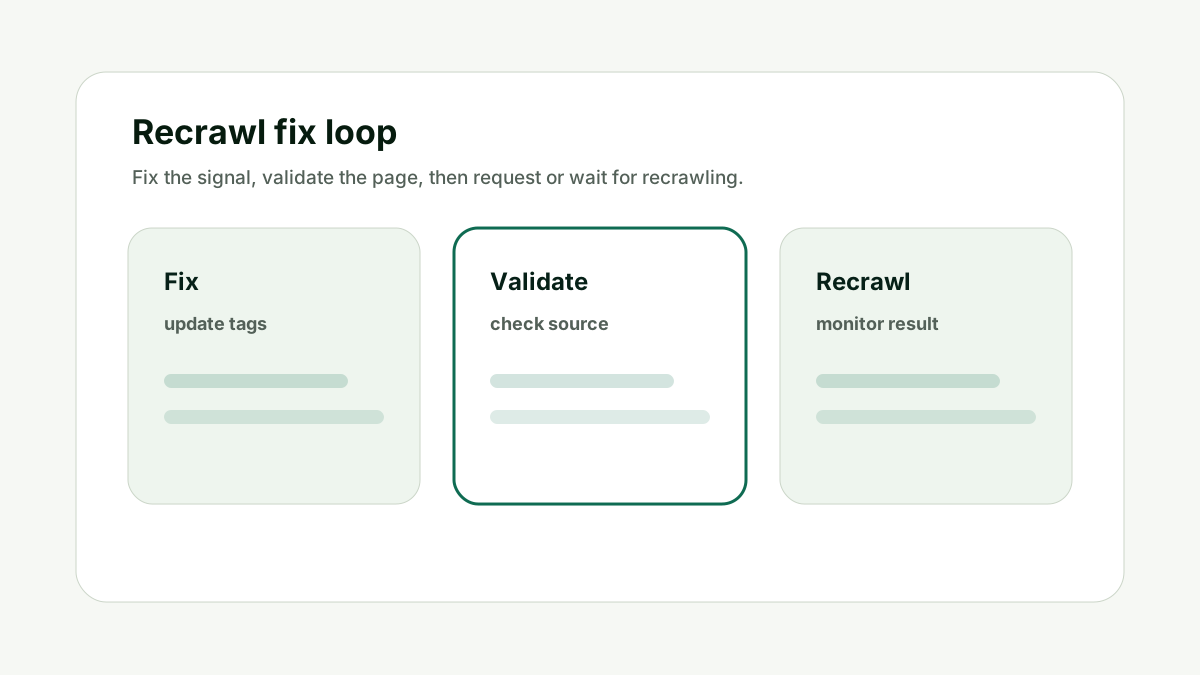
How This Fits the Wider SEO and AI Search Workflow
The important thing with Should canonical tags point to themselves? is to treat indexability as the foundation, not as a final polish item. The real job is deciding whether the audited URL should be the canonical URL, then making sure the page can support SEO, AI citation, and authority work without technical confusion.
That order matters because many teams try to solve an indexing problem with more content, more links, or more AI-search tooling. Those can help only after the URL is crawlable, indexable, canonical, internally linked, and represented consistently in the sitemap.
I would use the indexability check as a gate. If the URL fails because it is blocked, noindexed, canonicalized elsewhere, missing from the sitemap, or internally orphaned, fix that first. If the page passes technically but still does not perform, then the issue may be quality, relevance, authority, or source proof.
This is also where internal links should stay natural. Link to another tool or service only when it helps the reader take the next step. A page with forced internal links is not more trustworthy; it is just more cluttered.
Run the checker on final URLs that should rank, then separately inspect duplicate URLs that should consolidate. Once the URL is technically clean, use citation-readiness and visibility tools to test whether the page is useful enough for AI answers and search snippets.
Good indexability work is quiet. It does not create a flashy campaign asset, but it prevents the campaign from being built on the wrong URL.
A Simple Worked Example
A blog post lives at `/guide/`, but the CMS also creates `/guide?utm_source=newsletter` and `/guide/amp/`. The clean post URL should rank, while the parameter and AMP versions should support it.
For the clean post, I would use a self-referencing canonical. For the tracking URL, I would canonicalize to the clean URL or strip the parameter through redirects where appropriate. For special alternate versions, I would follow the platform-specific relationship rules.
The important part is not that every page self-canonicalizes. The important part is that every URL has an intentional role. Primary pages should point to themselves. Duplicate variants should consolidate.
That framework prevents a common CMS problem: hundreds of URL variants all claiming to be canonical while the sitemap and internal links point to only one of them.
Practical action checklist
- Audit the final URL after redirects, not the first URL someone pasted.
- Check robots.txt, robots meta, X-Robots-Tag, canonical, sitemap, and internal links together.
- Make the sitemap, canonical, Open Graph URL, and internal links agree on the preferred URL.
- Fix technical blockers before rewriting or promoting the page.
- Retest after deployment and record what changed.
What I Would Do Next
List which URLs should rank and which URLs are duplicates or alternates.
Set self-referencing canonicals on primary indexable URLs.
Use redirects or canonicals to consolidate duplicate variants into the preferred URL.
Conclusion
Should canonical tags point to themselves? is a useful question because it separates crawl access, index permission, canonical preference, and page quality.
The practical answer is to make every technical signal point at the same intended URL, then decide whether the page is strong enough to deserve indexing or AI-search visibility.
That gives your team a cleaner workflow than changing tags randomly and waiting for a different report color.
FAQ
Should every indexable page self-canonicalize?
Usually yes, when the page is the preferred URL and should be eligible for search results.
Can a canonical point to another domain?
It can in some duplicate or syndication cases, but use it carefully because it may consolidate signals away from the current URL.
Should noindex and canonical be used together?
Avoid mixing them casually. Use noindex to keep a page out of search and canonical to consolidate duplicates.
Should category filters self-canonicalize?
Only if the filtered page has unique search value. Otherwise, consolidate it to a cleaner canonical version.

Adam O'neil
1stpage Editorial Team
Our 1stpage editorial team combines hands-on SEO agency experience with evidence-backed search performance guidance. These posts are built from real search wins, audit-grade insight, and conversion-tested tactics designed to help agencies, founders, and search teams earn more traffic and trust.