Short answer
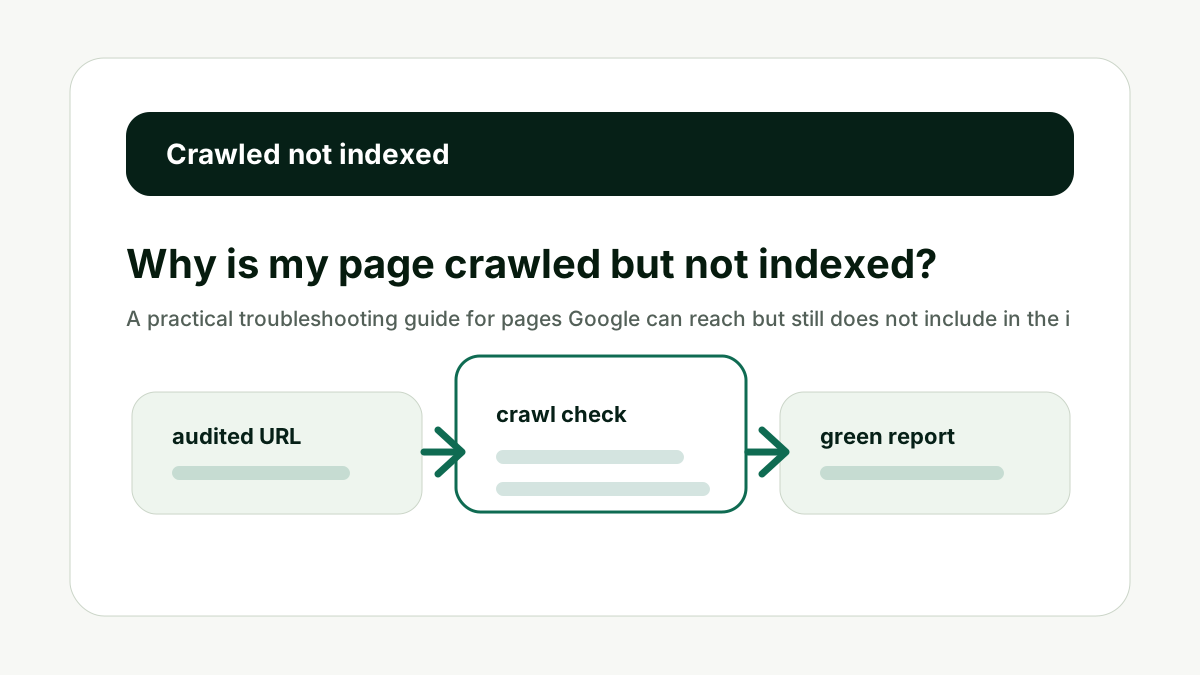
A page can be crawled but not indexed when Google can access the URL but does not choose it for the index. Common causes include noindex directives, canonical signals pointing elsewhere, weak or duplicate content, low internal importance, sitemap mismatch, or competing URL versions.
The useful way to think about this is not "what does one warning label mean?" The better question is whether every crawl, index, canonical, sitemap, and metadata signal supports the same URL outcome.
Reader question
"What should I check first?"
Start with the Indexability and Canonical Checker so you can separate technical blocking issues from content-quality or authority issues.
Table of Contents
I am going to answer this as a practical technical SEO workflow, not as a single-tag superstition.
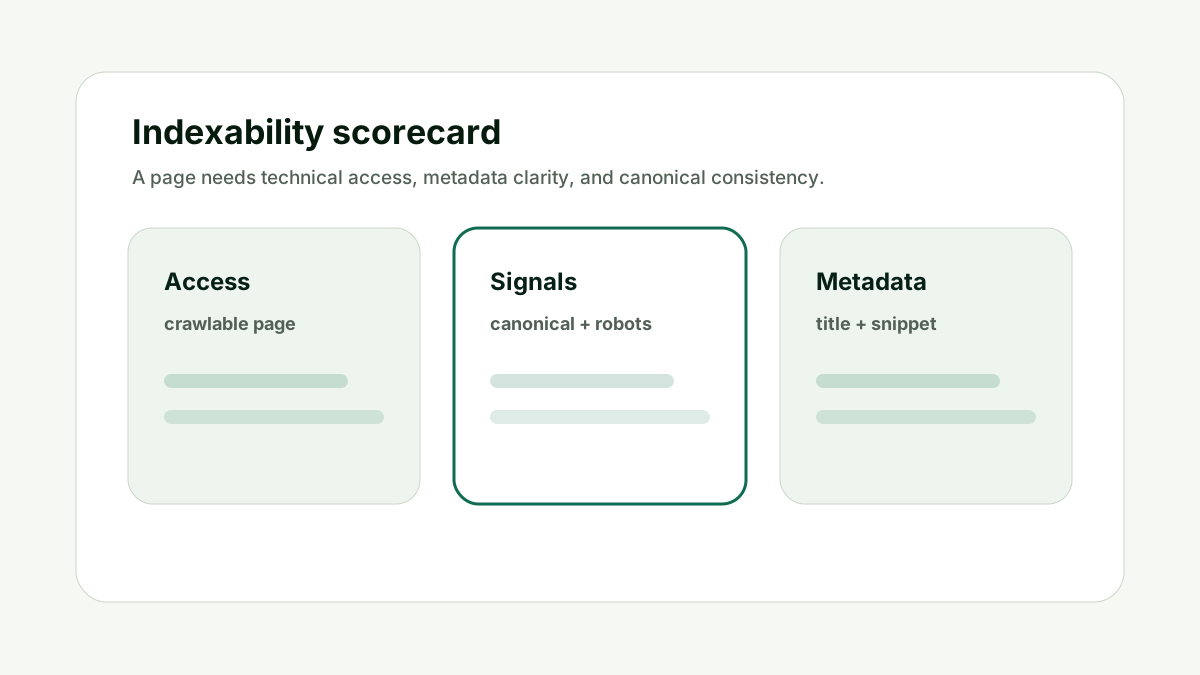
Indexability is usually a stack of signals. The URL has to be reachable, allowed, canonical, internally supported, listed appropriately, and useful enough to be selected.
Here is the framework I would use for a page appears in crawl logs or Search Console, but the URL still does not become an indexed search result.
Crawl vs Index
For Why is my page crawled but not indexed?, crawl vs index matters because crawling only means the page was fetched or discovered, while indexing means the search engine decided the page belongs in the searchable index. This is where many audits go wrong: teams see one warning in a tool and start editing content before they know whether the page is even sending a clean crawl or canonical signal.
Treat the status as a diagnostic path, not a verdict. First confirm that Google can reach the page, then confirm the page is allowed to index, then inspect whether another URL is being selected instead.
Do not assume that one crawl event means the page has earned index inclusion. The practical test is simple: would a crawler, sitemap, internal link, and canonical tag all point to the same intended outcome? If not, the signal needs cleanup before you move to content or authority work.
Crawl vs Index is one of the signals that decides whether the page can be evaluated cleanly.
Noindex Check
For Why is my page crawled but not indexed?, noindex check matters because a noindex meta tag or X-Robots-Tag can tell search engines not to include the page in results. This is where many audits go wrong: teams see one warning in a tool and start editing content before they know whether the page is even sending a clean crawl or canonical signal.
Inspect both the HTML head and server headers. Google documents robots meta tags and X-Robots-Tag headers as page-level indexing controls, so a hidden header can matter even when the page source looks fine.
Do not only search the rendered page visually. Indexing directives can sit in metadata or HTTP headers. The practical test is simple: would a crawler, sitemap, internal link, and canonical tag all point to the same intended outcome? If not, the signal needs cleanup before you move to content or authority work.
Noindex Check is one of the signals that decides whether the page can be evaluated cleanly.
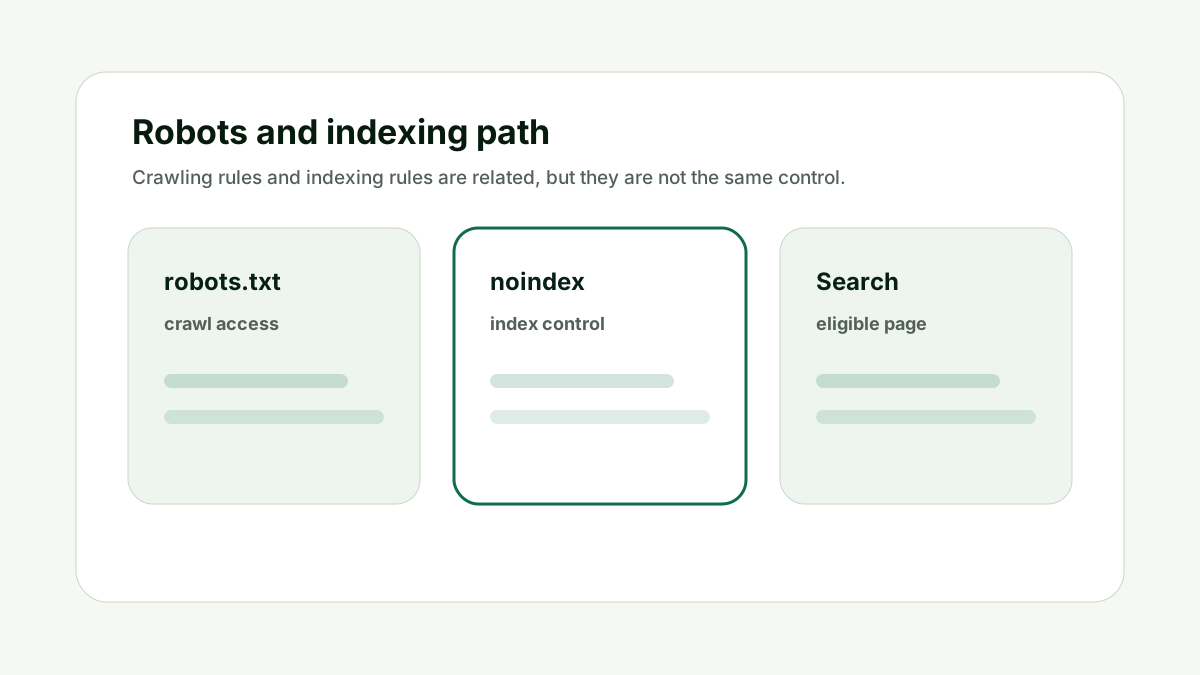
Canonical Choice
For Why is my page crawled but not indexed?, canonical choice matters because Google may crawl one URL but decide that another URL is the better canonical version. This is where many audits go wrong: teams see one warning in a tool and start editing content before they know whether the page is even sending a clean crawl or canonical signal.
Compare the audited URL with the canonical tag, sitemap entry, redirect target, and internal links. If they disagree, consolidate the signals around the preferred URL.
Do not list one URL in the sitemap while canonicals and internal links point somewhere else. The practical test is simple: would a crawler, sitemap, internal link, and canonical tag all point to the same intended outcome? If not, the signal needs cleanup before you move to content or authority work.
Canonical Choice is one of the signals that decides whether the page can be evaluated cleanly.
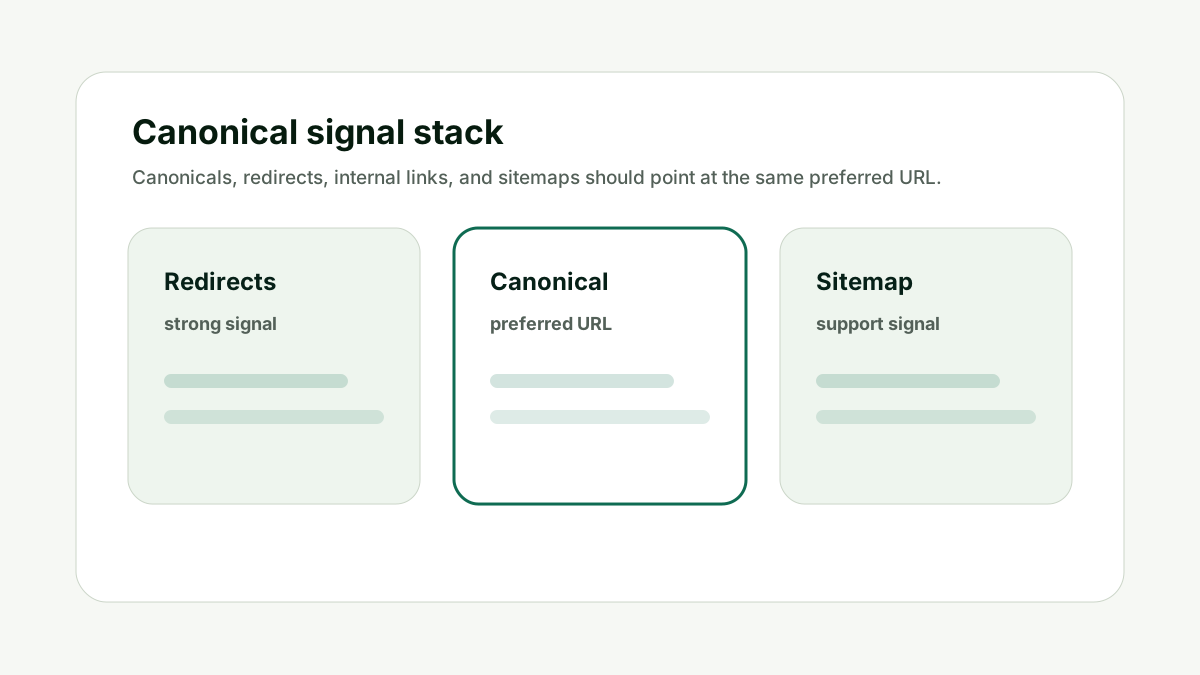
Duplicate Versions
For Why is my page crawled but not indexed?, duplicate versions matters because www, non-www, trailing slash, HTTP, HTTPS, and parameter versions can split signals across duplicates. This is where many audits go wrong: teams see one warning in a tool and start editing content before they know whether the page is even sending a clean crawl or canonical signal.
Choose one preferred version and make redirects, canonicals, Open Graph URLs, sitemap entries, and internal links agree. Small URL differences can create enough ambiguity to weaken selection.
Do not treat URL formatting as cosmetic. For crawlers, each version can be a separate address. The practical test is simple: would a crawler, sitemap, internal link, and canonical tag all point to the same intended outcome? If not, the signal needs cleanup before you move to content or authority work.
Duplicate Versions is one of the signals that decides whether the page can be evaluated cleanly.
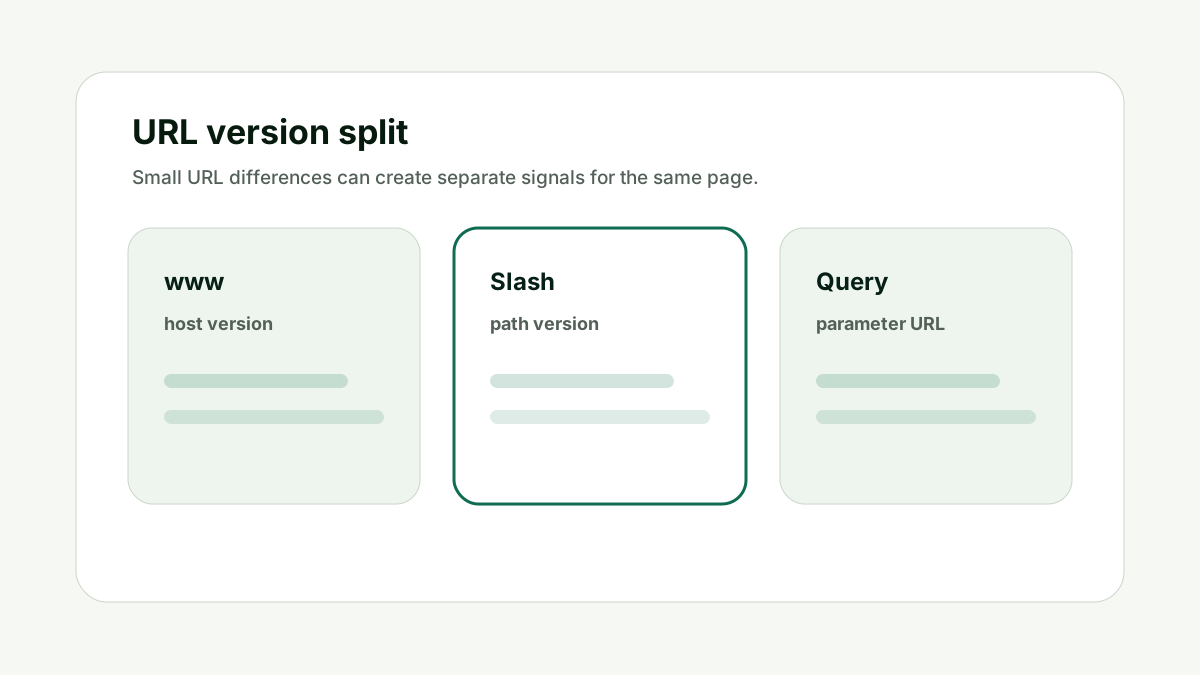
Content Value
For Why is my page crawled but not indexed?, content value matters because the page may be technically indexable but too weak, duplicative, or low-priority to select. This is where many audits go wrong: teams see one warning in a tool and start editing content before they know whether the page is even sending a clean crawl or canonical signal.
Make sure the page answers a distinct query, has enough original value, and is linked from relevant internal pages. If the page should support AI answers, test it with the AI Citation Readiness Checker after technical checks pass.
Do not keep rewriting metadata if the page itself does not deserve to be indexed. The practical test is simple: would a crawler, sitemap, internal link, and canonical tag all point to the same intended outcome? If not, the signal needs cleanup before you move to content or authority work.
Content Value is one of the signals that decides whether the page can be evaluated cleanly.
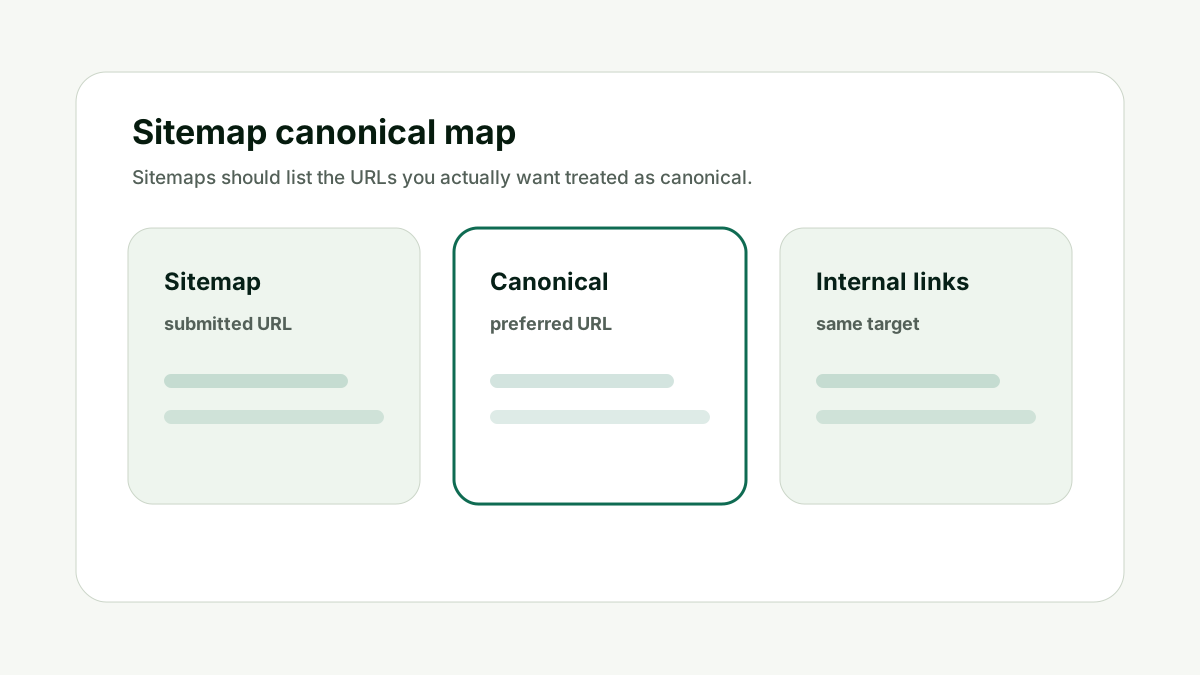
Retest and Monitor
For Why is my page crawled but not indexed?, retest and monitor matters because indexing changes often require recrawling and signal refresh. This is where many audits go wrong: teams see one warning in a tool and start editing content before they know whether the page is even sending a clean crawl or canonical signal.
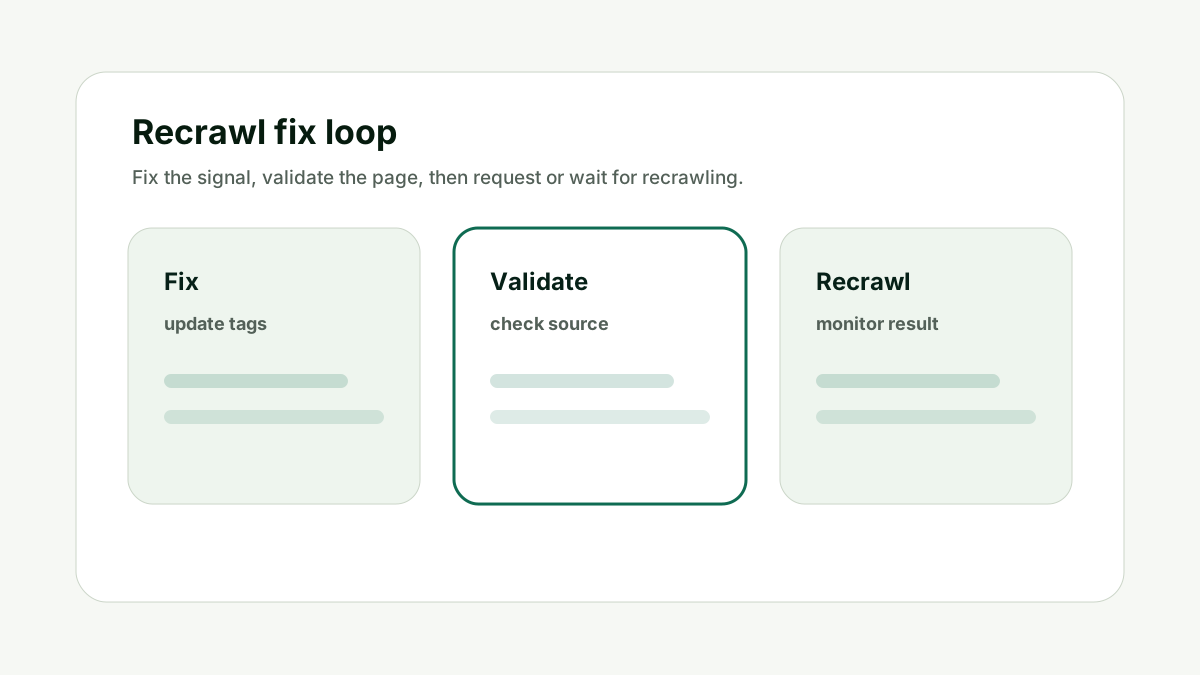
After fixes, validate the live source, update the sitemap if needed, request indexing where appropriate, and monitor Search Console or crawler output over time.
Do not make five unrelated changes at once if you need to learn which issue caused the problem. The practical test is simple: would a crawler, sitemap, internal link, and canonical tag all point to the same intended outcome? If not, the signal needs cleanup before you move to content or authority work.
Retest and Monitor is one of the signals that decides whether the page can be evaluated cleanly.
How This Fits the Wider SEO and AI Search Workflow
The important thing with Why is my page crawled but not indexed? is to treat indexability as the foundation, not as a final polish item. The real job is separating crawl access from index selection, then making sure the page can support SEO, AI citation, and authority work without technical confusion.
That order matters because many teams try to solve an indexing problem with more content, more links, or more AI-search tooling. Those can help only after the URL is crawlable, indexable, canonical, internally linked, and represented consistently in the sitemap.
I would use the indexability check as a gate. If the URL fails because it is blocked, noindexed, canonicalized elsewhere, missing from the sitemap, or internally orphaned, fix that first. If the page passes technically but still does not perform, then the issue may be quality, relevance, authority, or source proof.
This is also where internal links should stay natural. Link to another tool or service only when it helps the reader take the next step. A page with forced internal links is not more trustworthy; it is just more cluttered.
Check the final live URL after redirects, then compare robots, canonical, sitemap, and internal links against that exact URL. Once the URL is technically clean, use citation-readiness and visibility tools to test whether the page is useful enough for AI answers and search snippets.
Good indexability work is quiet. It does not create a flashy campaign asset, but it prevents the campaign from being built on the wrong URL.
A Simple Worked Example
Imagine a service page is discovered in Search Console but remains crawled, not indexed. The page loads normally, so the team assumes Google simply has not caught up yet.
The first check reveals that the page canonical points to the non-www version while the live site, sitemap, and internal links use www. That is not always fatal, but it creates disagreement. The sitemap says one thing, the page head says another, and the internal links say a third thing.
I would first make the canonical self-reference the final URL. Then I would update internal links and sitemap entries so they all point to the same version. After that, I would inspect whether the page has a real answer, unique value, and enough internal importance.
If the technical signals become clean and the page is still excluded, the problem shifts from indexability to usefulness, duplication, or authority. That is a different workstream, and separating those two saves a lot of wasted editing.
Practical action checklist
- Audit the final URL after redirects, not the first URL someone pasted.
- Check robots.txt, robots meta, X-Robots-Tag, canonical, sitemap, and internal links together.
- Make the sitemap, canonical, Open Graph URL, and internal links agree on the preferred URL.
- Fix technical blockers before rewriting or promoting the page.
- Retest after deployment and record what changed.
What I Would Do Next
Check whether the final URL is blocked, noindexed, or canonicalized elsewhere.
Confirm the sitemap and internal links point to the same preferred URL.
Improve page value only after the technical signals are clean enough to trust.
Conclusion
Why is my page crawled but not indexed? is a useful question because it separates crawl access, index permission, canonical preference, and page quality.
The practical answer is to make every technical signal point at the same intended URL, then decide whether the page is strong enough to deserve indexing or AI-search visibility.
That gives your team a cleaner workflow than changing tags randomly and waiting for a different report color.
FAQ
Does crawled but not indexed mean Google hates my site?
No. It means the URL was discovered or fetched but not selected for the index. The cause may be technical, duplicate, quality-related, or simply priority-related.
Can a canonical cause crawled but not indexed?
Yes. If the page points to another canonical URL, Google may choose that other URL instead.
Should I remove noindex immediately?
Only if the page is supposed to be indexed. Some pages are intentionally noindexed.
How long should I wait after fixing it?
There is no fixed timeline. Validate the fix, update the sitemap if needed, request recrawl where appropriate, and monitor the URL over time.

Adam O'neil
1stpage Editorial Team
Our 1stpage editorial team combines hands-on SEO agency experience with evidence-backed search performance guidance. These posts are built from real search wins, audit-grade insight, and conversion-tested tactics designed to help agencies, founders, and search teams earn more traffic and trust.