Short answer
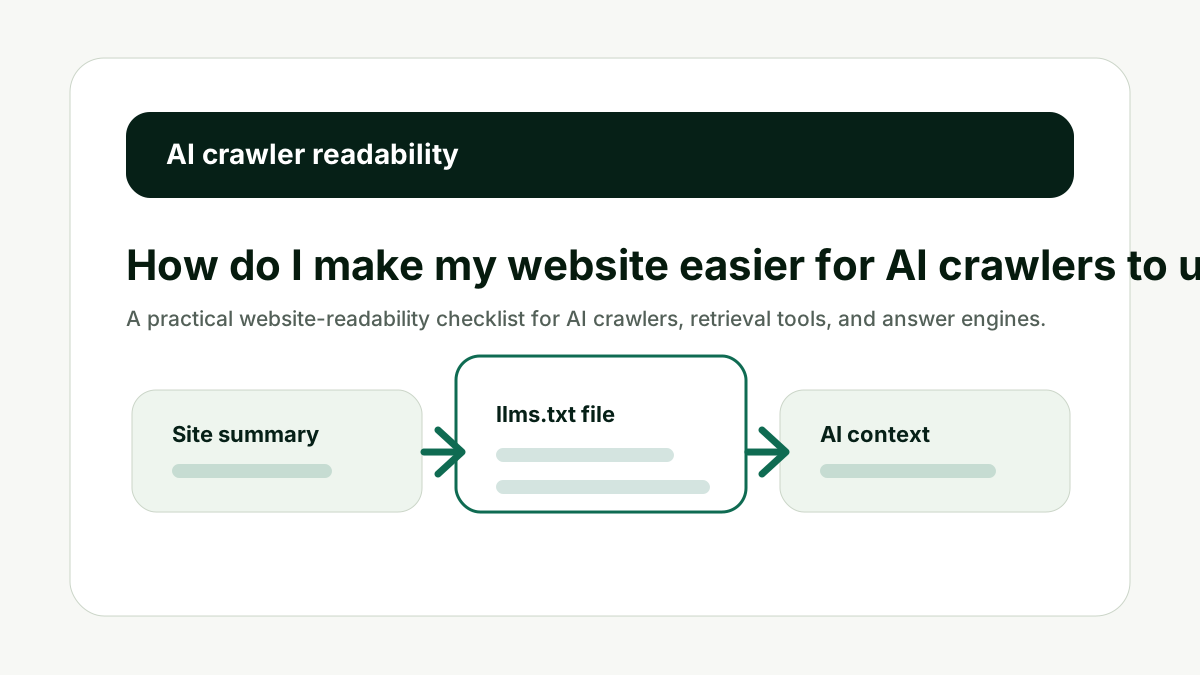
Make the site crawlable, keep priority pages clear, write concise summaries, connect related pages naturally, publish a useful llms.txt file, and retest AI prompts after changes. AI crawler readability is not one file; it is the whole site structure.
The useful way to think about this is not "will one file make AI systems recommend me?" The better question is whether your site gives crawlers, retrieval tools, and human reviewers a clean route to the pages that matter.
Reader question
"Where should I start?"
Start with crawlability and priority pages. Then use the Free LLMs.txt Generator to create a curated context file once the pages are worth pointing to.
Table of Contents
I am going to answer this as a practical website-operations question, not as a hype cycle question.
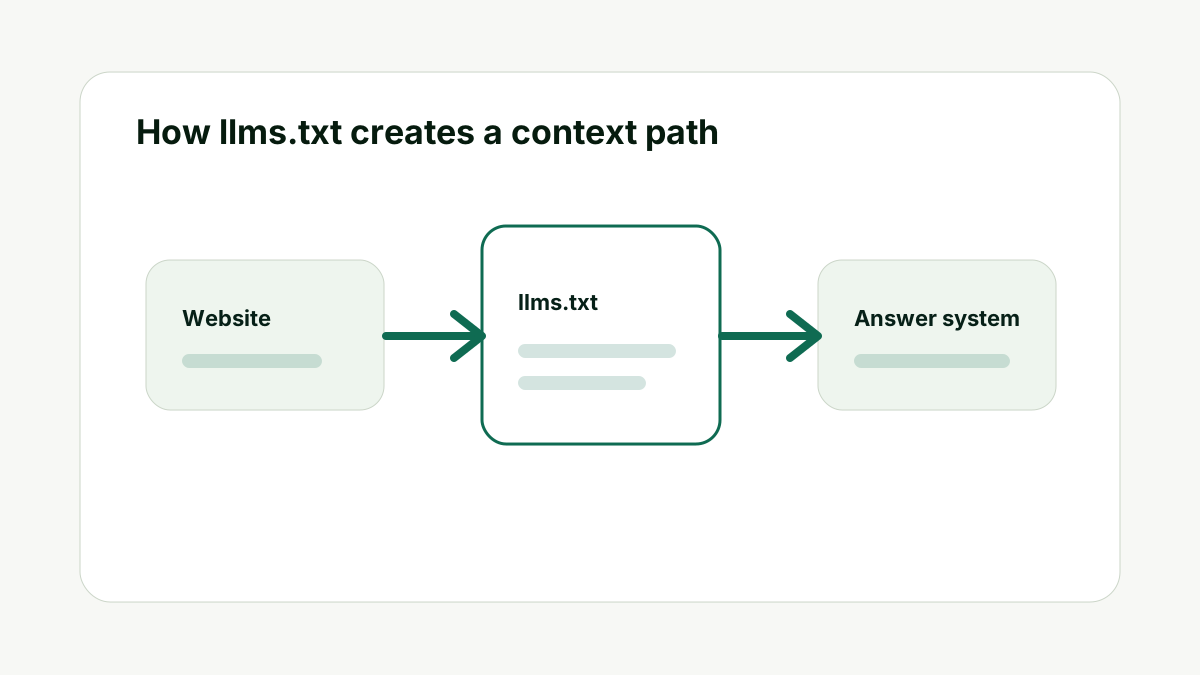
An llms.txt file can be useful, but it works best when the surrounding site is already clear. The file should describe the site, point to important pages, and reduce ambiguity. It should not become a shortcut around weak content, blocked pages, or missing proof.
Here is how I would evaluate it across the parts that matter.
Crawlability
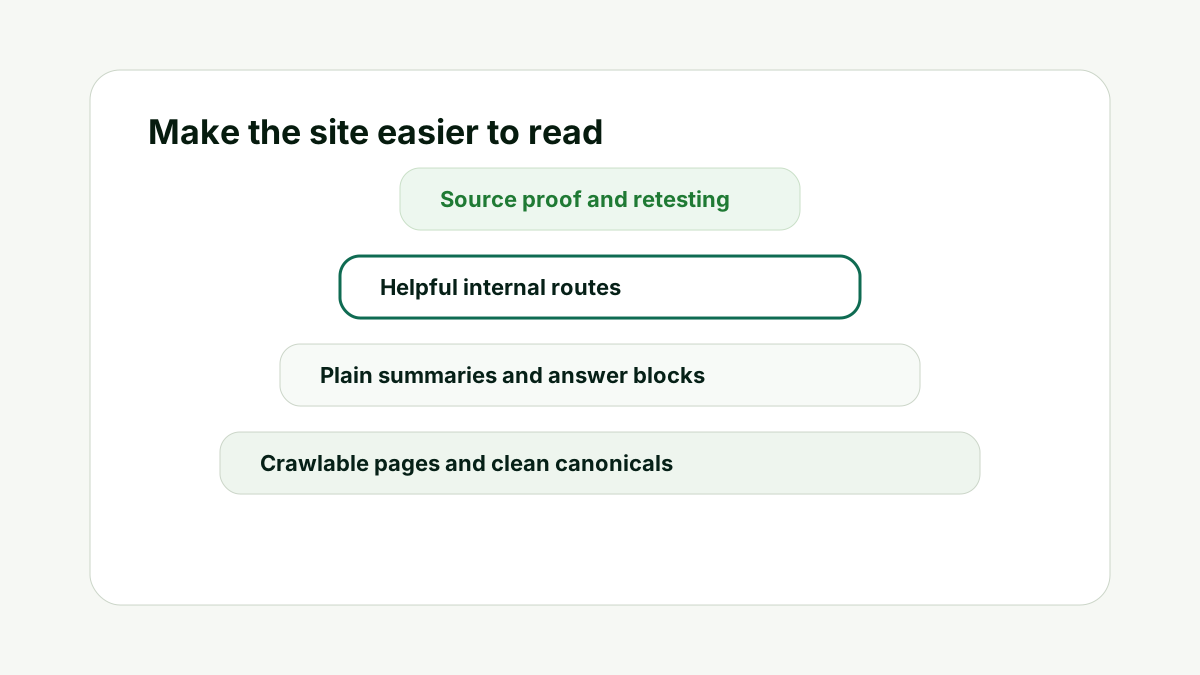
The first requirement is simple: important pages need to be accessible. If a page is blocked, noindexed, canonicalized incorrectly, or hidden behind scripts that are hard to render, a context file will not solve the problem.
Check the pages that define the brand and the offer. They should load normally, have canonical URLs, use stable headings, and avoid unnecessary duplication.
This is where technical SEO still matters. AI search readiness sits on top of crawlable, indexable, understandable pages.
Crawlability comes before context. A file cannot explain a page that systems cannot reach.
Clean Pages
Clean pages answer their main question quickly. They do not bury the point under vague intros, giant hero claims, or unsupported slogans.
For AI crawlers and answer systems, clear sections are useful. Use H2s that describe real topics, not clever labels. Add definitions, examples, and concise summaries where they help the reader.
If a page needs to be cited, test it with the AI Citation Readiness Checker before assuming the problem is external visibility.
Clean pages make the site easier to summarize. That helps humans and machines.
Structured Summaries
Structured summaries help explain a site quickly. This includes the homepage summary, service summaries, documentation intros, FAQ answers, and the llms.txt summary.
The summary should say what the page is about and who it is for. It should not be stuffed with keywords or vague adjectives.
When the same summary logic appears across pages and the llms.txt file, the site becomes easier to interpret consistently.
Structured summaries reduce guesswork. They also expose weak positioning fast.
Internal Routes
Internal links should help a reader move to the next useful page. They should not be forced just to increase link counts.
For AI crawler readability, the best links clarify relationships. A tool page may link to a supporting guide. A guide may link to a citation checker when the reader needs to test a page. A service page may link to a case study when proof is needed.
If the next page is not helpful in that moment, skip the link. Context matters more than volume.
Internal routes should behave like a map, not a link dump.
Source Proof
AI systems do not only read your site. They may also encounter publisher pages, community discussions, reviews, directories, partner pages, and comparison posts.
If those outside sources describe the brand consistently, they can support the same story your own pages tell. If they conflict, the answer may drift.
For AI visibility work, this is why page clarity and source proof need to move together.
Source proof helps the site story travel beyond the domain.
Retesting
After making the site easier to crawl and understand, retest prompts. Use the same prompt set before and after the changes.
Look for whether the brand is named, whether the description is accurate, whether the answer cites or references useful sources, and whether competitors still dominate.
The LLM Visibility Checker is useful here because it turns prompt checks into a repeatable visibility snapshot.
Retesting tells you whether the readability work changed actual answers.
How This Fits the Wider AI Search Workflow
The important thing with How do I make my website easier for AI crawlers to understand? is to avoid treating the file as an isolated SEO task. It belongs inside a wider workflow that starts with crawlability, moves into page clarity, then uses llms.txt as the curated map for the pages that deserve attention.
That order matters. If the page is blocked, the file cannot make it accessible. If the page is vague, the file cannot make it authoritative. If outside sources describe the brand differently, the file cannot erase the wider source gap. The file is useful because it makes the intended site structure visible, but it still depends on the quality of the pages and sources it points to.
In practice, I would use the file as a checkpoint. If a URL is important enough to include in llms.txt, it should also be strong enough to answer its core question clearly. It should have a stable canonical URL, a useful title, headings that match the topic, and enough proof to support the claims. If a page fails that check, improve the page before making it a priority source.
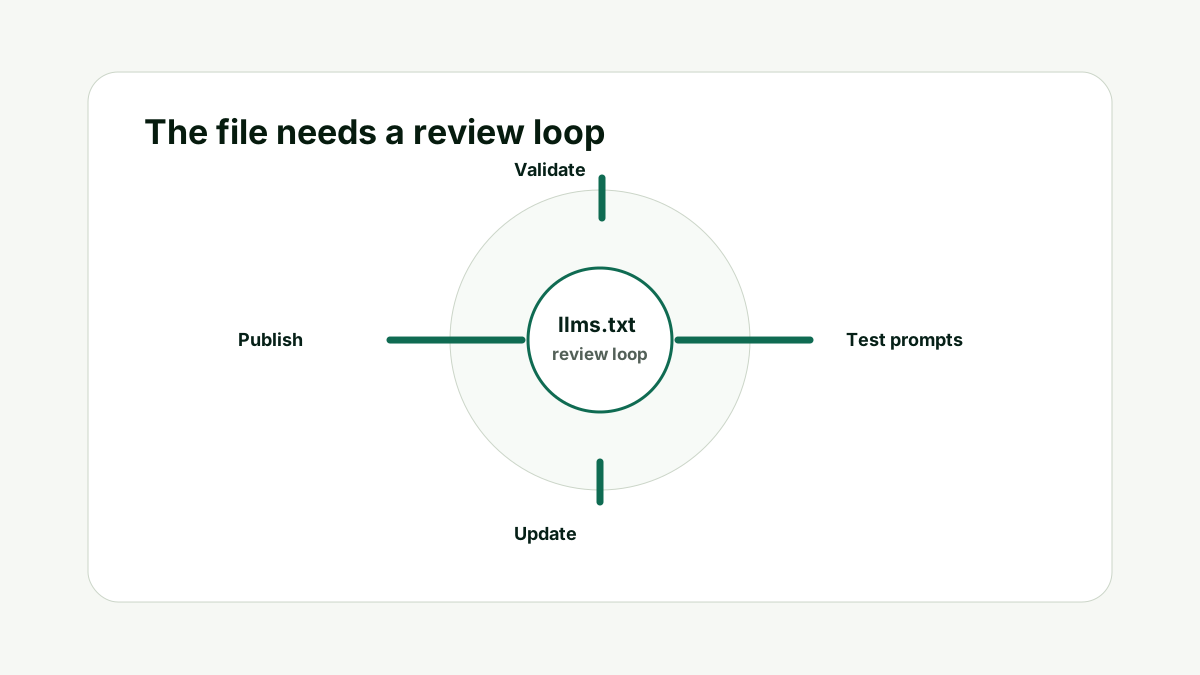
I would also connect the file to measurement. After publishing or updating it, run the prompts that matter to the business. Check whether the brand appears, whether the description is accurate, and whether the answer seems to rely on better sources. If the answers do not improve, the next step is not to stuff the file with more URLs. The next step is to improve the pages, source proof, and internal routes that support the file.
For teams, this also gives the file a clear owner. Someone should know which URLs are approved, which pages are optional, and which claims are no longer current. Without that owner, llms.txt can quietly drift away from the site it is supposed to explain.
That is why llms.txt should feel boring in the best way. It should be clear, current, and useful. The strategy is not to impress a model with a clever file. The strategy is to make your website easier to understand from the strongest available evidence.
A Simple Worked Example
A site owner says AI systems do not understand their website. The first temptation is to add an llms.txt file and wait. I would not start and stop there.
I would first check the homepage, main service pages, and tool or product pages. Do they load? Are they indexable? Do they say the category clearly? Do they include examples and proof? If those pages are weak, fix them before relying on a site-level file.
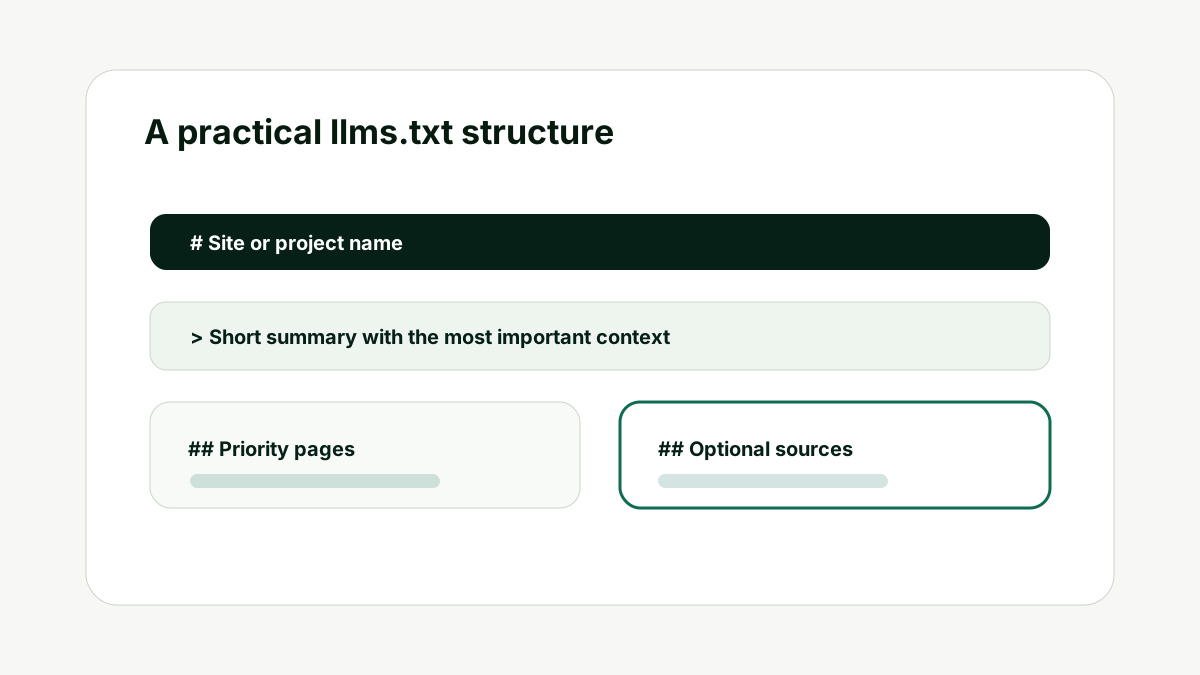
Then I would create the llms.txt file as a curated map. The file would point to the fixed pages, not every page. It would include a short summary, sitemap, current priority URLs, and optional resources.
Finally, I would test prompts. If the site is still misunderstood, I would inspect external sources and competitor pages. The file is one layer in a larger readability system.
Practical action checklist
- Write the exact site context the file should clarify.
- List only the priority URLs that support that context.
- Check crawlability before blaming AI systems for missing the page.
- Add contextual internal links only when they help the reader take the next step.
- Review the file after major site, product, or positioning changes.
What I Would Do Next
Audit crawlability and canonical signals on the pages that define the brand.
Rewrite weak summaries so pages answer their core question early.
Publish llms.txt after the priority pages are clean, then retest AI visibility.
Conclusion
How do I make my website easier for AI crawlers to understand? is a useful question because it separates AI-search preparation from guesswork.
The practical answer is to make the site easy to understand first, then use llms.txt as the concise map. Keep the file current, point it to strong pages, and test whether the answers around your brand improve over time.
That gives your team a better workflow than publishing a file once and hoping an AI system does the rest.
FAQ
Do AI crawlers need special pages?
Usually they need clear pages more than special pages. Plain headings, concise summaries, schema, and crawlable HTML are a strong start.
Is llms.txt enough on its own?
No. It supports context, but it should point to strong pages and be backed by accurate source proof.
Should I block AI crawlers?
That is a policy and access decision. Use the right crawler controls if you need restrictions. Llms.txt is not the control layer.
How often should I retest?
Retest after major page updates, new source wins, positioning changes, or noticeable changes in AI answer quality.

Adam O'neil
1stpage Editorial Team
Our 1stpage editorial team combines hands-on SEO agency experience with evidence-backed search performance guidance. These posts are built from real search wins, audit-grade insight, and conversion-tested tactics designed to help agencies, founders, and search teams earn more traffic and trust.


