Short answer
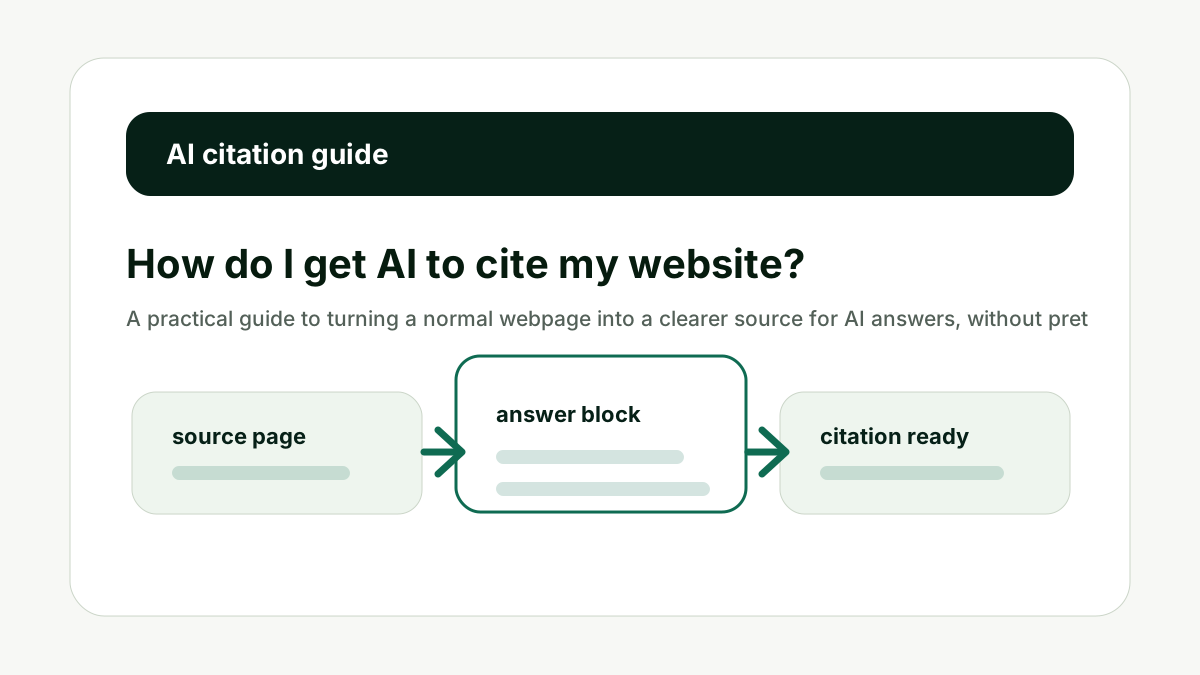
You get closer to AI citations by making the page easy to understand, easy to quote, and easy to verify. That means direct answer blocks, clear headings, specific claims, visible sources, structured data, crawlable HTML, and a retesting loop. No single edit guarantees a citation, but weak pages make citations less likely.
The useful way to think about this is not "how do I make an AI system do exactly what I want?" The better question is whether the page gives a clear, supported answer that deserves to be reused.
Reader question
"What should I check first?"
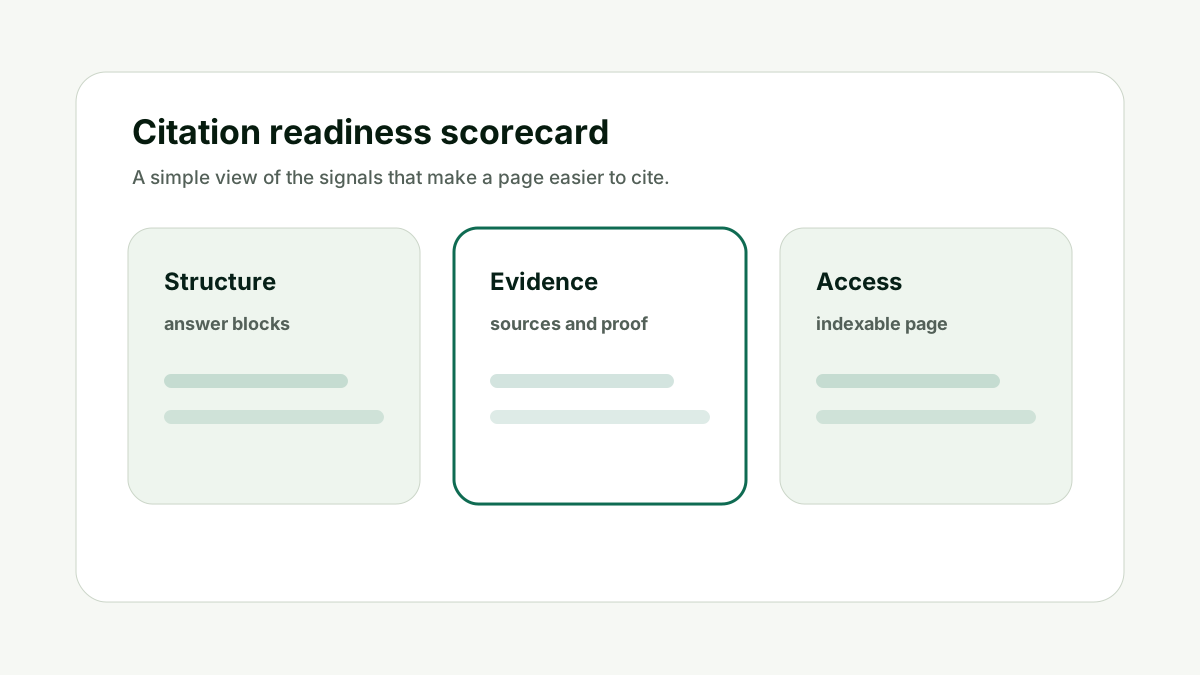
Start with the AI Citation Readiness Checker on the page you want cited, then fix the weakest structure, source, or access signals before retesting prompts.
Table of Contents
I am going to answer this as a practical source-quality question, not as a promise that one checklist can force citations.
AI citation visibility usually depends on a mix of page structure, evidence, technical access, and source trust. The page has to be easy to extract, but it also has to be worth extracting.
Here is the framework I would use for a service business wants AI answers to cite its guide instead of only citing generic publisher pages.
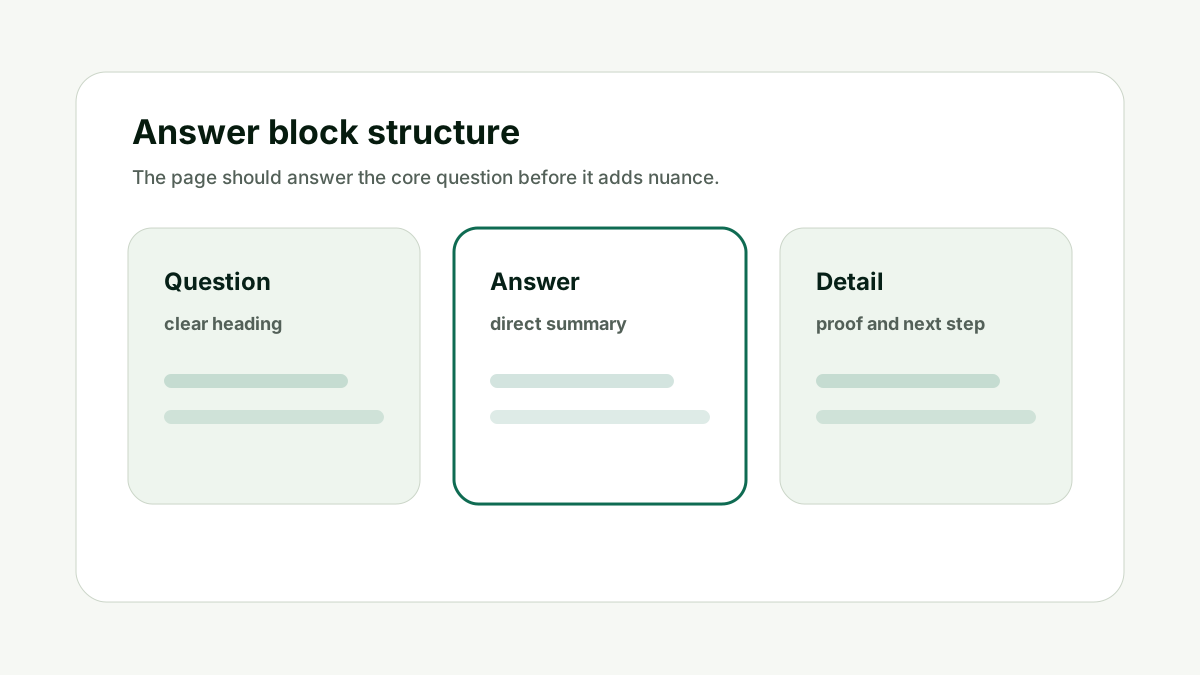
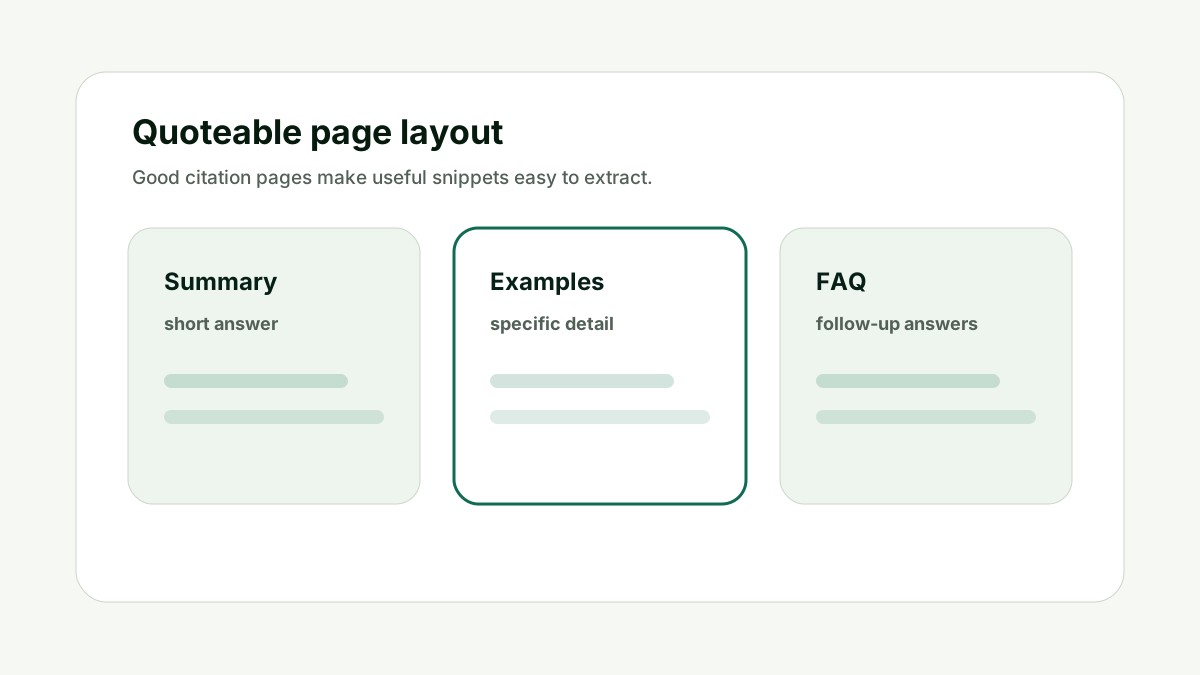
Extractable Answer
For How do I get AI to cite my website?, extractable answer matters because AI systems need a short, self-contained answer they can lift without rewriting the whole page. This is where many pages lose citation potential: the information may be present, but it is not packaged in a way an answer system or human reviewer can confidently reuse.
Put the answer near the top of the page under a question-shaped heading. Keep it factual, specific, and complete enough that it still makes sense outside the page.
Avoid opening with a vague brand statement. A human may tolerate the build-up, but an answer engine needs the answer before the supporting story. The practical test is simple: if someone copied only this section into a buyer-facing answer, would it still be accurate, specific, and supported? If not, the section needs more structure before it deserves to be treated as a source.
Extractable Answer is one of the signals that makes this page more usable as an AI answer source.
Source Proof
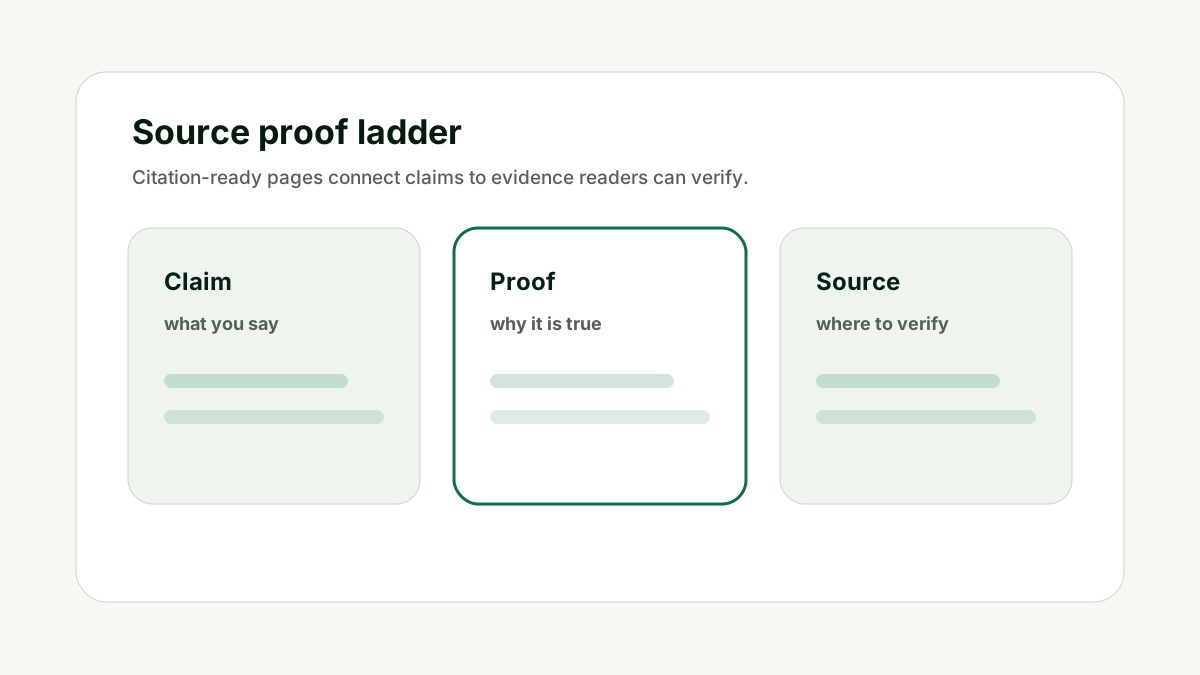
For How do I get AI to cite my website?, source proof matters because A page is easier to cite when claims are attached to proof a reader can verify. This is where many pages lose citation potential: the information may be present, but it is not packaged in a way an answer system or human reviewer can confidently reuse.
Add examples, named sources, original data, screenshots, policy references, or clear methodology where they support the point. The proof should sit close to the claim.
Do not rely on broad claims like "best", "trusted", or "leading" unless the page shows why those claims are true. The practical test is simple: if someone copied only this section into a buyer-facing answer, would it still be accurate, specific, and supported? If not, the section needs more structure before it deserves to be treated as a source.
Source Proof is one of the signals that makes this page more usable as an AI answer source.
Schema Support
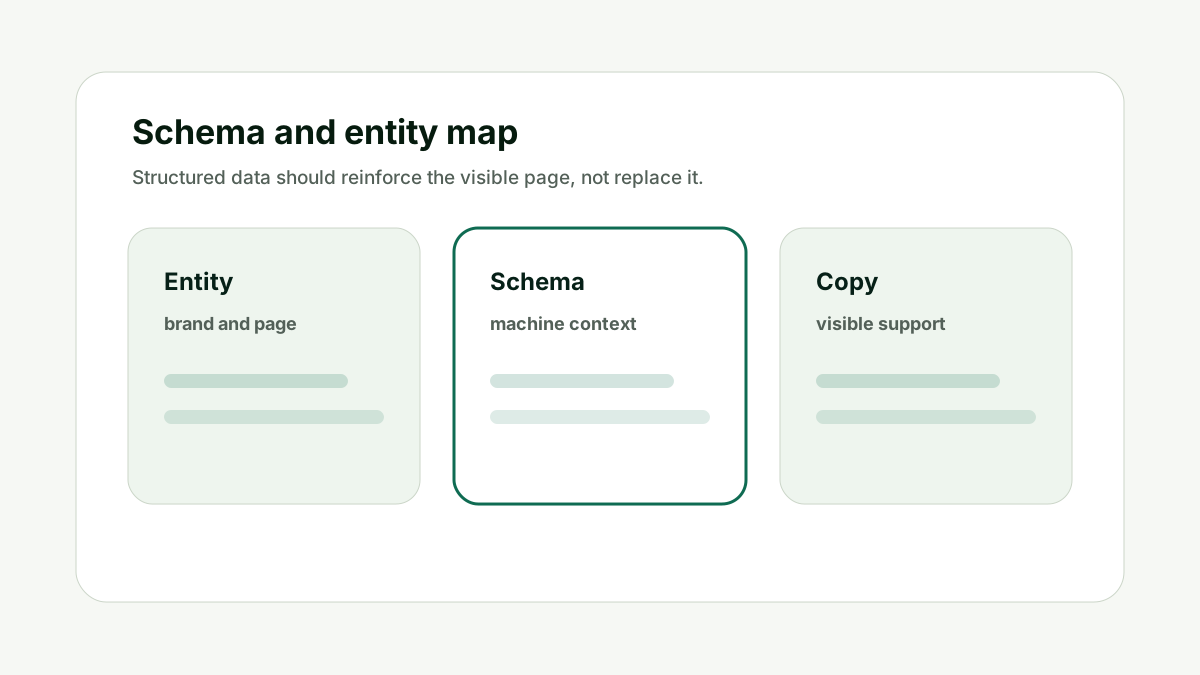
For How do I get AI to cite my website?, schema support matters because Structured data can reinforce what the visible page already says. This is where many pages lose citation potential: the information may be present, but it is not packaged in a way an answer system or human reviewer can confidently reuse.
Use schema for articles, FAQs, products, organizations, breadcrumbs, and other relevant entities when the page genuinely contains that information.
Schema is not a substitute for visible clarity. If humans cannot see the answer, adding markup alone will not make the page citation-ready. The practical test is simple: if someone copied only this section into a buyer-facing answer, would it still be accurate, specific, and supported? If not, the section needs more structure before it deserves to be treated as a source.
Schema Support is one of the signals that makes this page more usable as an AI answer source.
Technical Access
For How do I get AI to cite my website?, technical access matters because The page has to be reachable, canonical, and readable before citation readiness matters. This is where many pages lose citation potential: the information may be present, but it is not packaged in a way an answer system or human reviewer can confidently reuse.
Check indexability, canonical tags, robots rules, rendering, title tags, and whether the core answer appears in crawlable HTML.
If the page is blocked or canonicalized to another URL, improve that first with the Indexability and Canonical Checker. The practical test is simple: if someone copied only this section into a buyer-facing answer, would it still be accurate, specific, and supported? If not, the section needs more structure before it deserves to be treated as a source.
Technical Access is one of the signals that makes this page more usable as an AI answer source.
Topic Fit
For How do I get AI to cite my website?, topic fit matters because AI systems are more likely to cite a page when the page matches the question being asked. This is where many pages lose citation potential: the information may be present, but it is not packaged in a way an answer system or human reviewer can confidently reuse.
Map the buyer question to the exact section that answers it. If one page tries to answer too many unrelated questions, split or reorganize it.
Do not chase every prompt with one page. Build the clearest source for the prompt where you can add useful evidence. The practical test is simple: if someone copied only this section into a buyer-facing answer, would it still be accurate, specific, and supported? If not, the section needs more structure before it deserves to be treated as a source.
Topic Fit is one of the signals that makes this page more usable as an AI answer source.
Retesting
For How do I get AI to cite my website?, retesting matters because The only useful proof is whether answers improve after the page changes. This is where many pages lose citation potential: the information may be present, but it is not packaged in a way an answer system or human reviewer can confidently reuse.
Run the same prompts before and after edits. Track whether the page is cited, whether the brand is mentioned, and which competitors still appear.
For ongoing visibility, pair page fixes with the LLM Visibility Checker so the work is measured against real answer prompts. The practical test is simple: if someone copied only this section into a buyer-facing answer, would it still be accurate, specific, and supported? If not, the section needs more structure before it deserves to be treated as a source.
Retesting is one of the signals that makes this page more usable as an AI answer source.
How This Fits the Wider AI Search Workflow
The important thing with How do I get AI to cite my website? is to avoid treating citation readiness as a cosmetic content task. The real job is turning a page into a reliable source candidate, then connecting that page to the wider source trail around the brand.
That order matters because AI-search work usually fails in layers. A page may be blocked technically, vague editorially, unsupported with proof, or weaker than competitor sources across the web. If you only fix one layer, the answer may still ignore the page.
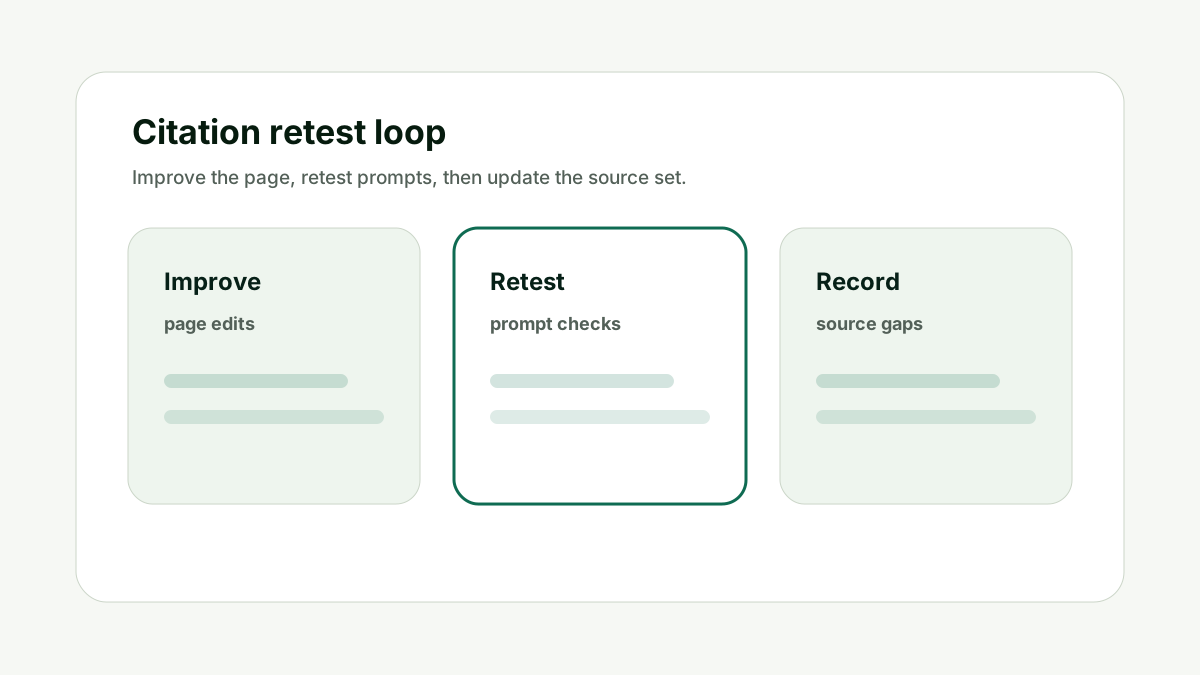
I would treat citation readiness as the page-level checkpoint inside a larger workflow. First, make sure the page is accessible and canonical. Second, make sure the page answers a real prompt clearly. Third, connect the claim to visible proof. Fourth, retest the answer and compare the page against sources that already win.
This is also where internal linking should stay natural. Link to a tool, service, or article only when it is the next useful action. Forced links make the article worse for readers and do not make the source more trustworthy.
Run the checker on the exact URL you want AI answers to quote, not just on the homepage. If the score improves but citations still do not appear, the next issue is probably authority, freshness, or corroboration. That is useful because it tells the team what kind of work is actually needed next.
Good citation readiness is not about tricking an answer engine. It is about making the best source easier to find, understand, quote, and verify.
A Simple Worked Example
Suppose the page is a guide about choosing a specialist agency. The old version starts with a broad hero claim, then takes six paragraphs to define the problem. It has no sources, no FAQ, no clear examples, and no page-level summary.
I would rewrite the opening around one direct answer. Then I would add a short section that defines who the guide is for, a proof section that shows examples or methodology, and an FAQ that answers the follow-up questions buyers actually ask.
Next I would add relevant schema only after the visible content is strong. If the page is an article, use article markup. If it has real FAQs, use FAQ content carefully and make sure the visible answers match the markup.
Finally I would retest the same prompts. If competitors still win, I would inspect whether they have stronger off-site mentions, better examples, or more trusted references. That tells me whether the gap is on-page readiness or source authority.
Practical action checklist
- Match the page to one question or prompt before editing.
- Add a direct answer before adding supporting detail.
- Keep proof close to claims that need verification.
- Validate technical access and schema only after the visible page is useful.
- Retest the same prompts so the team can see whether anything changed.
What I Would Do Next
Pick one page and one prompt where you want citation visibility.
Score that URL, fix the weakest answer, proof, schema, or access issue, then retest the same prompt.
Record whether the page became easier to cite or whether the gap is really external source authority.
Conclusion
How do I get AI to cite my website? is a useful question because it separates citation readiness from wishful thinking.
The practical answer is to build pages that answer clearly, prove their claims, stay technically accessible, and connect to a trustworthy source trail.
That gives your team a better workflow than publishing more content and hoping an AI answer engine finds the useful part.
FAQ
Can I force AI systems to cite my site?
No. You can improve the page so it is easier to cite, but citation decisions still depend on relevance, authority, source availability, and the answer system.
What is the first edit I should make?
Add a direct answer block near the top of the page. It should answer the target question without requiring a reader to scan the whole article.
Do backlinks matter for AI citations?
Authority and source reputation can matter. On-page readiness helps, but external proof and trusted mentions often influence whether a page is selected.
Should I update every page?
Start with pages that already deserve to be cited: service explainers, original research, comparison pages, guides, case studies, and support docs.

Adam O'neil
1stpage Editorial Team
Our 1stpage editorial team combines hands-on SEO agency experience with evidence-backed search performance guidance. These posts are built from real search wins, audit-grade insight, and conversion-tested tactics designed to help agencies, founders, and search teams earn more traffic and trust.