Short answer
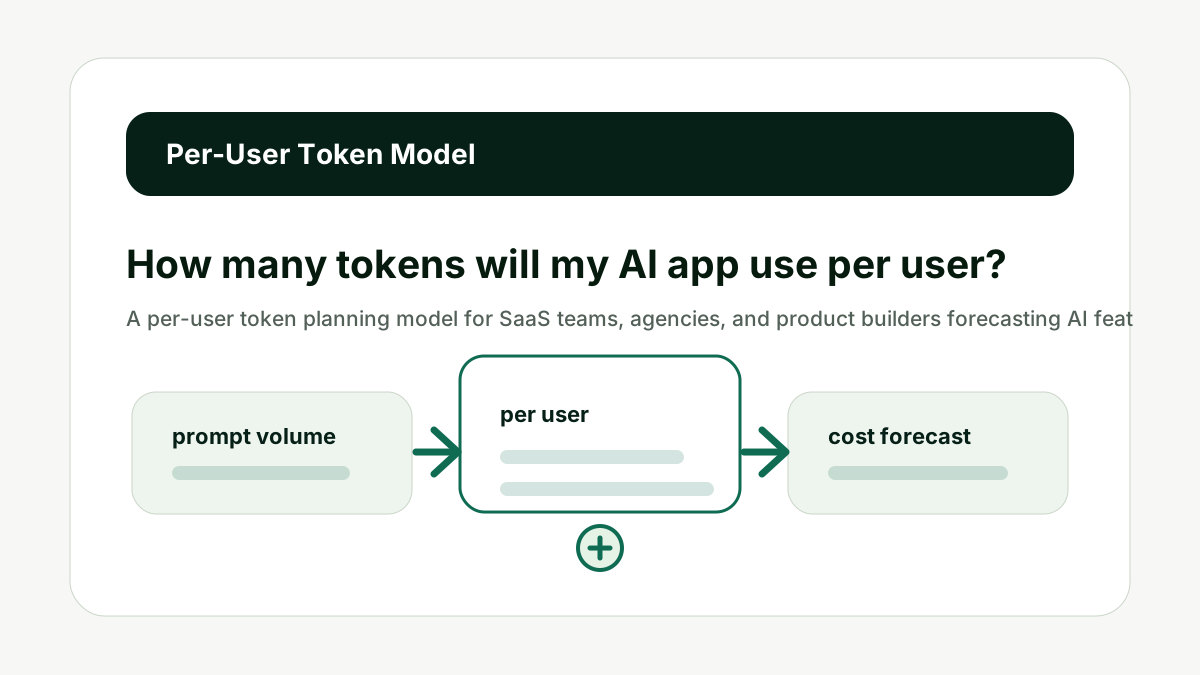
Estimate token usage per user by multiplying average tokens per request by requests per session, sessions per month, retries, and background jobs. Separate light, normal, and heavy users because averages can hide the accounts that drive most of the bill.
Provider prices change. Treat this guide as a cost-modeling workflow, then verify current rates on official pricing pages before making a production budget.
Reader question
"How do I estimate token cost per active user?"
Start with one representative workflow in the AI Token & API Cost Calculator, then multiply by user behavior rather than signups.
Table of Contents
I am going to answer this from the perspective of a team that has to ship an AI workflow, keep the user experience useful, and avoid a surprise invoice later.
The mistake is treating API cost as a price-table lookup. The useful version is a workflow forecast: what text goes in, what text comes out, how many times it happens, what happens when it fails, and which model is doing the work.
Here is the framework I would use for a SaaS team needs to know whether an AI feature can fit inside subscription pricing.
Define an Active User
Token forecasting should use active users, not total accounts. This matters because API cost is not one number. It is a behavior pattern made of prompt length, response length, volume, retries, model choice, and user habits.
Define what counts as an active AI user: opened the feature, ran a prompt, generated a report, summarized a document, or completed a workflow. Then estimate monthly active AI users separately from general product users.
Do not multiply AI cost by every registered account unless every account actually uses the feature. The better habit is to model the workflow before scale, then compare the estimate with live usage after launch.
For How many tokens will my AI app use per user?, the practical standard is simple: the forecast should name the workflow, expected user action, input token range, output token range, request count, model, and safety buffer. If those pieces are missing, the number is not a budget; it is a guess.
The calculator can speed up the first pass, but the final decision still needs product context. A support chat, report generator, coding assistant, and content workflow all behave differently. Each deserves its own estimate.
This is also where internal planning matters. If the AI feature supports a search or content workflow, pair the cost forecast with the Prompt Length / Context Window Checker for prompt size and the AI Tool Chooser when the team is deciding which model or subscription path fits the job.
Define an Active User makes the cost model easier to explain before the workflow reaches production volume.
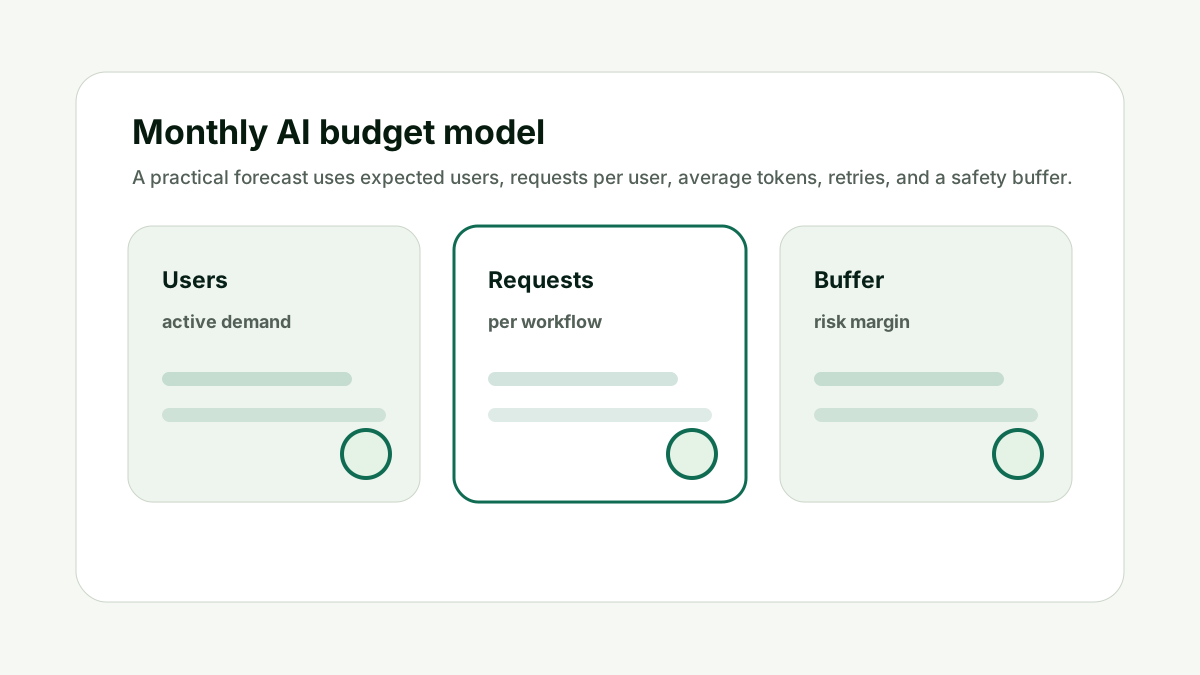
Map User Actions
Different user actions consume different token amounts. This matters because API cost is not one number. It is a behavior pattern made of prompt length, response length, volume, retries, model choice, and user habits.
List each AI action: chat reply, document summary, content draft, classification, report, search, or agent task. Estimate tokens for each action independently so expensive workflows are visible.
Do not average all AI actions into one request if the workflows behave differently. The better habit is to model the workflow before scale, then compare the estimate with live usage after launch.
For How many tokens will my AI app use per user?, the practical standard is simple: the forecast should name the workflow, expected user action, input token range, output token range, request count, model, and safety buffer. If those pieces are missing, the number is not a budget; it is a guess.
The calculator can speed up the first pass, but the final decision still needs product context. A support chat, report generator, coding assistant, and content workflow all behave differently. Each deserves its own estimate.
This is also where internal planning matters. If the AI feature supports a search or content workflow, pair the cost forecast with the Prompt Length / Context Window Checker for prompt size and the AI Tool Chooser when the team is deciding which model or subscription path fits the job.
Map User Actions makes the cost model easier to explain before the workflow reaches production volume.
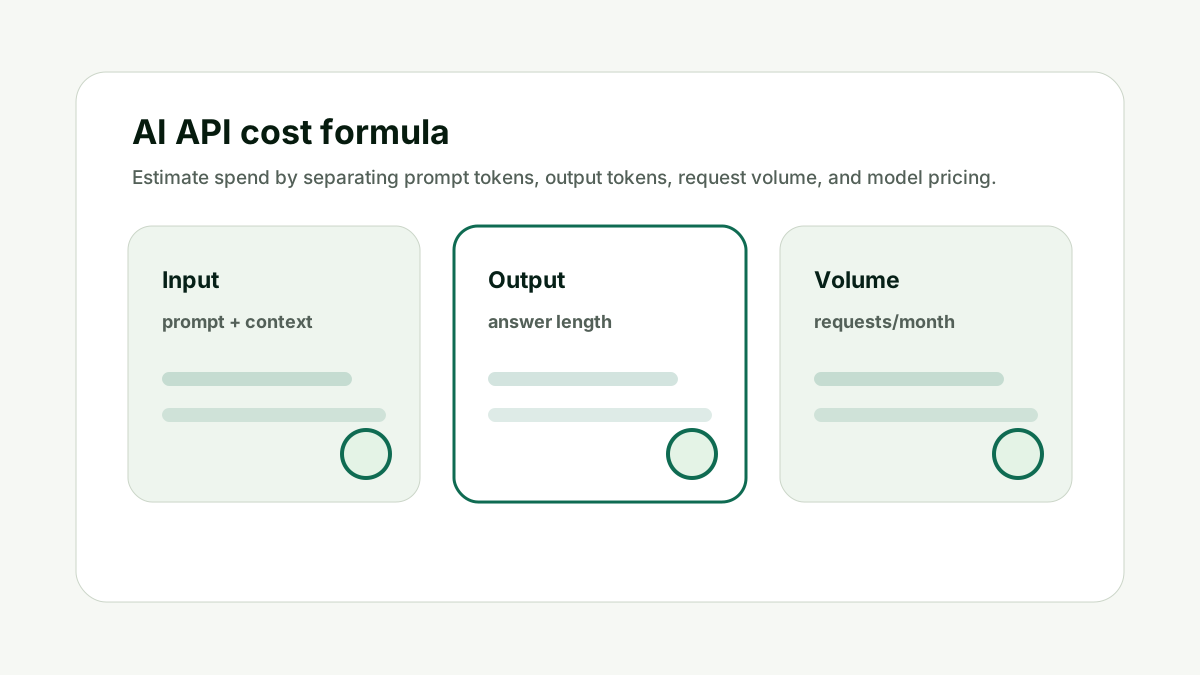
Separate User Tiers
A small group of heavy users can drive most usage. This matters because API cost is not one number. It is a behavior pattern made of prompt length, response length, volume, retries, model choice, and user habits.
Build light, normal, and heavy usage bands. For each band, estimate requests per session, sessions per month, output length, and retry rate.
Do not let a blended average hide heavy accounts that break margins. The better habit is to model the workflow before scale, then compare the estimate with live usage after launch.
For How many tokens will my AI app use per user?, the practical standard is simple: the forecast should name the workflow, expected user action, input token range, output token range, request count, model, and safety buffer. If those pieces are missing, the number is not a budget; it is a guess.
The calculator can speed up the first pass, but the final decision still needs product context. A support chat, report generator, coding assistant, and content workflow all behave differently. Each deserves its own estimate.
This is also where internal planning matters. If the AI feature supports a search or content workflow, pair the cost forecast with the Prompt Length / Context Window Checker for prompt size and the AI Tool Chooser when the team is deciding which model or subscription path fits the job.
Separate User Tiers makes the cost model easier to explain before the workflow reaches production volume.
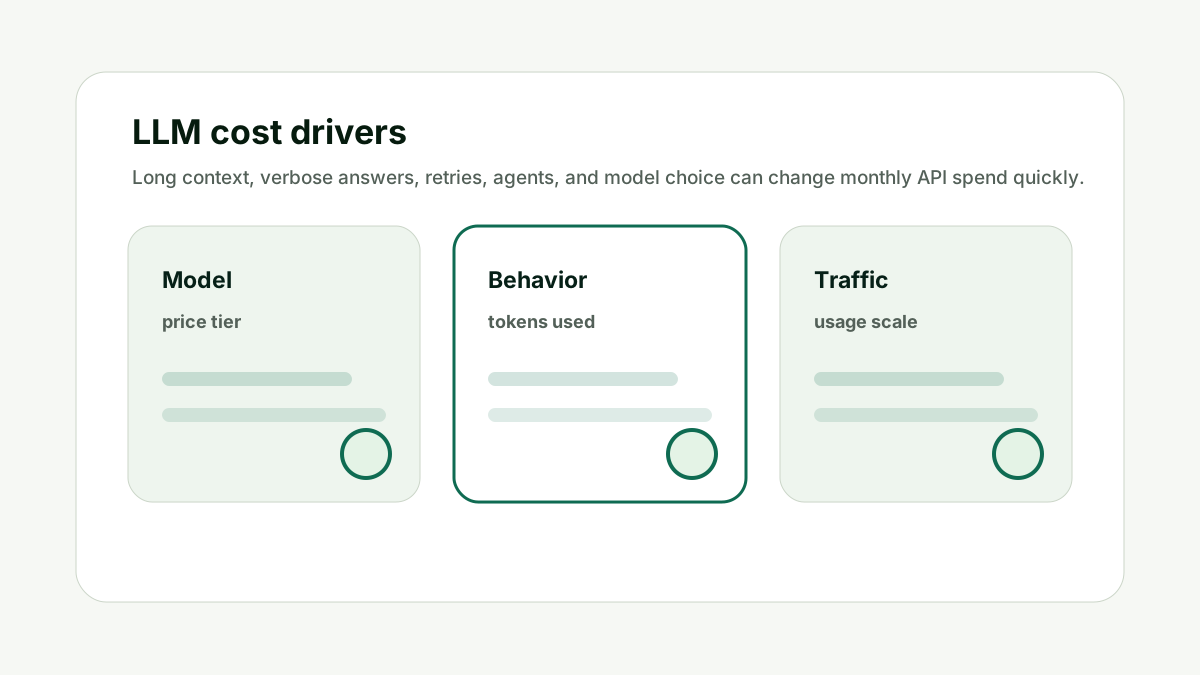
Include Background Calls
Some AI products run jobs when users are not actively clicking. This matters because API cost is not one number. It is a behavior pattern made of prompt length, response length, volume, retries, model choice, and user habits.
Include scheduled summaries, embeddings, evaluations, safety checks, enrichment, notifications, and sync jobs. These costs belong in per-user economics if they are triggered by the account.
Do not forecast only visible chat messages. The better habit is to model the workflow before scale, then compare the estimate with live usage after launch.
For How many tokens will my AI app use per user?, the practical standard is simple: the forecast should name the workflow, expected user action, input token range, output token range, request count, model, and safety buffer. If those pieces are missing, the number is not a budget; it is a guess.
The calculator can speed up the first pass, but the final decision still needs product context. A support chat, report generator, coding assistant, and content workflow all behave differently. Each deserves its own estimate.
This is also where internal planning matters. If the AI feature supports a search or content workflow, pair the cost forecast with the Prompt Length / Context Window Checker for prompt size and the AI Tool Chooser when the team is deciding which model or subscription path fits the job.
Include Background Calls makes the cost model easier to explain before the workflow reaches production volume.
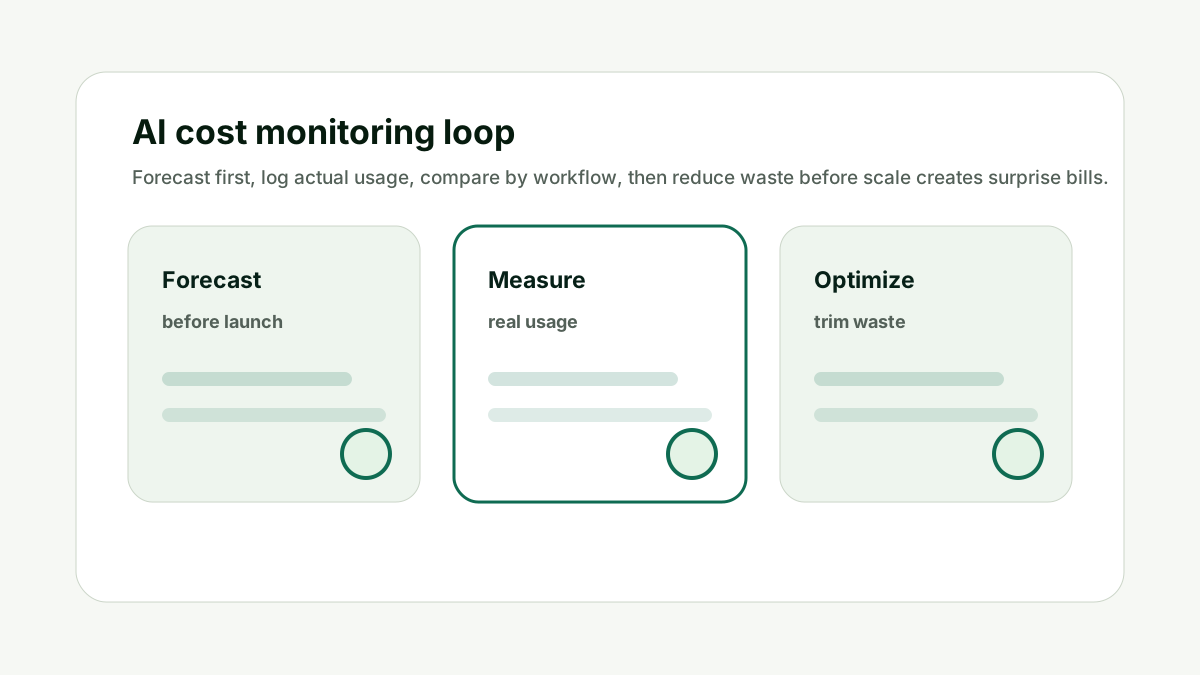
Connect Usage to Product Pricing
Per-user token cost matters because it affects margins and package limits. This matters because API cost is not one number. It is a behavior pattern made of prompt length, response length, volume, retries, model choice, and user habits.
Compare estimated AI cost per user with plan price, support cost, infrastructure cost, and margin target. If heavy usage is risky, add fair-use limits or charge for higher-volume workflows.
Do not offer unlimited AI usage without knowing the heavy-user cost case. The better habit is to model the workflow before scale, then compare the estimate with live usage after launch.
For How many tokens will my AI app use per user?, the practical standard is simple: the forecast should name the workflow, expected user action, input token range, output token range, request count, model, and safety buffer. If those pieces are missing, the number is not a budget; it is a guess.
The calculator can speed up the first pass, but the final decision still needs product context. A support chat, report generator, coding assistant, and content workflow all behave differently. Each deserves its own estimate.
This is also where internal planning matters. If the AI feature supports a search or content workflow, pair the cost forecast with the Prompt Length / Context Window Checker for prompt size and the AI Tool Chooser when the team is deciding which model or subscription path fits the job.
Connect Usage to Product Pricing makes the cost model easier to explain before the workflow reaches production volume.
Measure After Launch
Forecasts improve only when real usage is logged. This matters because API cost is not one number. It is a behavior pattern made of prompt length, response length, volume, retries, model choice, and user habits.
Store token usage by user, workspace, workflow, model, and prompt version. Review the spread between light, normal, and heavy users after launch.
Do not wait for invoices to understand per-user economics. The better habit is to model the workflow before scale, then compare the estimate with live usage after launch.
For How many tokens will my AI app use per user?, the practical standard is simple: the forecast should name the workflow, expected user action, input token range, output token range, request count, model, and safety buffer. If those pieces are missing, the number is not a budget; it is a guess.
The calculator can speed up the first pass, but the final decision still needs product context. A support chat, report generator, coding assistant, and content workflow all behave differently. Each deserves its own estimate.
This is also where internal planning matters. If the AI feature supports a search or content workflow, pair the cost forecast with the Prompt Length / Context Window Checker for prompt size and the AI Tool Chooser when the team is deciding which model or subscription path fits the job.
Measure After Launch makes the cost model easier to explain before the workflow reaches production volume.
How This Fits the Wider AI Workflow
The useful way to think about How many tokens will my AI app use per user? is that API cost planning is part of product design. Cost is shaped by what the user asks, what context the app sends, how much the model returns, and how often the workflow repeats.
The underlying technical idea comes from tokenization and transformer language models. Research such as subword tokenization, Attention Is All You Need, and few-shot language model research explains why prompt text, examples, and generated text all become measurable units.
For current production estimates, always verify the official provider pages: OpenAI API pricing, Anthropic pricing, and Gemini API pricing. Prices and model names change, so the articles in this cluster focus on the forecast method rather than frozen pricing tables.
Model one light user, one normal user, and one heavy user instead of one blended average. Internal links should stay natural. Link to the calculator when the reader is ready to estimate cost, to the prompt checker when prompt length is the issue, and to the AI Tool Chooser when model selection or subscription choice is the bigger question.
If the AI workflow supports SEO, content, or LLM visibility work, the same planning discipline applies. A team using the GEO / LLM SEO Planner or AI Keyword Clustering & Topical Map Helper still needs to know whether repeated AI calls are affordable at scale.
A Simple Worked Example
A SaaS app offers AI content briefs. A normal user creates five briefs per month, each with one prompt and one generated output. A heavy user creates fifty and regenerates each output twice.
A single average hides the problem. The normal user may fit comfortably inside the plan margin, while the heavy user can consume a large share of subscription revenue.
The team creates fair-use bands, adds overage controls, and routes simple brief cleanup to a cheaper model. The feature becomes predictable without removing value.
Per-user modeling is not about limiting useful features. It is about pricing and controlling them honestly.
Practical action checklist
- Forecast active AI users, not all accounts.
- List each AI workflow separately.
- Create light, normal, and heavy user bands.
- Include retries and background jobs.
- Compare cost to plan margin.
- Log real usage after launch.
What I Would Do Next
Choose one AI feature and define one user action.
Estimate tokens for that action.
Multiply it by light, normal, and heavy monthly usage.
Conclusion
How many tokens will my AI app use per user? is useful because it turns model pricing into an operational decision.
The practical answer is to forecast by workflow, separate input and output tokens, include retries and hidden calls, verify current provider pricing, and compare the estimate with real usage after launch.
Once the numbers are tied to behavior, the team can improve prompts, route models, set limits, and protect margins without guessing.
FAQ
Should I forecast AI cost per signup or per active user?
Use active AI users. Signups are usually not a good proxy for token usage.
Why model heavy users separately?
Heavy users can dominate total token spend and break margins if every plan is priced around the average.
Do background jobs count as per-user usage?
Yes, if they are triggered by or stored for a user or workspace.
How often should I update the forecast?
Update it after launch, after major prompt changes, and after any pricing or model changes.

Adam O'neil
1stpage Editorial Team
Our 1stpage editorial team combines hands-on SEO agency experience with evidence-backed search performance guidance. These posts are built from real search wins, audit-grade insight, and conversion-tested tactics designed to help agencies, founders, and search teams earn more traffic and trust.