Short answer
Input tokens are the text you send to the model, including system instructions, user messages, retrieved context, examples, and tool data. Output tokens are the text the model generates. Many providers price these separately, so a workflow can be expensive because of long prompts, long answers, or both.
Provider prices change. Treat this guide as a cost-modeling workflow, then verify current rates on official pricing pages before making a production budget.
Reader question
"Why does the pricing page show input and output tokens separately?"
Use the AI Token & API Cost Calculator to enter separate input and output prices, then test how answer length changes the monthly estimate.
Table of Contents
I am going to answer this from the perspective of a team that has to ship an AI workflow, keep the user experience useful, and avoid a surprise invoice later.
The mistake is treating API cost as a price-table lookup. The useful version is a workflow forecast: what text goes in, what text comes out, how many times it happens, what happens when it fails, and which model is doing the work.
Here is the framework I would use for a marketer or builder is reading API pricing pages and needs plain-English token math.
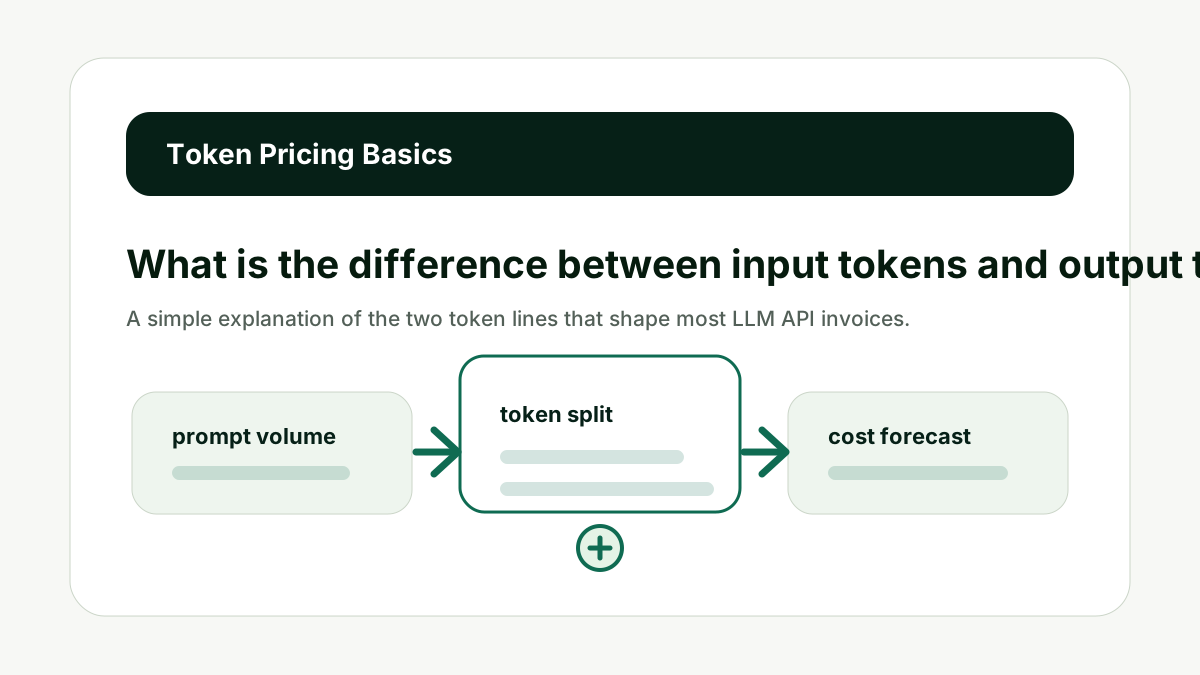
What Input Tokens Mean
Input tokens are everything the model receives before it starts answering. This matters because API cost is not one number. It is a behavior pattern made of prompt length, response length, volume, retries, model choice, and user habits.
This can include the system prompt, developer instructions, user text, chat history, retrieved passages, examples, schema, tool descriptions, and any formatting around the prompt.
Do not count only the visible user question if your application sends extra context. The better habit is to model the workflow before scale, then compare the estimate with live usage after launch.
For What is the difference between input tokens and output tokens?, the practical standard is simple: the forecast should name the workflow, expected user action, input token range, output token range, request count, model, and safety buffer. If those pieces are missing, the number is not a budget; it is a guess.
The calculator can speed up the first pass, but the final decision still needs product context. A support chat, report generator, coding assistant, and content workflow all behave differently. Each deserves its own estimate.
This is also where internal planning matters. If the AI feature supports a search or content workflow, pair the cost forecast with the Prompt Length / Context Window Checker for prompt size and the AI Tool Chooser when the team is deciding which model or subscription path fits the job.
What Input Tokens Mean makes the cost model easier to explain before the workflow reaches production volume.
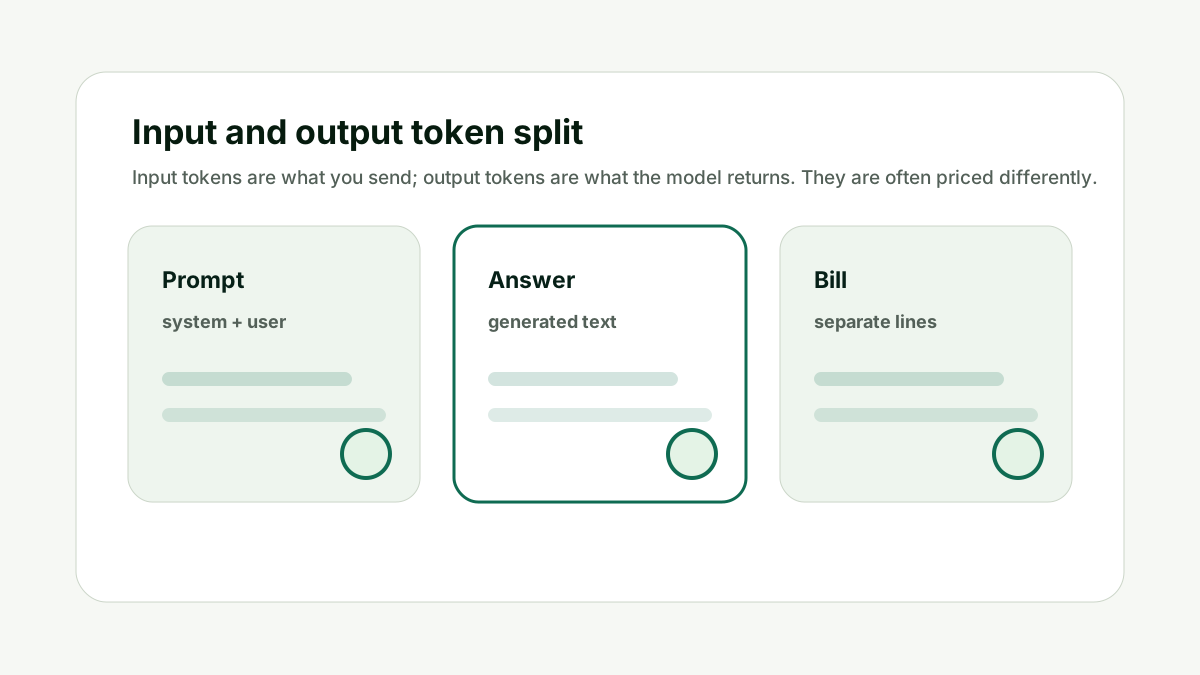
What Output Tokens Mean
Output tokens are the generated answer. This matters because API cost is not one number. It is a behavior pattern made of prompt length, response length, volume, retries, model choice, and user habits.
A short classification may use very few output tokens. A long report, email draft, article outline, or agent explanation can use far more. Output length is one of the easiest levers to control.
Do not assume a model answer will stay short unless you instruct and limit it. The better habit is to model the workflow before scale, then compare the estimate with live usage after launch.
For What is the difference between input tokens and output tokens?, the practical standard is simple: the forecast should name the workflow, expected user action, input token range, output token range, request count, model, and safety buffer. If those pieces are missing, the number is not a budget; it is a guess.
The calculator can speed up the first pass, but the final decision still needs product context. A support chat, report generator, coding assistant, and content workflow all behave differently. Each deserves its own estimate.
This is also where internal planning matters. If the AI feature supports a search or content workflow, pair the cost forecast with the Prompt Length / Context Window Checker for prompt size and the AI Tool Chooser when the team is deciding which model or subscription path fits the job.
What Output Tokens Mean makes the cost model easier to explain before the workflow reaches production volume.
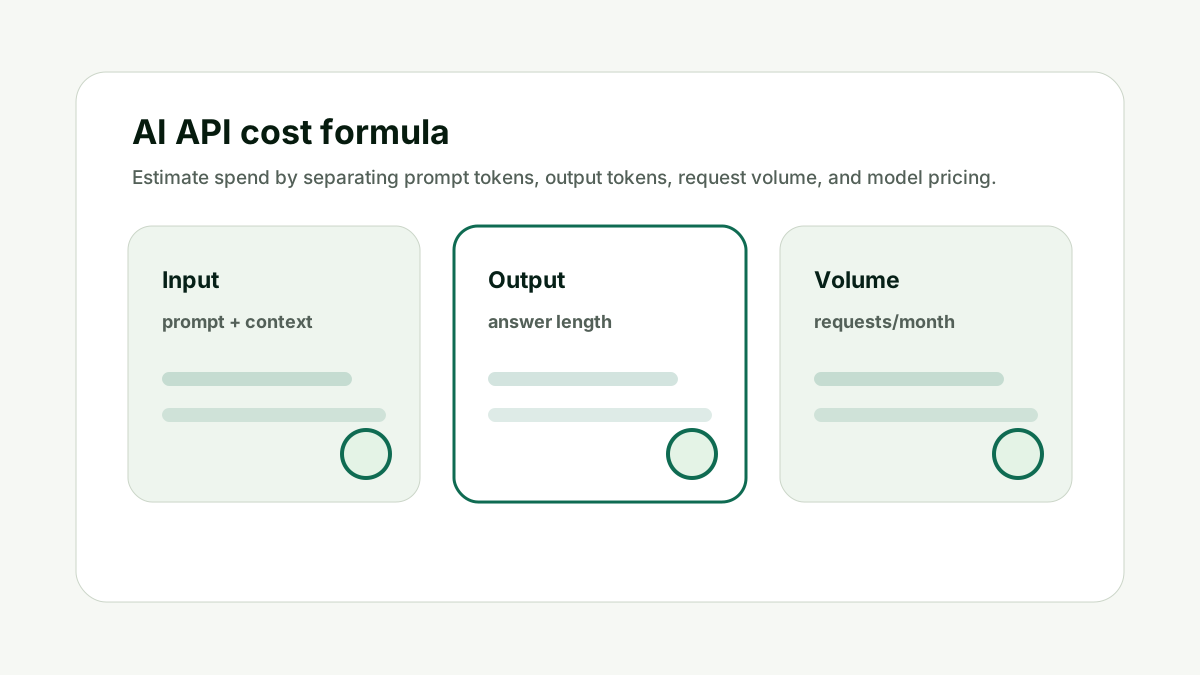
Why Prices Differ
Providers often price input and output differently because generation work and serving behavior differ. This matters because API cost is not one number. It is a behavior pattern made of prompt length, response length, volume, retries, model choice, and user habits.
The practical point is not the theory. The practical point is that your cost model must use two separate lines when the provider pricing page does.
Do not average input and output prices into one number unless the pricing model actually does that. The better habit is to model the workflow before scale, then compare the estimate with live usage after launch.
For What is the difference between input tokens and output tokens?, the practical standard is simple: the forecast should name the workflow, expected user action, input token range, output token range, request count, model, and safety buffer. If those pieces are missing, the number is not a budget; it is a guess.
The calculator can speed up the first pass, but the final decision still needs product context. A support chat, report generator, coding assistant, and content workflow all behave differently. Each deserves its own estimate.
This is also where internal planning matters. If the AI feature supports a search or content workflow, pair the cost forecast with the Prompt Length / Context Window Checker for prompt size and the AI Tool Chooser when the team is deciding which model or subscription path fits the job.
Why Prices Differ makes the cost model easier to explain before the workflow reaches production volume.
How Chat History Affects Cost
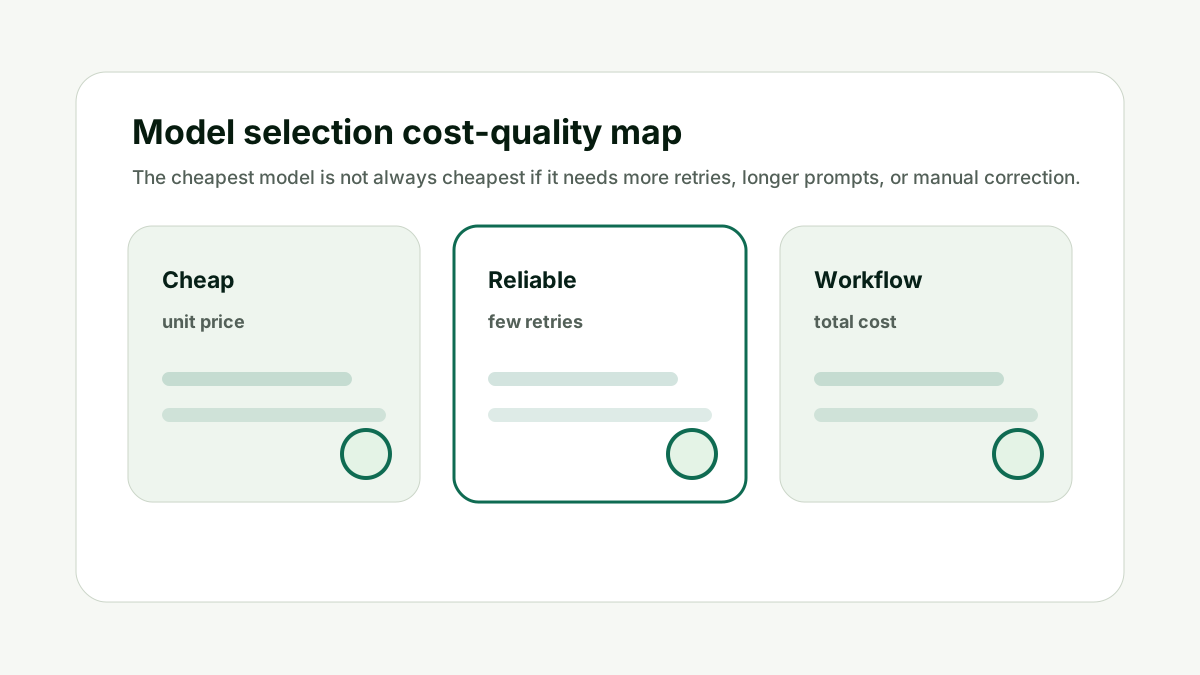
Chat apps can get more expensive as conversation history grows. This matters because API cost is not one number. It is a behavior pattern made of prompt length, response length, volume, retries, model choice, and user habits.
If every new message includes the previous conversation, input tokens increase over time. Summarizing history, trimming old context, and retrieving only relevant context can reduce cost.
Do not keep sending the full conversation when the current task needs only part of it. The better habit is to model the workflow before scale, then compare the estimate with live usage after launch.
For What is the difference between input tokens and output tokens?, the practical standard is simple: the forecast should name the workflow, expected user action, input token range, output token range, request count, model, and safety buffer. If those pieces are missing, the number is not a budget; it is a guess.
The calculator can speed up the first pass, but the final decision still needs product context. A support chat, report generator, coding assistant, and content workflow all behave differently. Each deserves its own estimate.
This is also where internal planning matters. If the AI feature supports a search or content workflow, pair the cost forecast with the Prompt Length / Context Window Checker for prompt size and the AI Tool Chooser when the team is deciding which model or subscription path fits the job.
How Chat History Affects Cost makes the cost model easier to explain before the workflow reaches production volume.
How to Reduce Input Tokens
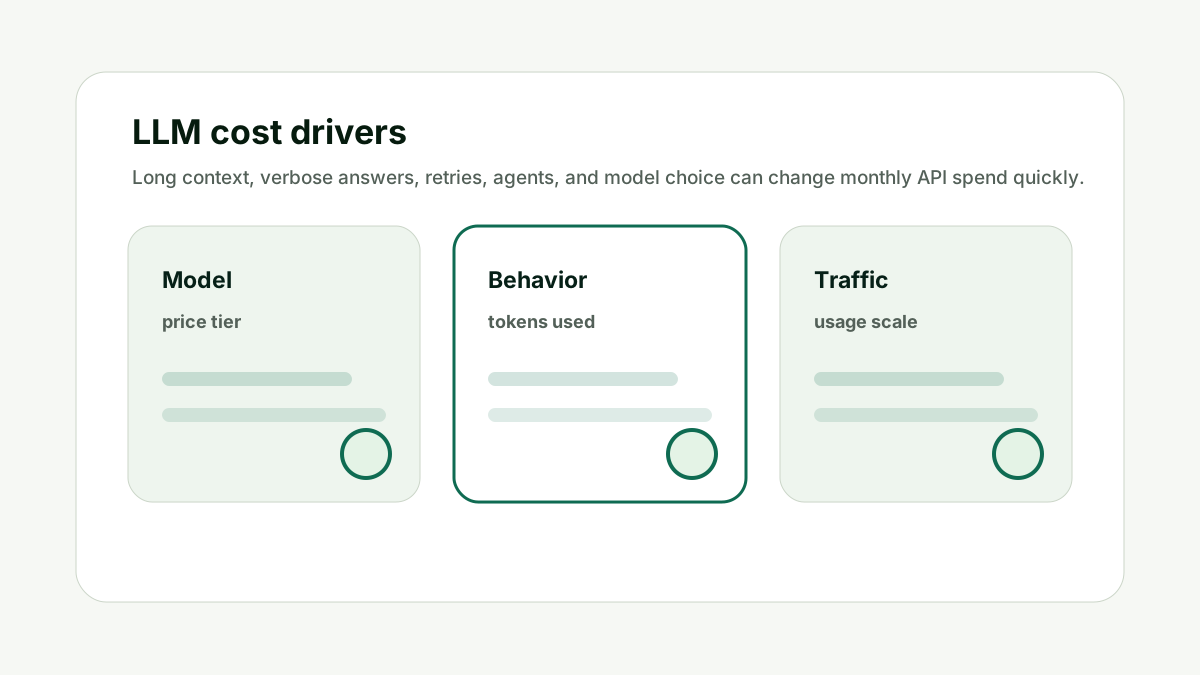
Input cost improves when the model gets only what it needs. This matters because API cost is not one number. It is a behavior pattern made of prompt length, response length, volume, retries, model choice, and user habits.
Shorten system prompts, remove duplicate instructions, reduce retrieval chunks, compress examples, and split large workflows into smaller steps where appropriate.
Do not remove context that protects quality or safety just to save a small amount. The better habit is to model the workflow before scale, then compare the estimate with live usage after launch.
For What is the difference between input tokens and output tokens?, the practical standard is simple: the forecast should name the workflow, expected user action, input token range, output token range, request count, model, and safety buffer. If those pieces are missing, the number is not a budget; it is a guess.
The calculator can speed up the first pass, but the final decision still needs product context. A support chat, report generator, coding assistant, and content workflow all behave differently. Each deserves its own estimate.
This is also where internal planning matters. If the AI feature supports a search or content workflow, pair the cost forecast with the Prompt Length / Context Window Checker for prompt size and the AI Tool Chooser when the team is deciding which model or subscription path fits the job.
How to Reduce Input Tokens makes the cost model easier to explain before the workflow reaches production volume.
How to Reduce Output Tokens
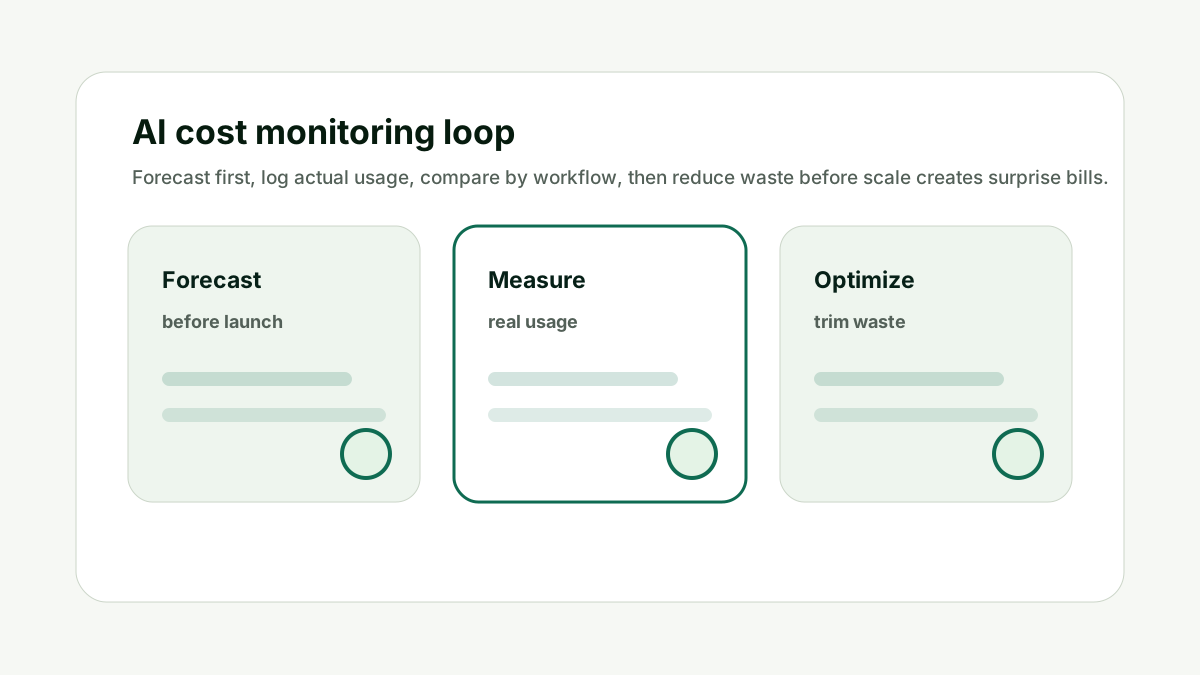
Output cost improves when answers are intentionally sized. This matters because API cost is not one number. It is a behavior pattern made of prompt length, response length, volume, retries, model choice, and user habits.
Use concise formats, bullets, summaries, token limits, and follow-up expansion when needed. Let users ask for more detail instead of always generating the longest answer by default.
Do not cap output so aggressively that users regenerate the answer repeatedly. The better habit is to model the workflow before scale, then compare the estimate with live usage after launch.
For What is the difference between input tokens and output tokens?, the practical standard is simple: the forecast should name the workflow, expected user action, input token range, output token range, request count, model, and safety buffer. If those pieces are missing, the number is not a budget; it is a guess.
The calculator can speed up the first pass, but the final decision still needs product context. A support chat, report generator, coding assistant, and content workflow all behave differently. Each deserves its own estimate.
This is also where internal planning matters. If the AI feature supports a search or content workflow, pair the cost forecast with the Prompt Length / Context Window Checker for prompt size and the AI Tool Chooser when the team is deciding which model or subscription path fits the job.
How to Reduce Output Tokens makes the cost model easier to explain before the workflow reaches production volume.
How This Fits the Wider AI Workflow
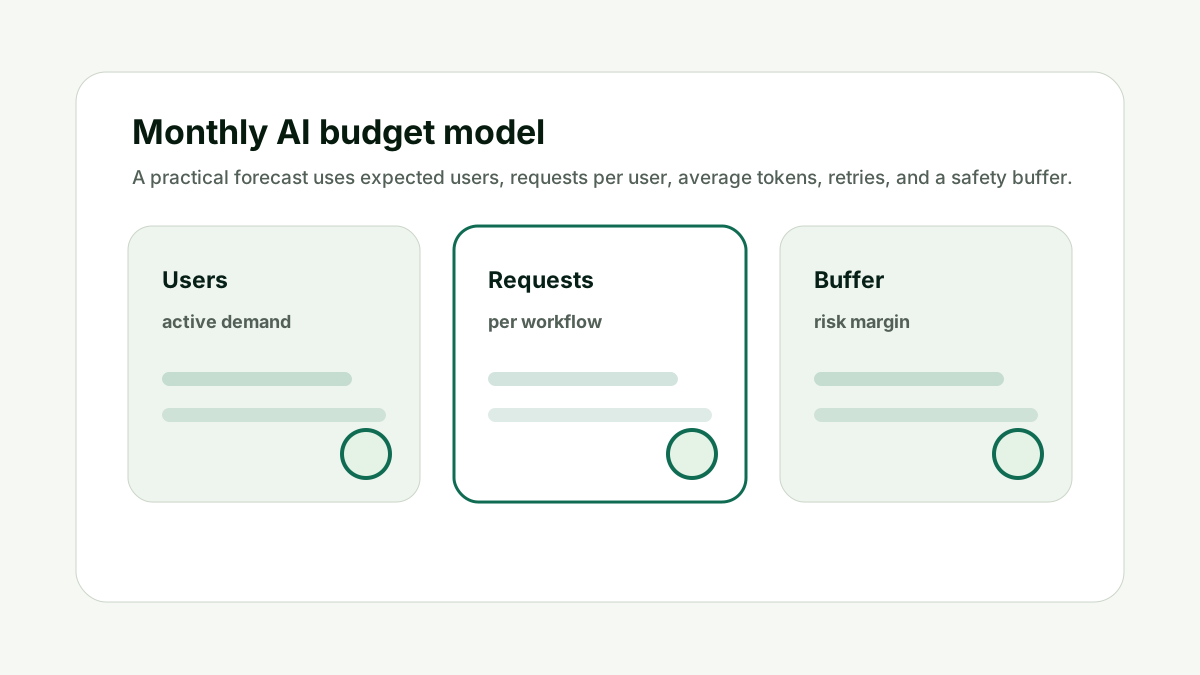
The useful way to think about What is the difference between input tokens and output tokens? is that API cost planning is part of product design. Cost is shaped by what the user asks, what context the app sends, how much the model returns, and how often the workflow repeats.
The underlying technical idea comes from tokenization and transformer language models. Research such as subword tokenization, Attention Is All You Need, and few-shot language model research explains why prompt text, examples, and generated text all become measurable units.
For current production estimates, always verify the official provider pages: OpenAI API pricing, Anthropic pricing, and Gemini API pricing. Prices and model names change, so the articles in this cluster focus on the forecast method rather than frozen pricing tables.
Change the output token field in the calculator and watch how quickly a verbose workflow changes the estimate. Internal links should stay natural. Link to the calculator when the reader is ready to estimate cost, to the prompt checker when prompt length is the issue, and to the AI Tool Chooser when model selection or subscription choice is the bigger question.
If the AI workflow supports SEO, content, or LLM visibility work, the same planning discipline applies. A team using the GEO / LLM SEO Planner or AI Keyword Clustering & Topical Map Helper still needs to know whether repeated AI calls are affordable at scale.
A Simple Worked Example
A support assistant sends a long knowledge-base passage and receives a short answer. That workflow is input-heavy.
A blog-outline generator sends a short prompt but asks for a detailed 2,000-word outline. That workflow is output-heavy.
A chat assistant with full history can be both input-heavy and output-heavy by the tenth turn. Each user message carries previous context plus the new answer.
Once the team sees the split, optimization becomes clearer. Trim context for input-heavy workflows. Shorten or stage answers for output-heavy workflows.
Practical action checklist
- Count hidden prompt context.
- Estimate generated answer length.
- Use separate input and output prices.
- Watch chat history growth.
- Trim duplicate context carefully.
- Limit output without causing retries.
What I Would Do Next
Paste the full prompt, including hidden context, into the calculator.
Test three output lengths.
Use the result to decide whether input or output is the main cost driver.
Conclusion
What is the difference between input tokens and output tokens? is useful because it turns model pricing into an operational decision.
The practical answer is to forecast by workflow, separate input and output tokens, include retries and hidden calls, verify current provider pricing, and compare the estimate with real usage after launch.
Once the numbers are tied to behavior, the team can improve prompts, route models, set limits, and protect margins without guessing.
FAQ
Are tokens the same as words?
No. Tokens are model-specific chunks of text. A token can be a word, part of a word, punctuation, or spacing.
Do system prompts count as input tokens?
Yes. System and developer instructions are part of the text sent to the model.
Why are output tokens often important?
Generated answers can be long, regenerated, or repeated across many users, so output can become a major cost driver.
Can I reduce tokens without hurting quality?
Yes, but optimize carefully. Remove waste before removing context that the model genuinely needs.

Adam O'neil
1stpage Editorial Team
Our 1stpage editorial team combines hands-on SEO agency experience with evidence-backed search performance guidance. These posts are built from real search wins, audit-grade insight, and conversion-tested tactics designed to help agencies, founders, and search teams earn more traffic and trust.