Short answer
A long prompt can fail inside a large context window because the important context is buried, instructions conflict, retrieval adds noise, the task asks for too many outputs, or the answer still needs more room than expected. A larger window helps capacity, but it does not guarantee focus.
Model context limits and tokenizer behavior vary. Treat this guide as a workflow framework, then use model-specific documentation and tokenizer tools before production decisions.
Reader question
"If the model has a huge context window, why does my long prompt still fail?"
Use the Prompt Length / Context Window Checker to check fit, then review whether the context is relevant and the task should be split.
Table of Contents
I am going to answer this like someone building prompts that need to work repeatedly, not just once in a demo.
The common mistake is treating context windows as a storage locker. A better mental model is a working budget: every instruction, example, document, chat turn, and generated answer consumes space.
Here is the framework I would use for a product or content team assumes a large-context model will solve every long-document workflow.
Capacity Is Not Focus
A large context window means more text can fit, not that every detail will be equally useful. This matters because prompt size is not only a technical limit. It changes answer quality, cost, latency, and how much useful work the model can complete in one response.
If the prompt contains thousands of irrelevant words, the model has to sort through noise before answering. Important facts can be present but weakly emphasized.
Do not treat a large context window as permission to paste everything. The better habit is to treat the context window like a budget: spend it on instructions, evidence, examples, and answer room that directly support the current job.
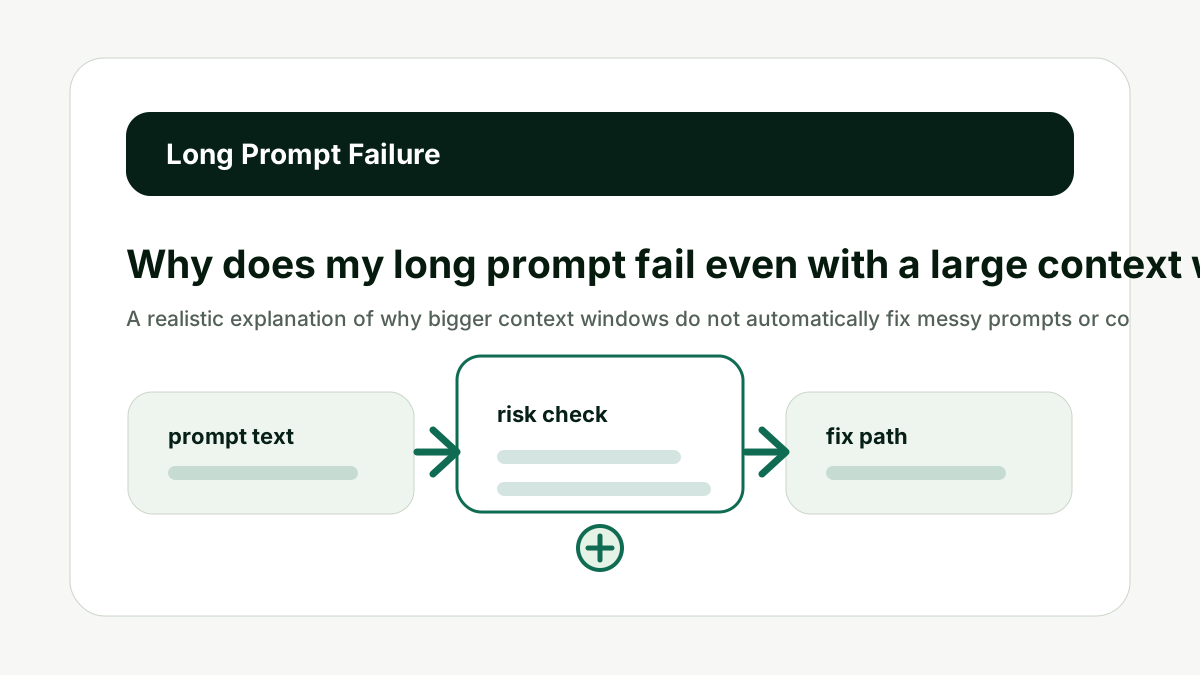
For Why does my long prompt fail even with a large context window?, the practical standard is simple: the prompt should have one clear task, relevant source context, no stale instructions, and enough remaining space for the answer format. If one of those pieces is missing, a larger model may not fix the workflow.
This is also a content and operations issue. Teams that build reusable AI workflows need prompt-length checks before they turn a useful demo into a template, internal tool, or customer-facing feature.
Use internal links naturally. The prompt checker handles context fit, the AI Token & API Cost Calculator handles budget impact, and the AI Tool Chooser helps when model selection is the real constraint.
Capacity Is Not Focus keeps the prompt tied to useful context, not just the largest possible input.
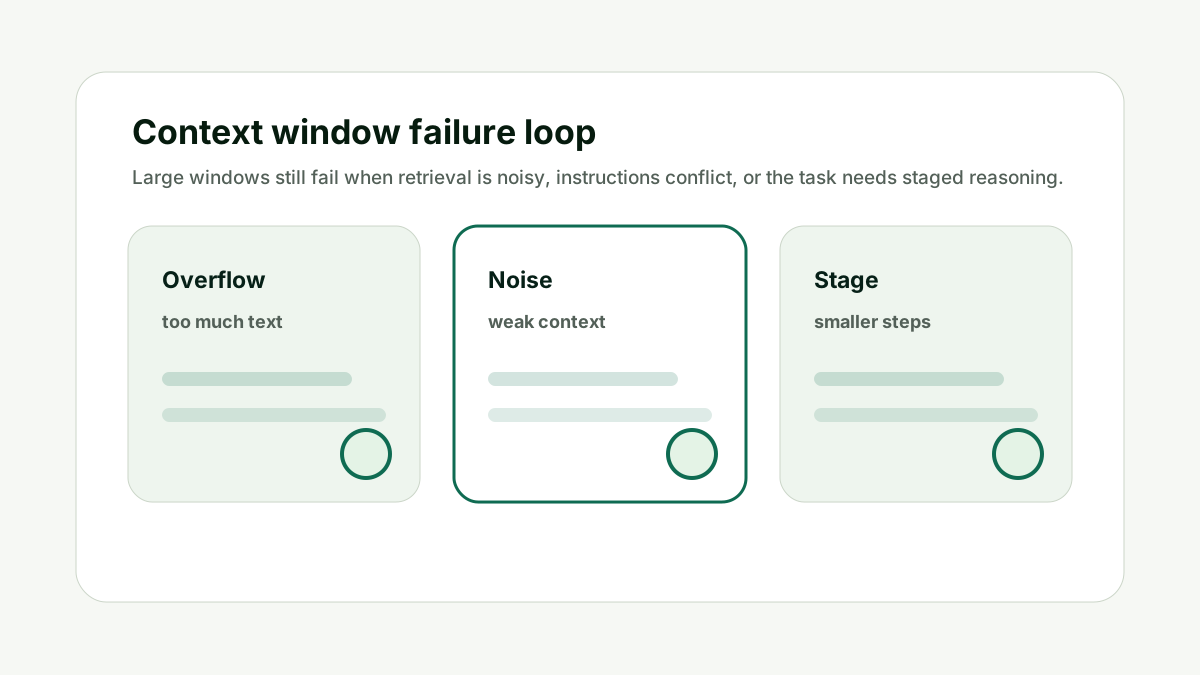
Conflicting Instructions
Long prompts often contain rules that contradict each other. This matters because prompt size is not only a technical limit. It changes answer quality, cost, latency, and how much useful work the model can complete in one response.
Old examples, system rules, user requests, formatting notes, and retrieved snippets can point in different directions. The model may follow one part while ignoring another.
Do not keep stale instructions that no longer match the task. The better habit is to treat the context window like a budget: spend it on instructions, evidence, examples, and answer room that directly support the current job.
For Why does my long prompt fail even with a large context window?, the practical standard is simple: the prompt should have one clear task, relevant source context, no stale instructions, and enough remaining space for the answer format. If one of those pieces is missing, a larger model may not fix the workflow.
This is also a content and operations issue. Teams that build reusable AI workflows need prompt-length checks before they turn a useful demo into a template, internal tool, or customer-facing feature.
Use internal links naturally. The prompt checker handles context fit, the AI Token & API Cost Calculator handles budget impact, and the AI Tool Chooser helps when model selection is the real constraint.
Conflicting Instructions keeps the prompt tied to useful context, not just the largest possible input.
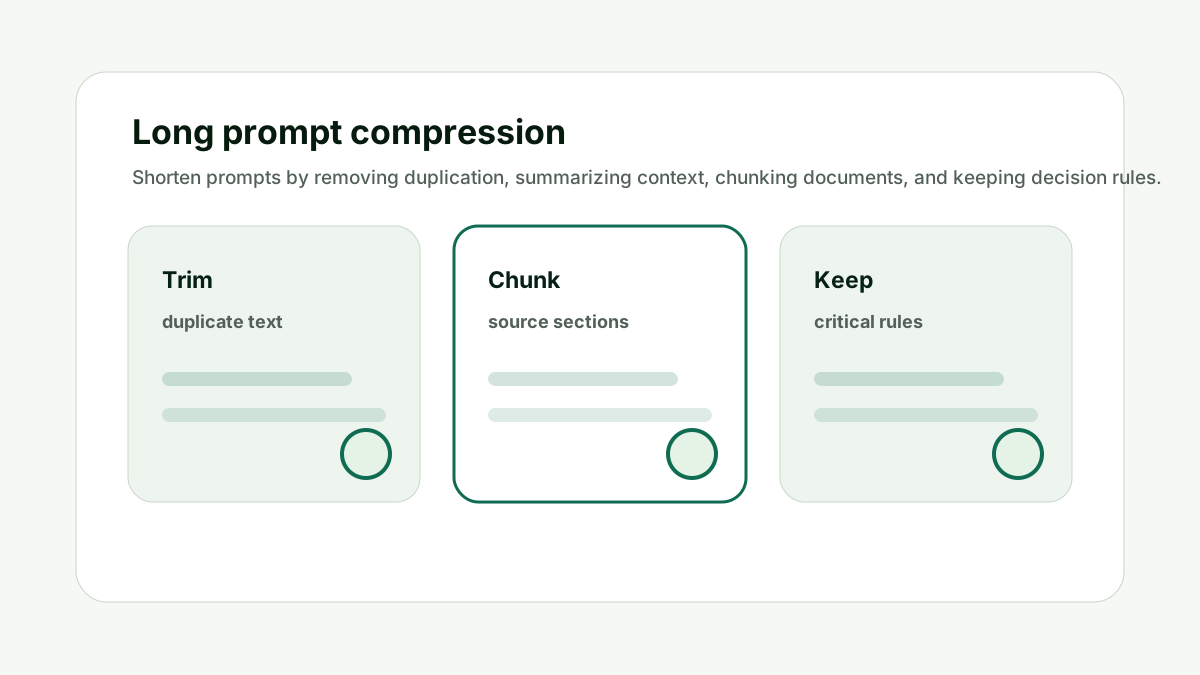
Retrieval Noise
Retrieval can add too much context or the wrong context. This matters because prompt size is not only a technical limit. It changes answer quality, cost, latency, and how much useful work the model can complete in one response.
If a search or RAG system retrieves broad chunks instead of precise passages, the prompt may fit but still be diluted. Improve retrieval quality before increasing context size.
Do not assume more retrieved passages are better. The better habit is to treat the context window like a budget: spend it on instructions, evidence, examples, and answer room that directly support the current job.
For Why does my long prompt fail even with a large context window?, the practical standard is simple: the prompt should have one clear task, relevant source context, no stale instructions, and enough remaining space for the answer format. If one of those pieces is missing, a larger model may not fix the workflow.
This is also a content and operations issue. Teams that build reusable AI workflows need prompt-length checks before they turn a useful demo into a template, internal tool, or customer-facing feature.
Use internal links naturally. The prompt checker handles context fit, the AI Token & API Cost Calculator handles budget impact, and the AI Tool Chooser helps when model selection is the real constraint.
Retrieval Noise keeps the prompt tied to useful context, not just the largest possible input.
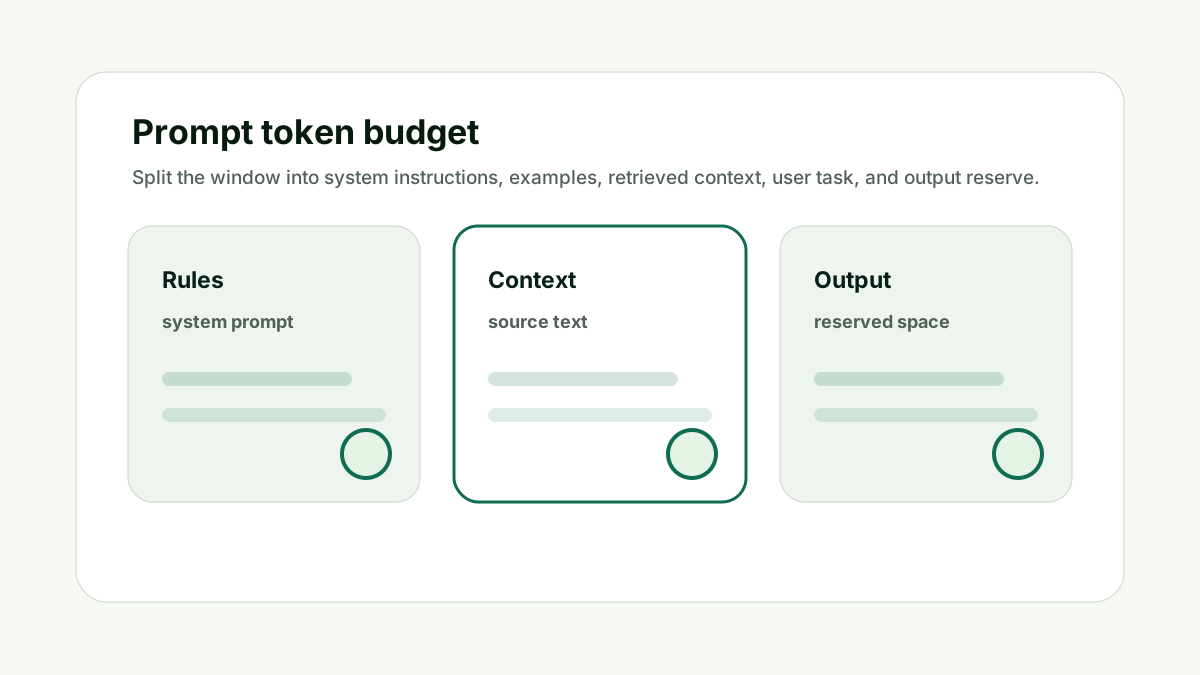
Task Overload
Some prompts fail because the task is too broad. This matters because prompt size is not only a technical limit. It changes answer quality, cost, latency, and how much useful work the model can complete in one response.
Reading, extracting, comparing, writing, formatting, and auditing can all be separate jobs. A large window does not remove the need for a staged workflow.
Do not ask for every deliverable in one response if quality matters. The better habit is to treat the context window like a budget: spend it on instructions, evidence, examples, and answer room that directly support the current job.
For Why does my long prompt fail even with a large context window?, the practical standard is simple: the prompt should have one clear task, relevant source context, no stale instructions, and enough remaining space for the answer format. If one of those pieces is missing, a larger model may not fix the workflow.
This is also a content and operations issue. Teams that build reusable AI workflows need prompt-length checks before they turn a useful demo into a template, internal tool, or customer-facing feature.
Use internal links naturally. The prompt checker handles context fit, the AI Token & API Cost Calculator handles budget impact, and the AI Tool Chooser helps when model selection is the real constraint.
Task Overload keeps the prompt tied to useful context, not just the largest possible input.
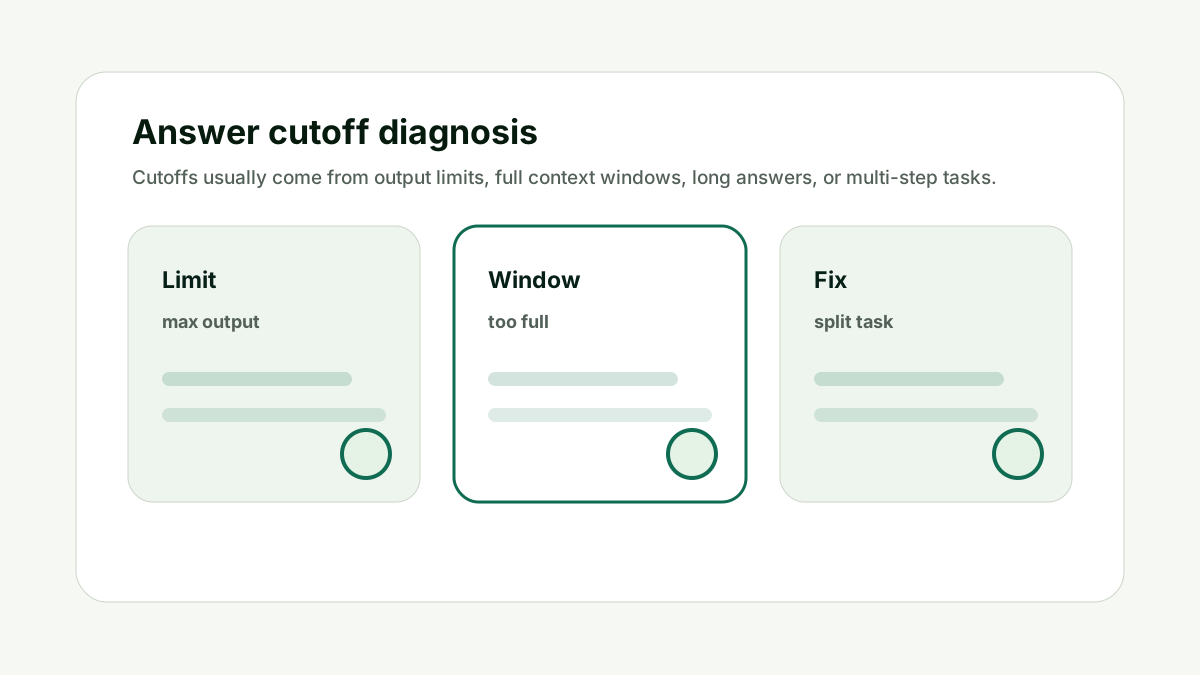
Output Still Matters
Large input capacity does not remove the need for answer room. This matters because prompt size is not only a technical limit. It changes answer quality, cost, latency, and how much useful work the model can complete in one response.
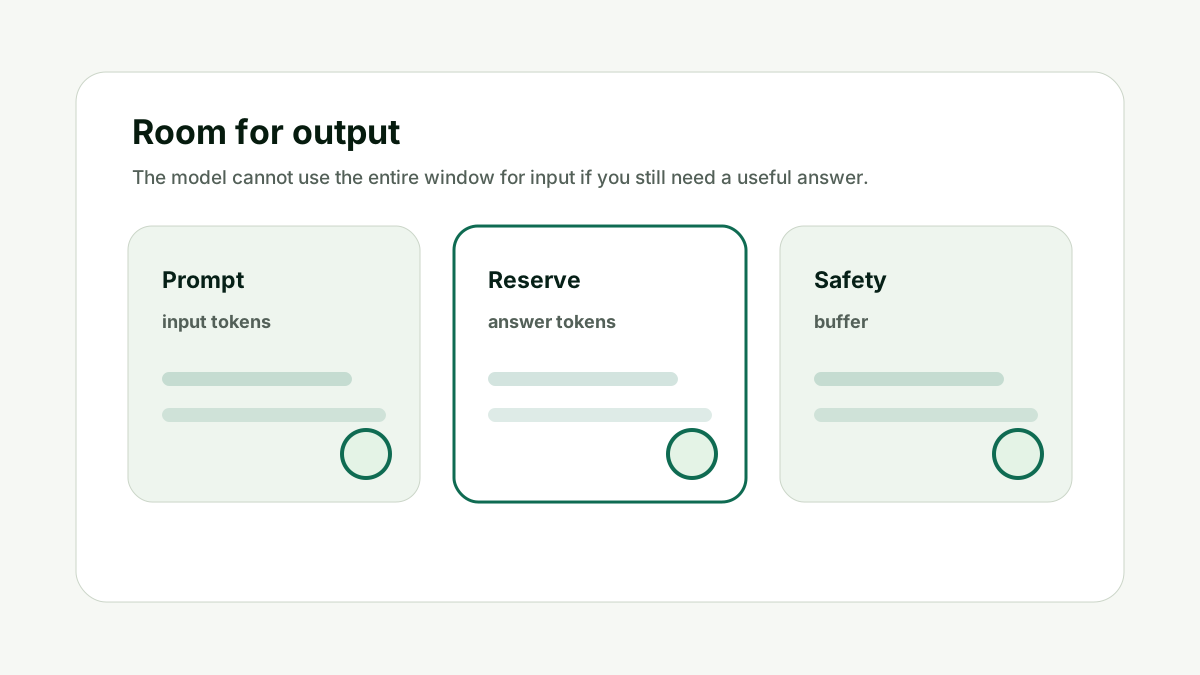
A model may read a huge document but still need space to write the synthesis. If the output is long, reserve room or produce the answer in sections.
Do not spend the whole window on source text and expect a full report. The better habit is to treat the context window like a budget: spend it on instructions, evidence, examples, and answer room that directly support the current job.
For Why does my long prompt fail even with a large context window?, the practical standard is simple: the prompt should have one clear task, relevant source context, no stale instructions, and enough remaining space for the answer format. If one of those pieces is missing, a larger model may not fix the workflow.
This is also a content and operations issue. Teams that build reusable AI workflows need prompt-length checks before they turn a useful demo into a template, internal tool, or customer-facing feature.
Use internal links naturally. The prompt checker handles context fit, the AI Token & API Cost Calculator handles budget impact, and the AI Tool Chooser helps when model selection is the real constraint.
Output Still Matters keeps the prompt tied to useful context, not just the largest possible input.
Design a Staged Workflow
The fix is often a better workflow, not only a larger model. This matters because prompt size is not only a technical limit. It changes answer quality, cost, latency, and how much useful work the model can complete in one response.
Chunk the source, extract structured notes, synthesize notes, then draft the final output. Each step has a clearer role and a smaller prompt.
Do not retry the same oversized prompt repeatedly without changing the design. The better habit is to treat the context window like a budget: spend it on instructions, evidence, examples, and answer room that directly support the current job.
For Why does my long prompt fail even with a large context window?, the practical standard is simple: the prompt should have one clear task, relevant source context, no stale instructions, and enough remaining space for the answer format. If one of those pieces is missing, a larger model may not fix the workflow.
This is also a content and operations issue. Teams that build reusable AI workflows need prompt-length checks before they turn a useful demo into a template, internal tool, or customer-facing feature.
Use internal links naturally. The prompt checker handles context fit, the AI Token & API Cost Calculator handles budget impact, and the AI Tool Chooser helps when model selection is the real constraint.
Design a Staged Workflow keeps the prompt tied to useful context, not just the largest possible input.
How This Fits the Wider AI Workflow
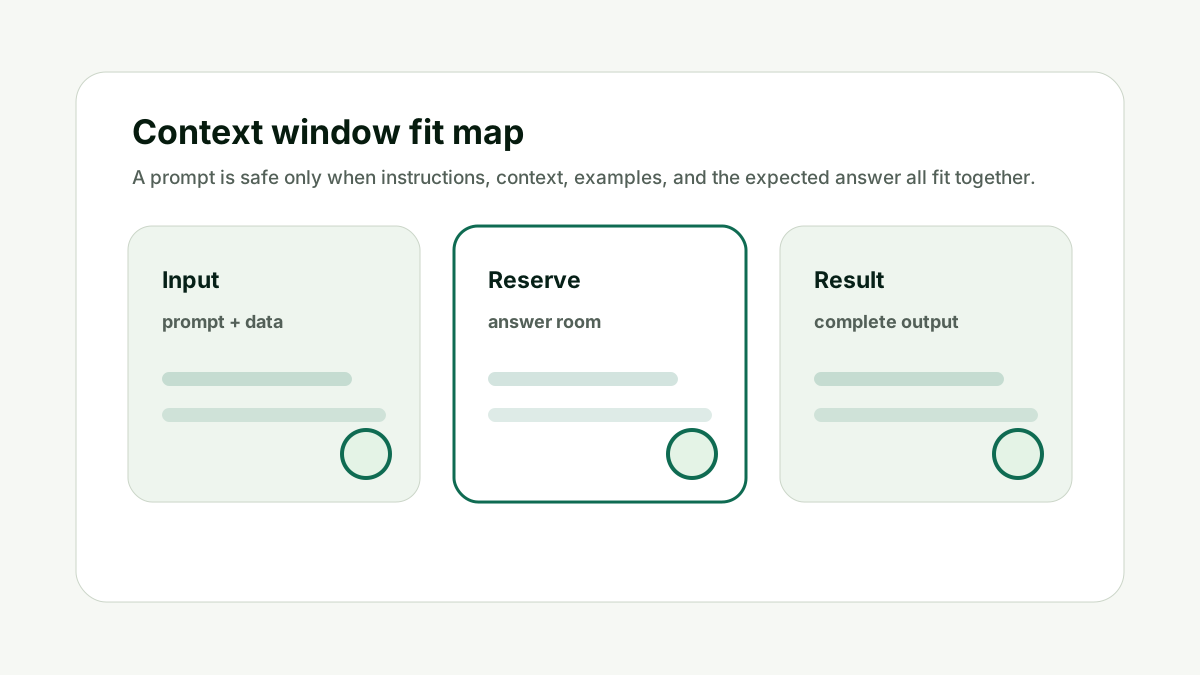
The useful way to think about Why does my long prompt fail even with a large context window? is that prompt length is part of workflow design. A prompt is not just text; it is the instructions, source material, examples, history, and reserved answer space that shape the final output.
The technical foundation comes from tokenization and transformer language models. Research such as subword tokenization, Attention Is All You Need, and few-shot language model research explains why prompts, examples, and generated answers all consume finite space.
For exact tokenizer behavior, use provider tooling where available, such as the OpenAI tokenizer, and read current model documentation for context limits before building production workflows. The checker on this site is a practical planning aid, not a replacement for model-specific tokenizer tests.
Use the checker for capacity, then audit the prompt for noisy context and conflicting instructions. If the prompt affects content or AI search work, pair this with the GEO / LLM SEO Planner for prompt strategy and the AI Citation Readiness Checker when page-level evidence is the bottleneck.
The goal is a workflow that fits, answers completely, costs what you expect, and stays maintainable after prompts evolve.
A Simple Worked Example
A team pastes a full RFP, company profile, competitor research, pricing notes, and legal terms into a large-context model and asks for a proposal.
The output misses legal constraints and invents positioning. The text fit, but the prompt had too many competing goals and weakly marked constraints.
The team fixes it by extracting requirements first, summarizing constraints, creating a proposal outline, and drafting section by section.
The large context window still helps, but the staged workflow makes the model useful.
Practical action checklist
- Remove irrelevant context before increasing window size.
- Check for conflicting instructions.
- Improve retrieval precision.
- Split broad tasks into stages.
- Reserve output room.
- Retest with a cleaner workflow.
What I Would Do Next
Run the long prompt through the checker.
Mark the parts that are truly needed for the current answer.
Split the workflow if the prompt is asking for multiple deliverables.
Conclusion
Why does my long prompt fail even with a large context window? matters because prompt length affects more than whether text fits. It affects answer quality, completion, cost, latency, and whether the workflow can be maintained over time.
The practical answer is to estimate tokens, reserve output room, remove noisy context, split large tasks, and test worst-case prompts before relying on a workflow.
When the prompt budget is clear, the model has a better chance of doing the job completely and predictably.
FAQ
Does a larger context window improve all prompts?
No. It increases capacity, but noisy or conflicting prompts can still fail.
Why does the model ignore details that were in the prompt?
Important details may be buried in noise, contradicted by other instructions, or outside the strongest part of the task.
Is RAG always better with more chunks?
No. Precise retrieved context is usually better than many broad chunks.
What is the best fix for long prompt failure?
Reduce noise, resolve conflicts, reserve output room, and split the task into stages.

Adam O'neil
1stpage Editorial Team
Our 1stpage editorial team combines hands-on SEO agency experience with evidence-backed search performance guidance. These posts are built from real search wins, audit-grade insight, and conversion-tested tactics designed to help agencies, founders, and search teams earn more traffic and trust.