Short answer
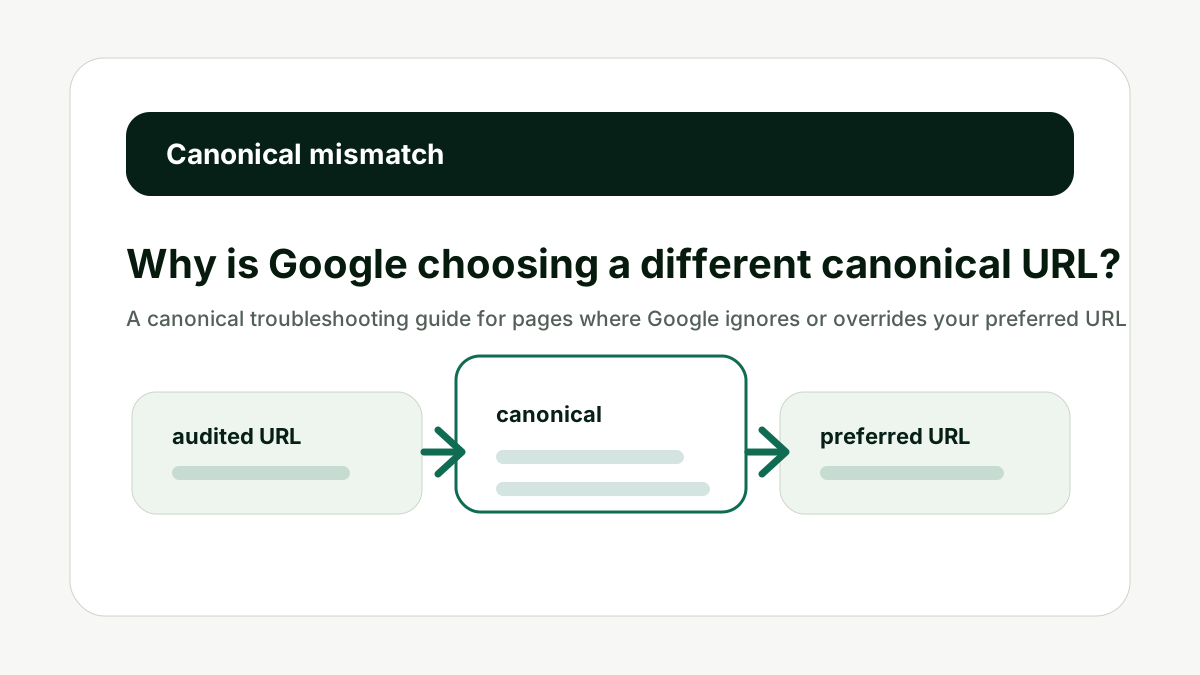
Google may choose a different canonical URL when duplicate pages, redirects, rel canonical tags, sitemap URLs, internal links, hreflang, or page content signals disagree. Canonical tags are strong signals, but they work best when the rest of the site reinforces the same preferred URL.
The useful way to think about this is not "what does one warning label mean?" The better question is whether every crawl, index, canonical, sitemap, and metadata signal supports the same URL outcome.
Reader question
"Is my canonical tag being ignored?"
Maybe. Use the Indexability and Canonical Checker to compare the audited URL against the canonical, sitemap, Open Graph URL, and URL format before assuming Google is wrong.
Table of Contents
I am going to answer this as a practical technical SEO workflow, not as a single-tag superstition.
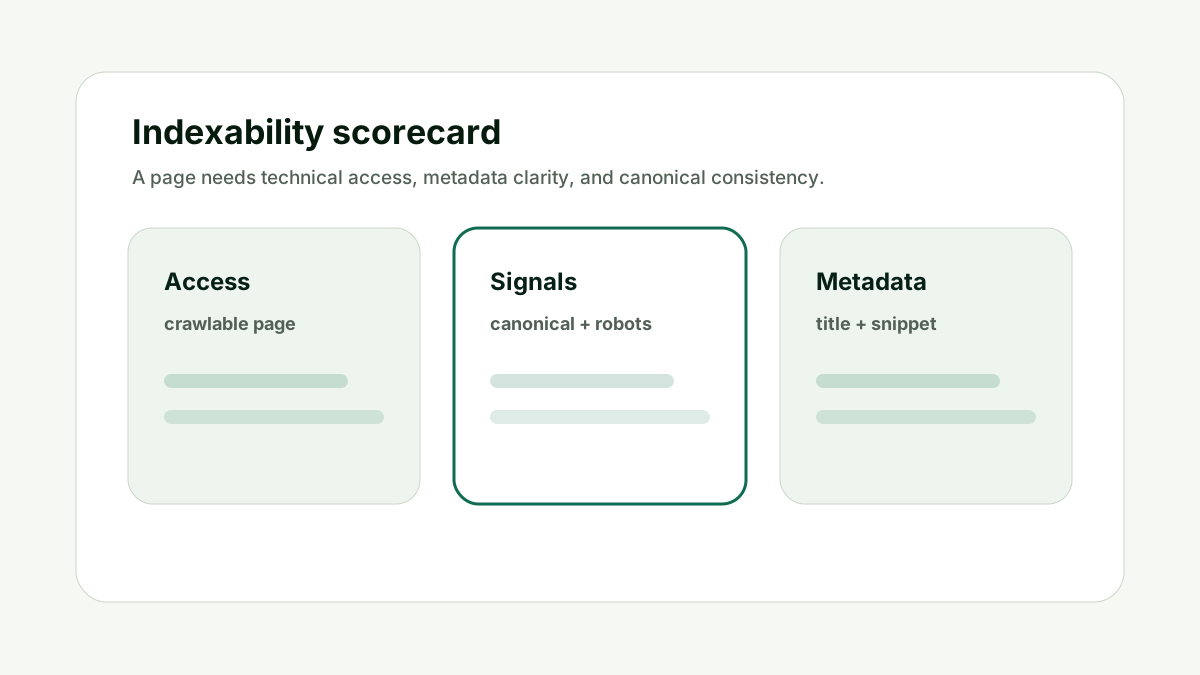
Indexability is usually a stack of signals. The URL has to be reachable, allowed, canonical, internally supported, listed appropriately, and useful enough to be selected.
Here is the framework I would use for Search Console reports a user-declared canonical, but Google-selected canonical points elsewhere.
Canonical Is A Signal
For Why is Google choosing a different canonical URL?, canonical is a signal matters because canonical tags help indicate preference, but Google still evaluates other signals and duplicate relationships. This is where many audits go wrong: teams see one warning in a tool and start editing content before they know whether the page is even sending a clean crawl or canonical signal.
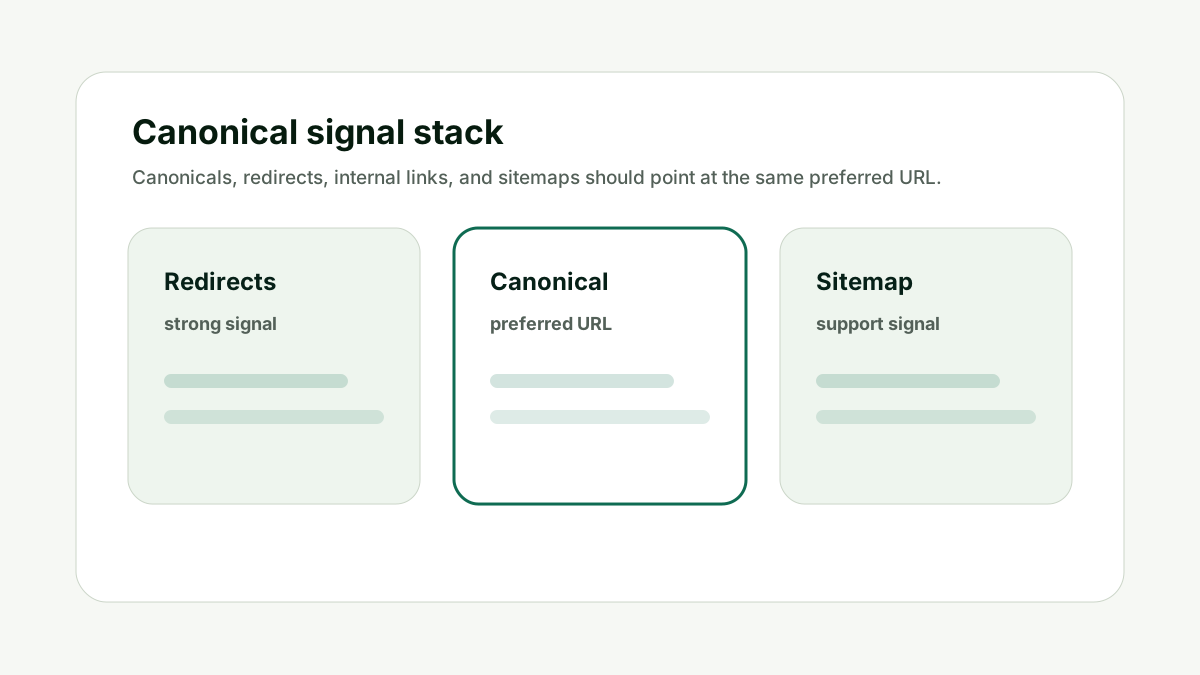
Google documentation describes redirects and rel canonical annotations as strong canonicalization signals, while sitemap inclusion is weaker but still supportive. The best setup uses consistent signals rather than a lonely tag.
Do not treat rel canonical as a command that overrides every other issue on the site. The practical test is simple: would a crawler, sitemap, internal link, and canonical tag all point to the same intended outcome? If not, the signal needs cleanup before you move to content or authority work.
Canonical Is A Signal is one of the signals that decides whether the page can be evaluated cleanly.
Duplicate Set
For Why is Google choosing a different canonical URL?, duplicate set matters because Google chooses canonicals within a set of duplicate or very similar URLs. This is where many audits go wrong: teams see one warning in a tool and start editing content before they know whether the page is even sending a clean crawl or canonical signal.
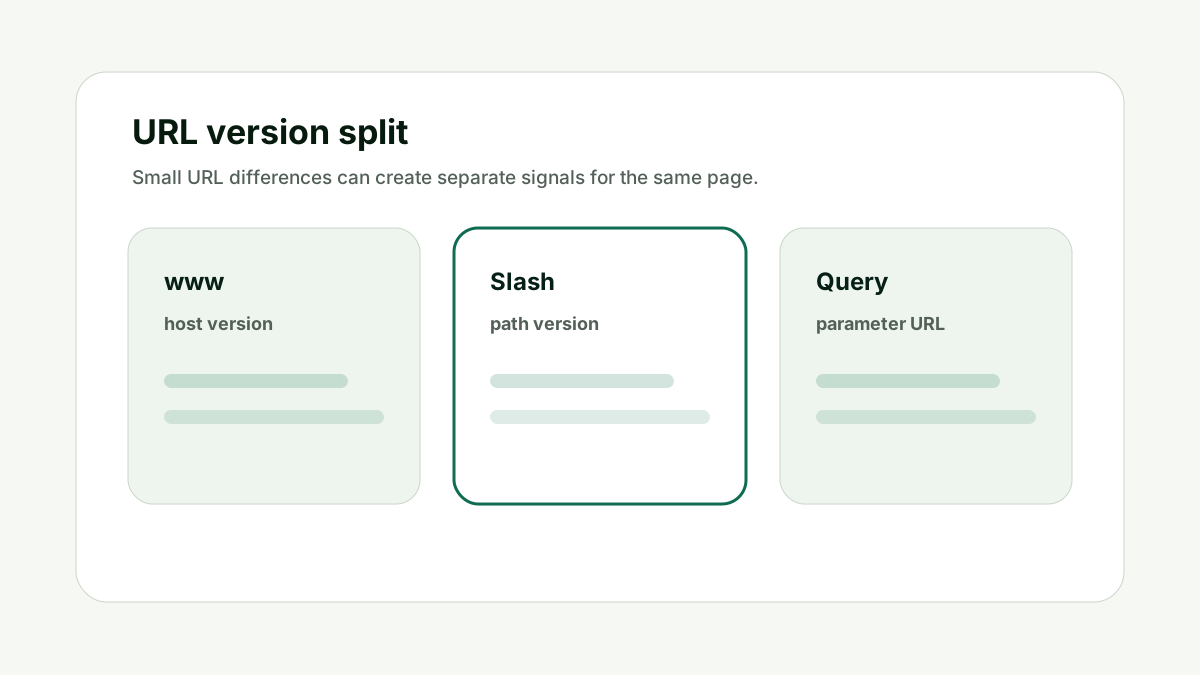
Check whether the same content is available through www and non-www, slash and non-slash, HTTP and HTTPS, parameter URLs, tracking URLs, printable pages, or category filters.
Do not fix only the one URL you noticed. Find the duplicate set first. The practical test is simple: would a crawler, sitemap, internal link, and canonical tag all point to the same intended outcome? If not, the signal needs cleanup before you move to content or authority work.
Duplicate Set is one of the signals that decides whether the page can be evaluated cleanly.
Redirects and Links
For Why is Google choosing a different canonical URL?, redirects and links matters because redirects and internal links can reinforce or weaken your declared canonical. This is where many audits go wrong: teams see one warning in a tool and start editing content before they know whether the page is even sending a clean crawl or canonical signal.
Internal links should point to the preferred canonical URL. Redirects should move deprecated variants to the preferred URL when those variants should not remain accessible.
Do not keep linking to duplicate URLs while asking Google to prefer a different one. The practical test is simple: would a crawler, sitemap, internal link, and canonical tag all point to the same intended outcome? If not, the signal needs cleanup before you move to content or authority work.
Redirects and Links is one of the signals that decides whether the page can be evaluated cleanly.
Sitemap Support
For Why is Google choosing a different canonical URL?, sitemap support matters because sitemap URLs are weaker canonical signals, but they still help communicate the preferred URL set. This is where many audits go wrong: teams see one warning in a tool and start editing content before they know whether the page is even sending a clean crawl or canonical signal.
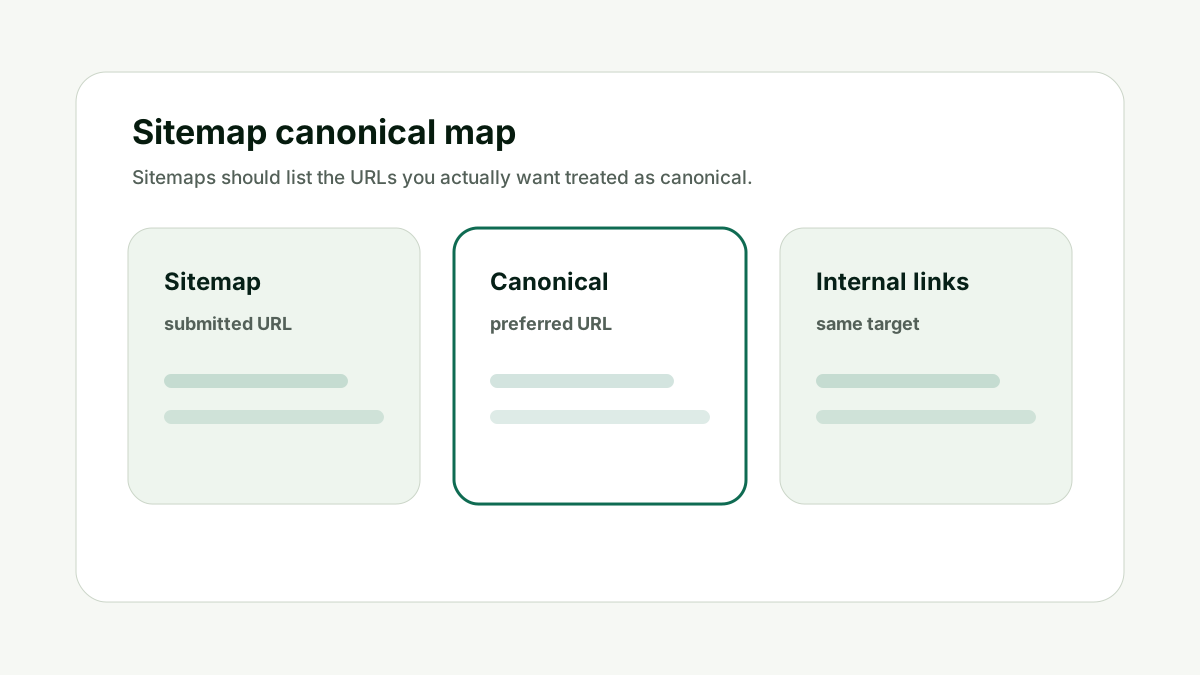
List the canonical URLs you actually want indexed. Avoid putting alternate versions, tracking URLs, or non-canonical duplicates in the sitemap.
Do not include URLs in the sitemap that canonicalize somewhere else unless you have a specific reason and understand the tradeoff. The practical test is simple: would a crawler, sitemap, internal link, and canonical tag all point to the same intended outcome? If not, the signal needs cleanup before you move to content or authority work.
Sitemap Support is one of the signals that decides whether the page can be evaluated cleanly.
Content Match
For Why is Google choosing a different canonical URL?, content match matters because canonicalization works best when duplicate pages are actually duplicate or very similar. This is where many audits go wrong: teams see one warning in a tool and start editing content before they know whether the page is even sending a clean crawl or canonical signal.
If two pages are meaningfully different, do not canonicalize one to the other just to control rankings. Consolidate only when the pages are duplicate, near-duplicate, or intentionally alternate versions.
Do not use canonical tags as a substitute for deciding which page should exist. The practical test is simple: would a crawler, sitemap, internal link, and canonical tag all point to the same intended outcome? If not, the signal needs cleanup before you move to content or authority work.
Content Match is one of the signals that decides whether the page can be evaluated cleanly.
Fix Validation
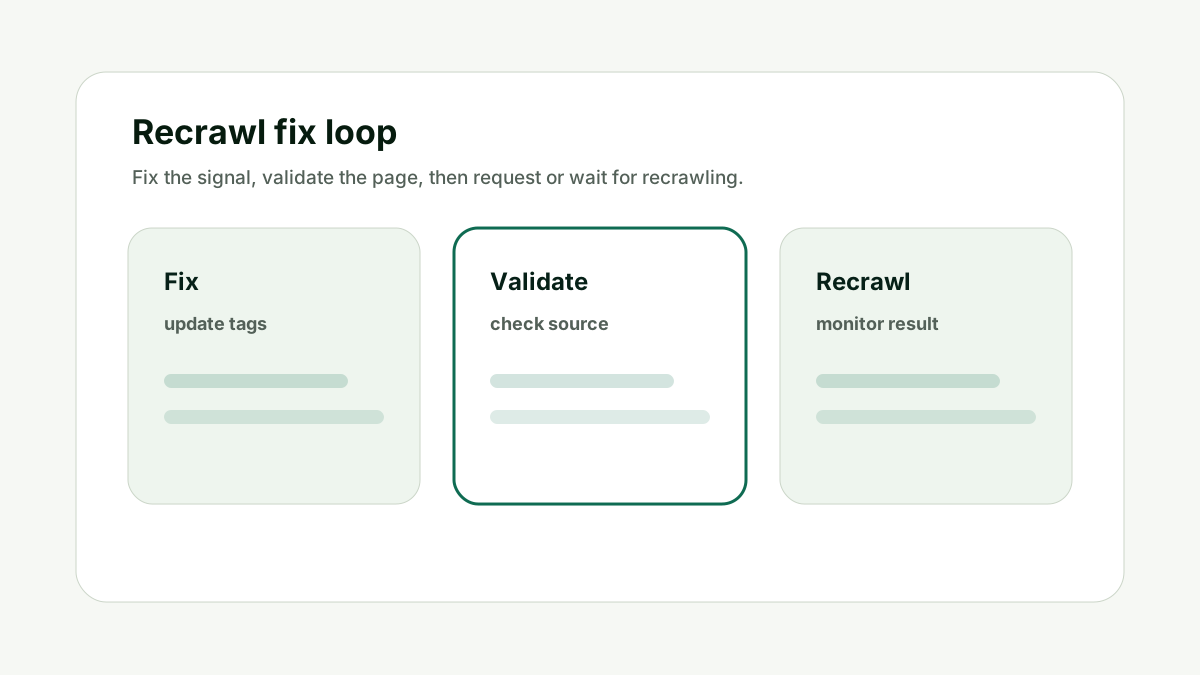
For Why is Google choosing a different canonical URL?, fix validation matters because canonical fixes need live-source validation and recrawling. This is where many audits go wrong: teams see one warning in a tool and start editing content before they know whether the page is even sending a clean crawl or canonical signal.
After changing tags, check the final rendered source, sitemap, internal links, and Search Console inspection. Then allow time for recrawling and canonical selection to update.
Do not keep changing canonicals daily. Make a clean decision, deploy it consistently, and monitor. The practical test is simple: would a crawler, sitemap, internal link, and canonical tag all point to the same intended outcome? If not, the signal needs cleanup before you move to content or authority work.
Fix Validation is one of the signals that decides whether the page can be evaluated cleanly.
How This Fits the Wider SEO and AI Search Workflow
The important thing with Why is Google choosing a different canonical URL? is to treat indexability as the foundation, not as a final polish item. The real job is making canonical signals agree around one preferred URL, then making sure the page can support SEO, AI citation, and authority work without technical confusion.
That order matters because many teams try to solve an indexing problem with more content, more links, or more AI-search tooling. Those can help only after the URL is crawlable, indexable, canonical, internally linked, and represented consistently in the sitemap.
I would use the indexability check as a gate. If the URL fails because it is blocked, noindexed, canonicalized elsewhere, missing from the sitemap, or internally orphaned, fix that first. If the page passes technically but still does not perform, then the issue may be quality, relevance, authority, or source proof.
This is also where internal links should stay natural. Link to another tool or service only when it helps the reader take the next step. A page with forced internal links is not more trustworthy; it is just more cluttered.
Do not inspect the canonical tag alone. Inspect the entire signal stack that supports or contradicts it. Once the URL is technically clean, use citation-readiness and visibility tools to test whether the page is useful enough for AI answers and search snippets.
Good indexability work is quiet. It does not create a flashy campaign asset, but it prevents the campaign from being built on the wrong URL.
A Simple Worked Example
A product page is available at four versions: HTTP, HTTPS, www, and non-www. The sitemap lists HTTPS non-www. Internal links point to HTTPS www. The canonical tag points to HTTPS non-www, but redirects do not consolidate the versions.
Google may choose one version that differs from the page owner preference because the signals do not tell one clear story. The canonical tag is present, but the internal linking system and final URL behavior are messy.
I would choose the preferred URL first. Then I would set redirects, canonicals, sitemap entries, Open Graph URLs, and internal links to that exact version. If duplicate versions do not need to stay live, redirect them.
After deployment, I would validate the page and wait for recrawling. The goal is not to force Google with one tag. The goal is to make the preferred URL obvious from every signal a crawler sees.
Practical action checklist
- Audit the final URL after redirects, not the first URL someone pasted.
- Check robots.txt, robots meta, X-Robots-Tag, canonical, sitemap, and internal links together.
- Make the sitemap, canonical, Open Graph URL, and internal links agree on the preferred URL.
- Fix technical blockers before rewriting or promoting the page.
- Retest after deployment and record what changed.
What I Would Do Next
Identify every duplicate or alternate version of the page.
Choose the preferred URL and make canonicals, redirects, internal links, and sitemap entries agree.
Validate the live source and monitor Google-selected canonical after recrawling.
Conclusion
Why is Google choosing a different canonical URL? is a useful question because it separates crawl access, index permission, canonical preference, and page quality.
The practical answer is to make every technical signal point at the same intended URL, then decide whether the page is strong enough to deserve indexing or AI-search visibility.
That gives your team a cleaner workflow than changing tags randomly and waiting for a different report color.
FAQ
Is rel canonical a directive?
No. It is a strong signal, but Google can choose another canonical when other signals or content relationships point elsewhere.
Can sitemap entries affect canonical choice?
They are weaker than redirects or rel canonical tags, but they can support your preferred URL when consistent.
Should duplicate URLs be blocked in robots.txt?
Usually no for canonicalization. Google warns against using robots.txt for canonicalization because it may prevent Google from seeing canonical signals.
Can internal links affect canonicals?
Yes. Consistent internal links to the canonical URL help reinforce the preferred version.

Adam O'neil
1stpage Editorial Team
Our 1stpage editorial team combines hands-on SEO agency experience with evidence-backed search performance guidance. These posts are built from real search wins, audit-grade insight, and conversion-tested tactics designed to help agencies, founders, and search teams earn more traffic and trust.