Table of Contents
- Synthesia vs HeyGen: the short verdict
- Synthesia and HeyGen at a glance
- Why Synthesia and HeyGen are direct competitors
- What matters when comparing Synthesia and HeyGen
- Synthesia vs HeyGen feature comparison
- Core workflow: Synthesia vs HeyGen
- AI avatars, voices and output quality
- Translation and localization
- Training, LMS and enterprise delivery
- Marketing and creator workflows
- Collaboration, security and governance
- Synthesia vs HeyGen pricing in 2026
- Where Synthesia is better
- Where HeyGen is better
- Synthesia limitations
- HeyGen limitations
- Best platform by use case
- Switching from Synthesia to HeyGen
- Switching from HeyGen to Synthesia
- Synthesia vs HeyGen: final verdict
- Frequently asked questions
Synthesia and HeyGen compete for the same practical job: turning a script, document or existing video into presenter-led content without a conventional studio shoot. Both offer AI avatars, synthetic voices, translation and team plans. The useful difference is not whether either platform can generate a talking-avatar video. It is which operating model fits the videos your team must produce repeatedly.
Direct answer: Choose Synthesia when your priority is structured training, enablement, internal communications and a governed enterprise video library. Choose HeyGen when your priority is fast marketing production, creator-led videos and flexible localization. There is no responsible universal winner without testing the same scripts, languages, avatars and approval process in both products.
Synthesia vs HeyGen: the short verdict
| Decision | Better starting point | Why |
|---|---|---|
| Structured enterprise learning and communications | Synthesia | Its public proposition is built around governed business video, collaboration, learning and enterprise deployment. |
| Marketing and creator-led production | HeyGen | Its self-serve plans and product positioning emphasize flexible creation, avatars, translation and faster campaign output. |
| Free baseline test | Tie | Both publish a free entry point, but the allowances and premium-feature access differ. |
| Comparable individual entry price | Tie | Synthesia Starter and HeyGen Creator are both listed at $29 per month on the current official pricing evidence. |
| Best final check before annual payment | Test both | Your scripts, languages, brand terms and approval process will expose the meaningful differences. |
Choose Synthesia if
- Your main workload is training, onboarding, enablement or internal communications.
- Multiple reviewers need a repeatable, governed production process.
- You need to evaluate enterprise learning, workspace and management capabilities as one system.
- Consistency across a large video library matters more than maximum creative variation.
Choose HeyGen if
- Marketing and creator teams need to produce and localize videos quickly.
- You want a broader self-serve path from Creator to credit-based Pro and team-oriented Business plans.
- Digital twins, avatar-led campaigns and translated marketing videos are central use cases.
- Your team values flexible generation credits and is prepared to manage usage closely.
Synthesia and HeyGen at a glance
| Field | Synthesia | HeyGen |
|---|---|---|
| Primary position | Enterprise AI video and digital avatars | AI avatar video generation and translation |
| Strongest starting fit | Training, enablement and internal communications | Marketing, creators and multilingual campaign production |
| Free entry point | Basic, $0 | Free, $0 |
| First listed paid plan | Starter, $29 per month | Creator, $29 per month or $24 per month billed annually |
| Higher self-serve plan | Creator, $89 per month | Pro from $49 per month |
| Team or enterprise path | Enterprise, custom pricing | Business, $149 per month for the first seat plus $20 per additional seat; enterprise options may require sales confirmation |
| Product information reviewed | Product, pricing and comparison pages | Product, pricing and help-centre pages |
| Main procurement question | Does its structured workflow fit your production and governance model? | Can you forecast credit usage and keep quality consistent across formats? |
Prices are snapshots checked on 3 August 2026. Promotions, annual billing, credits, included minutes, seats and enterprise terms can change.
Why Synthesia and HeyGen are direct competitors
This pair passes the competitor gate. Both vendors sell AI-avatar business-video creation, multilingual output and enterprise workflows to overlapping marketing, learning and communications teams. More importantly, both publish dedicated pages comparing themselves with the other. A buyer could reasonably choose one platform instead of the other for the same multilingual presenter-video programme.
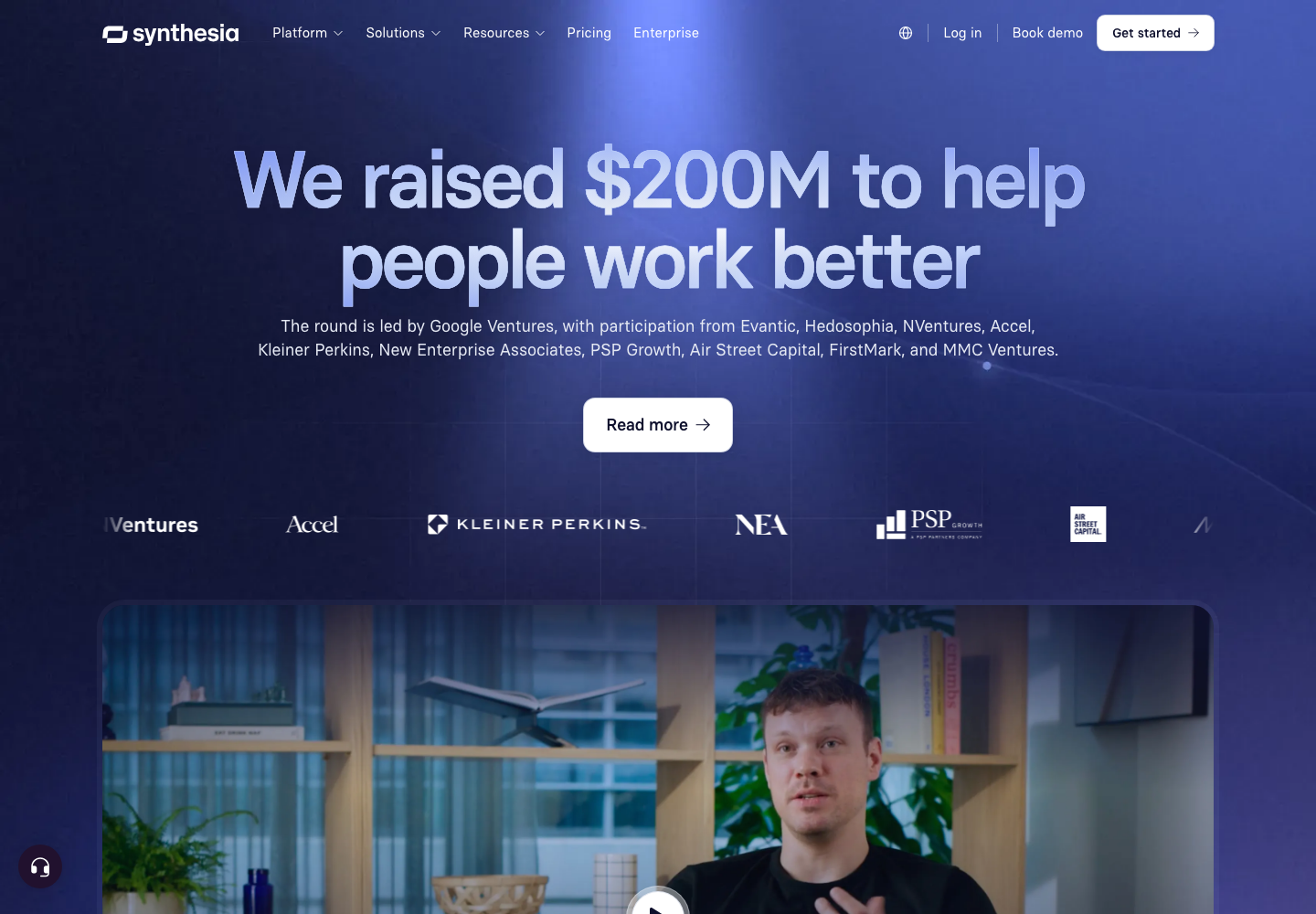
The companies approach that market from different histories. Our profile of Synthesia founder Victor Riparbelli and the company's $200M Series E explains its enterprise AI-video thesis and financing context. The profile of HeyGen founders Joshua Xu and Wayne Liang and the company's $60M Series A covers HeyGen's avatar, translation and creator-to-enterprise direction. Financing shows that both companies can invest aggressively; it does not tell you which product will work better.
Synthesia also has a standalone Synthesia product review for readers who want its features, limitations and evidence considered without the HeyGen comparison.
What matters when comparing Synthesia and HeyGen
The buying decision comes down to six practical questions:
- Can a team create an AI-avatar video from a script or source asset?
- Can it translate or localize the result for multiple markets?
- Can reviewers collaborate without losing version and approval control?
- Can learning teams move the output into their delivery workflow?
- Can a buyer forecast the cost of a realistic monthly workload?
- Are enterprise security, permissions and support clear enough for procurement?
The strongest choice is the platform that handles the same script, avatar type, language set, voice, scene structure and review process with fewer corrections and a more predictable monthly cost.
Synthesia vs HeyGen feature comparison
| Capability | Synthesia | HeyGen | Public-evidence verdict |
|---|---|---|---|
| Script-to-avatar video | Core product workflow | Core product workflow | Tie; use workflow fit as the tiebreaker |
| Video translation | Multilingual video and dubbing | Multilingual video and translation | Tie; native review should decide your priority languages |
| Training delivery | Enterprise learning, interactivity and delivery focus | Business plan includes SCORM, LMS support and interactive video | Synthesia has the stronger learning-led proposition |
| Marketing production | Supported within the business-video platform | Central creator and marketing proposition | HeyGen is the clearer starting point for creator-led marketing |
| Team collaboration | Enterprise workspace and review positioning | Business plan includes workspace collaboration, commenting and editing | Compare equivalent team plans in a live trial |
| Usage model | Monthly video-minute and credit allowances vary by plan | Paid plans use credits across supported generation features | Neither is simpler until the workload is normalized |
| Enterprise controls | Enterprise governance and security position | Business features include centralized management and SAML/SSO | Synthesia leads for governance-first buying |
Feature availability can differ by plan. A checkmark is not enough: ask whether the feature is included in the plan you priced, whether it consumes credits, and whether it works in the target language and export format.
Core workflow: Synthesia vs HeyGen
Synthesia workflow
Synthesia starts with a prompt, script, document, URL or template and moves into a scene-based business-video editor. Teams can review, update, translate and manage the resulting library at scale. That model suits recurring training and communications content because the work is usually revised rather than published once and forgotten.
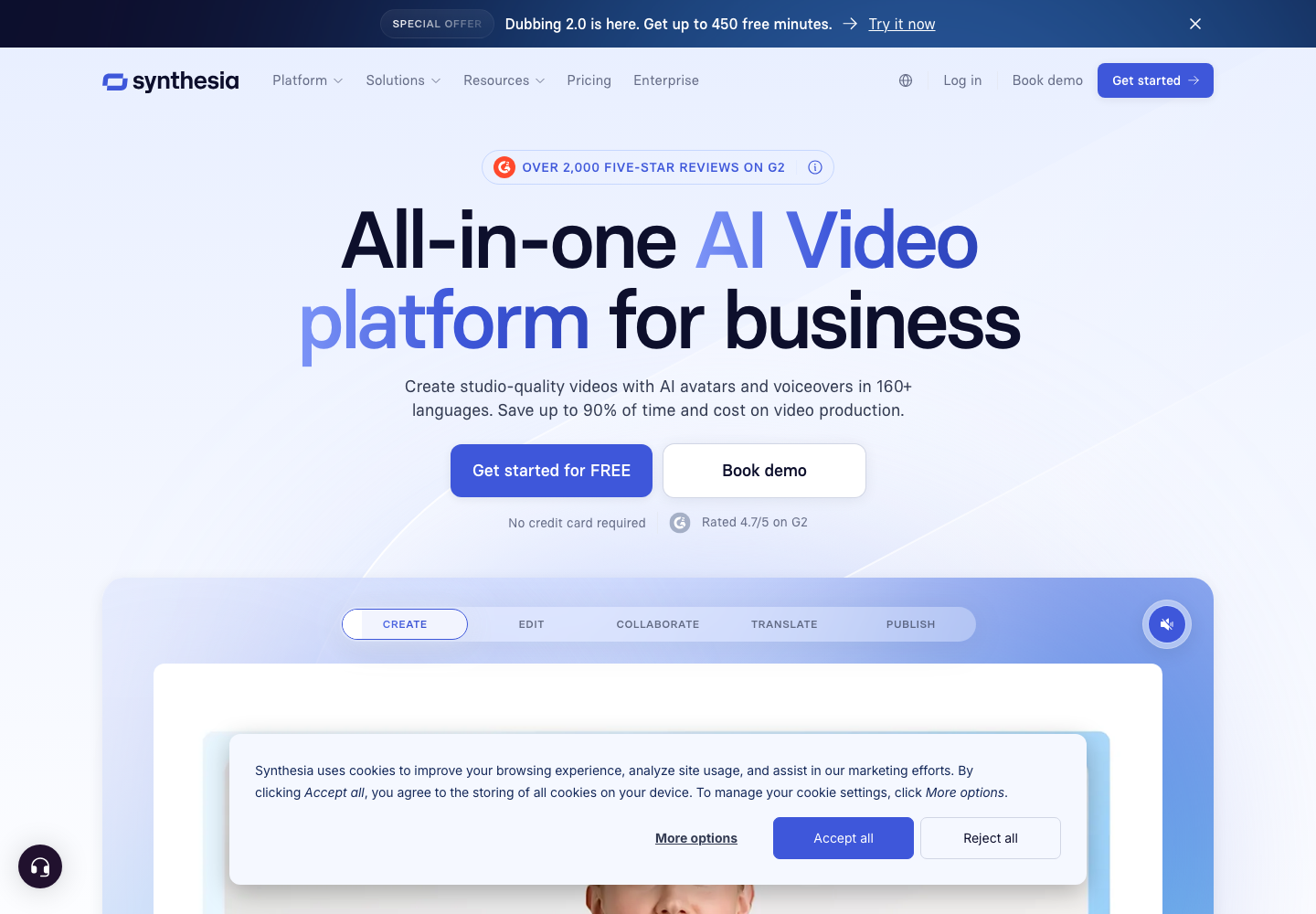
The unresolved question is how quickly your editors can move from source material to an approved video without fighting templates, pronunciation, timing or rendering. Run one module containing brand terminology, screen recordings, captions and a translated version. Record every manual correction.
HeyGen workflow
HeyGen emphasizes avatar selection, script or asset input, video generation and translation across creator, marketing and business use cases. Its plan structure moves from a free test and Creator plan into flexible Pro credits and a Business workspace with team, security and learning features.
The unresolved question is cost and consistency across the exact generation modes you will use. A headline plan can look generous while premium avatars, translation, video agents or generated assets consume credits differently. Build a representative monthly batch and price every required feature.
Workflow verdict: Synthesia wins for controlled libraries of repeatable enterprise content. HeyGen wins for mixed marketing, avatar and localization workloads.
AI avatars, voices and output quality
Both platforms deliver realistic avatars, synthetic voices and multilingual video. The meaningful difference appears when you apply your own brand terms, pacing, translations and review standards.
Use a five-scene test with the same 250-word script:
- A neutral presenter introduction.
- A sentence containing brand and technical terms.
- A screen-recording or product-demonstration segment.
- A call to action requiring natural emphasis.
- English plus two commercially important translations.
Score lip synchronization, pronunciation, gesture relevance, voice pacing, visual consistency, caption accuracy and the number of manual corrections. Let intended viewers review the result without telling them which vendor produced each version.
What Reddit users add to the test plan
Reddit feedback is anecdotal, but it exposes failure modes that feature tables miss. In an instructional-design discussion, one workplace-training user said the avatar distracted learners from the material:
Another participant in the same discussion preferred HeyGen's presentation options:
HeyGen also attracted a practical warning from a user producing a company video:
Treat these as prompts for a pilot, not a vote count. Show both outputs to the intended audience, measure corrections, and keep the human review effort in the cost model.
Translation and localization
Synthesia publicly describes support across more than 160 languages, dialects and tones. HeyGen publicly positions its platform across more than 175 languages and dialects. Larger language counts do not automatically mean better localization. Coverage may vary by voice, avatar, feature, plan and regional pronunciation.
The useful test is narrower: choose the three languages that matter commercially, translate the same approved source video, and ask native reviewers to mark meaning changes, pronunciation errors, pacing problems, on-screen text issues and lip-sync failures. Also confirm whether corrected scripts can be saved and reused without regenerating unrelated scenes.
Training, LMS and enterprise delivery
Synthesia's product and comparison material consistently emphasizes structured enterprise training, enablement, communications and collaboration. HeyGen's current Business-plan documentation includes SCORM export, LMS integration support and interactive-video features, which makes it a credible option rather than a creator-only product.
Do not choose on the presence of SCORM in a table. Confirm the package version, completion rules, quiz and branching behavior, LMS compatibility, update process and analytics retained after export. Upload the same module to the real LMS before procurement.
For a global learning team with strict review and repeatable module updates, Synthesia is the better choice. Choose HeyGen when avatar presentation, translation or a combined marketing-and-learning workflow carries more weight.
Marketing and creator workflows
HeyGen is the better choice for teams producing presenter-led campaign assets, digital-twin content and localized marketing variants. Its self-serve progression serves creators and marketers well, while its Business plan adds team controls when production expands.
Synthesia can create marketing content, but its clearest differentiation is a structured business-video system rather than a creator-first production tool. That can still be an advantage when brand control and repeatability matter more than experimentation.
Before choosing HeyGen, test whether the preferred avatars and generation modes remain consistent across a ten-video campaign. Before choosing Synthesia, test whether marketers can create the required variations without a slow approval or template process.
Collaboration, security and governance
Both vendors present enterprise security and collaboration capabilities. HeyGen's Business documentation lists centralized billing, invitations, team management, draft commenting, brand assets and SAML/SSO. Synthesia positions its Enterprise product around workspaces, roles, collaboration and governed deployment.
Procurement should request the actual terms and control matrix rather than relying on marketing pages. Verify SSO and provisioning, role granularity, audit history, content moderation, avatar consent, data retention, model-training terms, regional processing, export rights, incident response and deletion after contract end.
The founder histories provide useful context here. Synthesia's later-stage financing and long enterprise focus suggest a mature governance ambition; HeyGen's rapid move from creator workflows into Business features shows a broader market push. Neither replaces contract-level verification.
Synthesia vs HeyGen pricing in 2026
Prices were checked on 3 August 2026 from official pricing and help-centre material.
| Cost area | Synthesia | HeyGen |
|---|---|---|
| Free entry | Basic, $0 | Free, $0 |
| Individual entry | Starter, $29/month | Creator, $29/month or $24/month billed annually |
| Higher individual plan | Creator, $89/month | Pro from $49/month for 1,000 credits |
| Team plan | Enterprise, custom | Business, $149/month for first seat plus $20 per additional seat |
| Usage basis | Credits and generated-video minutes vary by plan | Credits are shared across supported AI features |
| Additional usage | Confirm plan and enterprise terms | Business extra credits documented at $0.05 per credit in blocks |
The entry prices are easy to compare and easy to misuse. Synthesia lists video-minute allowances for self-serve tiers. HeyGen uses credits across several generation features. A ten-minute translated training module is not commercially equivalent to ten minutes of simple avatar output.
Example monthly cost model
Price the same operating brief in both products:
- 20 finished videos per month.
- Five minutes per source video.
- Three translated versions of each.
- Four editors and reviewers.
- One custom avatar or digital twin.
- SCORM or LMS delivery for training content.
- Brand assets, approval and version updates.
Ask both vendors to show which plan covers the brief, expected monthly credits or minutes, overage rules and the cost of rerendering corrected scenes. Add internal review time. The cheaper subscription is not better value if it creates more corrections or unusable output.
Pricing verdict: The individual entry price is effectively tied. HeyGen provides a clearer step into Pro and Business pricing. Synthesia requires a custom Enterprise conversation for the highest-control team deployment. The true winner depends on generation mode, translations, seats and minutes.
Where Synthesia is better
- It is better suited to structured training, enablement and internal communications.
- Its enterprise narrative centers on governed collaboration and maintaining video at scale.
- Its workflow works better for teams treating video as a managed knowledge library.
- The standalone Synthesia review provides additional product-specific scrutiny.
Where HeyGen is better
- It is better suited to creator-led marketing and flexible localized campaign production.
- Its current self-serve path exposes Creator, credit-based Pro and Business pricing before a full enterprise negotiation.
- The Business plan documents collaboration, security and learning features, allowing teams to expand beyond individual creation.
- Its workflow works better for teams mixing avatar, translation and campaign formats.
Synthesia limitations
- The highest-control Enterprise price is not public.
- Public vendor comparisons cannot prove superior realism, voice or translation quality.
- Minute and credit allowances require workload modeling across translation and premium features.
- A structured enterprise workflow may be more process than a small creator team needs.
HeyGen limitations
- Credit use can be difficult to forecast across premium generation and asset features.
- Public vendor comparisons cannot prove superior realism, speed or creative control.
- Business cost rises with seats and additional credits.
- Teams must verify that creator-oriented flexibility still produces repeatable, governed enterprise output.
Best platform by use case
| Buyer or job | Better starting point | Reason | Watch before buying |
|---|---|---|---|
| Enterprise learning team | Synthesia | Structured training and governed business-video focus | Test the real LMS, translations and approval chain |
| Internal communications | Synthesia | Repeatable library and enterprise collaboration position | Confirm update workflow and viewer analytics |
| Marketing content team | HeyGen | Creator and campaign-oriented production path | Forecast premium-feature credits and corrections |
| Localization team | Tie | Both make multilingual video a central proposition | Native-review the exact target languages |
| Individual creator | HeyGen | Clear creator-led product and paid path | Check watermark, feature and credit limits |
| Regulated enterprise | Synthesia | Stronger governance-led product direction | Confirm contract, security and consent controls |
| Mixed marketing and training team | Trial both | The decision crosses each product's clearest strength | Use one shared production brief and full cost model |
Switching from Synthesia to HeyGen
Before moving, inventory source scripts, media, brand assets, custom avatars, voices, translations, templates, comments, approvals and analytics. Finished MP4 exports preserve the output, not the editable project history. Confirm which source assets can be exported and whether custom-avatar consent must be repeated.
Run a five-video migration before canceling. Recreate one simple video, one translated video, one training module, one custom-avatar asset and one video with several reviewers. Compare correction time and downstream integrations.
Switching from HeyGen to Synthesia
Use the same inventory in reverse. Pay particular attention to digital twins, premium generation modes and credit-funded assets that may not map directly to Synthesia. Confirm whether translated scripts, pronunciation changes, brand assets and interaction logic can be recreated without rebuilding every scene.
Do not treat finished exports as a migration plan. The expensive part is usually editable source, review history, reusable templates and the human process around them.
Synthesia vs HeyGen: final verdict
Choose Synthesia when video is part of a controlled enterprise learning, enablement or communications operation. It is better aligned with teams managing repeatable content, reviewers and governance.
Choose HeyGen when marketing, creator workflows and rapid localization drive the buying decision. Its plan progression and product position make it the stronger starting point for flexible production that can grow into a Business workspace.
Overall recommendation: There is no universal winner. Choose Synthesia for structured enterprise learning and communications. Choose HeyGen for marketing, creator-led production and flexible localization.
Before committing annually, generate the same five-scene video in English and two target languages, route both versions through the same reviewers, upload the learning version to the actual LMS, and price a complete month of corrections and translations.
Frequently asked questions
Is Synthesia better than HeyGen?
Synthesia is the better starting point for structured enterprise learning, enablement and internal communications. HeyGen is the better starting point for flexible marketing and creator-led production. A matched trial is required to decide avatar and translation quality for your content.
Is HeyGen cheaper than Synthesia?
Both currently list a $29 monthly individual entry plan. HeyGen also lists Pro from $49 and Business from $149 for the first seat, while Synthesia lists Creator at $89 and custom Enterprise pricing. Total cost depends on credits, minutes, translations, seats and generation modes.
Which is easier to use?
Ease of use depends on the workflow. Run the same script, corrections, translation and approval process in both products and count the steps to an approved export.
Which is better for training videos?
Synthesia is better for training because enablement and governed enterprise video are central to the product. HeyGen Business also includes SCORM, LMS and interactive-video capabilities, making it a strong option for mixed learning and marketing teams.
Which is better for marketing videos?
HeyGen is better for creator-led marketing, digital-twin content and localized campaign variants. Choose Synthesia when marketing video must follow a highly controlled enterprise template and review process.
Can I migrate from Synthesia to HeyGen or from HeyGen to Synthesia?
Finished videos can be retained, but editable scenes, avatars, voices, translations, comments and analytics may not transfer directly. Run a small migration and confirm export and consent terms before canceling either platform.

Tolu S.
Associate Director
Evidence-led product reviews and founder profiles for search, marketing, authority, and AI visibility teams.