Short answer
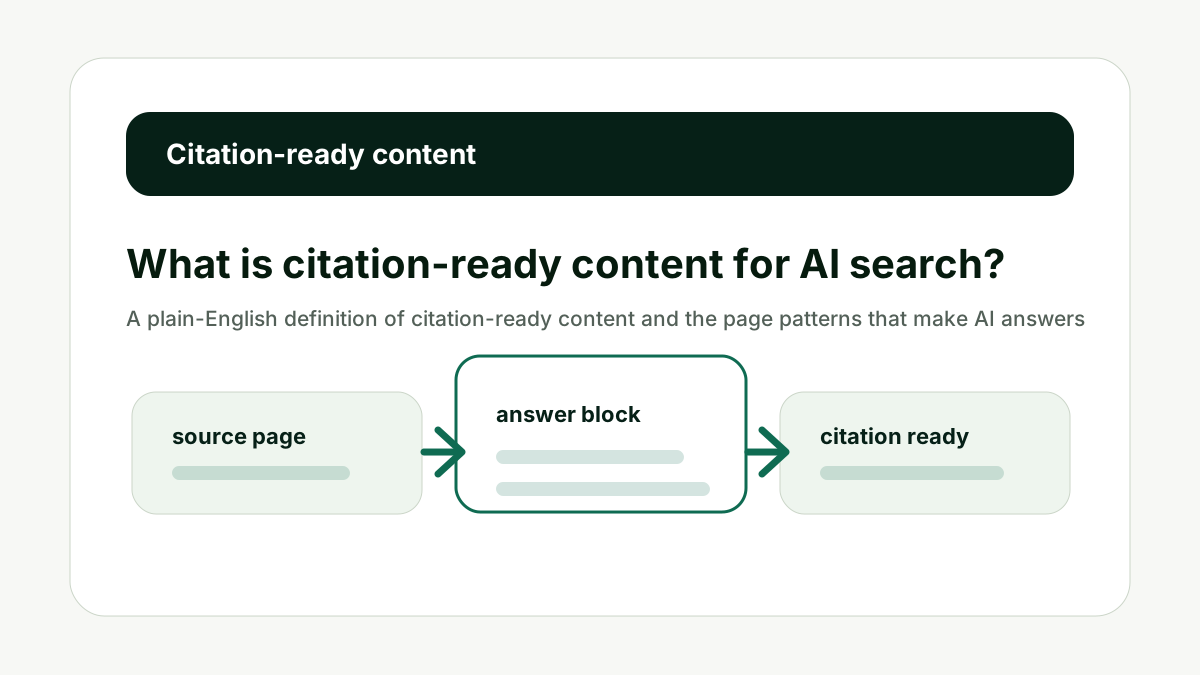
Citation-ready content is content that can be used as a reliable source in an AI-generated answer. It answers a specific question clearly, supports claims with evidence, identifies the entities involved, uses clean structure, and remains technically accessible.
The useful way to think about this is not "how do I make an AI system do exactly what I want?" The better question is whether the page gives a clear, supported answer that deserves to be reused.
Reader question
"What makes a page citation-ready?"
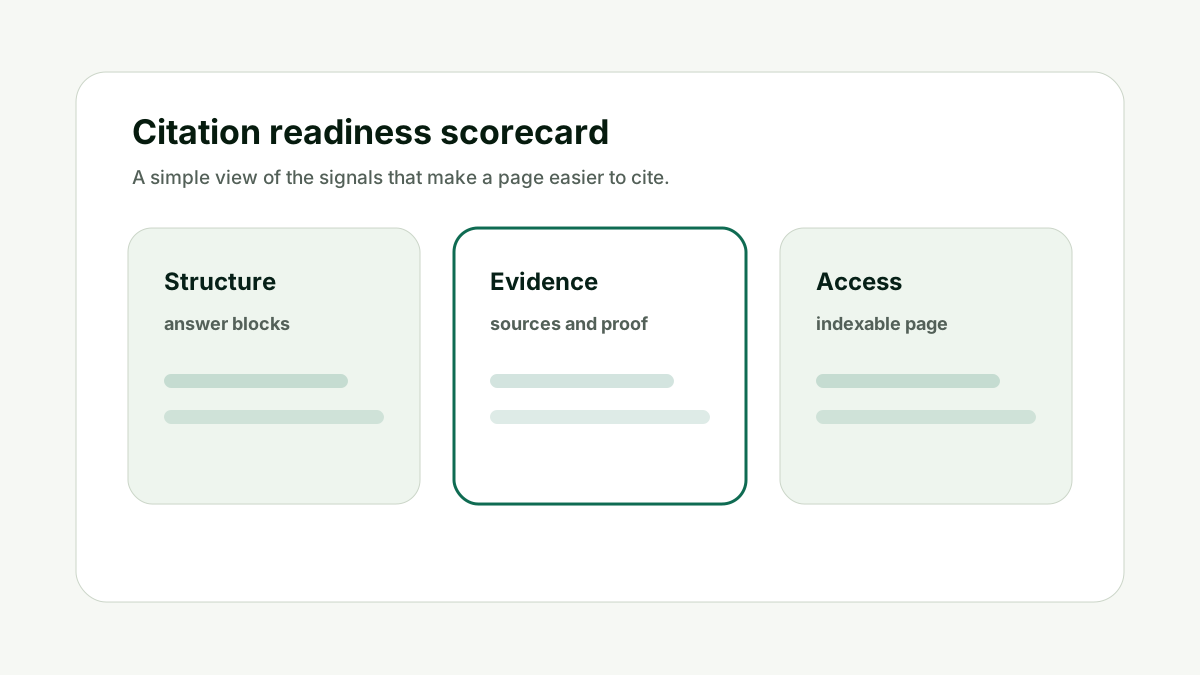
A page is citation-ready when a reviewer can quickly find the answer, proof, source context, and next step. The AI Citation Readiness Checker turns that review into a score.
Table of Contents
I am going to answer this as a practical source-quality question, not as a promise that one checklist can force citations.
AI citation visibility usually depends on a mix of page structure, evidence, technical access, and source trust. The page has to be easy to extract, but it also has to be worth extracting.
Here is the framework I would use for an editorial team wants a repeatable standard before rewriting service and guide pages.
Direct Answer
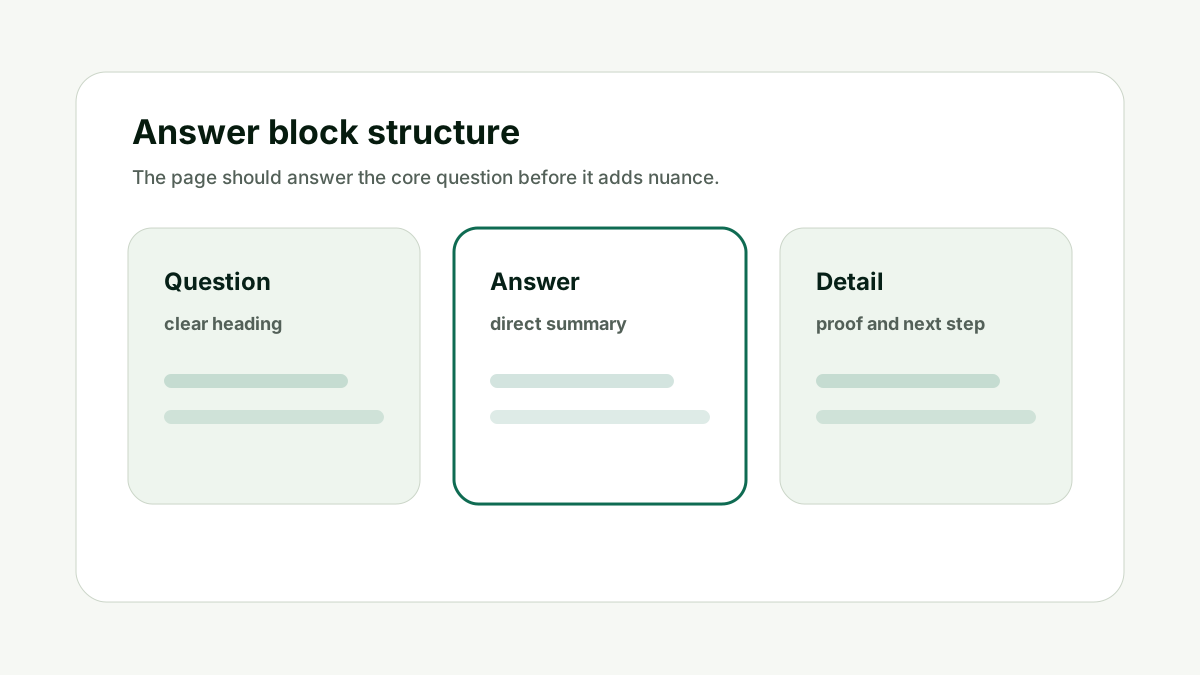
For What is citation-ready content for AI search?, direct answer matters because The page should answer the main question in a section that is easy to find and quote. This is where many pages lose citation potential: the information may be present, but it is not packaged in a way an answer system or human reviewer can confidently reuse.
A good direct answer does not need hype. It defines the topic, gives the practical answer, and sets expectations in a few sentences.
If the answer only appears after a long story, the page is not yet built for AI citation workflows. The practical test is simple: if someone copied only this section into a buyer-facing answer, would it still be accurate, specific, and supported? If not, the section needs more structure before it deserves to be treated as a source.
Direct Answer is one of the signals that makes this page more usable as an AI answer source.
Evidence
For What is citation-ready content for AI search?, evidence matters because Citation-ready content needs proof close to the claim. This is where many pages lose citation potential: the information may be present, but it is not packaged in a way an answer system or human reviewer can confidently reuse.
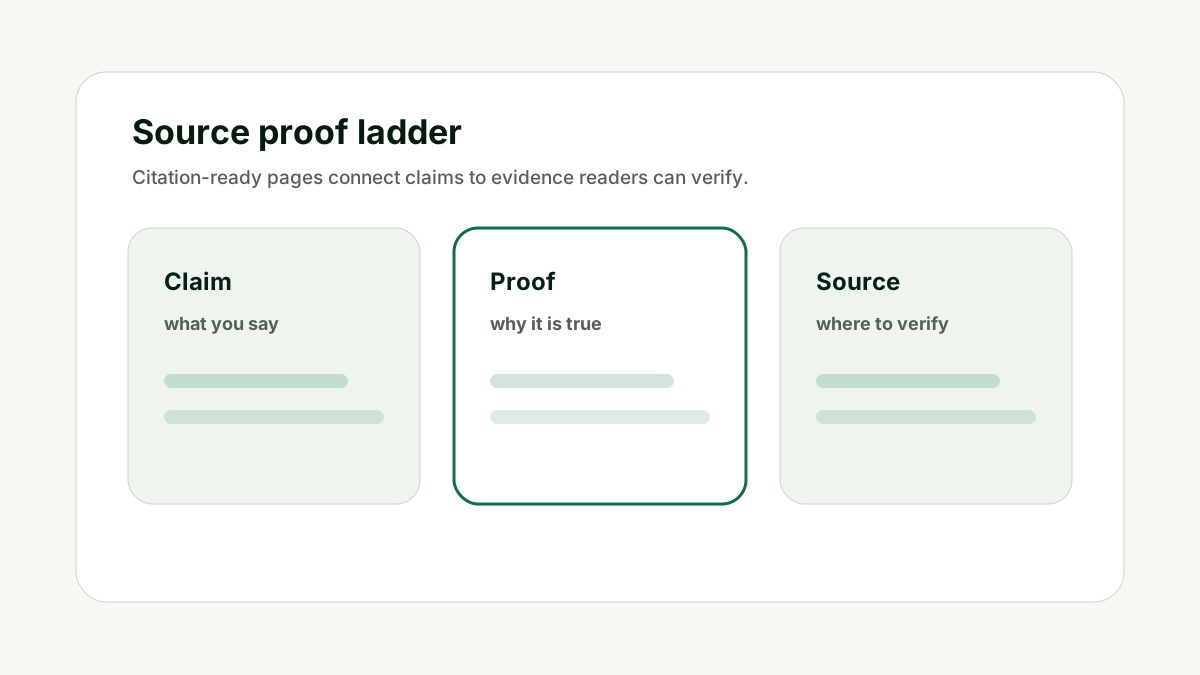
Use examples, data, screenshots, named references, methodology notes, or source links depending on the topic. The type of proof should match the claim.
Unsupported claims are the main reason a page feels useful to the brand but weak as a source. The practical test is simple: if someone copied only this section into a buyer-facing answer, would it still be accurate, specific, and supported? If not, the section needs more structure before it deserves to be treated as a source.
Evidence is one of the signals that makes this page more usable as an AI answer source.
Entity Clarity
For What is citation-ready content for AI search?, entity clarity matters because AI answers need to know who or what the page is about. This is where many pages lose citation potential: the information may be present, but it is not packaged in a way an answer system or human reviewer can confidently reuse.
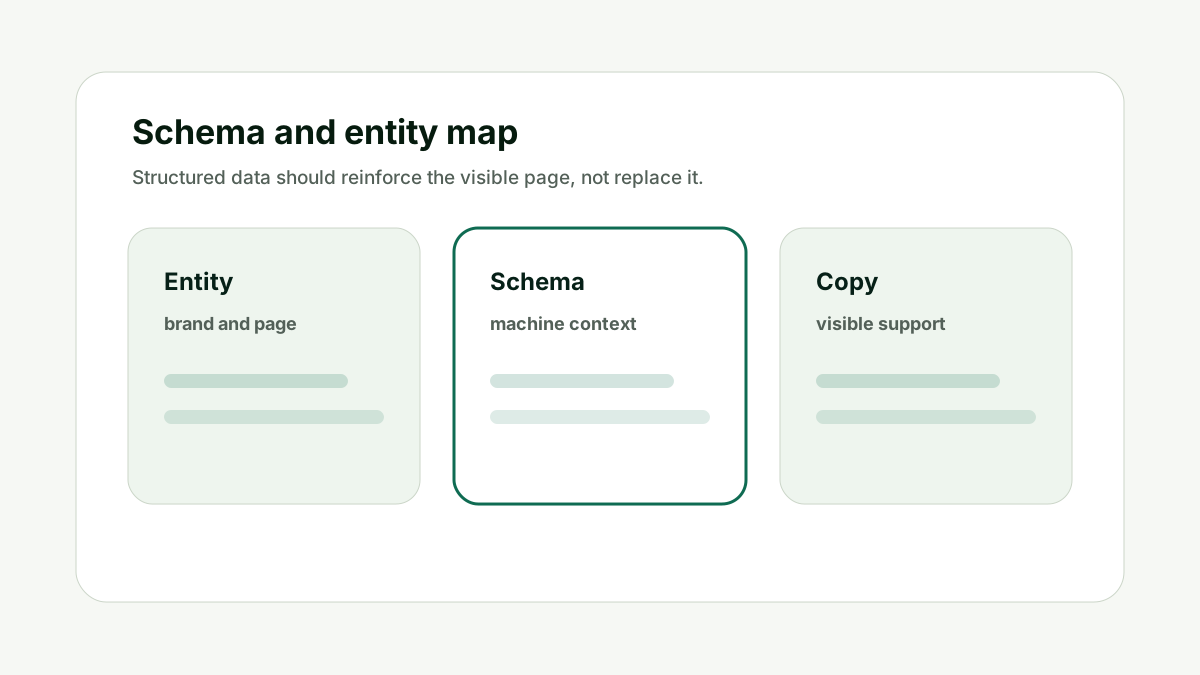
Make the brand, author, product, service, location, audience, and topic clear. Use consistent naming across title, headings, copy, schema, and internal links.
Entity confusion creates answer drift. If the page cannot tell a clean story, other sources may define the entity for you. The practical test is simple: if someone copied only this section into a buyer-facing answer, would it still be accurate, specific, and supported? If not, the section needs more structure before it deserves to be treated as a source.
Entity Clarity is one of the signals that makes this page more usable as an AI answer source.
Readable Layout
For What is citation-ready content for AI search?, readable layout matters because Citation-ready content is scannable without being thin. This is where many pages lose citation potential: the information may be present, but it is not packaged in a way an answer system or human reviewer can confidently reuse.
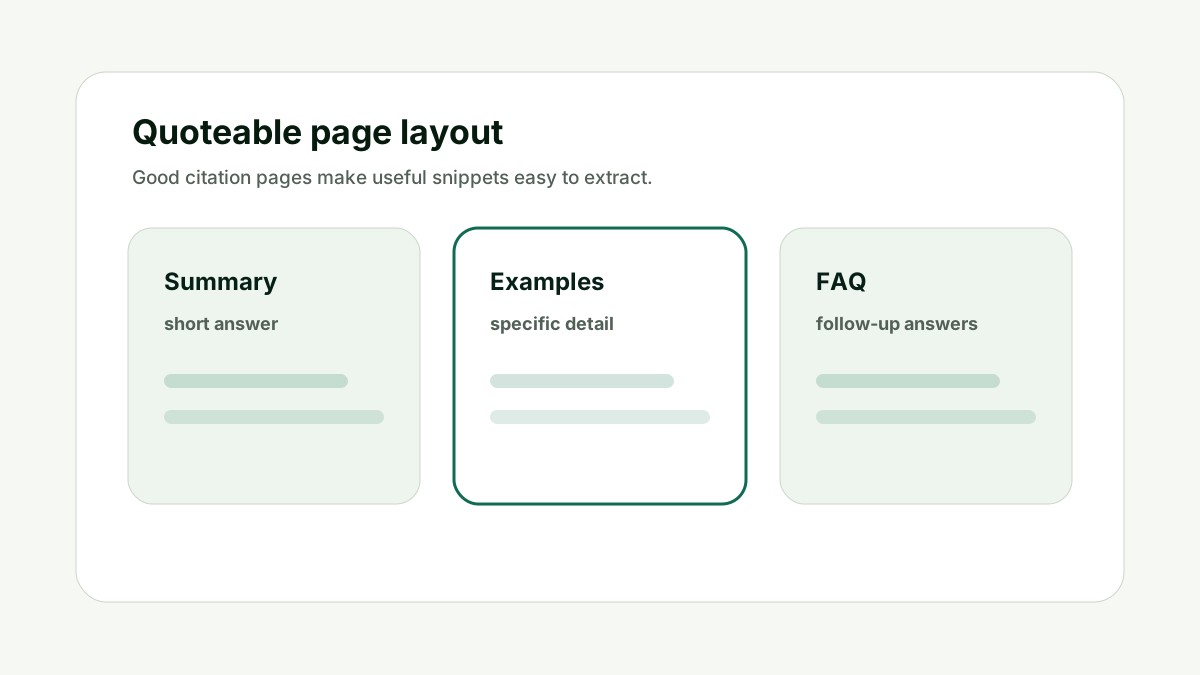
Use headings, summaries, tables, examples, FAQs, and visible dates where they help the reader. Make the useful excerpt obvious.
Do not bury the best answer in a graphic or a paragraph that depends on surrounding copy to make sense. The practical test is simple: if someone copied only this section into a buyer-facing answer, would it still be accurate, specific, and supported? If not, the section needs more structure before it deserves to be treated as a source.
Readable Layout is one of the signals that makes this page more usable as an AI answer source.
Technical Layer
For What is citation-ready content for AI search?, technical layer matters because Technical signals should support the editorial standard. This is where many pages lose citation potential: the information may be present, but it is not packaged in a way an answer system or human reviewer can confidently reuse.
Use clean HTML, canonical URLs, crawlable content, metadata, structured data, and internal links that clarify the page relationship.
If the technical layer contradicts the content layer, the page becomes harder to trust and harder to cite. The practical test is simple: if someone copied only this section into a buyer-facing answer, would it still be accurate, specific, and supported? If not, the section needs more structure before it deserves to be treated as a source.
Technical Layer is one of the signals that makes this page more usable as an AI answer source.
Measurement
For What is citation-ready content for AI search?, measurement matters because Citation-ready content should be tested against real prompts. This is where many pages lose citation potential: the information may be present, but it is not packaged in a way an answer system or human reviewer can confidently reuse.
Run prompt checks before and after edits. Record whether the page is cited, whether competitors appear, and whether the answer uses your language accurately.
The LLM Visibility Checker helps connect page work to answer-level visibility. The practical test is simple: if someone copied only this section into a buyer-facing answer, would it still be accurate, specific, and supported? If not, the section needs more structure before it deserves to be treated as a source.
Measurement is one of the signals that makes this page more usable as an AI answer source.
How This Fits the Wider AI Search Workflow
The important thing with What is citation-ready content for AI search? is to avoid treating citation readiness as a cosmetic content task. The real job is defining the content standard for AI answer sources, then connecting that page to the wider source trail around the brand.
That order matters because AI-search work usually fails in layers. A page may be blocked technically, vague editorially, unsupported with proof, or weaker than competitor sources across the web. If you only fix one layer, the answer may still ignore the page.
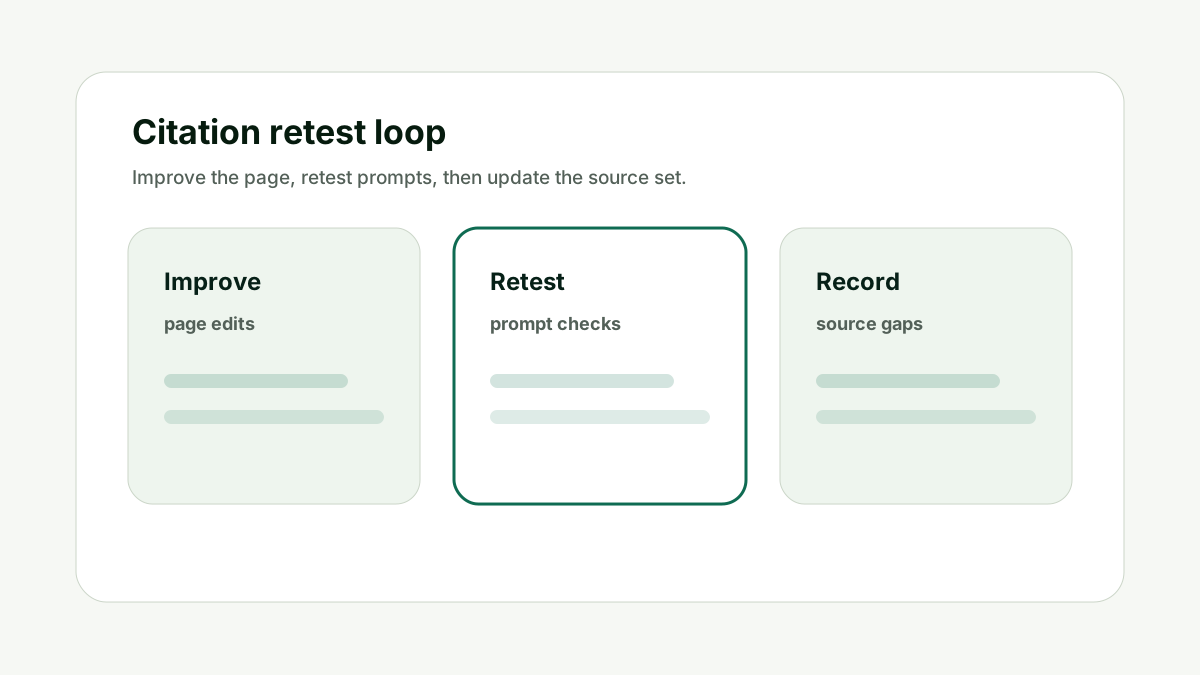
I would treat citation readiness as the page-level checkpoint inside a larger workflow. First, make sure the page is accessible and canonical. Second, make sure the page answers a real prompt clearly. Third, connect the claim to visible proof. Fourth, retest the answer and compare the page against sources that already win.
This is also where internal linking should stay natural. Link to a tool, service, or article only when it is the next useful action. Forced links make the article worse for readers and do not make the source more trustworthy.
Use the score as an editorial checklist before a page becomes a priority source in AI search campaigns. If the score improves but citations still do not appear, the next issue is probably authority, freshness, or corroboration. That is useful because it tells the team what kind of work is actually needed next.
Good citation readiness is not about tricking an answer engine. It is about making the best source easier to find, understand, quote, and verify.
A Simple Worked Example
A citation-ready article about a technical topic might start with the definition, then explain when it matters, then show a simple example. It would link to official docs or reliable references when rules are involved.
A citation-ready service page would be different. It would explain who the service is for, what the process includes, what proof exists, and when the service is not the right fit. That makes it more useful than a generic sales page.
A citation-ready comparison page would show the difference between options in a table, explain the tradeoffs, and avoid pretending one option wins every situation. The point is not only to persuade. The point is to become a usable source.
Across all three examples, the pattern is the same: answer, proof, structure, entity clarity, and retesting.
Practical action checklist
- Match the page to one question or prompt before editing.
- Add a direct answer before adding supporting detail.
- Keep proof close to claims that need verification.
- Validate technical access and schema only after the visible page is useful.
- Retest the same prompts so the team can see whether anything changed.
What I Would Do Next
Choose one important page and define the question it should answer.
Add a direct answer, proof, clearer headings, and schema only where the visible page supports it.
Retest prompts and update the page if the answer still misunderstands the source.
Conclusion
What is citation-ready content for AI search? is a useful question because it separates citation readiness from wishful thinking.
The practical answer is to build pages that answer clearly, prove their claims, stay technically accessible, and connect to a trustworthy source trail.
That gives your team a better workflow than publishing more content and hoping an AI answer engine finds the useful part.
FAQ
Is citation-ready content the same as SEO content?
No. Good SEO content can be citation-ready, but citation readiness focuses more directly on extractable answers, proof, and source clarity.
Does every article need schema?
No. Use schema when it accurately describes the visible page. It is support, not a shortcut.
Can sales pages be citation-ready?
Yes, if they explain the service clearly, support claims, and answer buyer questions instead of only making promotional claims.
What is the easiest page to improve first?
Start with a page that already gets traffic or matters commercially, but has weak answers, missing proof, or unclear structure.

Adam O'neil
1stpage Editorial Team
Our 1stpage editorial team combines hands-on SEO agency experience with evidence-backed search performance guidance. These posts are built from real search wins, audit-grade insight, and conversion-tested tactics designed to help agencies, founders, and search teams earn more traffic and trust.