Table of Contents
Aviv Revach, Omer Müller and Eyal Brosh founded Adaptive6 to move cloud-cost control closer to the engineers and code that create infrastructure spend. Revach is CEO, Müller is CTO, and Brosh is a co-founder with an engineering and operating background. Adaptive6 emerged from stealth in January 2026 with a $28 million Series A and $44 million raised across its seed and Series A rounds.
The company calls its category cloud cost governance. Its argument is that dashboards can show waste after it exists, while an engineering-connected system can trace waste to code, identify an owner and support remediation before the same pattern compounds.
Adaptive6 founders and funding at a glance
| Field | Verified information |
|---|---|
| Founders | Aviv Revach, Omer Müller and Eyal Brosh |
| Leadership | Revach: CEO; Müller: CTO |
| Company | Adaptive6 — adaptive6.ai |
| Founded | 2021 |
| Product | Cloud cost governance across cloud, code, runtime and AI workloads |
| Latest round | $28M Series A |
| Total funding | $44M |
| Investors | USVP, Vertex Ventures Israel, Pitango, New Era Capital Partners and Forgepoint Capital |
| Last verified | 21 July 2026 |
Who is Aviv Revach?
Aviv Revach is Adaptive6's co-founder and CEO. His public writing frames cloud cost as an engineering-governance problem rather than a finance dashboard problem. He previously co-founded Commerce Sciences with Brosh, giving the pair prior experience building and exiting a technology company together.
Founder profile: Connect with Aviv Revach on LinkedIn.
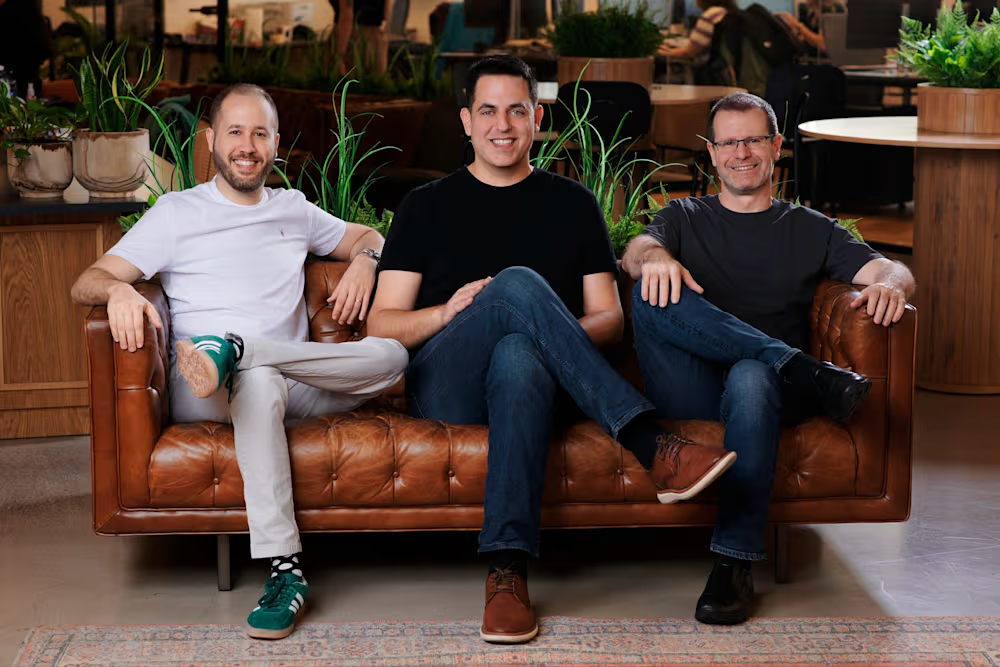
Official Adaptive6 founding-team photograph published by Vertex Ventures Israel. The same contextual team image is used where a separately licensed individual portrait was not available.
Revach's thesis is commercially specific: large cloud estates do not mainly need another view of spend; they need ownership and remediation embedded into how engineering works. The credible test is not the number of issues the platform detects, but the share of identified waste fixed without creating reliability or performance problems.
Who is Omer Müller?
Omer Müller is co-founder and CTO. Investor reporting identifies him as the technical founder behind a system that connects cloud configuration and runtime evidence to the infrastructure-as-code responsible for spend.
Founder profile: Follow Omer Müller through Adaptive6's current company profile.
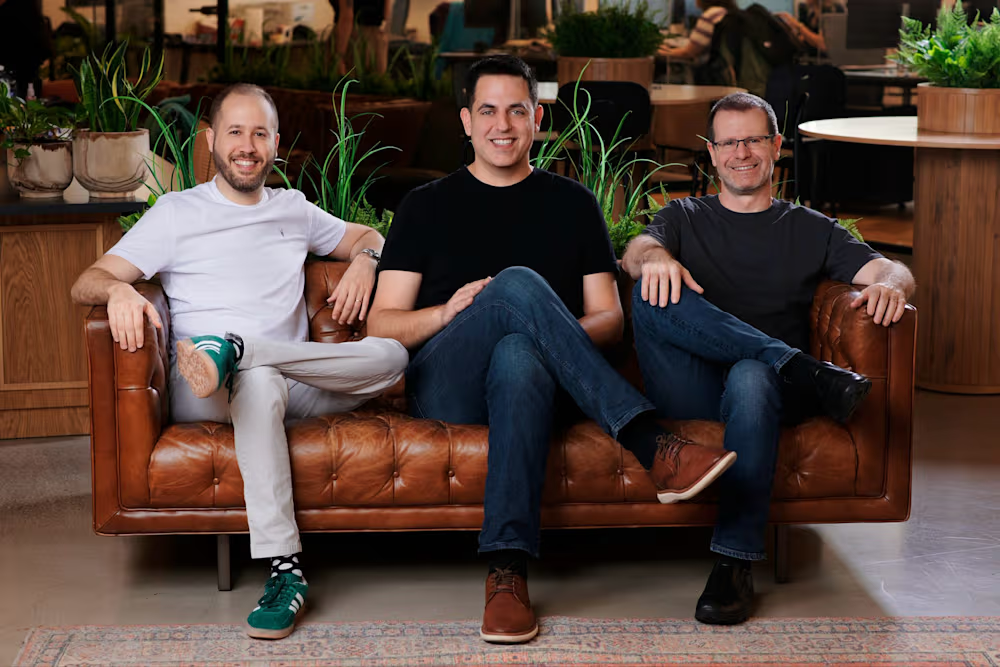
Official Adaptive6 founding-team photograph published with the company's funding announcement.
Müller's challenge is harder than producing recommendations. Enterprise buyers need safe change proposals, accurate ownership, broad cloud coverage, audit trails and integration with repositories, ticketing systems and deployment practices. Every automated fix must preserve a human decision path when the operational risk is material.
Who is Eyal Brosh?
Eyal Brosh is an Adaptive6 co-founder and a repeat collaborator with Revach. Public investor and company material places him alongside Revach and Müller in the founding team.
Founder profile: Connect with Eyal Brosh on LinkedIn.
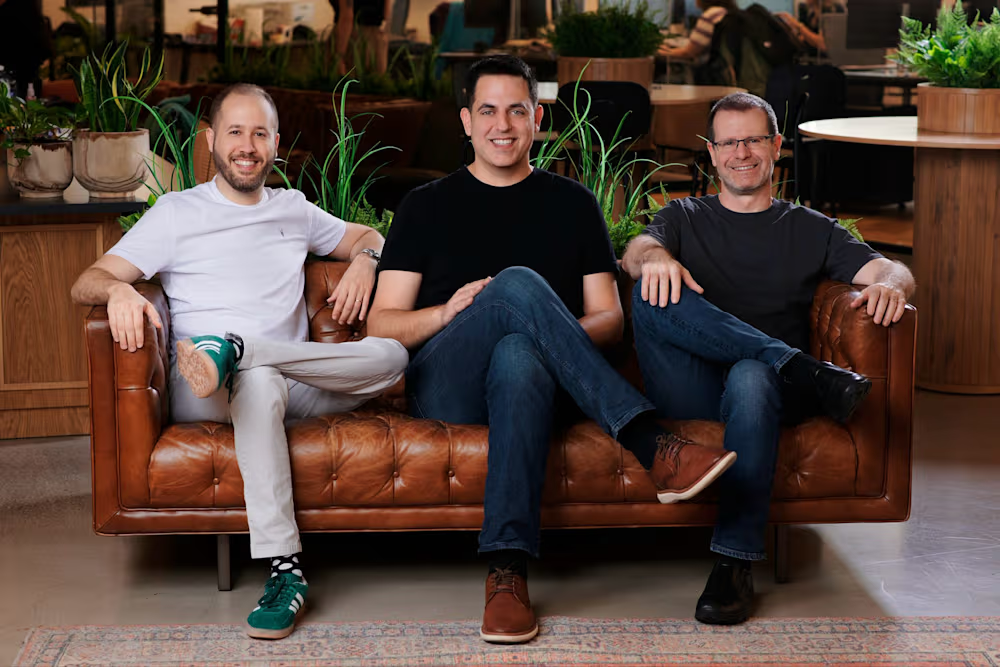
Official founding-team image. It is retained in context rather than transformed into an artificial individual likeness.
Brosh's presence adds institutional memory to the team. Repeat-founder familiarity can accelerate decisions, but it does not remove the need for clear product, security and customer-success ownership as Adaptive6 expands internationally.
What Adaptive6 does
Adaptive6 connects cloud, code and engineering workflow data to identify inefficient resources and trace issues back to owners and source configuration. Its public positioning includes AWS, Azure, Google Cloud, Kubernetes, data platforms and AI infrastructure.
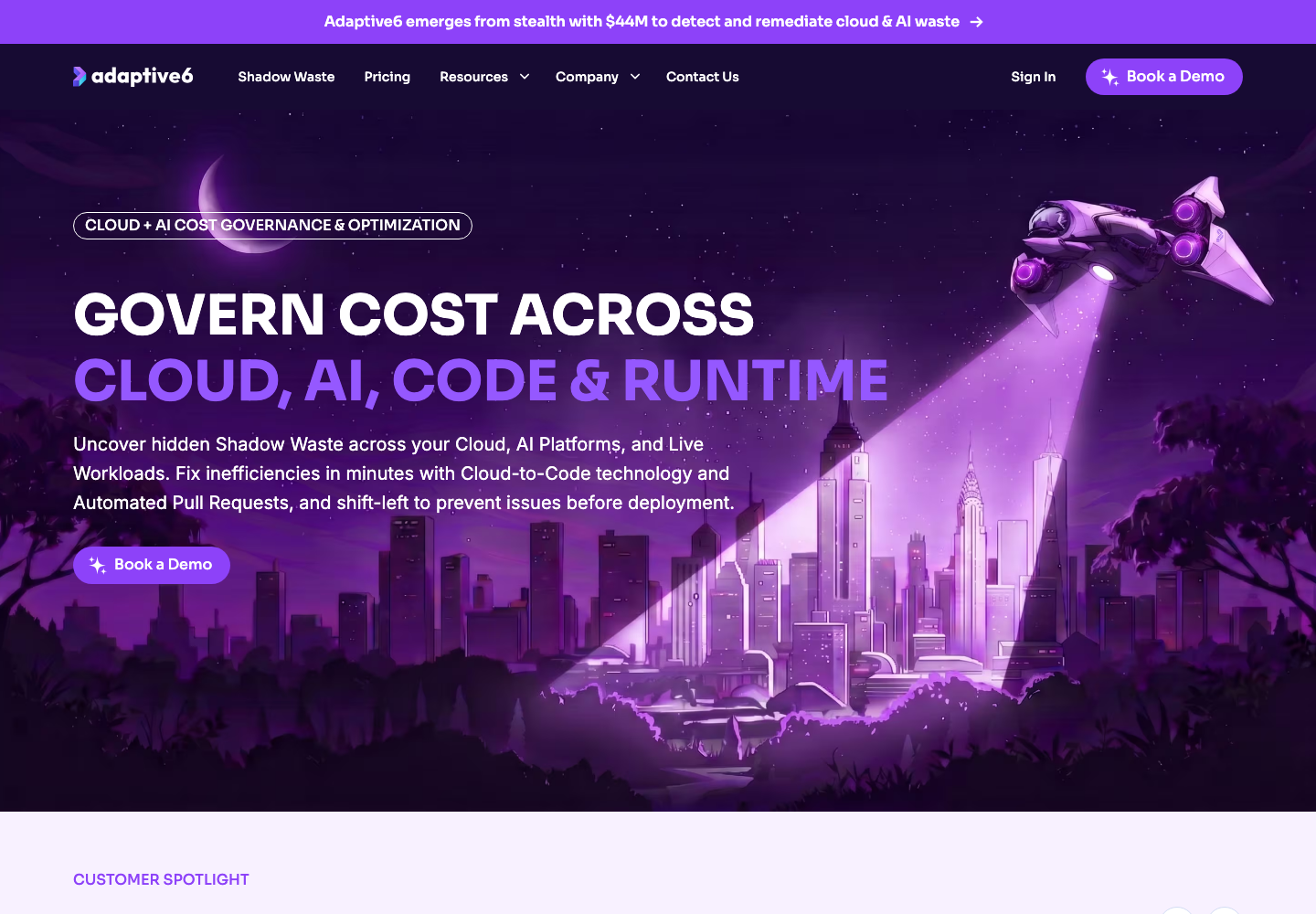
Authentic Adaptive6 homepage capture used in the related Adaptive6 review.
The value proposition is prevention plus remediation. Traditional FinOps reporting often explains where money went. Adaptive6 says its platform helps the engineering organization decide who should act, why the issue exists and how to correct it. Buyers should independently test attribution accuracy, estimated versus realized savings, false positives, permissions and the operational safety of suggested code changes.
Adaptive6 funding history
| Date | Round | Amount | Evidence status |
|---|---|---|---|
| Before January 2026 | Seed | $16M | Reported by Vertex Ventures Israel |
| January 2026 | Series A | $28M | Confirmed by investor announcements |
| Total | Seed + Series A | $44M | Calculated from disclosed rounds and reported as total |
USVP led the Series A, with Forgepoint Capital and New Era Capital Partners joining and existing investors Pitango and Vertex continuing. The round is intended to scale product development, enterprise adoption and global operations.
Strengths, risks and unresolved questions
Visible strengths
- A repeat-founder team with engineering and security experience.
- A product thesis tied to a measurable enterprise cost problem.
- Workflow and code-level remediation rather than reporting alone.
- Backing from specialist enterprise and cybersecurity investors.
Material risks
- Suggested savings may differ from savings safely realized in production.
- Read and write access across cloud and code creates a serious trust burden.
- FinOps, observability and cloud providers are expanding into adjacent workflows.
- AI and GPU optimization change quickly as infrastructure patterns evolve.
Questions buyers should ask
- How are realized savings verified against a stable baseline?
- Which changes can run automatically and which require approval?
- How are rollback, audit and least-privilege controls implemented?
- What percentage of recommendations are accepted by engineering teams?
- How does the platform separate cost reduction from performance degradation?
Frequently asked questions
Who founded Adaptive6?
Adaptive6 was founded by Aviv Revach, Omer Müller and Eyal Brosh. Revach is CEO and Müller is CTO.
How much has Adaptive6 raised?
Adaptive6 has reported $44 million in total funding: a $16 million seed round and $28 million Series A.
What does Adaptive6 do?
Adaptive6 provides cloud cost governance and optimization that connects cloud waste to code, runtime evidence, engineering owners and remediation workflows.

Tolu S.
Associate Director
Evidence-led product reviews and founder profiles for search, marketing, authority, and AI visibility teams.