Short answer
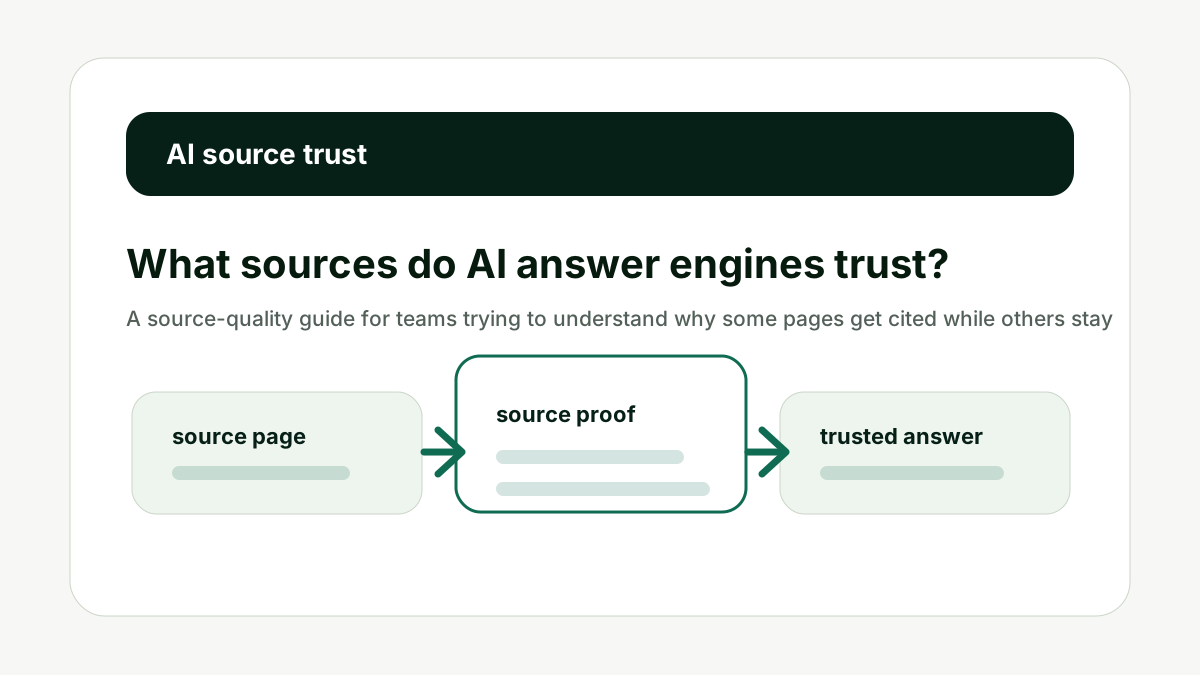
AI answer engines tend to favor sources that are relevant to the question, clearly written, technically accessible, externally trusted, fresh enough for the topic, and corroborated by other reliable pages. The exact system varies, but weak or unsupported pages are rarely the safest source choice.
The useful way to think about this is not "how do I make an AI system do exactly what I want?" The better question is whether the page gives a clear, supported answer that deserves to be reused.
Reader question
"Is this only about domain authority?"
No. Authority matters, but so do relevance, extractable answers, source proof, and consistency. Use the AI Citation Readiness Checker for the page layer and LLMentioned for wider source-gap work.
Table of Contents
I am going to answer this as a practical source-quality question, not as a promise that one checklist can force citations.
AI citation visibility usually depends on a mix of page structure, evidence, technical access, and source trust. The page has to be easy to extract, but it also has to be worth extracting.
Here is the framework I would use for a brand sees competitors cited in AI answers and wants to know whether the issue is page quality or source authority.
Relevance
For What sources do AI answer engines trust?, relevance matters because The trusted source for one prompt may be irrelevant for another. This is where many pages lose citation potential: the information may be present, but it is not packaged in a way an answer system or human reviewer can confidently reuse.
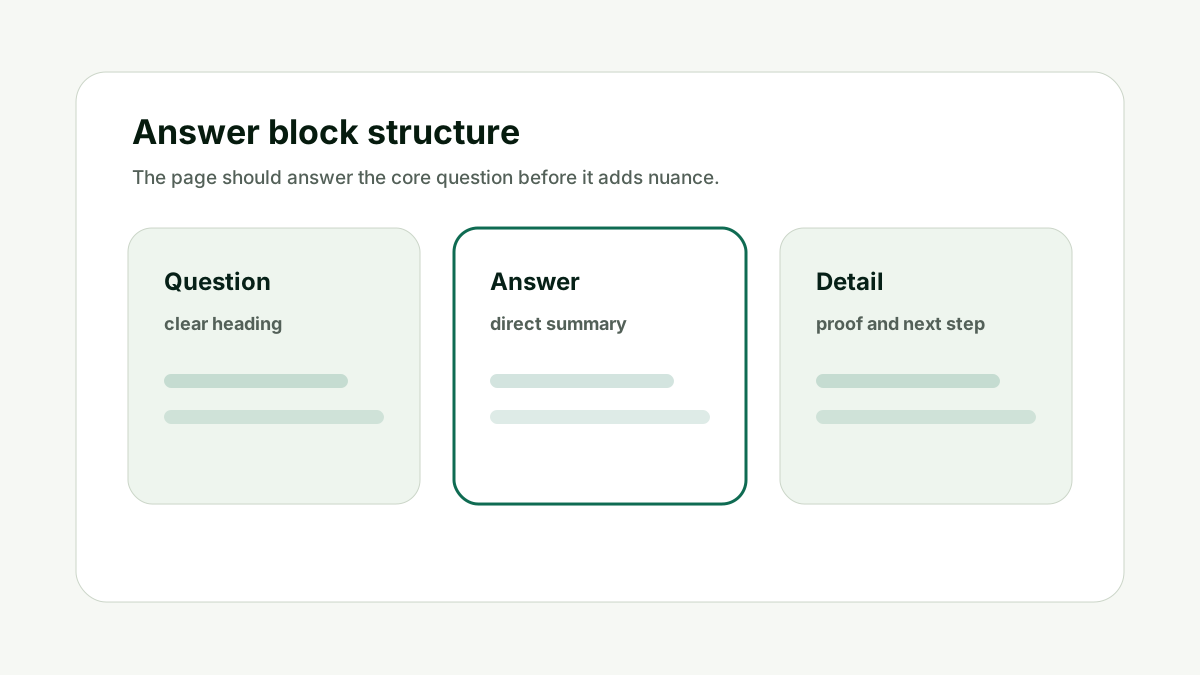
A page should answer the specific question, not just mention the broad keyword. AI systems need a source that fits the answer being assembled.
Do not rely on a broad homepage when a focused guide, comparison, or documentation page would be a better match. The practical test is simple: if someone copied only this section into a buyer-facing answer, would it still be accurate, specific, and supported? If not, the section needs more structure before it deserves to be treated as a source.
Relevance is one of the signals that makes this page more usable as an AI answer source.
Authority
For What sources do AI answer engines trust?, authority matters because Authority is the public trust surrounding the page and domain. This is where many pages lose citation potential: the information may be present, but it is not packaged in a way an answer system or human reviewer can confidently reuse.
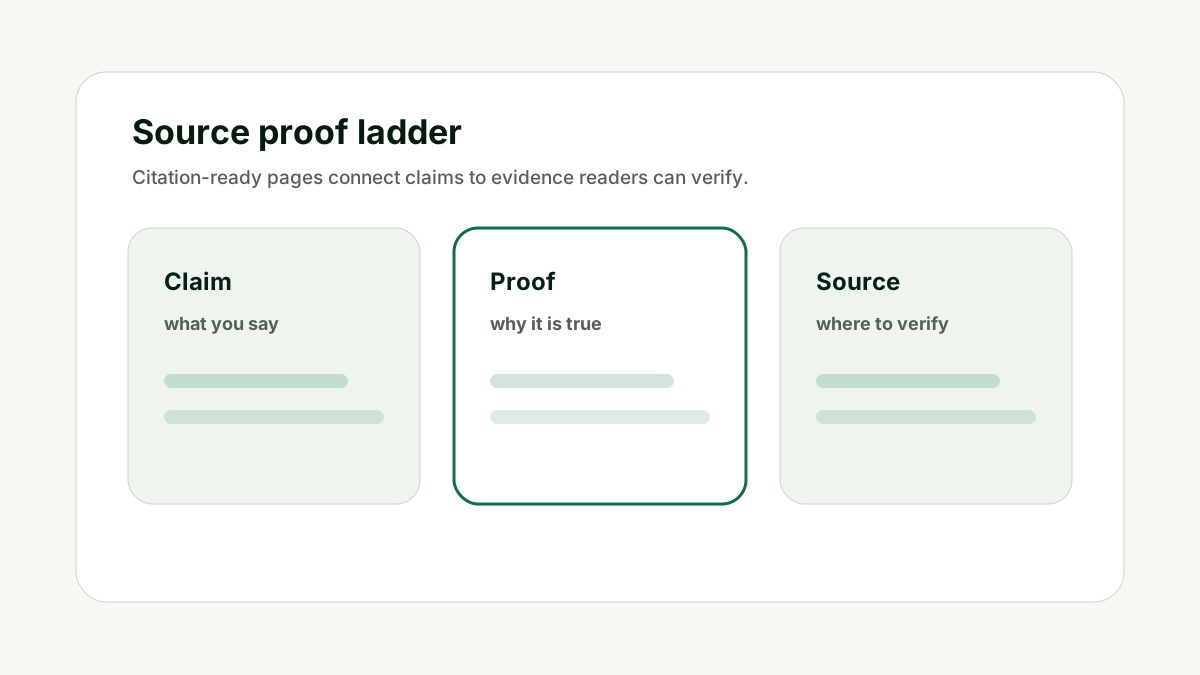
Links, brand mentions, publisher reputation, reviews, citations, and topical history can all contribute to whether a source feels safer than an unknown page.
If competitors have stronger outside mentions, your on-page work may be necessary but not sufficient. The practical test is simple: if someone copied only this section into a buyer-facing answer, would it still be accurate, specific, and supported? If not, the section needs more structure before it deserves to be treated as a source.
Authority is one of the signals that makes this page more usable as an AI answer source.
Clarity
For What sources do AI answer engines trust?, clarity matters because Trusted sources are usually easy to quote without distortion. This is where many pages lose citation potential: the information may be present, but it is not packaged in a way an answer system or human reviewer can confidently reuse.
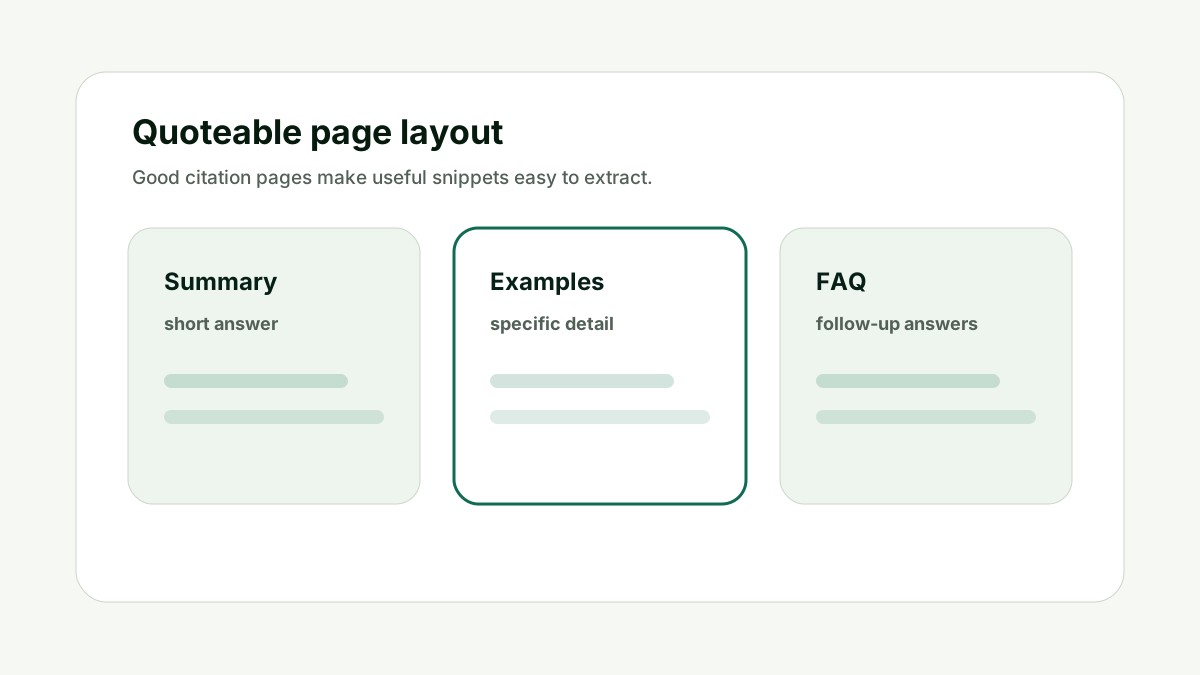
Clear definitions, stable headings, examples, and cautious claims reduce the chance that an answer system misreads the page.
A page full of vague positioning may be persuasive copy, but it is weak as a factual source. The practical test is simple: if someone copied only this section into a buyer-facing answer, would it still be accurate, specific, and supported? If not, the section needs more structure before it deserves to be treated as a source.
Clarity is one of the signals that makes this page more usable as an AI answer source.
Freshness
For What sources do AI answer engines trust?, freshness matters because Freshness matters more for topics that change quickly. This is where many pages lose citation potential: the information may be present, but it is not packaged in a way an answer system or human reviewer can confidently reuse.
Add visible review dates, update stale sections, and remove old claims when the answer depends on current rules, pricing, products, or platform behavior.
Do not fake freshness. A current date on old information can damage trust when readers compare sources. The practical test is simple: if someone copied only this section into a buyer-facing answer, would it still be accurate, specific, and supported? If not, the section needs more structure before it deserves to be treated as a source.
Freshness is one of the signals that makes this page more usable as an AI answer source.
Corroboration
For What sources do AI answer engines trust?, corroboration matters because AI answers often look safer when multiple sources tell the same story. This is where many pages lose citation potential: the information may be present, but it is not packaged in a way an answer system or human reviewer can confidently reuse.
Your own page, third-party mentions, case studies, reviews, and community discussions should reinforce the same entity and claim set.
If your site says one thing and outside sources say another, the answer may follow the wider source trail. The practical test is simple: if someone copied only this section into a buyer-facing answer, would it still be accurate, specific, and supported? If not, the section needs more structure before it deserves to be treated as a source.
Corroboration is one of the signals that makes this page more usable as an AI answer source.
Source Gap Action
For What sources do AI answer engines trust?, source gap action matters because The next action depends on which trust layer is missing. This is where many pages lose citation potential: the information may be present, but it is not packaged in a way an answer system or human reviewer can confidently reuse.
If the page is weak, rewrite it. If technical access is weak, fix that. If outside proof is weak, build credible source mentions and authority placements.
For source-gap campaigns, connect page readiness to services like Top Page Links only when the page is already worth promoting. The practical test is simple: if someone copied only this section into a buyer-facing answer, would it still be accurate, specific, and supported? If not, the section needs more structure before it deserves to be treated as a source.
Source Gap Action is one of the signals that makes this page more usable as an AI answer source.
How This Fits the Wider AI Search Workflow
The important thing with What sources do AI answer engines trust? is to avoid treating citation readiness as a cosmetic content task. The real job is understanding source trust and source gaps, then connecting that page to the wider source trail around the brand.
That order matters because AI-search work usually fails in layers. A page may be blocked technically, vague editorially, unsupported with proof, or weaker than competitor sources across the web. If you only fix one layer, the answer may still ignore the page.
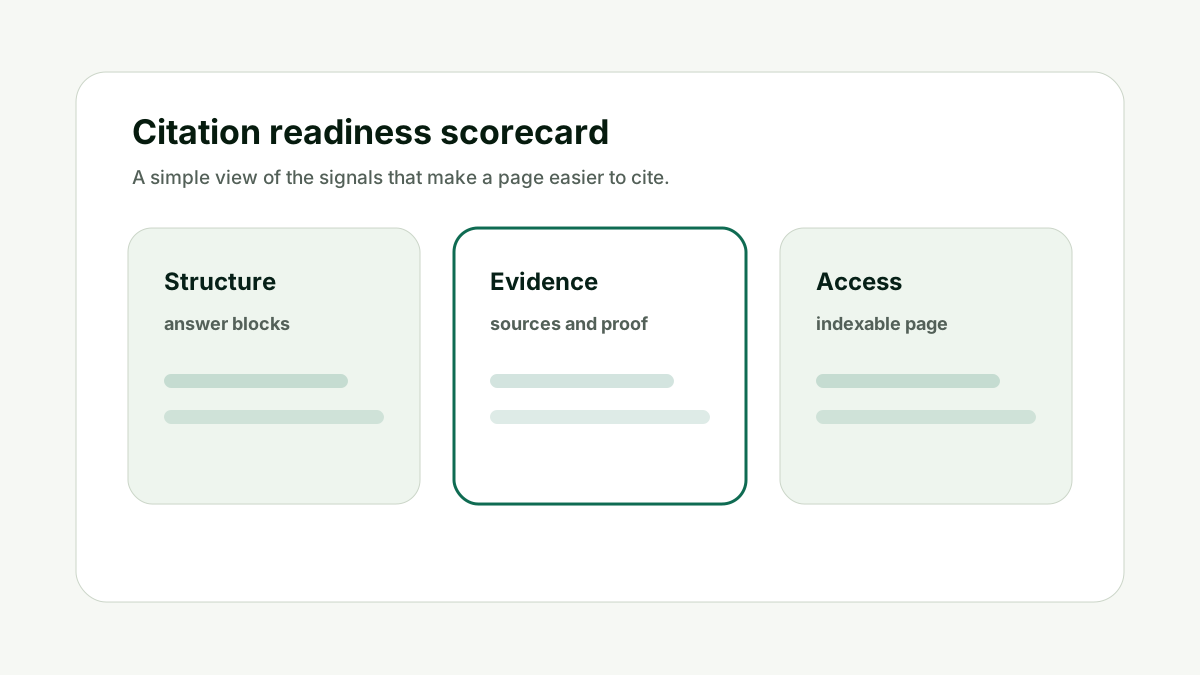
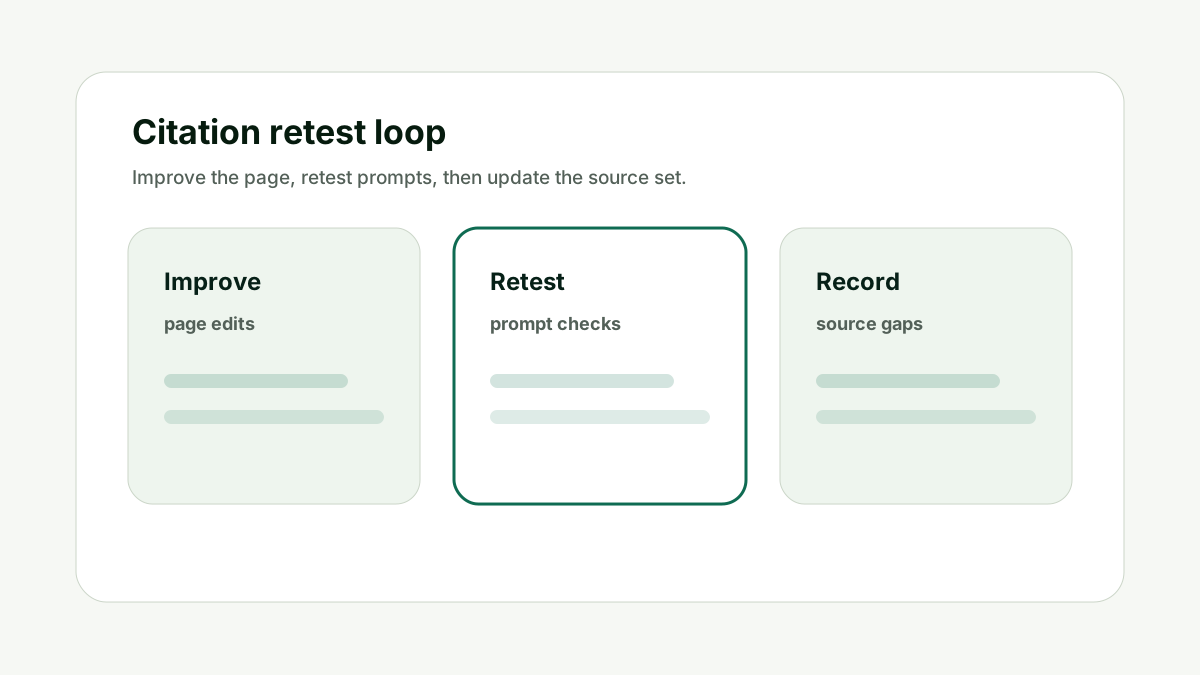
I would treat citation readiness as the page-level checkpoint inside a larger workflow. First, make sure the page is accessible and canonical. Second, make sure the page answers a real prompt clearly. Third, connect the claim to visible proof. Fourth, retest the answer and compare the page against sources that already win.
This is also where internal linking should stay natural. Link to a tool, service, or article only when it is the next useful action. Forced links make the article worse for readers and do not make the source more trustworthy.
Compare your page against cited sources before deciding whether to rewrite, build proof, or earn stronger mentions. If the score improves but citations still do not appear, the next issue is probably authority, freshness, or corroboration. That is useful because it tells the team what kind of work is actually needed next.
Good citation readiness is not about tricking an answer engine. It is about making the best source easier to find, understand, quote, and verify.
A Simple Worked Example
A brand asks why competitors are cited while its own page is ignored. The page has a decent title and a few paragraphs, but the competitor page has a direct answer, updated examples, links from trusted publishers, and mentions in community threads.
In that case, I would not call the problem only technical. The brand has a source gap. It needs a better page and better proof around the page.
First, I would make the page citation-ready: answer block, examples, proof, schema, and technical access. Then I would compare the competitor source trail: who mentions them, which pages link to them, and where their claims are repeated.
The strongest campaign connects both sides. The page becomes worth citing, and the web around the page starts confirming that it is a trustworthy source.
Practical action checklist
- Match the page to one question or prompt before editing.
- Add a direct answer before adding supporting detail.
- Keep proof close to claims that need verification.
- Validate technical access and schema only after the visible page is useful.
- Retest the same prompts so the team can see whether anything changed.
What I Would Do Next
List the pages currently cited for your target prompts.
Compare your page against those sources for relevance, clarity, evidence, freshness, and authority.
Fix the page first, then build source proof where the wider trust gap is obvious.
Conclusion
What sources do AI answer engines trust? is a useful question because it separates citation readiness from wishful thinking.
The practical answer is to build pages that answer clearly, prove their claims, stay technically accessible, and connect to a trustworthy source trail.
That gives your team a better workflow than publishing more content and hoping an AI answer engine finds the useful part.
FAQ
Do AI systems trust big sites more?
Often large trusted sites have an advantage, but relevance, clarity, and proof still matter. Smaller sites can win when they provide the best source for a specific question.
Can internal links improve source trust?
They can help clarify relationships and priority pages, but they do not replace external proof or page-level quality.
What is a source gap?
A source gap is the difference between what your page proves and what competing sources prove across the web.
Should I build links before fixing the page?
Usually no. Build authority to pages that already deserve to be cited. Otherwise you amplify a weak source.

Adam O'neil
1stpage Editorial Team
Our 1stpage editorial team combines hands-on SEO agency experience with evidence-backed search performance guidance. These posts are built from real search wins, audit-grade insight, and conversion-tested tactics designed to help agencies, founders, and search teams earn more traffic and trust.