Short answer
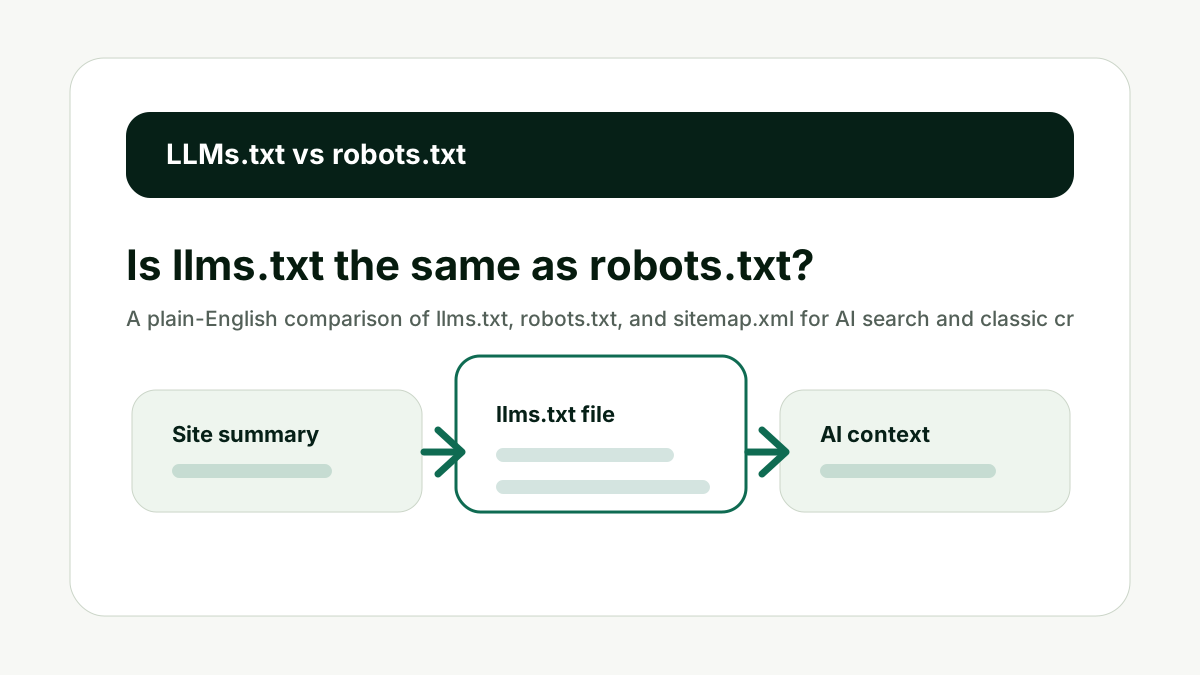
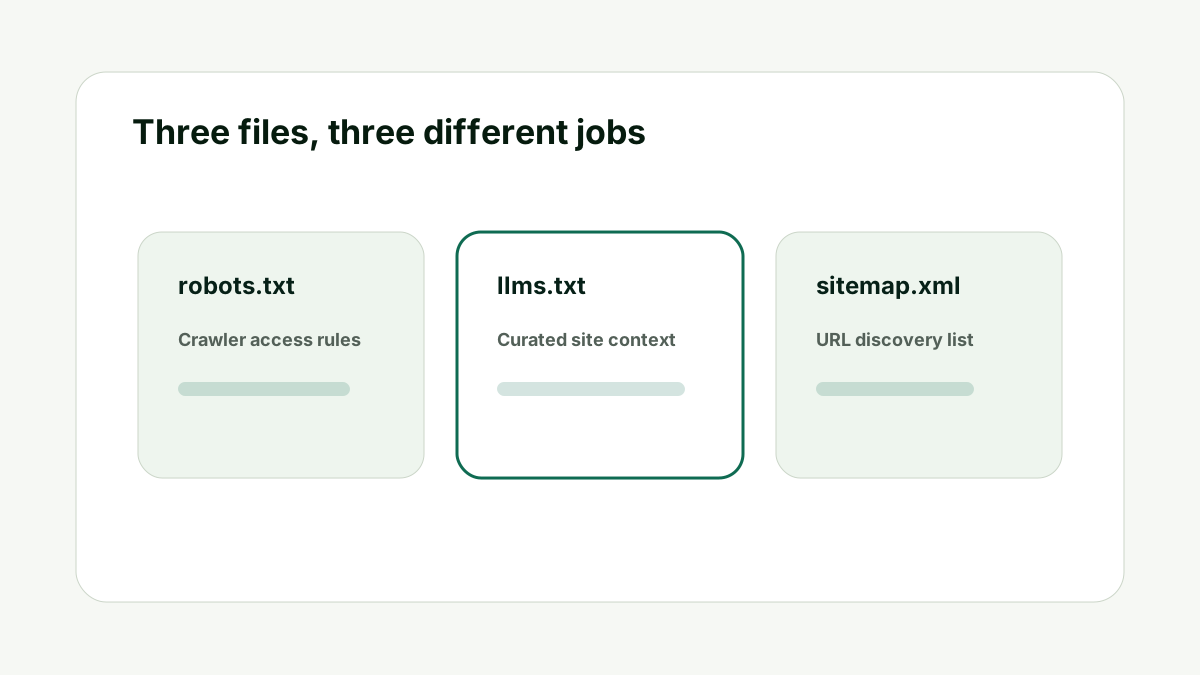
No. robots.txt is mainly about crawler access rules. sitemap.xml is mainly about URL discovery. llms.txt is a curated context file that explains the site and points to important resources. They can work together, but they do different jobs.
The useful way to think about this is not "will one file make AI systems recommend me?" The better question is whether your site gives crawlers, retrieval tools, and human reviewers a clean route to the pages that matter.
Reader question
"Which file should I fix first?"
Fix robots and indexability first if pages are blocked. Use the Free LLMs.txt Generator after the important pages can be reached and summarized.
Table of Contents
I am going to answer this as a practical website-operations question, not as a hype cycle question.
An llms.txt file can be useful, but it works best when the surrounding site is already clear. The file should describe the site, point to important pages, and reduce ambiguity. It should not become a shortcut around weak content, blocked pages, or missing proof.
Here is how I would evaluate it across the parts that matter.
Purpose
The purpose of robots.txt is to give crawler access guidance. It tells bots which paths are allowed or disallowed, and it can reference sitemaps. It is not designed to summarize your business.
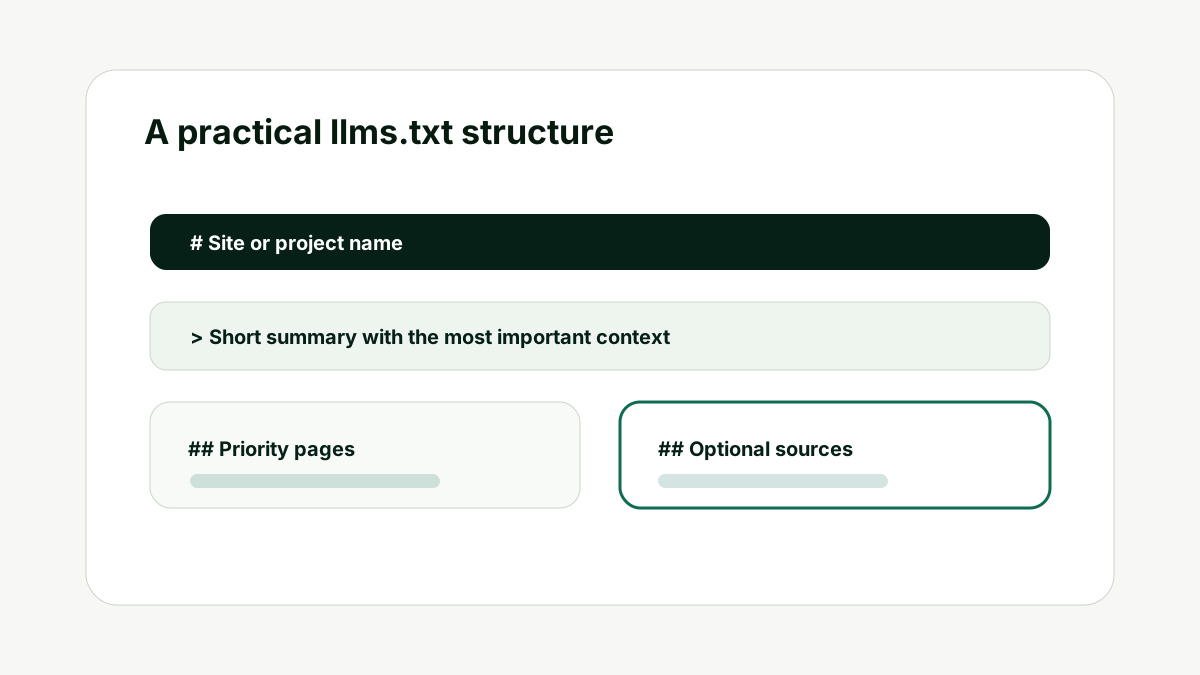
The purpose of llms.txt is different. It gives a concise, Markdown-readable overview of the site and links to useful resources. It is closer to a curated guide than a gatekeeping file.
That difference matters because teams sometimes expect llms.txt to control crawling. It should not be used that way.
Purpose is the main difference. robots.txt manages access; llms.txt provides context.
Permissions
Robots.txt is where crawler permissions usually live. If a section of the site should not be crawled by compliant bots, robots.txt is the file people expect to check.
Llms.txt should not be treated as a permissions file. It may mention which resources are preferred, but it does not replace access rules or privacy controls.
If sensitive content should not be available, the answer is not to omit it from llms.txt. The answer is to secure it properly and use the correct crawler and indexing controls.
Permissions belong in the right layer. Do not use a context file as a security or access system.
Discovery
Sitemap.xml is the strongest comparison for discovery. It lists URLs so search engines can find pages. A sitemap can include many URLs and metadata like last modification dates.
Llms.txt is more selective. It can link to priority pages, but it is not meant to list everything. It should explain what matters first.
For large sites, both are useful. The sitemap helps broad discovery. The llms.txt file gives the curated overview.
Sitemap.xml is the broad URL list. llms.txt is the curated context list.
Context
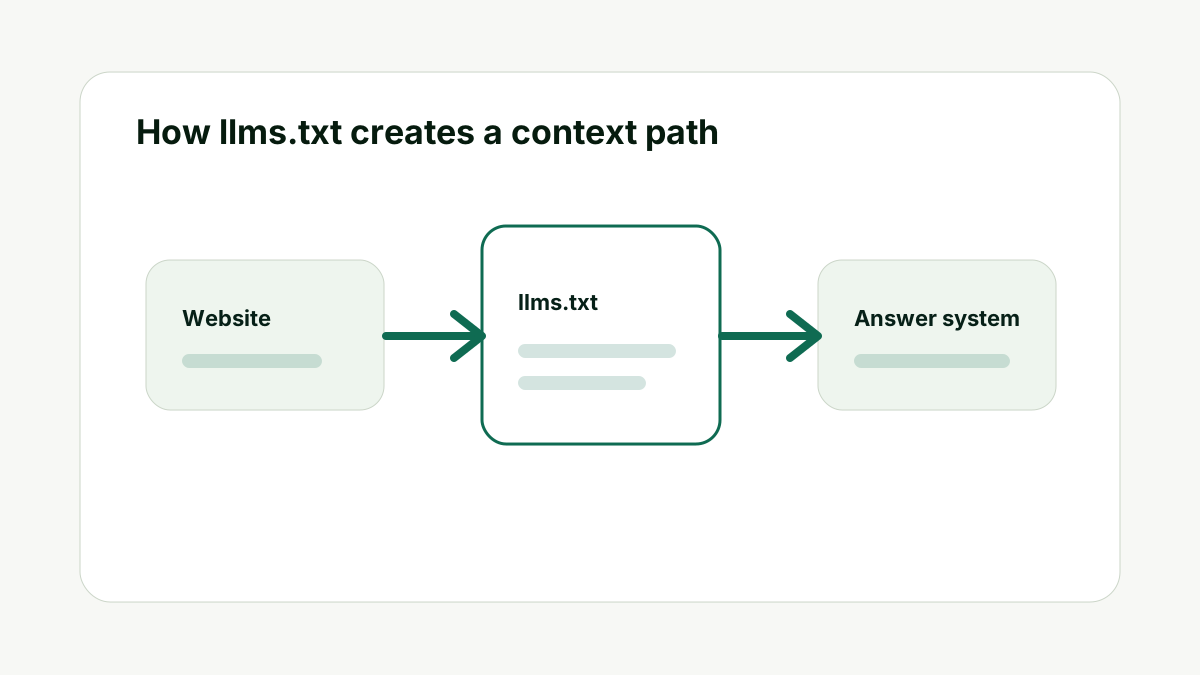
Context is where llms.txt is strongest. It can say what the site does, which pages are canonical, which docs are current, and which resources are optional.
Robots.txt and sitemap.xml are not built for that kind of explanation. They are useful technical files, but they do not tell a reader how to interpret a business, product, or documentation library.
This is why llms.txt can sit beside existing standards rather than compete with them.
Context is the reason to create the file. It adds explanation where technical files only list or control.
How They Work Together
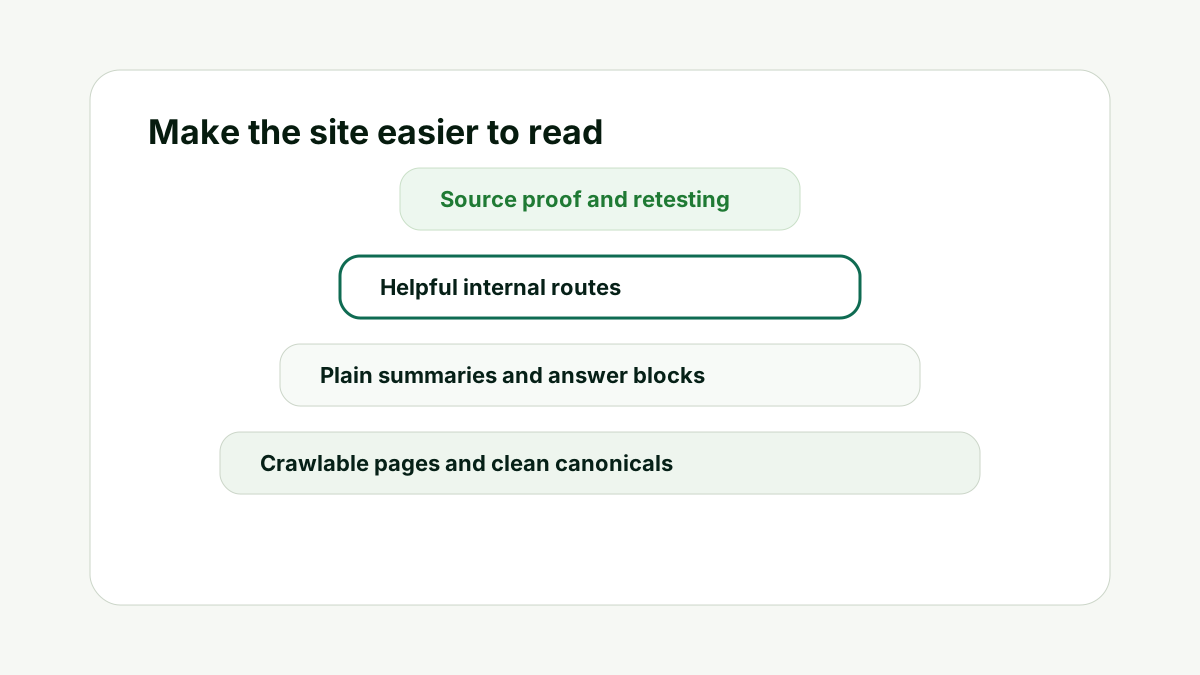
The practical workflow is simple. First, make sure important pages are crawlable and indexable. Then confirm the sitemap lists the pages that matter. Then create the llms.txt file to explain the best sources.
If you skip the first two steps, llms.txt will point to weak or inaccessible pages. If you skip the third step, AI tools may still have to infer which pages are most important.
For the technical step, use the Indexability and Canonical Checker. For the context step, use the generator.
The best setup uses all three files together, each for the job it was designed to do.
Common Mistakes
The first mistake is putting every URL in llms.txt. That makes the file redundant with the sitemap and less helpful as a summary.
The second mistake is writing vague promotional copy. The file should explain the site clearly, not inflate the brand with unsupported claims.
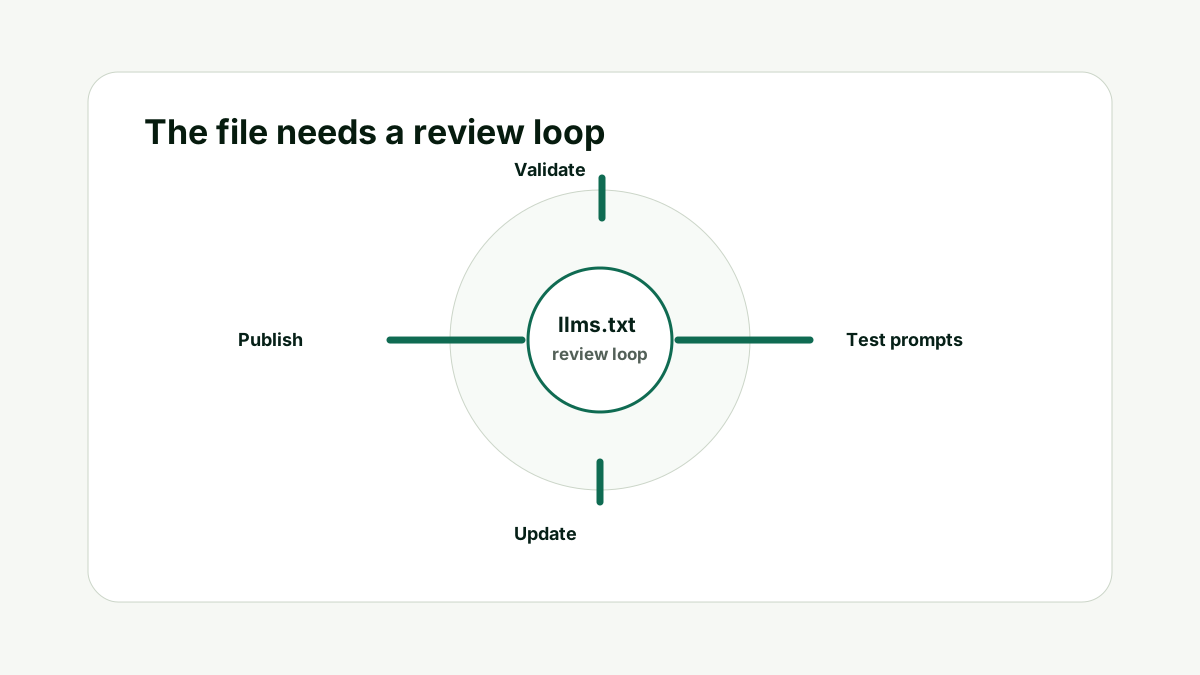
The third mistake is publishing it once and forgetting it. Like any important site file, it should be reviewed when the site changes.
Avoid turning llms.txt into a sitemap, an ad, or a stale artifact.
How This Fits the Wider AI Search Workflow
The important thing with Is llms.txt the same as robots.txt? is to avoid treating the file as an isolated SEO task. It belongs inside a wider workflow that starts with crawlability, moves into page clarity, then uses llms.txt as the curated map for the pages that deserve attention.
That order matters. If the page is blocked, the file cannot make it accessible. If the page is vague, the file cannot make it authoritative. If outside sources describe the brand differently, the file cannot erase the wider source gap. The file is useful because it makes the intended site structure visible, but it still depends on the quality of the pages and sources it points to.
In practice, I would use the file as a checkpoint. If a URL is important enough to include in llms.txt, it should also be strong enough to answer its core question clearly. It should have a stable canonical URL, a useful title, headings that match the topic, and enough proof to support the claims. If a page fails that check, improve the page before making it a priority source.
I would also connect the file to measurement. After publishing or updating it, run the prompts that matter to the business. Check whether the brand appears, whether the description is accurate, and whether the answer seems to rely on better sources. If the answers do not improve, the next step is not to stuff the file with more URLs. The next step is to improve the pages, source proof, and internal routes that support the file.
For teams, this also gives the file a clear owner. Someone should know which URLs are approved, which pages are optional, and which claims are no longer current. Without that owner, llms.txt can quietly drift away from the site it is supposed to explain.
That is why llms.txt should feel boring in the best way. It should be clear, current, and useful. The strategy is not to impress a model with a clever file. The strategy is to make your website easier to understand from the strongest available evidence.
A Simple Worked Example
Imagine a site has three files: robots.txt, sitemap.xml, and llms.txt. The robots file says which areas bots may crawl. The sitemap lists the canonical URLs. The llms file explains which of those URLs define the business.
If the service page is blocked in robots.txt, llms.txt cannot fix that. If the sitemap points to old pages, llms.txt cannot make the new pages easier to discover. If the llms file points to old content, the sitemap cannot explain the current positioning.
The right workflow is to audit access, discovery, and context in that order. Once those three layers agree, the site is easier for classic search crawlers, AI retrieval systems, and human reviewers to understand.
That is why I would not ask which file is better. I would ask whether the files agree with each other.
Practical action checklist
- Write the exact site context the file should clarify.
- List only the priority URLs that support that context.
- Check crawlability before blaming AI systems for missing the page.
- Add contextual internal links only when they help the reader take the next step.
- Review the file after major site, product, or positioning changes.
What I Would Do Next
Check whether your important pages are indexable and canonical.
Review your sitemap for current priority URLs.
Create a concise llms.txt file that points to the best pages and explains why they matter.
Conclusion
Is llms.txt the same as robots.txt? is a useful question because it separates AI-search preparation from guesswork.
The practical answer is to make the site easy to understand first, then use llms.txt as the concise map. Keep the file current, point it to strong pages, and test whether the answers around your brand improve over time.
That gives your team a better workflow than publishing a file once and hoping an AI system does the rest.
FAQ
Can llms.txt block AI crawlers?
No. Use proper crawler controls, server rules, and access controls for blocking. Llms.txt is a context file, not a blocking mechanism.
Does robots.txt replace llms.txt?
No. Robots.txt and llms.txt have different jobs. One handles access guidance; the other provides curated context.
Should llms.txt include my sitemap?
It can reference the sitemap if that helps connect the summary to broader URL discovery.
What if the files disagree?
Fix the disagreement. The priority pages in llms.txt should be crawlable, canonical, current, and represented correctly in your wider site structure.

Adam O'neil
1stpage Editorial Team
Our 1stpage editorial team combines hands-on SEO agency experience with evidence-backed search performance guidance. These posts are built from real search wins, audit-grade insight, and conversion-tested tactics designed to help agencies, founders, and search teams earn more traffic and trust.


