Table of Contents
- Storylane vs Walnut: the short verdict
- Storylane and Walnut at a glance
- Why Storylane and Walnut are direct competitors
- What matters when comparing Storylane and Walnut
- Storylane vs Walnut feature comparison
- Core workflow: Storylane vs Walnut
- Ease of use and onboarding
- Output quality and reporting
- Integrations, permissions and governance
- Buyer workflow and operating fit
- Security, administration and support
- What Reddit users say
- Storylane vs Walnut pricing in 2026
- Where Storylane is better
- Where Walnut is better
- Storylane limitations
- Walnut limitations
- Best platform by use case
- Switching from Storylane to Walnut
- Switching from Walnut to Storylane
- Storylane vs Walnut: final verdict
- Frequently asked questions
Storylane and Walnut compete for the same decision: choosing a interactive demo platforms that your team can operate consistently. The products overlap, but they reward different operating models.
Direct answer: Choose Storylane for marketing teams that need fast guided demos and simple self-serve creation. Choose Walnut for sales teams that need realistic, personalised demo environments and enterprise controls. The best platform is the one that fits your team, data and operating rhythm without creating avoidable administration.
Storylane vs Walnut: the short verdict
| Decision | Better choice | Why |
|---|---|---|
| Best for marketing teams that need fast guided demos and simple self-serve creation | Storylane | speed, affordability and guided tours. |
| Best for sales teams that need realistic, personalised demo environments and enterprise controls | Walnut | HTML-style sales demos and personalisation. |
| Best value | Depends on usage | Compare the complete operating workload, not the entry price. |
| Best final check | Trial both | Use your own data, users, permissions and approval process. |
Choose Storylane if
- marketing teams that need fast guided demos and simple self-serve creation describes your main use case.
- speed, affordability and guided tours matters more than surface-level simplicity.
- Your team can manage the implementation and governance the platform requires.
Choose Walnut if
- sales teams that need realistic, personalised demo environments and enterprise controls is closer to the work your team performs every week.
- HTML-style sales demos and personalisation will shorten the path from setup to routine adoption.
- You prefer a narrower operational fit over buying maximum platform breadth.
Storylane and Walnut at a glance
| Field | Storylane | Walnut |
|---|---|---|
| Category | interactive demo platforms | interactive demo platforms |
| Best for | marketing teams that need fast guided demos and simple self-serve creation | sales teams that need realistic, personalised demo environments and enterprise controls |
| Core strength | speed, affordability and guided tours | HTML-style sales demos and personalisation |
| Main limitation | basic demos can look less like the live product | higher price and a heavier build process |
| Starting price | From $40/month | Custom |
Why Storylane and Walnut are direct competitors
Both products sell to product marketing and sales teams and compete for the same core budget. A buyer can reasonably choose one instead of the other, which makes this a genuine replacement decision rather than a loose category comparison. Our Storylane founder profile adds the company and financing context behind that product direction. Our Walnut founder profile provides the same context for Walnut.
What matters when comparing Storylane and Walnut
The decision turns on operating fit. Check how each platform handles setup, daily work, collaboration, reporting, permissions, integrations and cost as usage grows. A longer feature list is not a win if the team cannot maintain the data or adopt the workflow.
- Define one measurable job and its owner.
- Connect the same representative data.
- Complete the same weekly workflow.
- Invite the same operators and reviewers.
- Compare the approved output and correction time.
- Price the next twelve months at realistic usage.
Storylane vs Walnut feature comparison
| Capability | Storylane | Walnut | Verdict |
|---|---|---|---|
| Core workflow | Built around marketing teams that need fast guided demos and simple self-serve creation | Built around sales teams that need realistic, personalised demo environments and enterprise controls | Buyer-dependent |
| Primary strength | speed, affordability and guided tours | HTML-style sales demos and personalisation | Match the operating model |
| Collaboration | Team and enterprise controls | Team and enterprise controls | Verify roles on the target plan |
| Reporting | Operational and management reporting | Operational and management reporting | Test the decisions you need to make |
| Cost | From $40/month | Custom | Model full usage |
Core workflow: Storylane vs Walnut
Storylane workflow
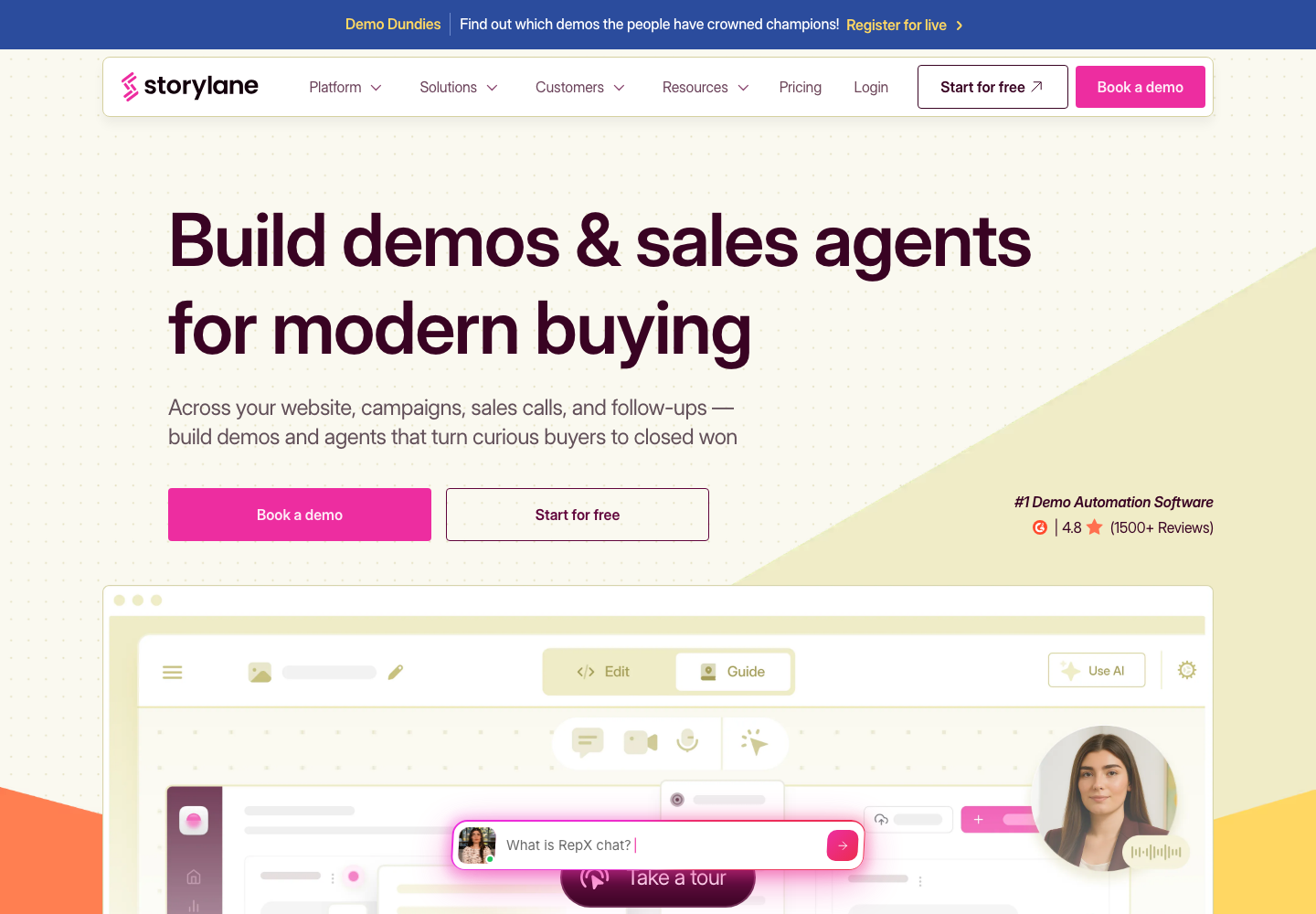
Storylane is strongest when marketing teams that need fast guided demos and simple self-serve creation. The platform's advantage is speed, affordability and guided tours. Build the pilot around one live workflow, assign an owner and record every manual step. The main watch-out is basic demos can look less like the live product.
Walnut workflow
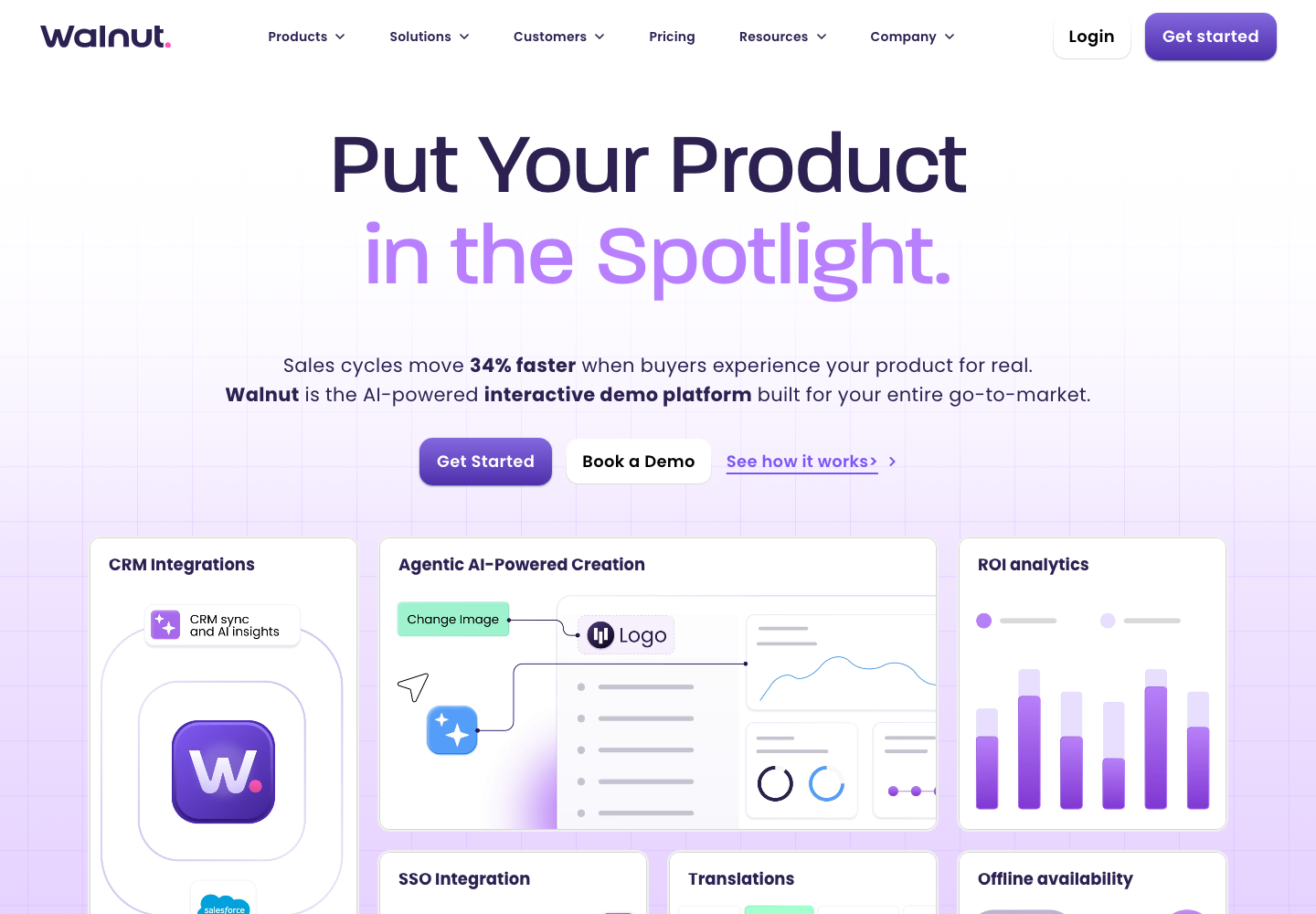
Walnut is strongest when sales teams that need realistic, personalised demo environments and enterprise controls. Its advantage is HTML-style sales demos and personalisation. Use the same data and success condition so the comparison stays commercial rather than cosmetic. The main watch-out is higher price and a heavier build process.
Workflow winner: Choose Storylane when speed, affordability and guided tours is decisive. Choose Walnut when HTML-style sales demos and personalisation matters more.
Ease of use and onboarding
Ease of use is not the number of clicks in a demo. It is the time required to reach a trustworthy routine, train the team and make changes without outside help. Storylane asks buyers to accept basic demos can look less like the live product. Walnut asks buyers to accept higher price and a heavier build process. Give operators a real task and watch where they pause, ask for help or leave the workflow.
Output quality and reporting
Judge output by the decision it supports. The dashboard, campaign, project, model or report should answer a defined business question and make the next action obvious. Require both products to reproduce the same executive view and operational drill-down from the same source data.
Integrations, permissions and governance
List the systems that must exchange data on day one and the fields that must move in each direction. Then test roles, approvals, audit history, exports and deletion. Integration logos are not enough. The buying team needs to see the actual records arrive, update and recover after an error.
Buyer workflow and operating fit
Storylane suits marketing teams that need fast guided demos and simple self-serve creation. Walnut suits sales teams that need realistic, personalised demo environments and enterprise controls. This difference should guide the shortlist before feature scoring begins. Buying against the wrong operating model creates more cost than missing a secondary feature.
Security, administration and support
Confirm SSO, provisioning, role granularity, data retention, regional processing, incident response and support terms in the contract. Also name the internal administrator. A powerful platform without an accountable owner becomes shelfware.
What Reddit users say
Community feedback highlights practical questions worth carrying into the pilot:
Use these comments as test prompts. They do not replace your own workload, data or procurement requirements.
Storylane vs Walnut pricing in 2026
| Cost area | Storylane | Walnut |
|---|---|---|
| Entry point | From $40/month | Custom |
| Enterprise plan | Confirm scope and quote | Confirm scope and quote |
| Implementation | Include internal and vendor time | Include internal and vendor time |
| Expansion | Model users, data and add-ons | Model users, data and add-ons |
Example monthly cost model
Price one realistic operating month: core users, occasional collaborators, data volume, workflows, integrations, premium controls, implementation and support. Add internal administration time. The cheaper quote loses if it needs more manual work or produces lower adoption.
Pricing verdict: Compare like-for-like usage and contract terms. The published entry point is only the first input.
Where Storylane is better
- speed, affordability and guided tours.
- Better aligned with marketing teams that need fast guided demos and simple self-serve creation.
- The stronger choice when buyers can support the required operating model.
Where Walnut is better
- HTML-style sales demos and personalisation.
- Better aligned with sales teams that need realistic, personalised demo environments and enterprise controls.
- The stronger choice when time to routine adoption carries more weight.
Storylane limitations
- basic demos can look less like the live product.
- Total cost depends on the final plan, users, data and services.
- Teams still need an owner, data standards and adoption plan.
Walnut limitations
- higher price and a heavier build process.
- Plan boundaries and add-ons can change the commercial result.
- Migration effort rises when workflows and historical data are poorly documented.
Best platform by use case
| Buyer or job | Better choice | Reason | Watch before buying |
|---|---|---|---|
| marketing teams that need fast guided demos and simple self-serve creation | Storylane | speed, affordability and guided tours | basic demos can look less like the live product |
| sales teams that need realistic, personalised demo environments and enterprise controls | Walnut | HTML-style sales demos and personalisation | higher price and a heavier build process |
| Lean team | Walnut | Prioritise the shortest maintainable workflow | Confirm plan limits |
| Complex enterprise | Storylane | Prioritise governance and operating depth | Fund implementation ownership |
| Unclear requirements | Trial both | The buying brief needs evidence | Use one shared success rubric |
Switching from Storylane to Walnut
Inventory data, fields, integrations, workflows, templates, permissions, reports and contract dates. Export the source records before rebuilding anything. Migrate one representative workflow first, reconcile the result and train a small operator group before moving the remaining users.
Switching from Walnut to Storylane
Use the same process in reverse. Do not assume historical configuration will map directly. Preserve source data, document logic and decide which old workflows should be retired instead of recreated.
Storylane vs Walnut: final verdict
Choose Storylane when marketing teams that need fast guided demos and simple self-serve creation. Its decisive advantage is speed, affordability and guided tours.
Choose Walnut when sales teams that need realistic, personalised demo environments and enterprise controls. Its decisive advantage is HTML-style sales demos and personalisation.
Overall recommendation: There is no universal winner. Match the platform to the operating model, then prove the choice with one live workflow and a twelve-month cost model.
Frequently asked questions
Is Storylane better than Walnut?
Storylane is better for marketing teams that need fast guided demos and simple self-serve creation. Walnut is better for sales teams that need realistic, personalised demo environments and enterprise controls.
Is Walnut cheaper than Storylane?
The entry points are From $40/month for Storylane and Custom for Walnut. Compare the full quote at your expected users, data, add-ons and support level.
Which is easier to use?
Walnut has the edge when HTML-style sales demos and personalisation shortens adoption. Storylane earns its extra depth when speed, affordability and guided tours is essential.
Which is better for enterprise teams?
Choose the product that passes your real permission, integration, security and reporting workflow. Storylane is the stronger default when marketing teams that need fast guided demos and simple self-serve creation.
Can I migrate from Storylane to Walnut?
Yes, but configuration and history rarely transfer cleanly. Export source data, document logic and run a staged migration.

Tolu S.
Associate Director
Evidence-led product reviews and founder profiles for search, marketing, authority, and AI visibility teams.