Table of Contents
- PostHog founders and financing at a glance
- Who is James Hawkins?
- Who is Tim Glaser?
- Why the founders built PostHog
- What PostHog does
- What makes the founder thesis distinctive?
- PostHog financing and transaction history
- What the latest milestone was intended to change
- Founder and company timeline
- The founders' public thesis
- Strengths, risks and unresolved questions
- Evidence to watch over the next 12 to 18 months
- Frequently asked questions
James Hawkins and Tim Glaser founded PostHog, the open-source product engineering and analytics platform business now serving product, engineering, data and growth teams. James Hawkins is Co-founder and co-CEO; Tim Glaser is Co-founder and co-CEO.
The latest material financing milestone covered here is $75M Series E at a reported $1.4B valuation, dated 2025-07. The relevant total is $182M disclosed funding, labelled as company-confirmed cumulative funding and Series E amount; valuation is externally reported. It is company-level capital or transaction value—not founder net worth.
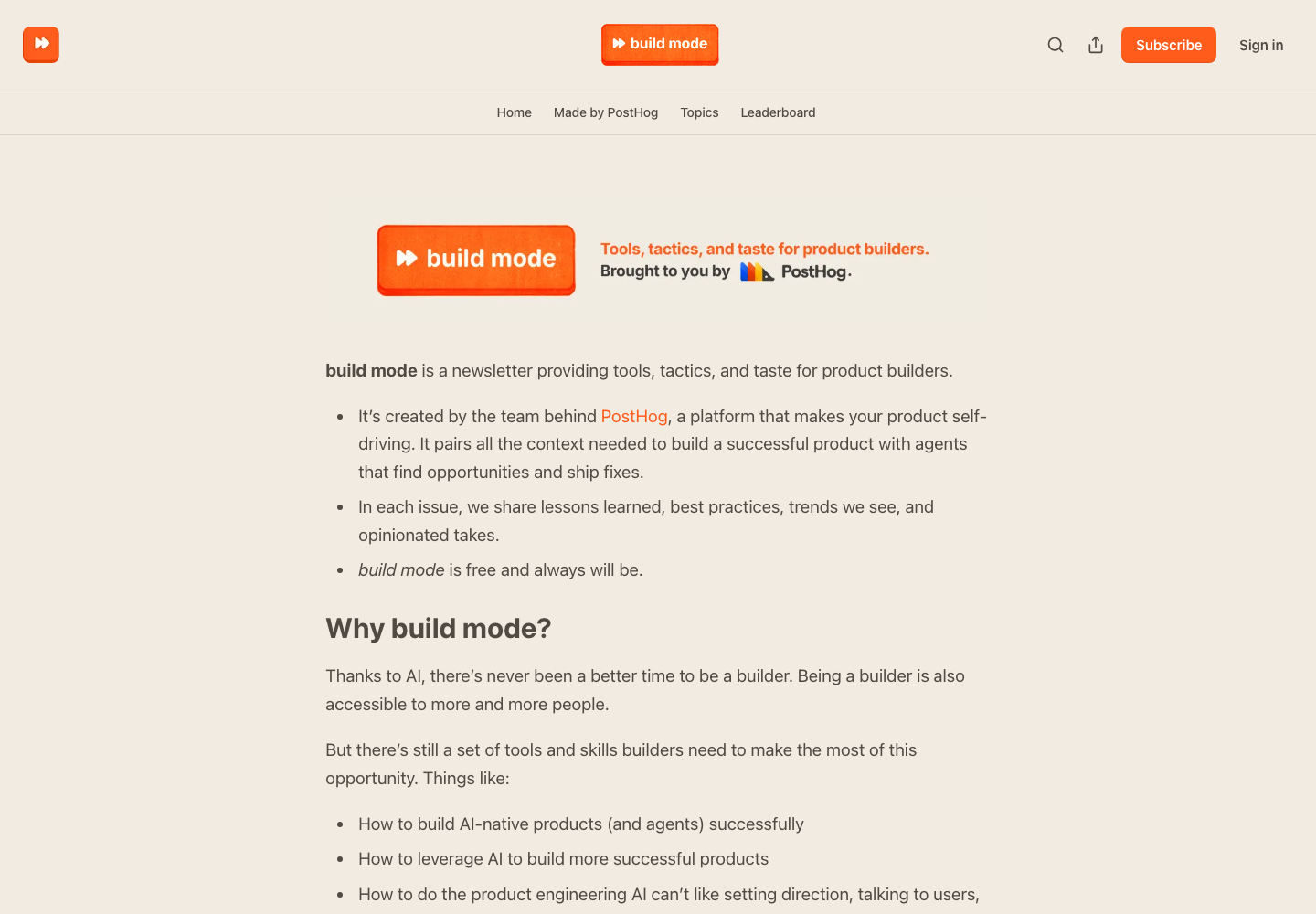
Authentic PostHog website evidence captured on 21 July 2026.
PostHog founders and financing at a glance
| Field | Verified information |
|---|---|
| Founding team | James Hawkins and Tim Glaser |
| Current or documented roles | James Hawkins: Co-founder and co-CEO; Tim Glaser: Co-founder and co-CEO |
| Company | PostHog — posthog.com |
| Founded | 2020 |
| Headquarters or operating scope | San Francisco, California, United States; remote international team |
| Product category | Open-source product engineering and analytics platform |
| Primary customer | Product, engineering, data and growth teams |
| Latest financing milestone | $75M Series E at a reported $1.4B valuation, 2025-07 |
| Total or transaction value | $182M disclosed funding — company-confirmed cumulative funding and Series E amount; valuation is externally reported |
| Public status | Privately held or part of an acquirer |
| Last verified | 21 July 2026 |
Who is James Hawkins?
James Hawkins is Co-founder and co-CEO at PostHog. James Hawkins's role should be read in its current context: founder status is permanent, while executive responsibility can change as a company scales, lists publicly or is acquired.
Founder profile: Connect with James Hawkins on LinkedIn.

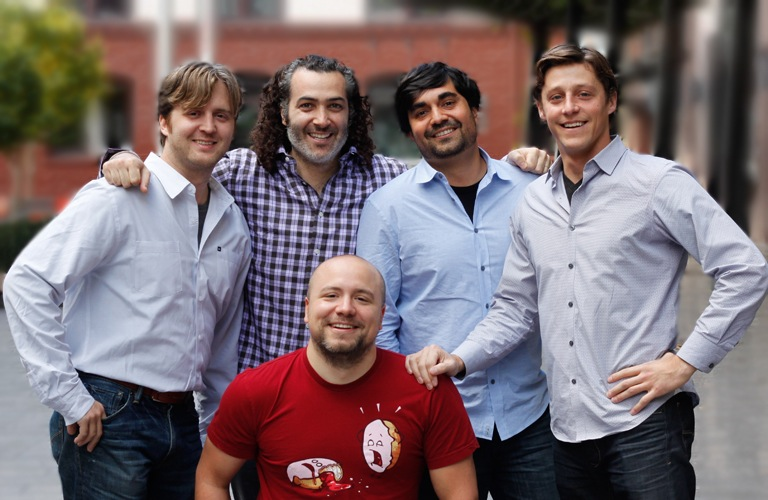
James Hawkins in PostHog's official founder media library.
In the founding team, James Hawkins contributed to the combination of product judgment, technical execution and go-to-market work behind PostHog. The public evidence does not justify claims about private ownership, personal wealth or undisclosed internal responsibilities.
Who is Tim Glaser?
Tim Glaser is Co-founder and co-CEO at PostHog. Tim Glaser's role should be read in its current context: founder status is permanent, while executive responsibility can change as a company scales, lists publicly or is acquired.
Founder profile: Connect with Tim Glaser on LinkedIn.

Tim Glaser in PostHog's official founder media library.
In the founding team, Tim Glaser contributed to the combination of product judgment, technical execution and go-to-market work behind PostHog. The public evidence does not justify claims about private ownership, personal wealth or undisclosed internal responsibilities.
Why the founders built PostHog
Hawkins and Glaser started PostHog after prior startup experience showed them how fragmented and expensive product tooling could become. They built the first version as an open-source product analytics product, then broadened the thesis into a single, developer-oriented stack that lets teams collect, analyze and act on product data without stitching together a long list of vendors.
This is documented company history plus editorial assessment. It does not establish private motivations beyond what the founders and company have said publicly.
What PostHog does
PostHog combines product analytics, session replay, feature flags, experiments, error tracking, logs, a customer-data warehouse and AI observability. Its open-source roots, usage-based cloud model and broad integrated suite are designed to support product engineers from initial instrumentation through release and diagnosis.
The best AI search optimization agencies comparison is useful for readers comparing the authority and visibility work that sits outside a customer-engagement platform. The guide to citation-ready content for AI search explains a related content-distribution problem.
What makes the founder thesis distinctive?
The CSV names James Hawkins alone. PostHog's official media page identifies both Hawkins and Tim Glaser as co-founders and documents $182M raised through its July 2025 Series E. The founders describe an equal partnership and now operate as co-CEOs.
Our assessment is that durable differentiation must show up in customer outcomes, workflow adoption, reliable data movement and lower operating cost—not only in feature count or AI branding.
PostHog financing and transaction history
| Announcement date | Round or instrument | Amount | Lead or named participants | Reported use | Evidence status |
|---|---|---|---|---|---|
| March 2020 | Seed | $3M | Y Combinator and investors | Launch open-source product analytics | Company-disclosed |
| July 2020 | Series A | $9M | GV and investors | Scale product and engineering | Company-disclosed |
| March 2021 | Series B | $15M | Y Combinator Continuity and investors | Expand the platform | Company-disclosed |
| Early 2025 | Series C | $10M | Existing and new investors | Continue product expansion | Company-disclosed |
| March 2025 | Series D | $70M | Stripe with investors | Scale the product-engineering platform | Company-confirmed |
| July 2025 | Series E | $75M at a reported $1.4B valuation | Peak XV Partners with investors | Build toward self-driving products | Company-confirmed amount; valuation externally reported |
| — | Current qualified figure | $182M disclosed funding | — | — | company-confirmed cumulative funding and Series E amount; valuation is externally reported |
The headline uses $75M Series E at a reported $1.4B valuation because it is the clearest recent milestone in the verified record. Different instruments are not silently combined: acquisition consideration, IPO proceeds, primary funding and secondary liquidity have different meanings.
What the latest milestone was intended to change
Public statements connect the milestone to some combination of product investment, AI capability, geographic expansion, hiring, acquisitions or shareholder liquidity. Those plans are attributed intentions, not proof that each outcome occurred. Evidence should include shipped capabilities, adoption, retention, unit economics and customer results after the transaction.
Founder and company timeline
| Period | Milestone |
|---|---|
| January 2020 | Hawkins and Glaser found PostHog. |
| February 2020 | The first open-source release ships after an intensive initial build. |
| 2020–2021 | Seed through Series B financing supports early product and team growth. |
| March 2025 | PostHog raises a $70M Series D led by Stripe. |
| July 2025 | A $75M Series E brings disclosed funding to $182M. |
| 2026 | The company develops a broad product-engineering and AI-observability stack. |
The founders' public thesis
Across the available company history, the founders argue that customer data becomes valuable when operating teams can turn it into timely, coordinated action. The exact emphasis differs by company—category creation, accessibility, data ownership, real-time infrastructure or AI-assisted execution—but the test is similar: can a customer make better decisions without adding hidden complexity?
Strengths, risks and unresolved questions
Visible strengths
- A founding thesis attached to a recurring and measurable marketing workflow.
- Product history and financing evidence available from primary sources.
- A platform broad enough to influence data, orchestration and customer communication.
Material risks
- A broad all-in-one platform can create operational dependence across analytics, flags, replay and observability.
- Session replay, logs and event collection require strict masking, retention, access and regional data controls.
- The reported $1.4B valuation is tied to the 2025 financing and is not founder wealth or a current market price.
Questions buyers and researchers should ask
- Which founder roles are current, and which describe historical service?
- How is incremental customer or revenue impact measured against a control?
- What data, consent, model and deliverability controls constrain automated action?
- Which transaction amounts were primary capital, secondary liquidity or acquisition consideration?
- What implementation resources are required before the platform produces reliable value?
Evidence to watch over the next 12 to 18 months
Watch for independently explainable retention and expansion, transparent AI evaluation, successful migrations, product delivery tied to the announced financing purpose and current executive-role disclosures. For public companies, filings provide a stronger operating signal than promotional customer counts alone. For private companies, future financing announcements should identify transaction composition clearly.
Frequently asked questions
Who founded PostHog?
PostHog was founded by James Hawkins and Tim Glaser.
What does PostHog do?
PostHog provides open-source product engineering and analytics platform capabilities for product, engineering, data and growth teams.
What is PostHog's latest financing milestone?
The latest milestone verified for this profile is $75M Series E at a reported $1.4B valuation, dated 2025-07.
How much funding has PostHog raised?
The qualified figure used here is $182M disclosed funding. Its status is company-confirmed cumulative funding and Series E amount; valuation is externally reported; it should not be interpreted as founder wealth.
What should buyers verify?
Buyers should test data integration, consent controls, measurement, implementation effort, support, exportability and the limits placed on automated or AI-generated actions.

Tolu S.
Associate Director
Evidence-led product reviews and founder profiles for search, marketing, authority, and AI visibility teams.