Short answer
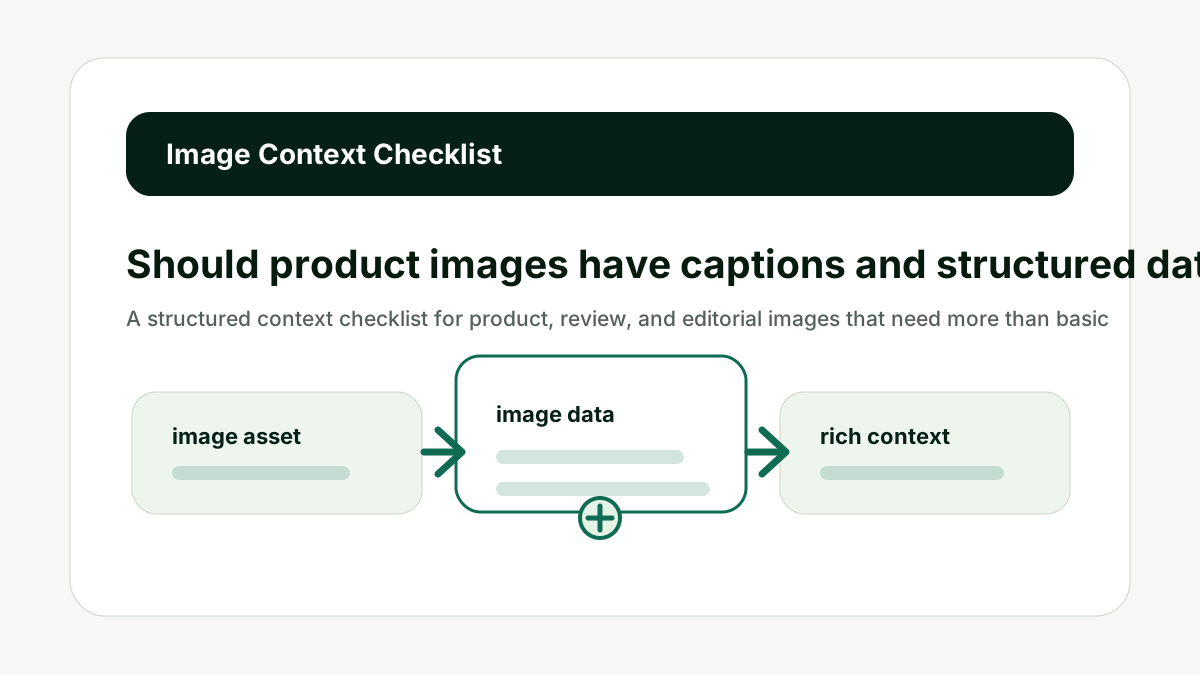
Product images should have captions and structured data when the image helps users understand the product, review, comparison, or article. Alt text describes the image, captions explain the meaning, and structured data or Open Graph tags can identify the preferred image for search and sharing surfaces.
For platform rules, use Google's image SEO best practices, the W3C alt text decision tree, and Web.dev image performance guidance as the source of truth.
Reader question
"Do captions and schema actually help?"
They help when they add real context. Use the AI Image SEO Optimizer for draft captions and then connect the final page to product, article, or citation-readiness checks.
Table of Contents
I am going to answer this as an editorial and technical SEO workflow, not as a keyword stuffing exercise.
Images help users understand pages, but they also create crawl, accessibility, performance, and preview signals. That is why the best image SEO work is specific and restrained.
Here is the framework I would use for an ecommerce or review team wants richer image context without overengineering every media asset.
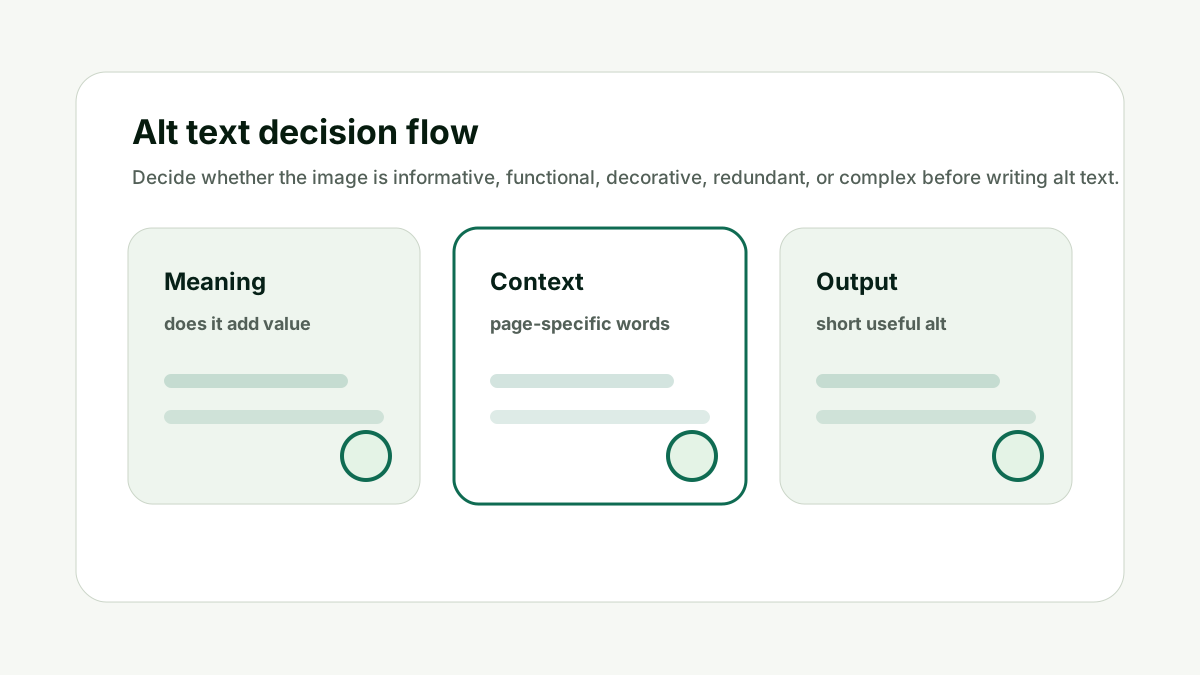
Separate Alt, Caption, and Schema Jobs
For Should product images have captions and structured data?, separate alt, caption, and schema jobs matters because each layer explains the image in a different way. The common mistake is treating image SEO as one field in the CMS when it is really a small system of asset quality, page context, crawlability, accessibility, and performance.
Alt text helps when the image is not visible. Captions help visible readers understand meaning. Structured data helps machines connect the image to the page entity.
Do not paste the same sentence into alt text, caption, and schema without thinking. The better habit is to decide what the image contributes, then make the filename, alt text, caption, metadata, and surrounding page support that same job.
This is also where AI output needs human review. A generated filename or alt attribute can save time, but it cannot know whether the screenshot is current, whether a product variant is correct, or whether a chart takeaway is already explained in nearby text.
Separate Alt, Caption, and Schema Jobs is one of the checks that keeps image SEO useful instead of noisy.
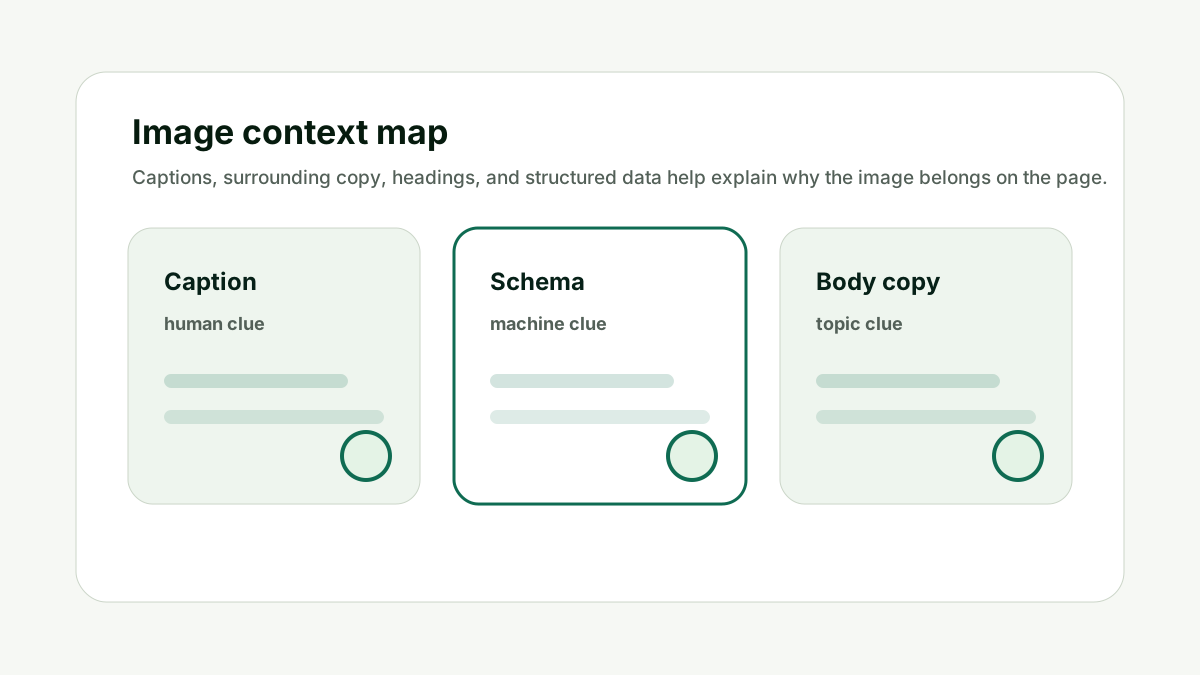
Use Captions for Meaning
For Should product images have captions and structured data?, use captions for meaning matters because captions are useful when the image needs interpretation, source notes, or product detail. The common mistake is treating image SEO as one field in the CMS when it is really a small system of asset quality, page context, crawlability, accessibility, and performance.
A product image caption can explain the model, use case, angle, or comparison shown. A chart caption can summarize the takeaway. This often improves human comprehension more than alt text alone.
Do not caption purely decorative images just to add keywords. The better habit is to decide what the image contributes, then make the filename, alt text, caption, metadata, and surrounding page support that same job.
This is also where AI output needs human review. A generated filename or alt attribute can save time, but it cannot know whether the screenshot is current, whether a product variant is correct, or whether a chart takeaway is already explained in nearby text.
Use Captions for Meaning is one of the checks that keeps image SEO useful instead of noisy.
Mark the Preferred Image
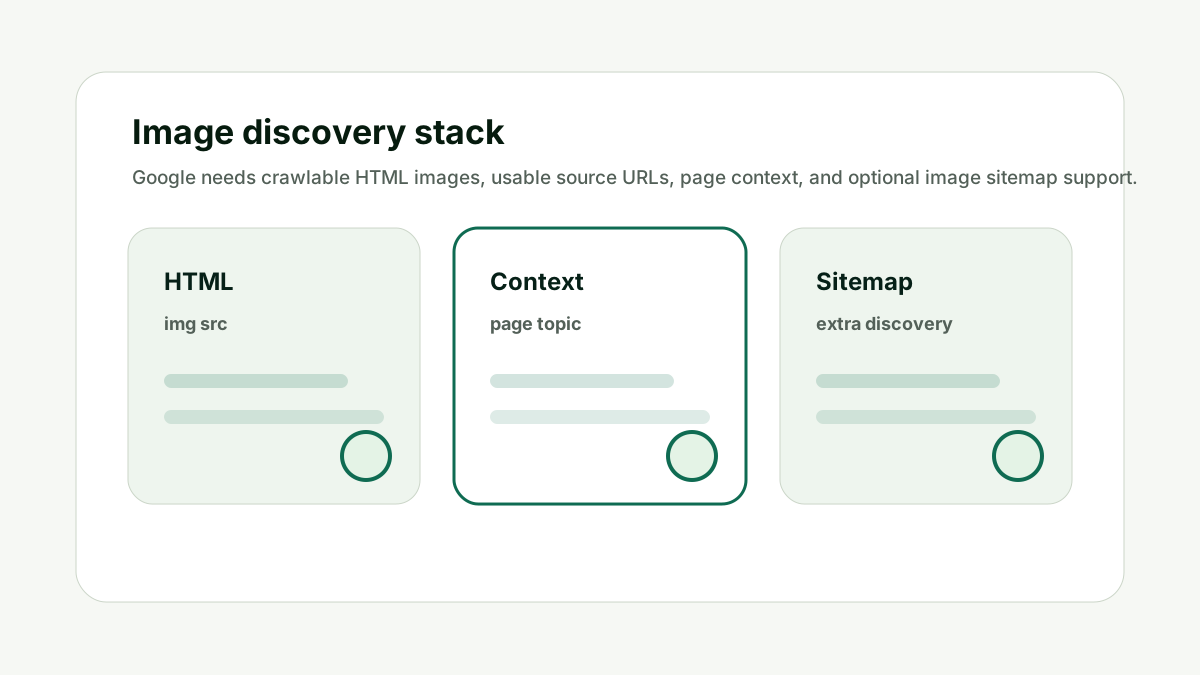
For Should product images have captions and structured data?, mark the preferred image matters because Google documentation explains that metadata such as schema image fields and og:image can influence which image is selected as a preview. The common mistake is treating image SEO as one field in the CMS when it is really a small system of asset quality, page context, crawlability, accessibility, and performance.
Choose a relevant representative image and use consistent Open Graph and structured data values where appropriate. Make sure the URL is crawlable and stable.
Do not let random thumbnails, logos, or decorative graphics become the default preview image. The better habit is to decide what the image contributes, then make the filename, alt text, caption, metadata, and surrounding page support that same job.
This is also where AI output needs human review. A generated filename or alt attribute can save time, but it cannot know whether the screenshot is current, whether a product variant is correct, or whether a chart takeaway is already explained in nearby text.
Mark the Preferred Image is one of the checks that keeps image SEO useful instead of noisy.
Connect to Product Data
For Should product images have captions and structured data?, connect to product data matters because product images work best when they align with product names, variants, reviews, and availability context. The common mistake is treating image SEO as one field in the CMS when it is really a small system of asset quality, page context, crawlability, accessibility, and performance.
For ecommerce, make sure the image supports the actual product entity and variant shown on the page. The image should not contradict the title, SKU, color, or structured data.
Do not reuse one generic product image across many variant pages without clarifying the context. The better habit is to decide what the image contributes, then make the filename, alt text, caption, metadata, and surrounding page support that same job.
This is also where AI output needs human review. A generated filename or alt attribute can save time, but it cannot know whether the screenshot is current, whether a product variant is correct, or whether a chart takeaway is already explained in nearby text.
Connect to Product Data is one of the checks that keeps image SEO useful instead of noisy.
Watch Performance
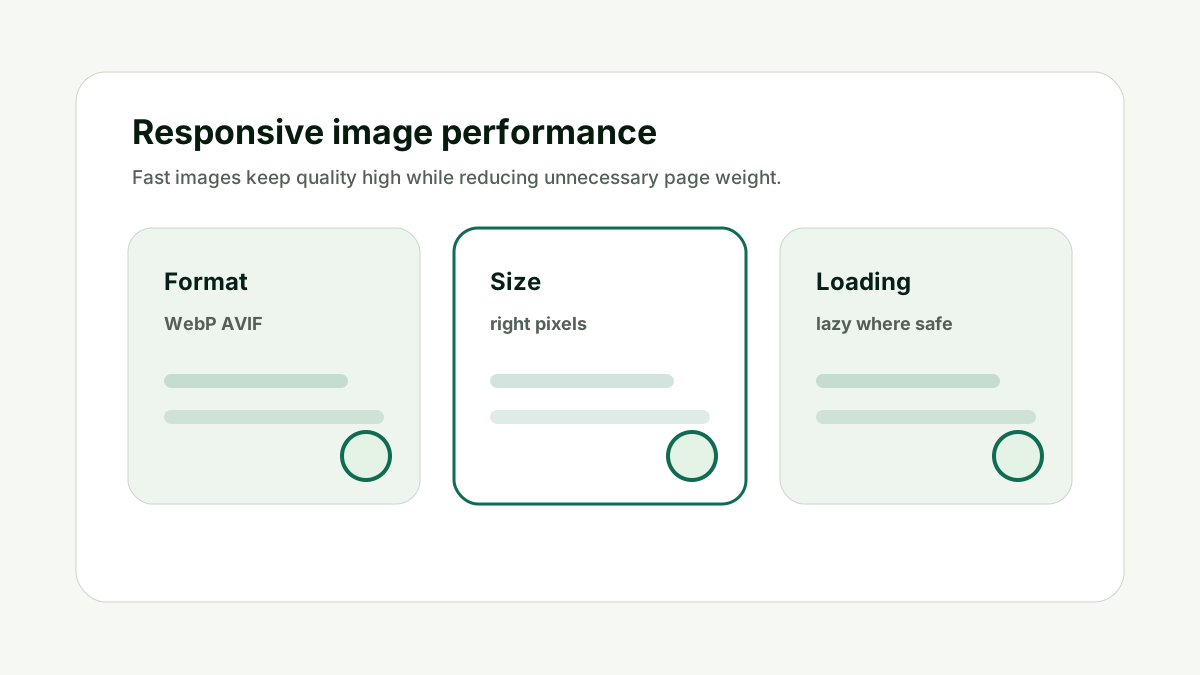
For Should product images have captions and structured data?, watch performance matters because product and review pages often carry many images, which can create performance problems. The common mistake is treating image SEO as one field in the CMS when it is really a small system of asset quality, page context, crawlability, accessibility, and performance.
Use modern formats, responsive sizes, lazy loading for below-the-fold images, and clear dimensions. Keep the primary product image sharp and fast.
Do not add rich context while ignoring the page weight that images create. The better habit is to decide what the image contributes, then make the filename, alt text, caption, metadata, and surrounding page support that same job.
This is also where AI output needs human review. A generated filename or alt attribute can save time, but it cannot know whether the screenshot is current, whether a product variant is correct, or whether a chart takeaway is already explained in nearby text.
Watch Performance is one of the checks that keeps image SEO useful instead of noisy.
Audit Important Pages
For Should product images have captions and structured data?, audit important pages matters because not every image deserves the same level of optimization. The common mistake is treating image SEO as one field in the CMS when it is really a small system of asset quality, page context, crawlability, accessibility, and performance.
Prioritize category pages, product pages, review pages, comparison posts, and articles where images carry meaning. Use the Indexability and Canonical Checker if the final page has crawl or metadata issues.
Do not spend time on decorative images before fixing revenue or citation-critical assets. The better habit is to decide what the image contributes, then make the filename, alt text, caption, metadata, and surrounding page support that same job.
This is also where AI output needs human review. A generated filename or alt attribute can save time, but it cannot know whether the screenshot is current, whether a product variant is correct, or whether a chart takeaway is already explained in nearby text.
Audit Important Pages is one of the checks that keeps image SEO useful instead of noisy.
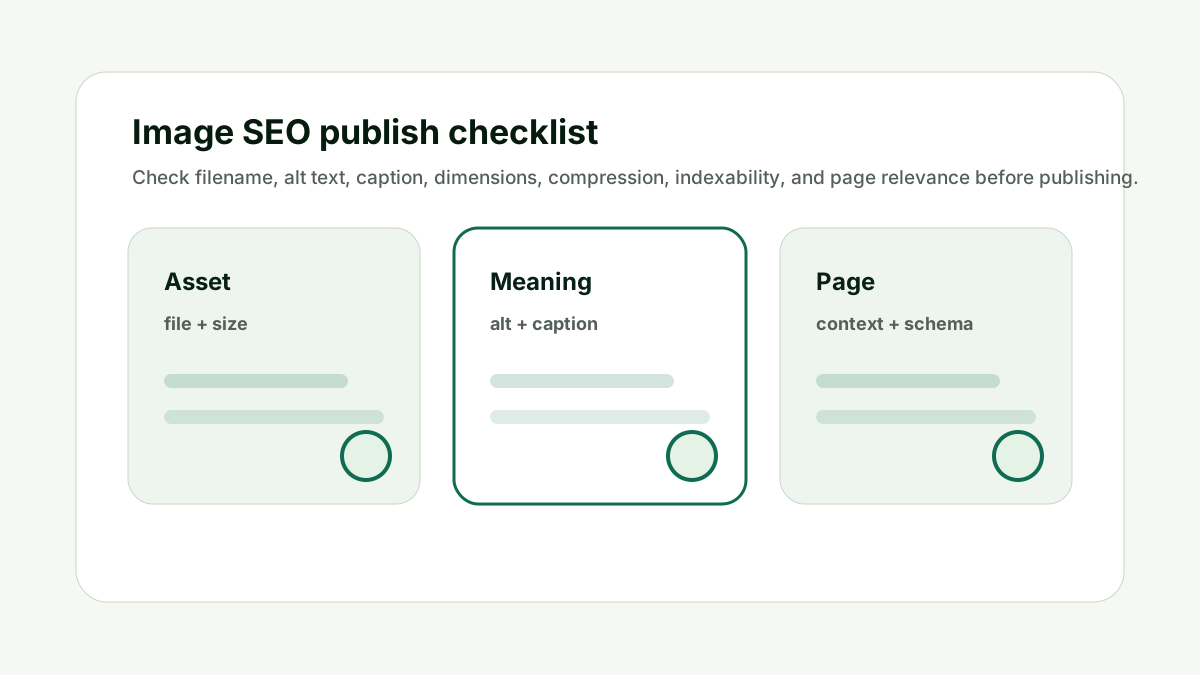
How This Fits the Wider SEO and AI Search Workflow
The important thing with Should product images have captions and structured data? is to treat images as part of the page's evidence, not only as decoration. The real job is using captions and structured data where they clarify the image and page, then making sure the final article remains crawlable, fast, accessible, and easy to summarize.
That order matters because image SEO has overlapping audiences. Humans need useful visuals. Screen-reader users need meaningful alternatives. Google needs crawlable assets and page context. AI systems need enough surrounding detail to understand why the image belongs on the page.
I would use the optimizer as a draft assistant. It can generate filename ideas, alt text, captions, and compression notes. The editor still decides whether the image is informative, decorative, functional, redundant, or complex.
This is also where internal links should stay natural. Use the image tool when the reader is preparing an asset. Use the Indexability and Canonical Checker when the final page has crawl or metadata problems. Use the AI Citation Readiness Checker when the image supports claims that AI systems may quote or summarize.
Generate captions as working drafts, then decide which images deserve structured data and stronger page context. Once the page is live, revisit image performance and search appearance only when the image matters to discovery, trust, conversion, or explanation.
Good image SEO is quiet. It makes the page easier to understand without making the page feel over-optimized.
A Simple Worked Example
A review page compares three project management dashboards. Each dashboard screenshot has basic alt text, but no captions. Readers have to guess what feature each screenshot demonstrates.
A better setup gives each screenshot a focused caption: "Task dependency view showing blocked work across three teams." The alt text can stay shorter: "Task dependency dashboard with blocked work indicators."
The page then uses a representative Open Graph image and article schema image property so sharing and preview systems select the right visual.
This is stronger because every layer has a job. Alt text describes. Caption interprets. Metadata identifies the preferred preview. The page copy connects the screenshot to the review.
Practical action checklist
- Use captions when an image needs interpretation or source context.
- Keep alt text shorter than captions.
- Use stable image URLs in structured data and Open Graph tags.
- Make product images match the actual variant or entity on the page.
- Prioritize important commercial and editorial images first.
What I Would Do Next
Pick the primary image for each important page.
Add captions only where they help readers understand the image.
Check schema and Open Graph values for the representative image.
Conclusion
Should product images have captions and structured data? is a useful question because it separates visual quality, accessibility, crawlability, page context, and performance.
The practical answer is to make the image clear, useful, fast, and connected to the surrounding page. That is better than treating alt text or filenames as isolated SEO fields.
When the image genuinely supports the page, search engines and AI systems have a cleaner signal to understand it.
FAQ
Should every product image have a caption?
Not every image needs one. Use captions when they add meaning, product detail, or comparison context.
Is ImageObject schema required?
No, but structured image properties can help clarify the preferred image in supported schemas.
Can captions replace alt text?
No. Captions and alt text serve different purposes.
Should logos be the og:image?
Usually no for articles or product pages. Use a representative image that reflects the page content.

Adam O'neil
1stpage Editorial Team
Our 1stpage editorial team combines hands-on SEO agency experience with evidence-backed search performance guidance. These posts are built from real search wins, audit-grade insight, and conversion-tested tactics designed to help agencies, founders, and search teams earn more traffic and trust.