Short answer
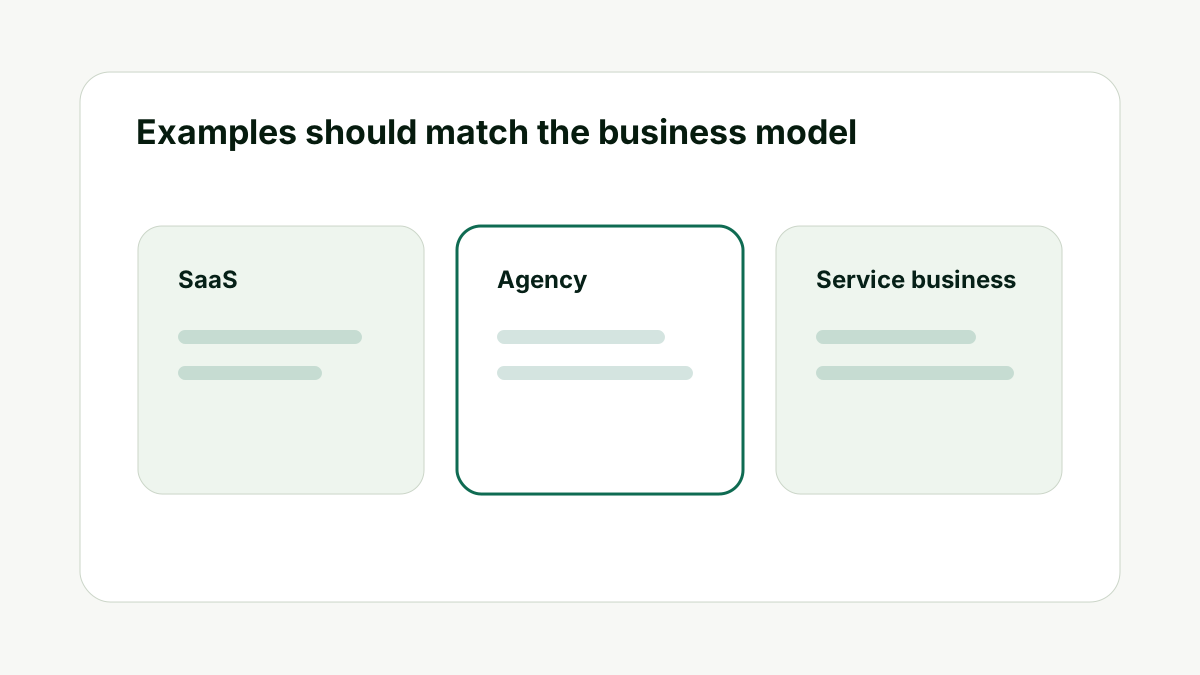
The best llms.txt file depends on the site. A SaaS file should prioritize product, docs, integrations, security, and pricing pages. An agency file should prioritize services, proof, case studies, tools, and contact routes. A service business file should prioritize location or niche pages, trust pages, and booking information.
The useful way to think about this is not "will one file make AI systems recommend me?" The better question is whether your site gives crawlers, retrieval tools, and human reviewers a clean route to the pages that matter.
Reader question
"Can I use one template for every site?"
Use the Free LLMs.txt Generator for the structure, but choose priority URLs based on the business model.
Table of Contents
I am going to answer this as a practical website-operations question, not as a hype cycle question.
An llms.txt file can be useful, but it works best when the surrounding site is already clear. The file should describe the site, point to important pages, and reduce ambiguity. It should not become a shortcut around weak content, blocked pages, or missing proof.
Here is how I would evaluate it across the parts that matter.
SaaS Example
A SaaS llms.txt file should help a reader understand the product category, core use cases, docs, pricing, integrations, security, and support routes.
Priority pages often include the homepage, product overview, key feature pages, docs, integrations, pricing, security or trust center, changelog, and support page.
The optional section can include deep docs, older release notes, developer examples, comparison articles, and long-form tutorials.
SaaS files should make product context and documentation paths obvious.
Agency Example
An agency file should clarify the service category, client type, delivery model, proof, and contact route. This is especially useful when the site has many services or blog posts.
For 1stpage-style sites, priority pages might include the homepage, LLMentioned, Top Page Links, Traffic Page Links, case studies, tools, about page, and contact page.
Use descriptions that explain the job of each page. For example, a service page may define the offer, while a case study page proves the outcome.
Agency files should separate service pages, proof pages, and educational content.
Service Business Example
A service business file should explain who the business serves, where it operates, which services matter most, and how someone can book or contact the team.
Priority pages may include the homepage, main service pages, location pages, reviews or testimonials, about page, booking page, and policies.
If the business operates in regulated or high-trust niches, include pages that explain credentials, compliance, insurance, or professional standards.
Service business files should make audience, location, trust, and contact paths clear.
What To Omit
Do not include every low-value page. Tag pages, thin posts, outdated announcements, duplicate city pages, and old offers can weaken the file.
Do not include claims that the linked pages cannot support. If the file says the company is an expert in a topic, the priority pages and outside sources should back that up.
Do not include private or sensitive URLs. If something should not be public, it should not be in a public root file.
Omission is part of curation. A shorter accurate file is better than a long noisy one.
Optional Section
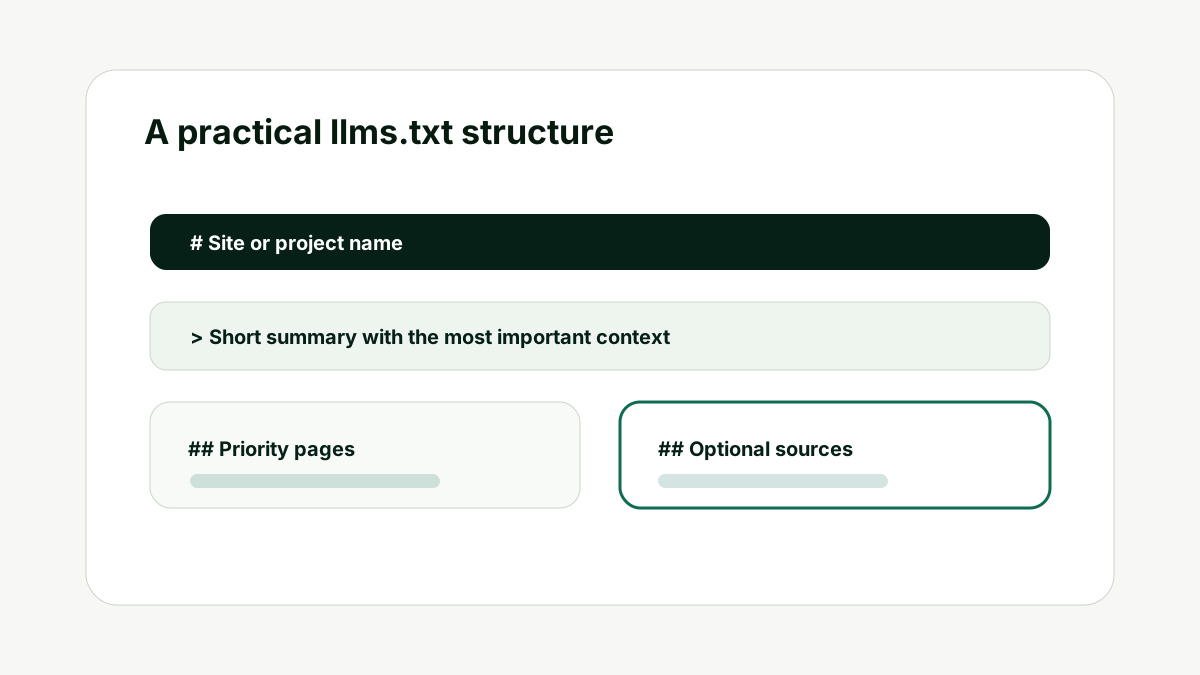
The optional section is useful for secondary resources. It can include deeper documentation, long tutorials, research pages, or supporting articles that are helpful but not essential.
For SaaS, optional might include developer examples. For agencies, optional might include educational blog posts. For local services, optional might include advice articles or FAQs.
The optional label helps keep the main file from becoming too heavy while still giving readers a route to more context.
Use optional sections for useful context that should not crowd the priority list.
Review Loop
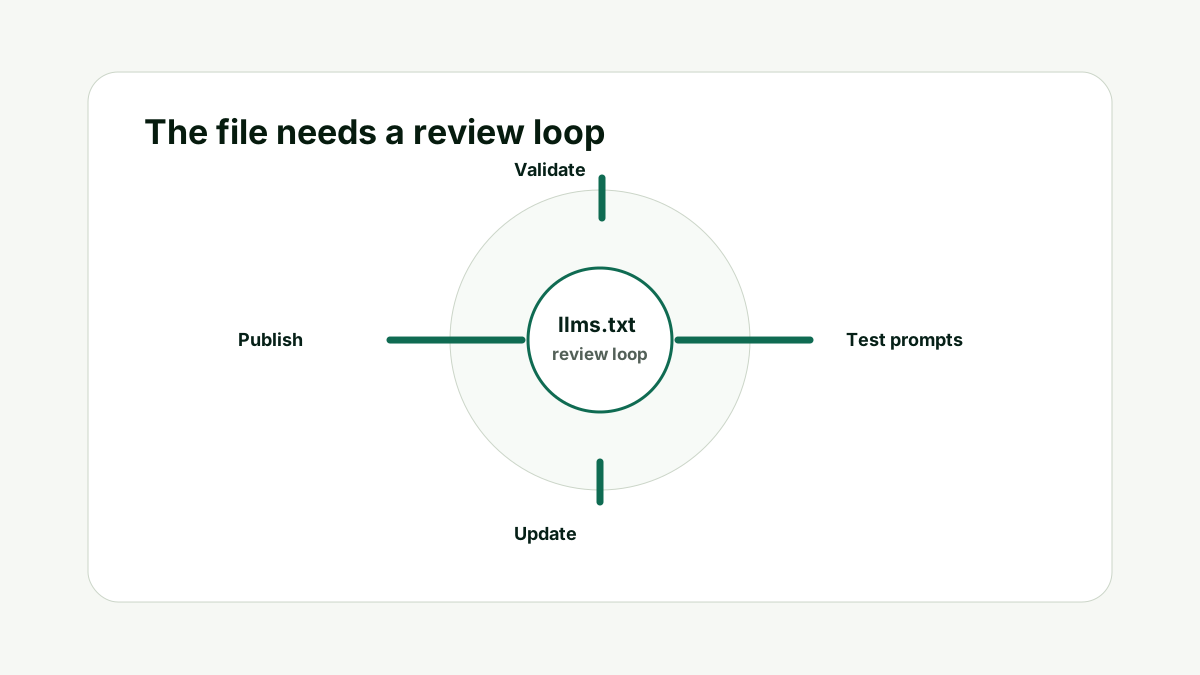
Every example needs a review loop. The file should be checked when products change, services change, pages move, documentation updates, or AI answers describe the brand incorrectly.
A simple review habit is enough. Check the file quarterly or after major site updates. Confirm every link works and every description is still true.
Then run a few AI visibility prompts to see whether the site is easier to describe accurately.
Examples are only useful if they stay current.
How This Fits the Wider AI Search Workflow
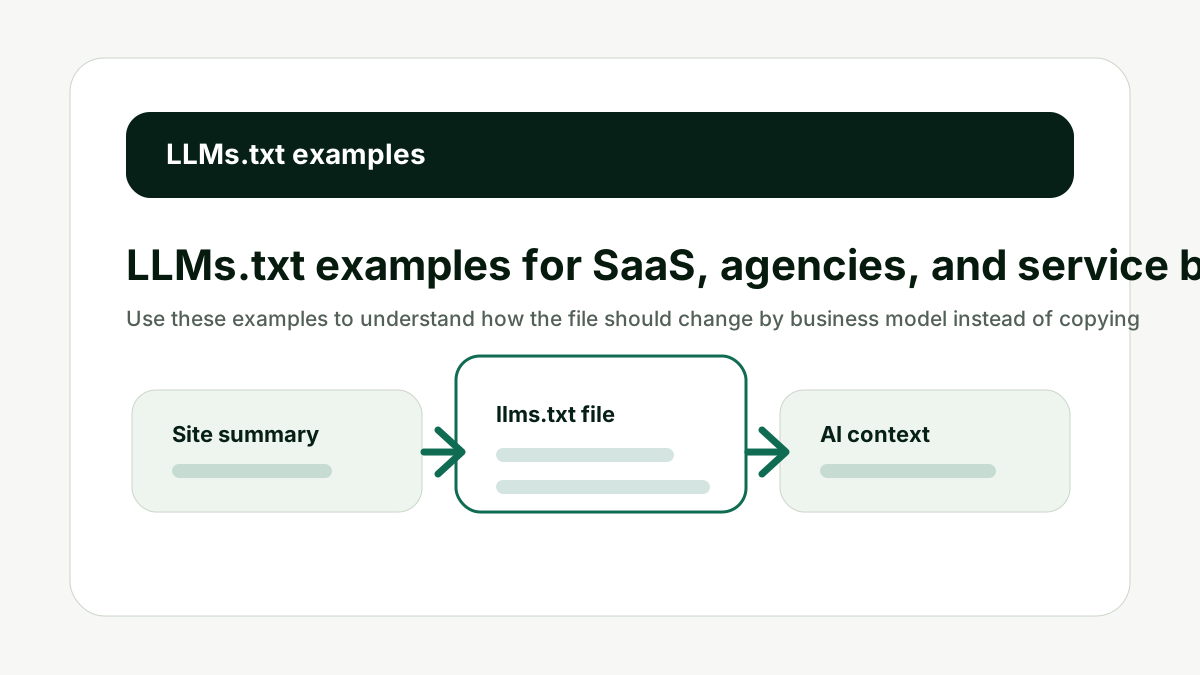
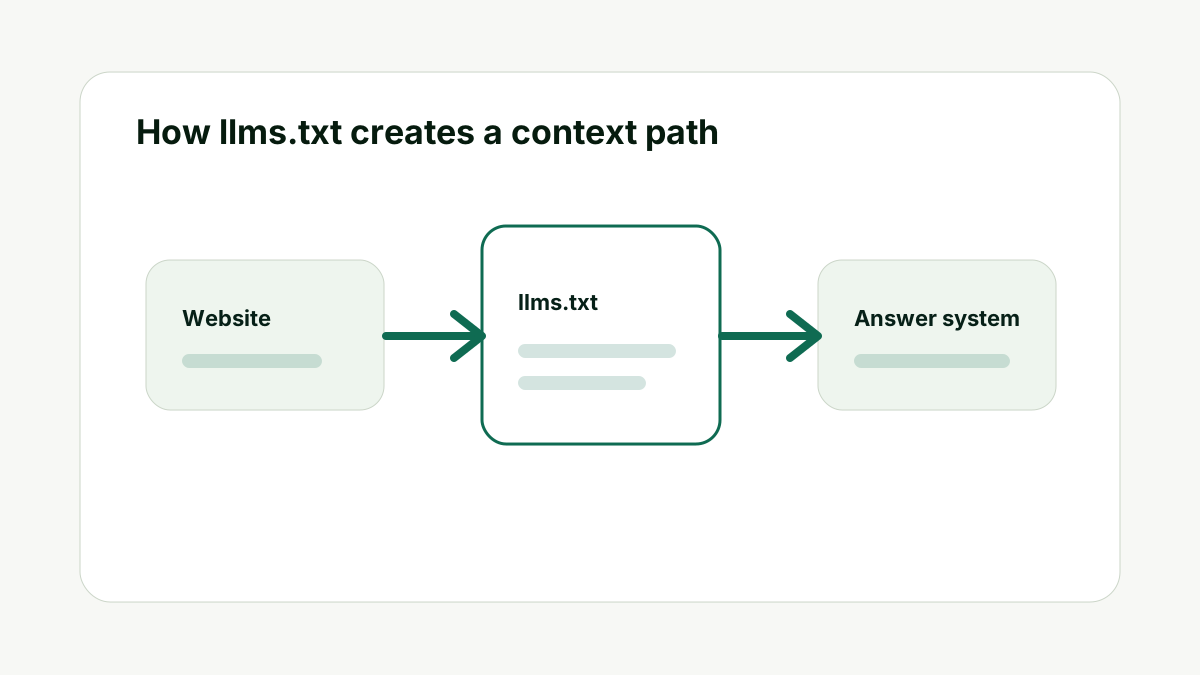
The important thing with LLMs.txt examples for SaaS, agencies, and service businesses is to avoid treating the file as an isolated SEO task. It belongs inside a wider workflow that starts with crawlability, moves into page clarity, then uses llms.txt as the curated map for the pages that deserve attention.
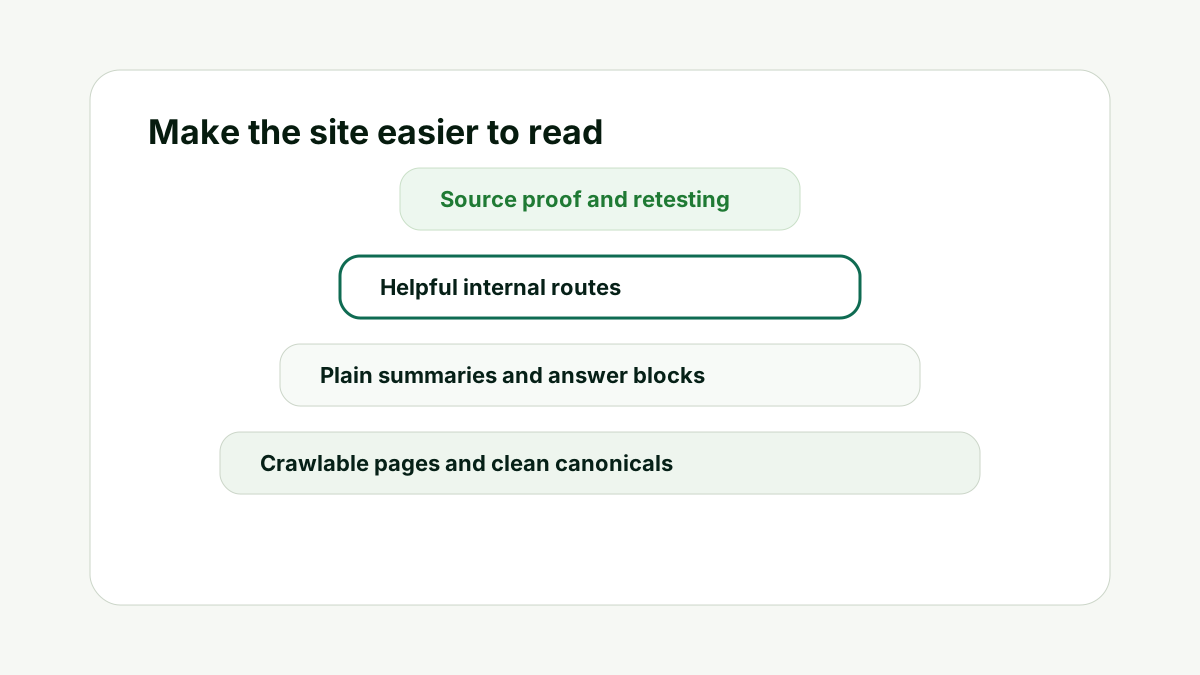
That order matters. If the page is blocked, the file cannot make it accessible. If the page is vague, the file cannot make it authoritative. If outside sources describe the brand differently, the file cannot erase the wider source gap. The file is useful because it makes the intended site structure visible, but it still depends on the quality of the pages and sources it points to.
In practice, I would use the file as a checkpoint. If a URL is important enough to include in llms.txt, it should also be strong enough to answer its core question clearly. It should have a stable canonical URL, a useful title, headings that match the topic, and enough proof to support the claims. If a page fails that check, improve the page before making it a priority source.
I would also connect the file to measurement. After publishing or updating it, run the prompts that matter to the business. Check whether the brand appears, whether the description is accurate, and whether the answer seems to rely on better sources. If the answers do not improve, the next step is not to stuff the file with more URLs. The next step is to improve the pages, source proof, and internal routes that support the file.
For teams, this also gives the file a clear owner. Someone should know which URLs are approved, which pages are optional, and which claims are no longer current. Without that owner, llms.txt can quietly drift away from the site it is supposed to explain.
That is why llms.txt should feel boring in the best way. It should be clear, current, and useful. The strategy is not to impress a model with a clever file. The strategy is to make your website easier to understand from the strongest available evidence.
A Simple Worked Example
For a SaaS company, I would put the product overview, docs, pricing, integrations, security, and support pages first. I would use optional sections for deep technical docs and tutorials.
For an agency, I would put the service pages and proof pages first. The file should make it easy to understand what the agency sells, who it helps, and where the proof lives.
For a service business, I would put the core service, location, trust, booking, and review pages first. The file should make the business easy to describe accurately by audience and market.
The structure is similar across all three examples, but the priority pages change. That is the main lesson. The generator gives you the format; the business model decides the content.
Practical action checklist
- Write the exact site context the file should clarify.
- List only the priority URLs that support that context.
- Check crawlability before blaming AI systems for missing the page.
- Add contextual internal links only when they help the reader take the next step.
- Review the file after major site, product, or positioning changes.
What I Would Do Next
Choose the example that matches your business model.
Generate a first draft with only the most important pages.
Review the file for stale URLs, unsupported claims, and missing proof before publishing.
Conclusion
LLMs.txt examples for SaaS, agencies, and service businesses is a useful question because it separates AI-search preparation from guesswork.
The practical answer is to make the site easy to understand first, then use llms.txt as the concise map. Keep the file current, point it to strong pages, and test whether the answers around your brand improve over time.
That gives your team a better workflow than publishing a file once and hoping an AI system does the rest.
FAQ
Can I copy another company's llms.txt file?
Use examples for structure, but do not copy the content. Your priority pages, descriptions, and optional sections should match your own site.
Should SaaS docs go in priority or optional?
Core docs can be priority. Deep docs and edge-case tutorials often belong in optional sections.
Should agencies include blog posts?
Only include the strongest guides or a blog index. The file should not become a full blog archive.
Should local service pages be included?
Yes, when they are important to how the business is understood. Avoid thin or duplicate location pages.

Adam O'neil
1stpage Editorial Team
Our 1stpage editorial team combines hands-on SEO agency experience with evidence-backed search performance guidance. These posts are built from real search wins, audit-grade insight, and conversion-tested tactics designed to help agencies, founders, and search teams earn more traffic and trust.