Short answer
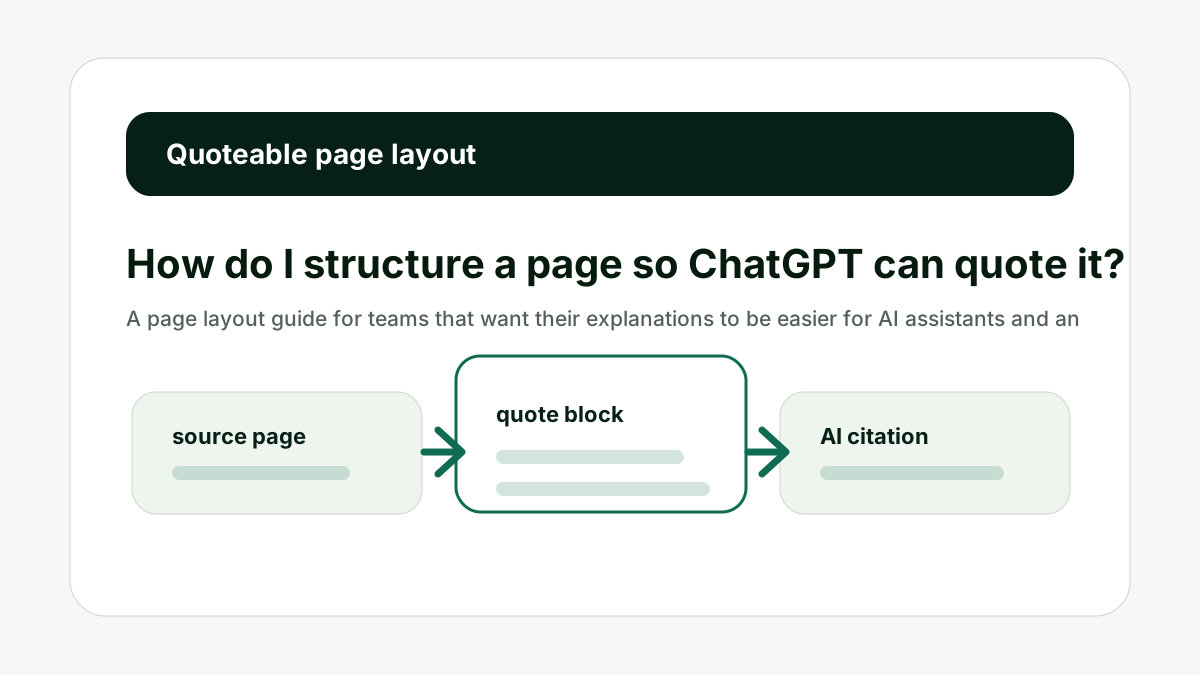
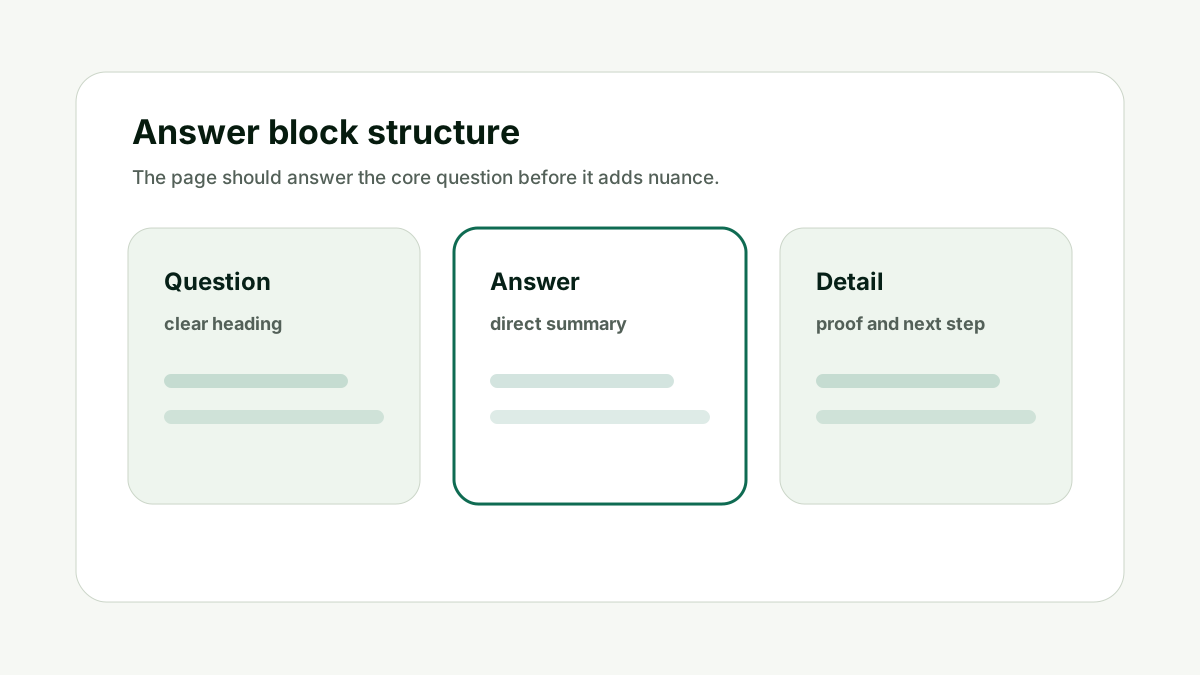
Structure the page around the answer someone would actually quote. Use a clear title, question-shaped headings, short answer blocks, standalone definitions, examples, source support, FAQ follow-ups, schema, and clean technical access.
The useful way to think about this is not "how do I make an AI system do exactly what I want?" The better question is whether the page gives a clear, supported answer that deserves to be reused.
Reader question
"What does quoteable mean in practice?"
Quoteable means a paragraph still makes sense when lifted into an answer. Use the AI Citation Readiness Checker to find whether the page has those extractable sections.
Table of Contents
I am going to answer this as a practical source-quality question, not as a promise that one checklist can force citations.
AI citation visibility usually depends on a mix of page structure, evidence, technical access, and source trust. The page has to be easy to extract, but it also has to be worth extracting.
Here is the framework I would use for a company has useful expertise but its best explanations are buried in long paragraphs.
Title and Intent
For How do I structure a page so ChatGPT can quote it?, title and intent matters because The title should tell the reader exactly what the page answers. This is where many pages lose citation potential: the information may be present, but it is not packaged in a way an answer system or human reviewer can confidently reuse.
Use a title and H1 that match the primary question. Then use the opening paragraph to answer the question without delaying the point.
Avoid clever titles when the goal is citation. Clarity gives the page a better chance to be understood. The practical test is simple: if someone copied only this section into a buyer-facing answer, would it still be accurate, specific, and supported? If not, the section needs more structure before it deserves to be treated as a source.
Title and Intent is one of the signals that makes this page more usable as an AI answer source.
Standalone Blocks
For How do I structure a page so ChatGPT can quote it?, standalone blocks matters because A quoteable page is made of sections that still make sense out of context. This is where many pages lose citation potential: the information may be present, but it is not packaged in a way an answer system or human reviewer can confidently reuse.
Each important paragraph should include the noun, the action, and the practical meaning. Avoid pronouns and references that only work after reading the previous section.
If a sentence starts with "this" or "it" too often, the excerpt may be hard to quote accurately. The practical test is simple: if someone copied only this section into a buyer-facing answer, would it still be accurate, specific, and supported? If not, the section needs more structure before it deserves to be treated as a source.
Standalone Blocks is one of the signals that makes this page more usable as an AI answer source.
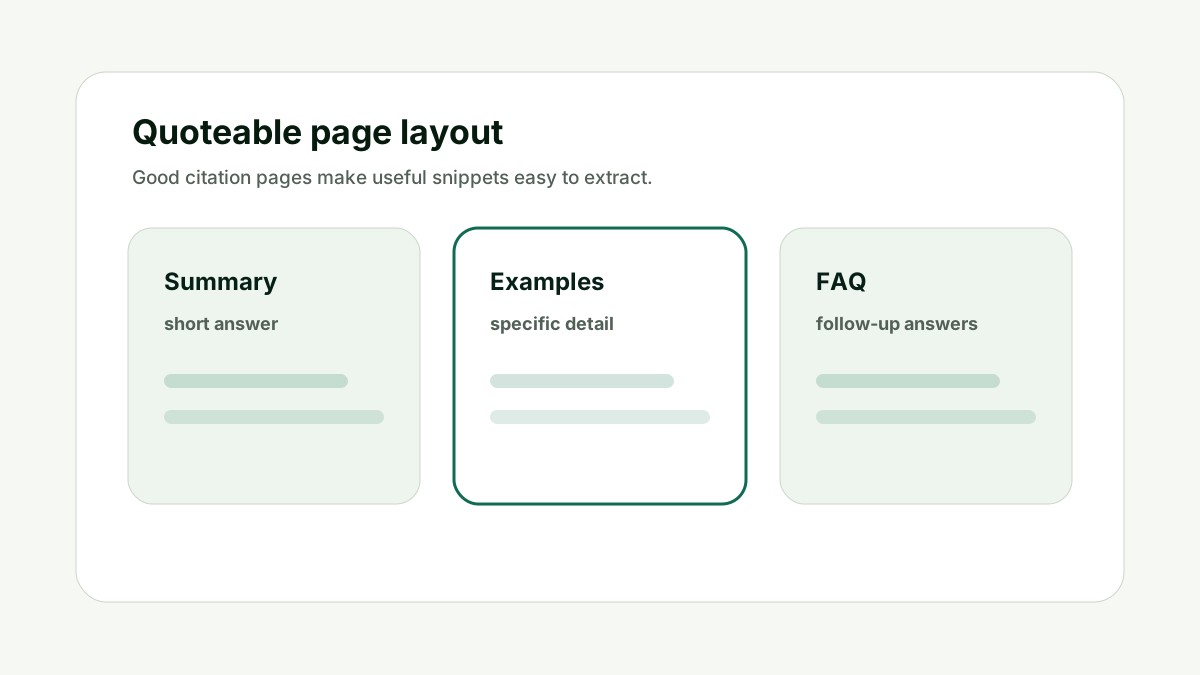
Examples
For How do I structure a page so ChatGPT can quote it?, examples matters because Examples make a quote more useful and less generic. This is where many pages lose citation potential: the information may be present, but it is not packaged in a way an answer system or human reviewer can confidently reuse.
Add short examples, mini scenarios, or comparison notes after the answer block. They help AI systems distinguish your page from thin summaries.
Do not add examples that distract from the answer. They should clarify the point, not become a separate article. The practical test is simple: if someone copied only this section into a buyer-facing answer, would it still be accurate, specific, and supported? If not, the section needs more structure before it deserves to be treated as a source.
Examples is one of the signals that makes this page more usable as an AI answer source.
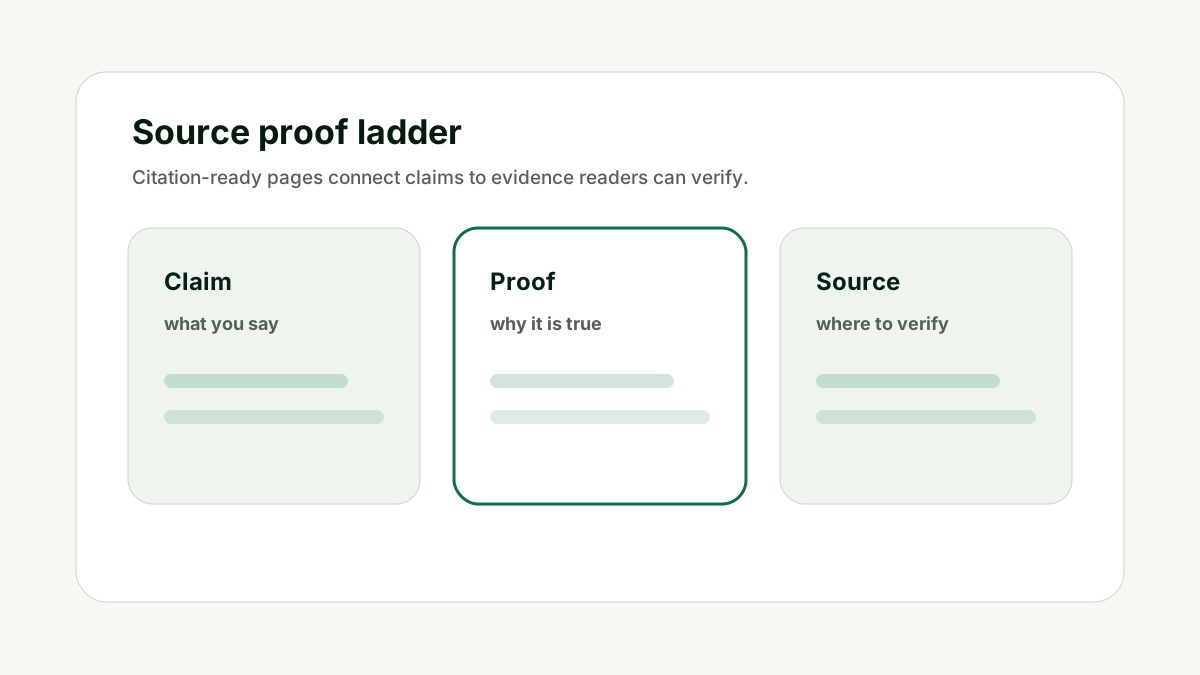
Source Links
For How do I structure a page so ChatGPT can quote it?, source links matters because Quoteable pages need visible evidence when they make claims. This is where many pages lose citation potential: the information may be present, but it is not packaged in a way an answer system or human reviewer can confidently reuse.
Link to official docs, original research, case studies, or internal proof pages when they help verify the answer. Keep the links close to the claim.
If a claim would be risky without a source, either support it or soften it. The practical test is simple: if someone copied only this section into a buyer-facing answer, would it still be accurate, specific, and supported? If not, the section needs more structure before it deserves to be treated as a source.
Source Links is one of the signals that makes this page more usable as an AI answer source.
Schema and Summary
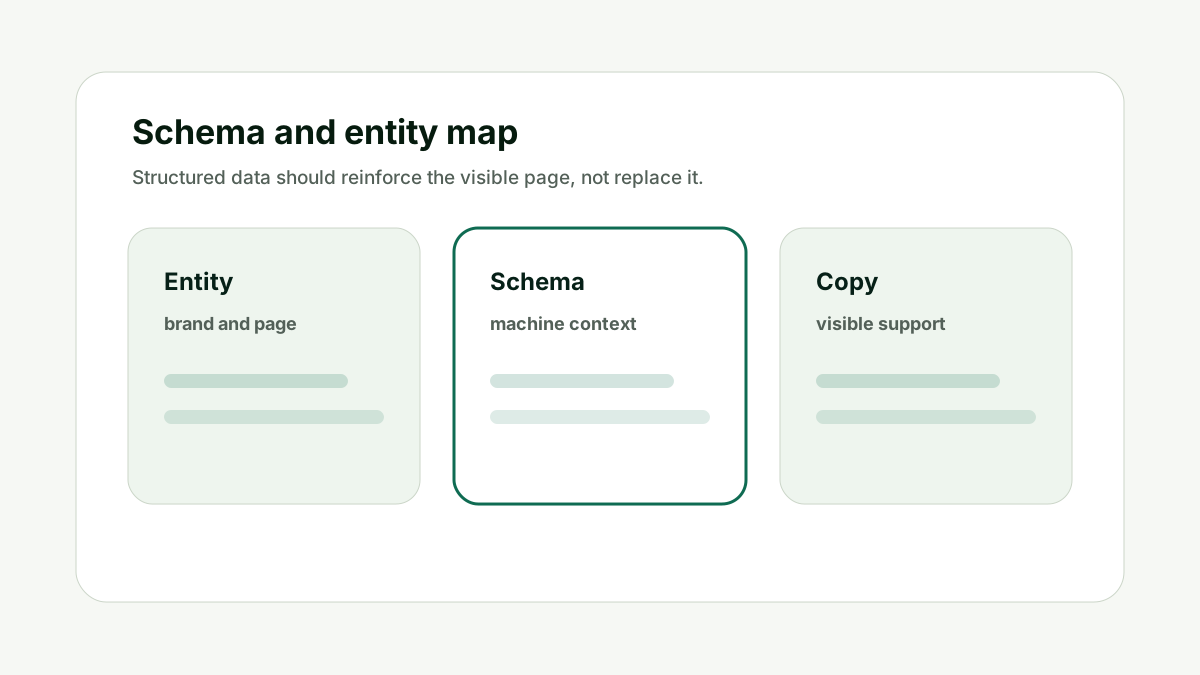
For How do I structure a page so ChatGPT can quote it?, schema and summary matters because Structured data and summaries should reinforce the quoteable sections. This is where many pages lose citation potential: the information may be present, but it is not packaged in a way an answer system or human reviewer can confidently reuse.
Use schema where it accurately describes the page, and use summaries that match the visible headings and answers.
Do not use schema to introduce claims that the page itself does not support. The practical test is simple: if someone copied only this section into a buyer-facing answer, would it still be accurate, specific, and supported? If not, the section needs more structure before it deserves to be treated as a source.
Schema and Summary is one of the signals that makes this page more usable as an AI answer source.
Prompt Checks
For How do I structure a page so ChatGPT can quote it?, prompt checks matters because The final check is whether prompts use the page accurately. This is where many pages lose citation potential: the information may be present, but it is not packaged in a way an answer system or human reviewer can confidently reuse.
Ask questions that match the page intent. Record whether the answer quotes the right section, distorts the claim, or ignores the page.
If the wording is distorted, rewrite the excerpt so the claim is easier to lift without changing meaning. The practical test is simple: if someone copied only this section into a buyer-facing answer, would it still be accurate, specific, and supported? If not, the section needs more structure before it deserves to be treated as a source.
Prompt Checks is one of the signals that makes this page more usable as an AI answer source.
How This Fits the Wider AI Search Workflow
The important thing with How do I structure a page so ChatGPT can quote it? is to avoid treating citation readiness as a cosmetic content task. The real job is building quoteable page sections, then connecting that page to the wider source trail around the brand.
That order matters because AI-search work usually fails in layers. A page may be blocked technically, vague editorially, unsupported with proof, or weaker than competitor sources across the web. If you only fix one layer, the answer may still ignore the page.
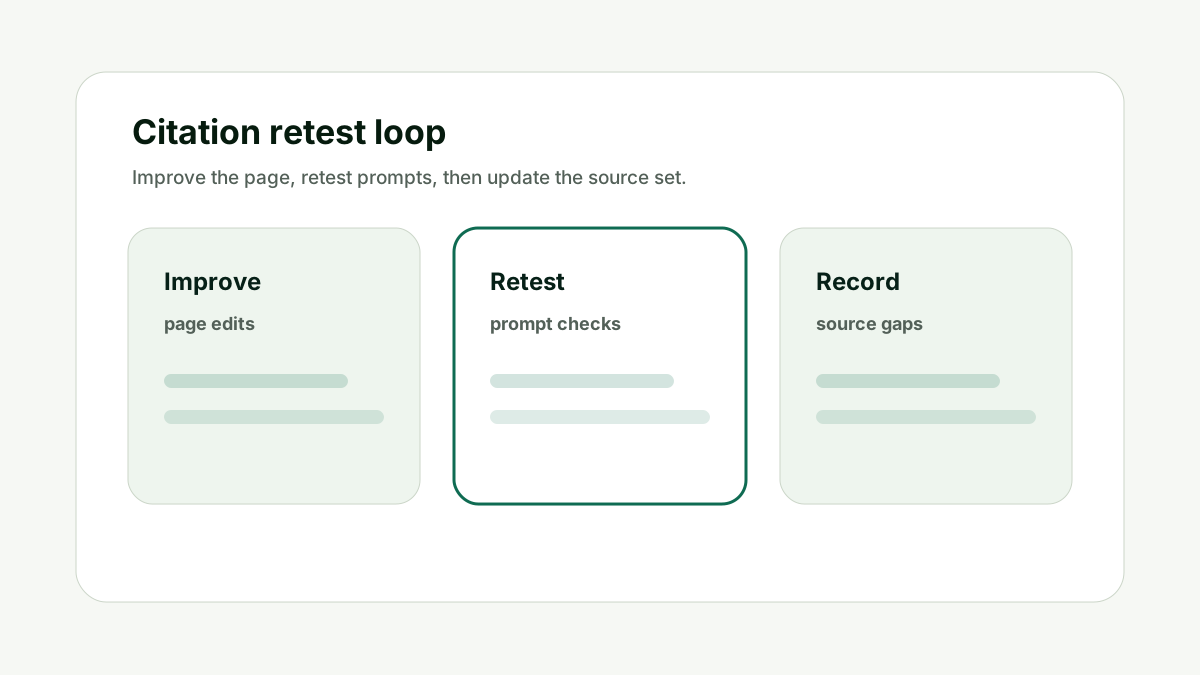
I would treat citation readiness as the page-level checkpoint inside a larger workflow. First, make sure the page is accessible and canonical. Second, make sure the page answers a real prompt clearly. Third, connect the claim to visible proof. Fourth, retest the answer and compare the page against sources that already win.
This is also where internal linking should stay natural. Link to a tool, service, or article only when it is the next useful action. Forced links make the article worse for readers and do not make the source more trustworthy.
Check whether each section can stand alone before asking AI systems to quote it accurately. If the score improves but citations still do not appear, the next issue is probably authority, freshness, or corroboration. That is useful because it tells the team what kind of work is actually needed next.
Good citation readiness is not about tricking an answer engine. It is about making the best source easier to find, understand, quote, and verify.
A Simple Worked Example
A page may have strong expertise but still be hard to quote. The author writes long narrative paragraphs, refers to earlier sections constantly, and hides the best explanation under a vague heading.
I would break the page into question-shaped sections. Each section would start with a direct answer, then add an example, then add evidence or a next step. The wording would avoid context-dependent references.
For a commercial page, I would also add a short "who this is for" section and a "when not to use this" section. Those two pieces make recommendations more accurate because the page is not pretending to fit every buyer.
After publishing, I would test prompts that ask for definitions, recommendations, and comparisons. If the model paraphrases badly, the source paragraph probably needs clearer nouns, fewer assumptions, and stronger proof.
Practical action checklist
- Match the page to one question or prompt before editing.
- Add a direct answer before adding supporting detail.
- Keep proof close to claims that need verification.
- Validate technical access and schema only after the visible page is useful.
- Retest the same prompts so the team can see whether anything changed.
What I Would Do Next
Choose one important section and rewrite it as a standalone answer.
Add an example and proof immediately after the answer.
Run a prompt check and see whether the answer uses the section accurately.
Conclusion
How do I structure a page so ChatGPT can quote it? is a useful question because it separates citation readiness from wishful thinking.
The practical answer is to build pages that answer clearly, prove their claims, stay technically accessible, and connect to a trustworthy source trail.
That gives your team a better workflow than publishing more content and hoping an AI answer engine finds the useful part.
FAQ
Should every paragraph be short?
Not every paragraph, but the key answer blocks should be concise and self-contained.
Can ChatGPT quote pages directly?
Depending on the product, browsing, retrieval, and source access can vary. Your job is to make the page easier to use when it is available as a source.
Should I write for bots or humans?
Write for humans first, but make the human answer clear enough that machines can extract it without distorting it.
What is the biggest quoteability mistake?
Burying the answer under vague intros, clever headings, or unsupported claims.

Adam O'neil
1stpage Editorial Team
Our 1stpage editorial team combines hands-on SEO agency experience with evidence-backed search performance guidance. These posts are built from real search wins, audit-grade insight, and conversion-tested tactics designed to help agencies, founders, and search teams earn more traffic and trust.