Short answer
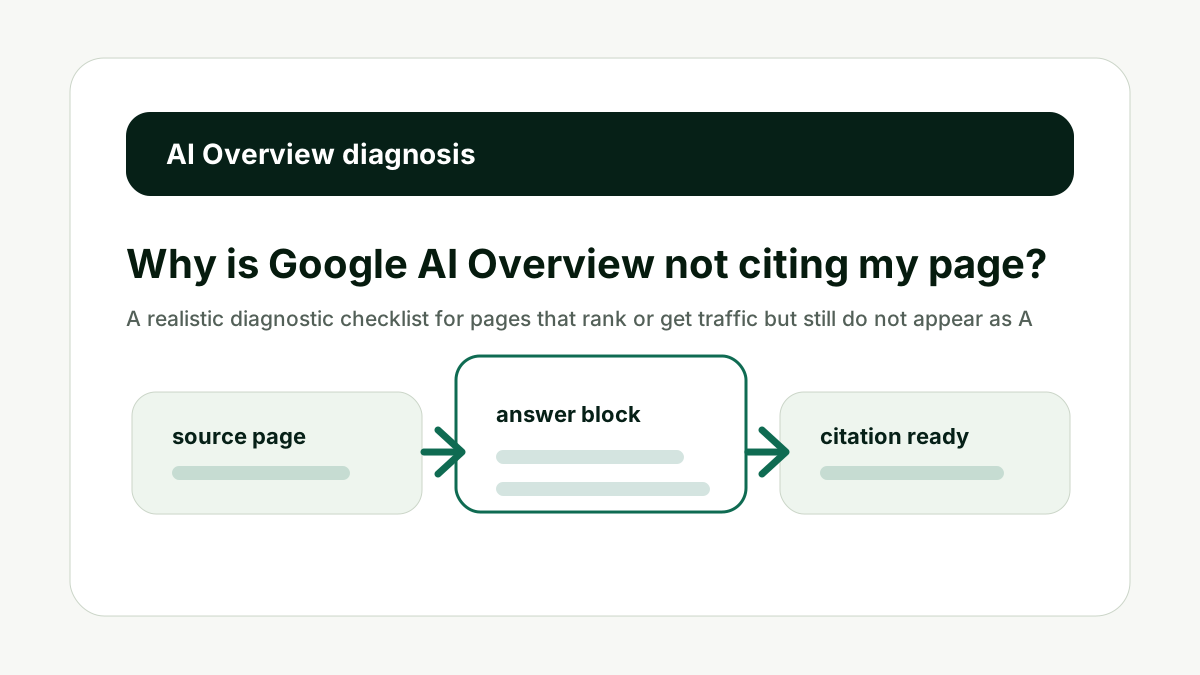
Google AI Overview may not cite your page because the page does not answer the exact query clearly, is hard to crawl, lacks strong evidence, is weaker than competing sources, or does not match the answer format Google is assembling. A ranking page is not automatically a citation-ready page.
The useful way to think about this is not "how do I make an AI system do exactly what I want?" The better question is whether the page gives a clear, supported answer that deserves to be reused.
Reader question
"Where should I start troubleshooting?"
Start with crawlability and answer format. Use the AI Citation Readiness Checker for page structure and the Indexability and Canonical Checker if the technical signals look suspicious.
Table of Contents
I am going to answer this as a practical source-quality question, not as a promise that one checklist can force citations.
AI citation visibility usually depends on a mix of page structure, evidence, technical access, and source trust. The page has to be easy to extract, but it also has to be worth extracting.
Here is the framework I would use for a page ranks on the first page but Google chooses other sources in the AI Overview.
Query Fit
For Why is Google AI Overview not citing my page?, query fit matters because A page can rank for a keyword while still missing the specific answer Google needs for an AI Overview. This is where many pages lose citation potential: the information may be present, but it is not packaged in a way an answer system or human reviewer can confidently reuse.
Compare the exact AI Overview wording with your page section. If the answer is implied but not stated, rewrite the section so the answer is explicit.
Do not assume ranking equals citation fit. The overview may need a definition, checklist, statistic, comparison, or steps that your page does not provide cleanly. The practical test is simple: if someone copied only this section into a buyer-facing answer, would it still be accurate, specific, and supported? If not, the section needs more structure before it deserves to be treated as a source.
Query Fit is one of the signals that makes this page more usable as an AI answer source.
Crawl Signals
For Why is Google AI Overview not citing my page?, crawl signals matters because Citation selection depends on whether the page can be fetched, parsed, and understood. This is where many pages lose citation potential: the information may be present, but it is not packaged in a way an answer system or human reviewer can confidently reuse.
Check robots rules, canonical tags, indexability, page rendering, internal links, and whether the useful answer is visible without an interaction.
If Google is pointed at another canonical URL or the answer is buried in rendered content, fix access before rewriting the whole page. The practical test is simple: if someone copied only this section into a buyer-facing answer, would it still be accurate, specific, and supported? If not, the section needs more structure before it deserves to be treated as a source.
Crawl Signals is one of the signals that makes this page more usable as an AI answer source.
Evidence Gap
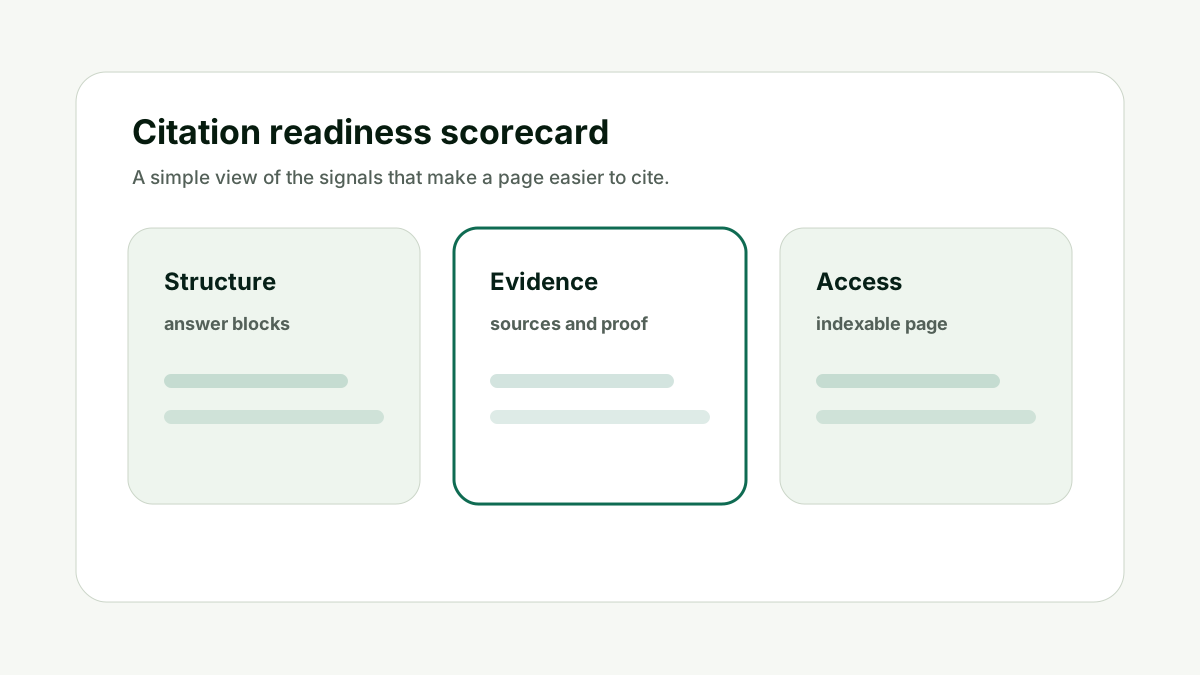
For Why is Google AI Overview not citing my page?, evidence gap matters because AI Overview sources tend to need support, not just assertions. This is where many pages lose citation potential: the information may be present, but it is not packaged in a way an answer system or human reviewer can confidently reuse.
Add first-hand examples, named entities, dates, methods, clear definitions, and source references where the query needs confidence.
Thin affiliate paragraphs and generic summaries are easy to outrank as sources even when they rank in classic blue links. The practical test is simple: if someone copied only this section into a buyer-facing answer, would it still be accurate, specific, and supported? If not, the section needs more structure before it deserves to be treated as a source.
Evidence Gap is one of the signals that makes this page more usable as an AI answer source.
Content Format
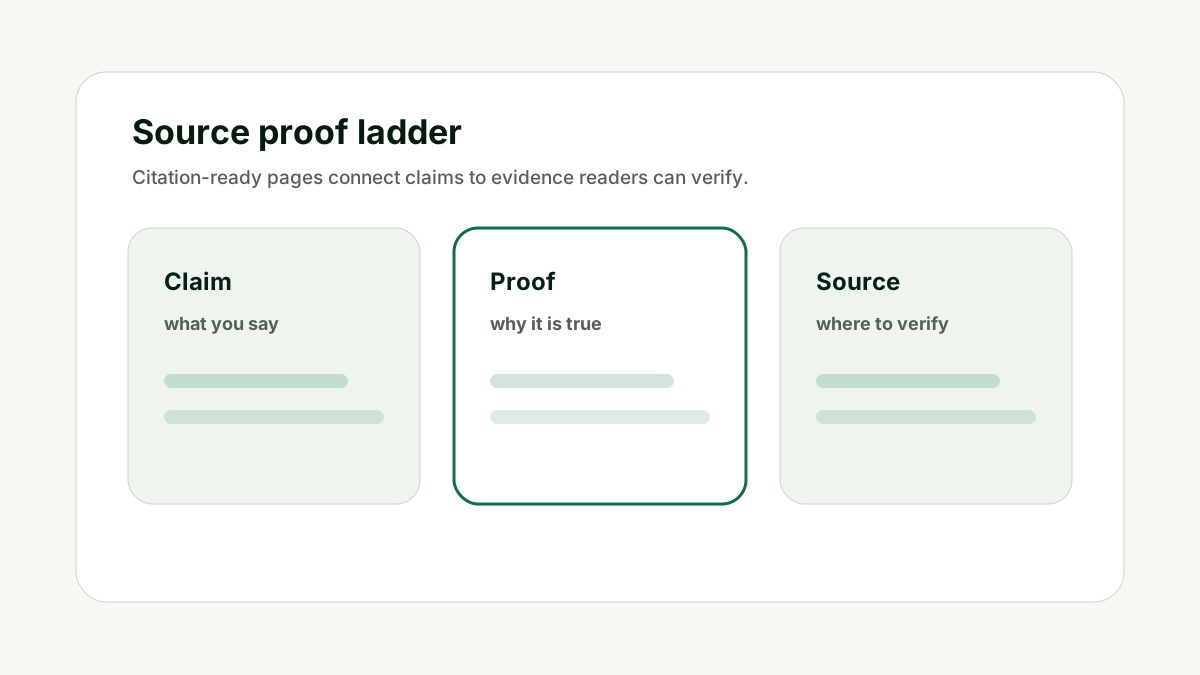
For Why is Google AI Overview not citing my page?, content format matters because The format of the answer matters as much as the topic. This is where many pages lose citation potential: the information may be present, but it is not packaged in a way an answer system or human reviewer can confidently reuse.
If the overview is a list, build a clean list. If it is a comparison, include a comparison table. If it is a how-to answer, use steps.
Do not force clever headings. Use clear section labels that match the way users and answer systems phrase the task. The practical test is simple: if someone copied only this section into a buyer-facing answer, would it still be accurate, specific, and supported? If not, the section needs more structure before it deserves to be treated as a source.
Content Format is one of the signals that makes this page more usable as an AI answer source.
Authority Pressure
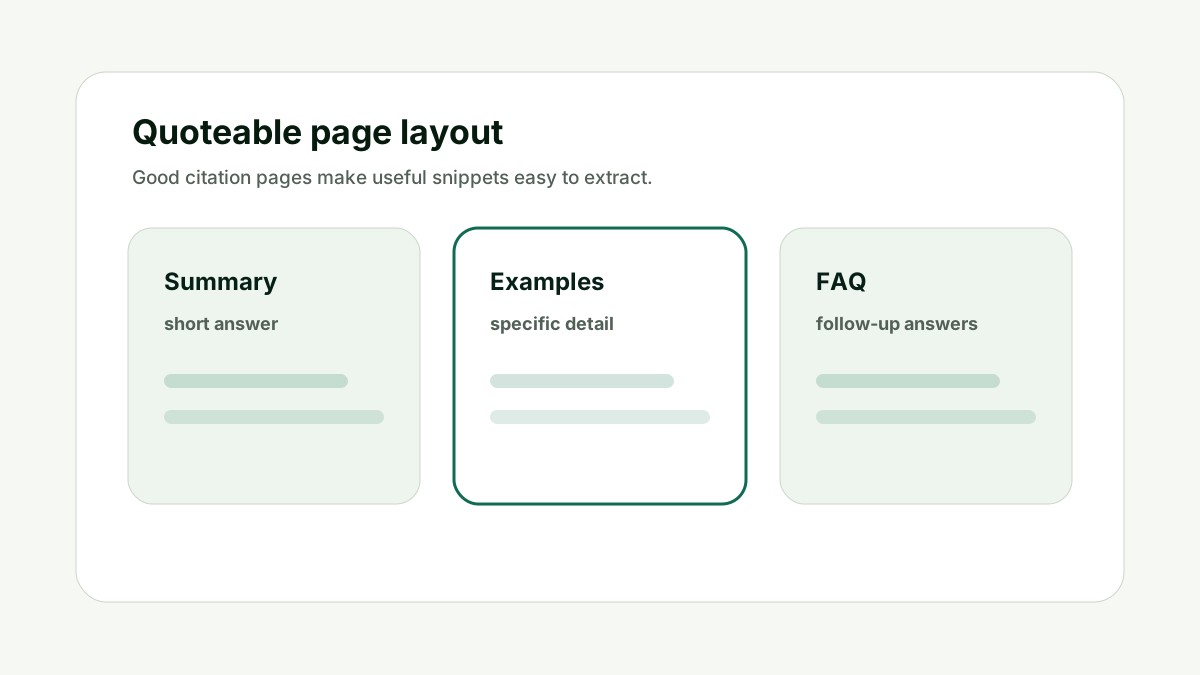
For Why is Google AI Overview not citing my page?, authority pressure matters because Your page may be structurally fine but still lose to stronger sources. This is where many pages lose citation potential: the information may be present, but it is not packaged in a way an answer system or human reviewer can confidently reuse.
Compare cited pages for brand trust, external mentions, links, topical depth, and whether other sources reinforce their claims.
If authority is the gap, page edits alone will not solve it. That is where LLMentioned source-gap work becomes relevant. The practical test is simple: if someone copied only this section into a buyer-facing answer, would it still be accurate, specific, and supported? If not, the section needs more structure before it deserves to be treated as a source.
Authority Pressure is one of the signals that makes this page more usable as an AI answer source.
Retest Window
For Why is Google AI Overview not citing my page?, retest window matters because AI Overview behavior can shift as Google recrawls pages and tests answer formats. This is where many pages lose citation potential: the information may be present, but it is not packaged in a way an answer system or human reviewer can confidently reuse.
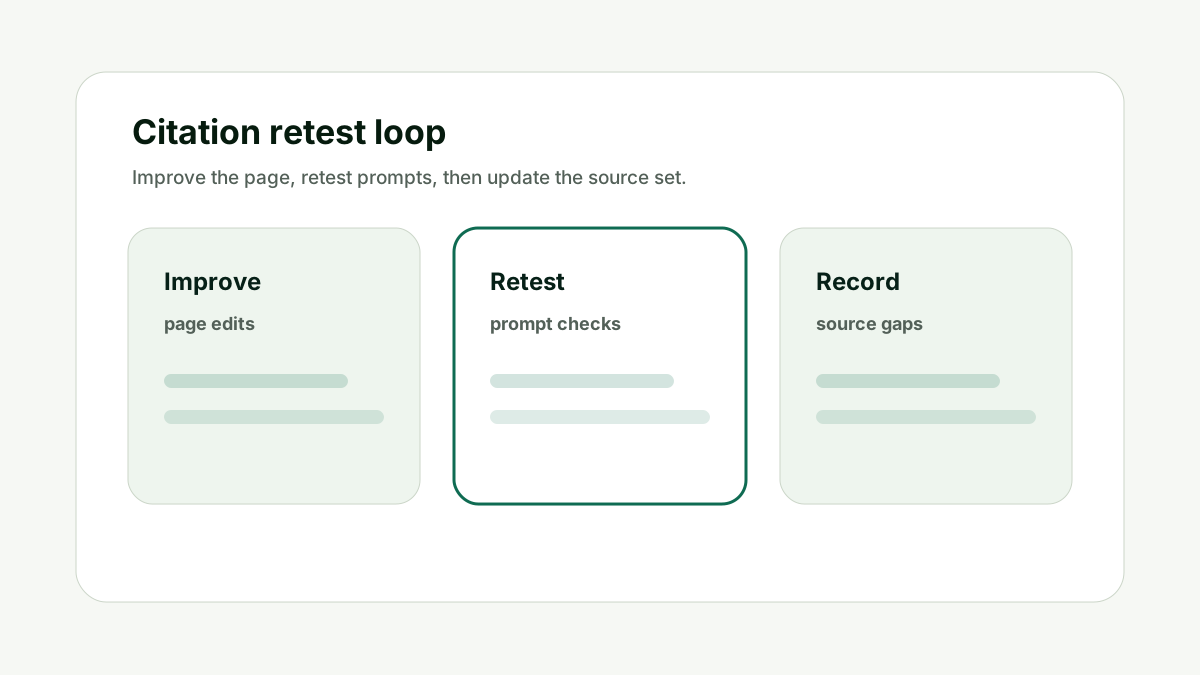
Document the query, date, cited sources, your page changes, and when you checked again. This prevents random screenshots from becoming your measurement system.
Retest after meaningful edits, not after every sentence. You need enough change for the page to deserve a different outcome. The practical test is simple: if someone copied only this section into a buyer-facing answer, would it still be accurate, specific, and supported? If not, the section needs more structure before it deserves to be treated as a source.
Retest Window is one of the signals that makes this page more usable as an AI answer source.
How This Fits the Wider AI Search Workflow
The important thing with Why is Google AI Overview not citing my page? is to avoid treating citation readiness as a cosmetic content task. The real job is diagnosing AI Overview citation gaps, then connecting that page to the wider source trail around the brand.
That order matters because AI-search work usually fails in layers. A page may be blocked technically, vague editorially, unsupported with proof, or weaker than competitor sources across the web. If you only fix one layer, the answer may still ignore the page.
I would treat citation readiness as the page-level checkpoint inside a larger workflow. First, make sure the page is accessible and canonical. Second, make sure the page answers a real prompt clearly. Third, connect the claim to visible proof. Fourth, retest the answer and compare the page against sources that already win.
This is also where internal linking should stay natural. Link to a tool, service, or article only when it is the next useful action. Forced links make the article worse for readers and do not make the source more trustworthy.
Score the URL against the query you care about, then compare the result against pages that are being cited. If the score improves but citations still do not appear, the next issue is probably authority, freshness, or corroboration. That is useful because it tells the team what kind of work is actually needed next.
Good citation readiness is not about tricking an answer engine. It is about making the best source easier to find, understand, quote, and verify.
A Simple Worked Example
Imagine a page ranks number four for a commercial query, but the AI Overview cites three publishers and a documentation page. The page gets traffic, so the team assumes Google is ignoring them unfairly.
When I inspect it, the page has a long intro, no direct answer, weak source links, and no clean comparison table. The cited pages all answer the question in the first screen and support their claims with examples.
The fix is not to add more keywords. The fix is to create a section that answers the overview question directly, support the claims, and make the page easier to extract. Then I would compare the page again against the cited sources.
If the edited page is still ignored, I would move to authority and source gaps. Maybe the cited domains have stronger public trust, better mentions, or fresher data. That changes the work from on-page editing to authority building.
Practical action checklist
- Match the page to one question or prompt before editing.
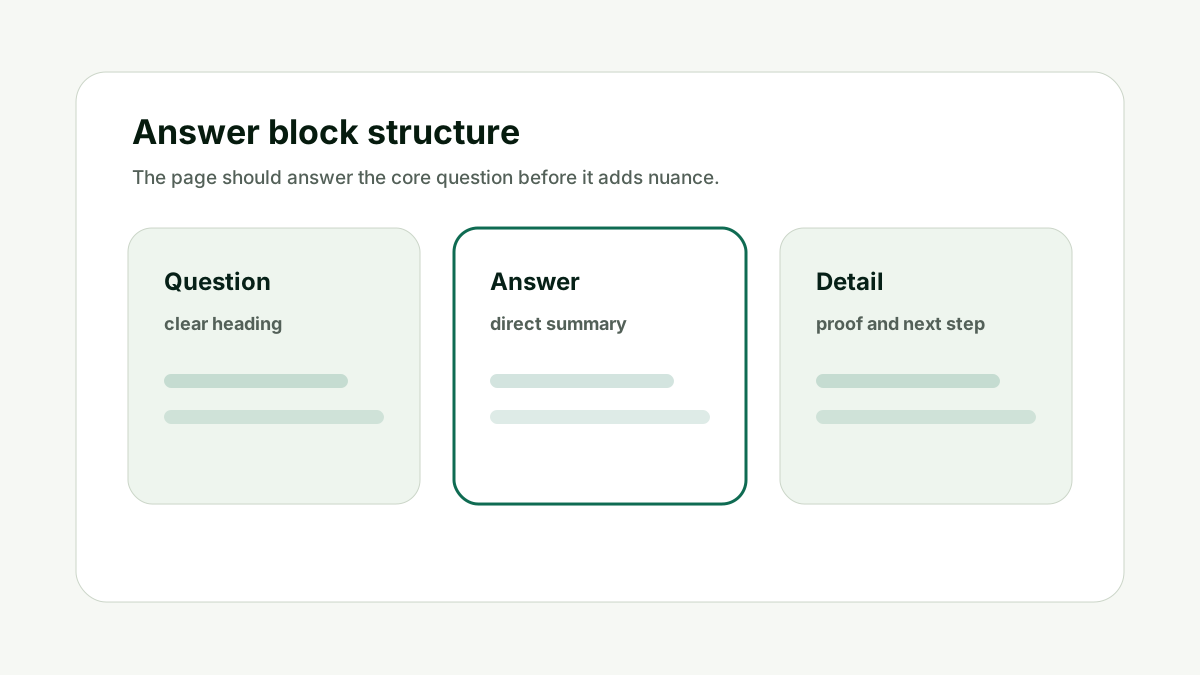
- Add a direct answer before adding supporting detail.
- Keep proof close to claims that need verification.
- Validate technical access and schema only after the visible page is useful.
- Retest the same prompts so the team can see whether anything changed.
What I Would Do Next
Capture the exact AI Overview query and current cited sources.
Score your page for answer structure, proof, schema, and access.
Update the page around the missing answer format, then retest on a fixed schedule.
Conclusion
Why is Google AI Overview not citing my page? is a useful question because it separates citation readiness from wishful thinking.
The practical answer is to build pages that answer clearly, prove their claims, stay technically accessible, and connect to a trustworthy source trail.
That gives your team a better workflow than publishing more content and hoping an AI answer engine finds the useful part.
FAQ
Can a page rank but still miss AI Overview citations?
Yes. Ranking and citation readiness overlap, but they are not identical. The answer format, evidence, and source trust still matter.
Should I add schema first?
Only after the visible content answers the question clearly. Schema should reinforce the page, not hide missing substance.
How long does it take to show up?
There is no guaranteed timeline. Recrawling, query behavior, source competition, and Google systems all affect visibility.
Should I copy cited pages?
No. Use them to understand answer format and evidence expectations, then build a stronger original source.

Adam O'neil
1stpage Editorial Team
Our 1stpage editorial team combines hands-on SEO agency experience with evidence-backed search performance guidance. These posts are built from real search wins, audit-grade insight, and conversion-tested tactics designed to help agencies, founders, and search teams earn more traffic and trust.