Short answer
In most cases, group keywords together when they share the same search intent and can be answered by one strong page. Use separate pages when the queries require different formats, audiences, locations, funnel stages, or proof. One keyword per page often creates thin content and cannibalization unless the intent is genuinely distinct.
For the underlying SEO rules, use Google's SEO starter guide and helpful content guidance. For the information-retrieval background, topic modeling and vector-space research such as Latent Dirichlet Allocation and the Vector Space Model explain why grouping related language can be useful, but SEO page ownership still needs human judgment.
Reader question
"Is one keyword per page still a good SEO strategy?"
Usually no. Use the AI Keyword Clustering & Topical Map Helper to see which terms can share a page, then split only when the page job changes.
Table of Contents
I am going to answer this like a practical content architect, not like someone trying to turn every keyword variation into a new URL.
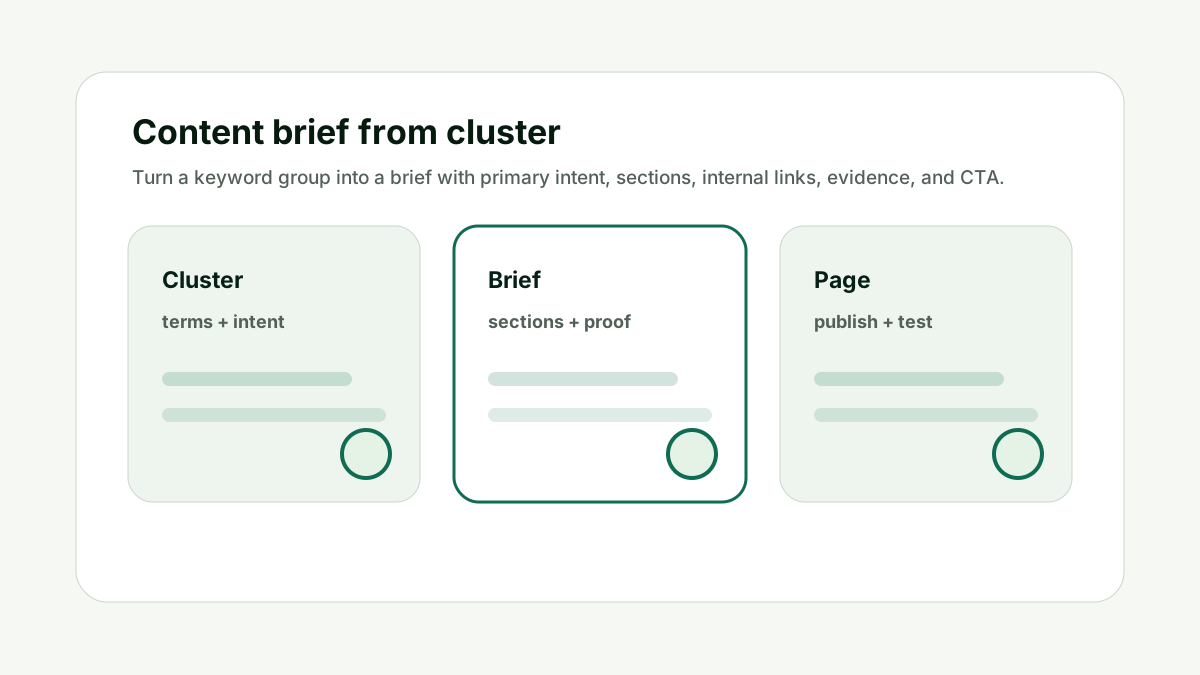
Keyword clusters are useful only when they help a team decide what page to build, what to merge, what to link, and what to ignore. A cluster that cannot become a page brief is just another spreadsheet tab.
Here is the framework I would use for a content team is planning pages and does not want to create dozens of near-duplicate articles.
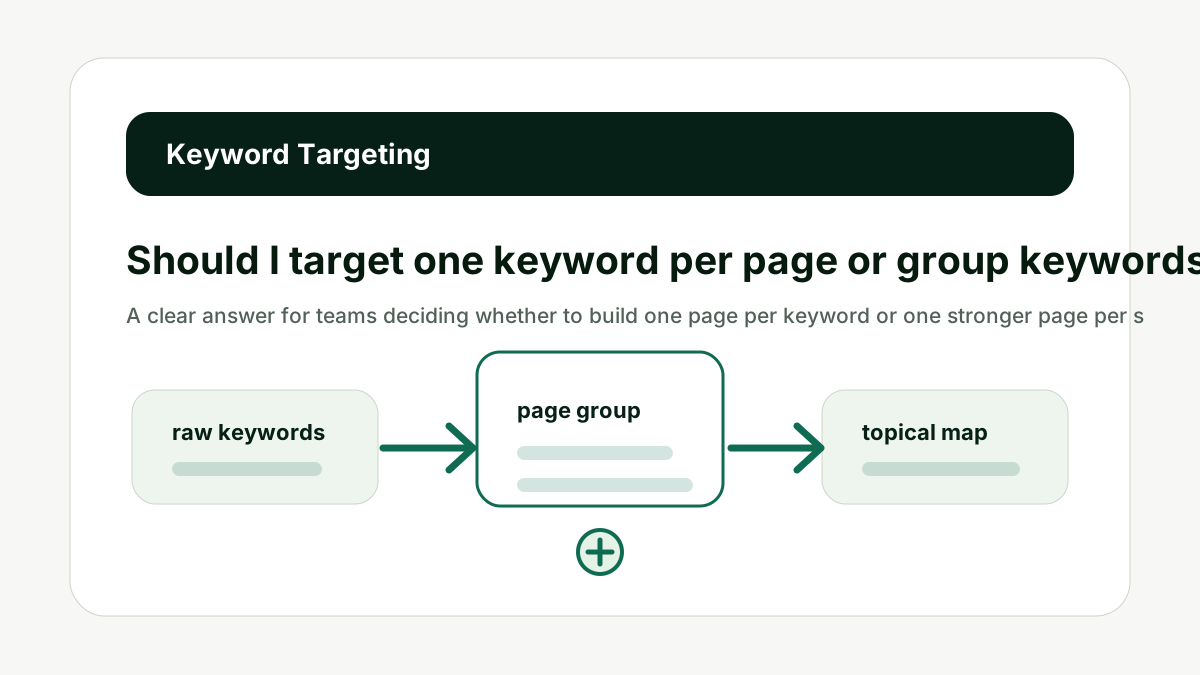
Group Same-Intent Keywords
If several keywords ask for the same answer, one complete page is usually better than several thin pages. This is the point where keyword planning stops being a spreadsheet exercise and becomes a decision about what page should exist.
A page about "how to cluster keywords for SEO" can naturally cover grouping keywords, keyword buckets, topic clusters, and content planning if those phrases share the same user need. The page becomes stronger because it answers the whole question.
Do not split every modifier into a separate article just to increase page count. The better habit is to check whether the cluster would help a reader finish a job, choose a solution, compare options, or understand the topic deeply enough to take the next step.
For Should I target one keyword per page or group keywords together?, the practical standard is simple: every cluster should have one clear intent, one likely page owner, one internal-link role, and one reason it matters to the business. If any of those are missing, the cluster needs more review before it becomes a brief.
A useful review question is: would the reader be satisfied if this exact page answered the whole keyword group? If the answer is yes, the group can probably become one strong page. If the answer is no, the terms may need a separate support article, comparison page, template, tool page, or service page.
This also protects internal linking quality. When the page role is clear, links can point users from the broad guide to the specific next action. When the page role is muddy, teams usually add links mechanically, which makes the cluster feel forced and makes the site hierarchy harder to understand.
Group Same-Intent Keywords keeps the cluster tied to page ownership, not just keyword similarity.
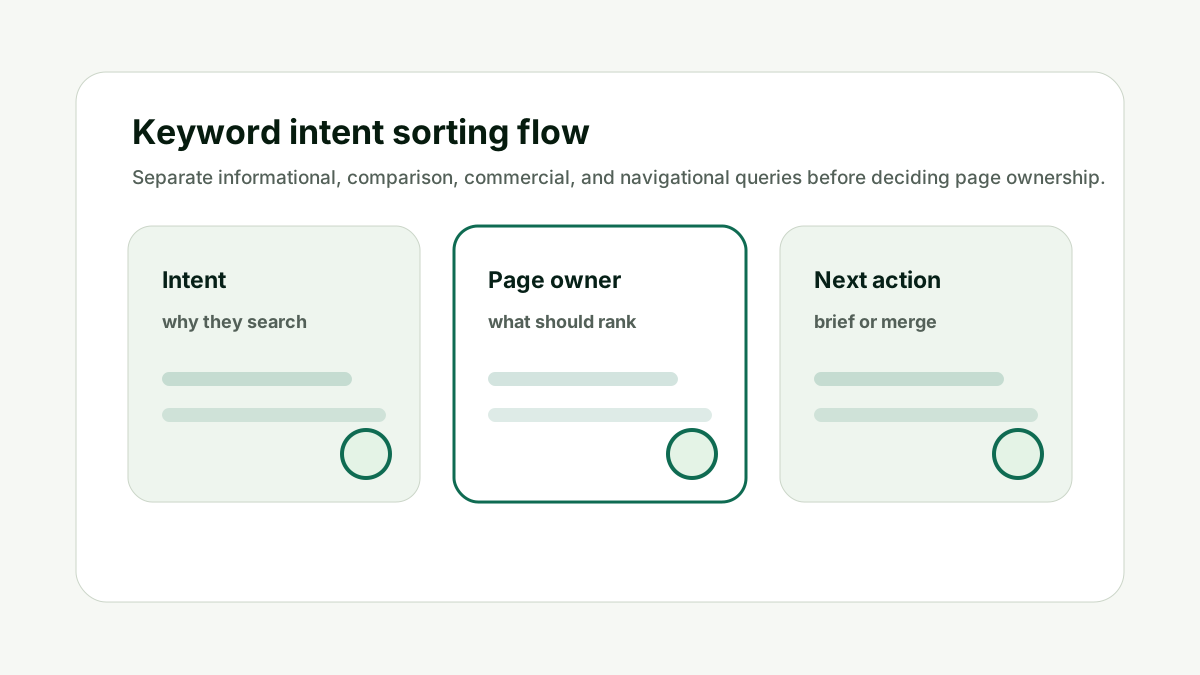
Split Different Page Jobs
Separate pages are useful when the searcher wants a different outcome. This is the point where keyword planning stops being a spreadsheet exercise and becomes a decision about what page should exist.
A comparison query, a tool query, a definition query, and a template query may all use similar words but need different page formats. The right split depends on the page the user expects, not the exact phrase.
Do not merge product, tutorial, and comparison intent into one unfocused page. The better habit is to check whether the cluster would help a reader finish a job, choose a solution, compare options, or understand the topic deeply enough to take the next step.
For Should I target one keyword per page or group keywords together?, the practical standard is simple: every cluster should have one clear intent, one likely page owner, one internal-link role, and one reason it matters to the business. If any of those are missing, the cluster needs more review before it becomes a brief.
A useful review question is: would the reader be satisfied if this exact page answered the whole keyword group? If the answer is yes, the group can probably become one strong page. If the answer is no, the terms may need a separate support article, comparison page, template, tool page, or service page.
This also protects internal linking quality. When the page role is clear, links can point users from the broad guide to the specific next action. When the page role is muddy, teams usually add links mechanically, which makes the cluster feel forced and makes the site hierarchy harder to understand.
Split Different Page Jobs keeps the cluster tied to page ownership, not just keyword similarity.
Avoid Thin Pages
One-keyword-per-page strategies often create pages that repeat the same advice with minor wording changes. This is the point where keyword planning stops being a spreadsheet exercise and becomes a decision about what page should exist.
Google asks creators to provide original, substantial, complete, and helpful content. A thin page made only to capture one keyword variation rarely meets that bar.
Do not publish pages that exist only because a keyword export had another row. The better habit is to check whether the cluster would help a reader finish a job, choose a solution, compare options, or understand the topic deeply enough to take the next step.
For Should I target one keyword per page or group keywords together?, the practical standard is simple: every cluster should have one clear intent, one likely page owner, one internal-link role, and one reason it matters to the business. If any of those are missing, the cluster needs more review before it becomes a brief.
A useful review question is: would the reader be satisfied if this exact page answered the whole keyword group? If the answer is yes, the group can probably become one strong page. If the answer is no, the terms may need a separate support article, comparison page, template, tool page, or service page.
This also protects internal linking quality. When the page role is clear, links can point users from the broad guide to the specific next action. When the page role is muddy, teams usually add links mechanically, which makes the cluster feel forced and makes the site hierarchy harder to understand.
Avoid Thin Pages keeps the cluster tied to page ownership, not just keyword similarity.
Use Primary and Secondary Terms
A strong page can have one primary target and several secondary phrases. This is the point where keyword planning stops being a spreadsheet exercise and becomes a decision about what page should exist.
The primary term sets the page promise. Secondary phrases become sections, examples, FAQs, and internal-link anchors. This lets the page cover the topic naturally without hiding keyword lists in the copy.
Do not stuff every secondary term into headings if it makes the article unnatural. The better habit is to check whether the cluster would help a reader finish a job, choose a solution, compare options, or understand the topic deeply enough to take the next step.
For Should I target one keyword per page or group keywords together?, the practical standard is simple: every cluster should have one clear intent, one likely page owner, one internal-link role, and one reason it matters to the business. If any of those are missing, the cluster needs more review before it becomes a brief.
A useful review question is: would the reader be satisfied if this exact page answered the whole keyword group? If the answer is yes, the group can probably become one strong page. If the answer is no, the terms may need a separate support article, comparison page, template, tool page, or service page.
This also protects internal linking quality. When the page role is clear, links can point users from the broad guide to the specific next action. When the page role is muddy, teams usually add links mechanically, which makes the cluster feel forced and makes the site hierarchy harder to understand.
Use Primary and Secondary Terms keeps the cluster tied to page ownership, not just keyword similarity.
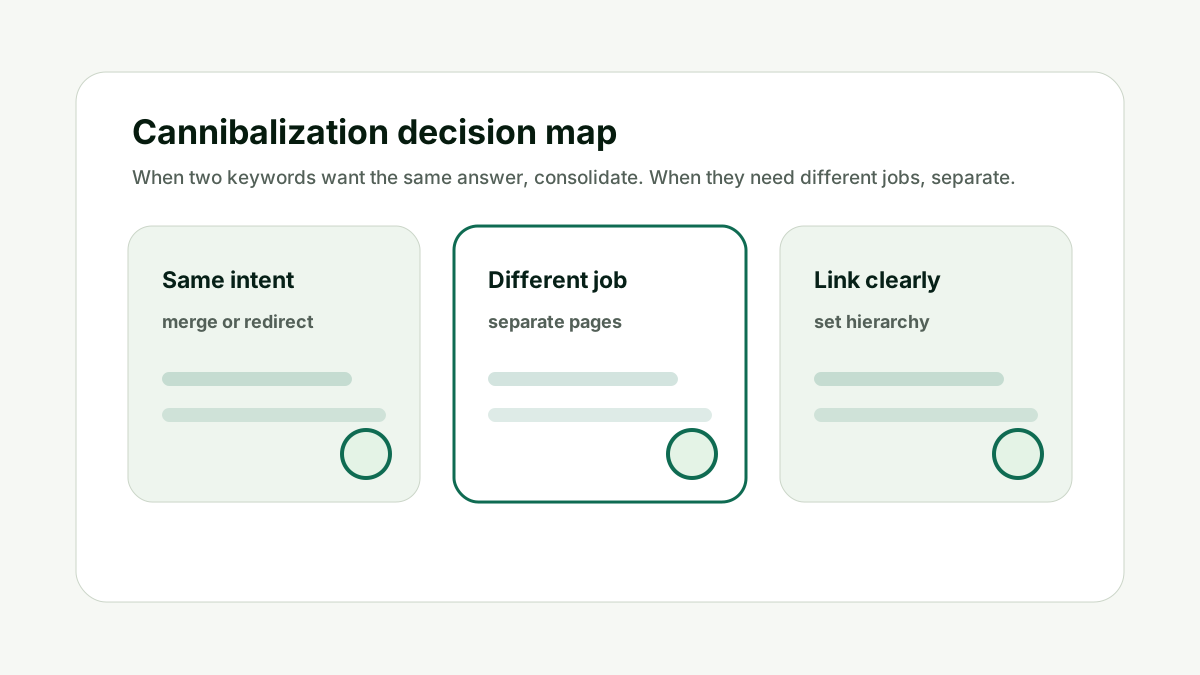
Check Cannibalization Risk
If two pages could reasonably rank for the same query, you need a hierarchy decision. This is the point where keyword planning stops being a spreadsheet exercise and becomes a decision about what page should exist.
Choose one canonical page for the broad query, then make supporting pages narrower. Link them together with clear anchor text so search engines and users understand the relationship.
Do not let two similar pages compete without a reason. The better habit is to check whether the cluster would help a reader finish a job, choose a solution, compare options, or understand the topic deeply enough to take the next step.
For Should I target one keyword per page or group keywords together?, the practical standard is simple: every cluster should have one clear intent, one likely page owner, one internal-link role, and one reason it matters to the business. If any of those are missing, the cluster needs more review before it becomes a brief.
A useful review question is: would the reader be satisfied if this exact page answered the whole keyword group? If the answer is yes, the group can probably become one strong page. If the answer is no, the terms may need a separate support article, comparison page, template, tool page, or service page.
This also protects internal linking quality. When the page role is clear, links can point users from the broad guide to the specific next action. When the page role is muddy, teams usually add links mechanically, which makes the cluster feel forced and makes the site hierarchy harder to understand.
Check Cannibalization Risk keeps the cluster tied to page ownership, not just keyword similarity.
Build for Users First
The final page should feel like the best answer to a real question, not a keyword container. This is the point where keyword planning stops being a spreadsheet exercise and becomes a decision about what page should exist.
Use sections that match the reader journey: definition, decision criteria, examples, workflow, mistakes, next steps, and FAQ. If the page answers the complete intent, it can target a group confidently.
Do not let keyword grouping override common sense about what readers need. The better habit is to check whether the cluster would help a reader finish a job, choose a solution, compare options, or understand the topic deeply enough to take the next step.
For Should I target one keyword per page or group keywords together?, the practical standard is simple: every cluster should have one clear intent, one likely page owner, one internal-link role, and one reason it matters to the business. If any of those are missing, the cluster needs more review before it becomes a brief.
A useful review question is: would the reader be satisfied if this exact page answered the whole keyword group? If the answer is yes, the group can probably become one strong page. If the answer is no, the terms may need a separate support article, comparison page, template, tool page, or service page.
This also protects internal linking quality. When the page role is clear, links can point users from the broad guide to the specific next action. When the page role is muddy, teams usually add links mechanically, which makes the cluster feel forced and makes the site hierarchy harder to understand.
Build for Users First keeps the cluster tied to page ownership, not just keyword similarity.
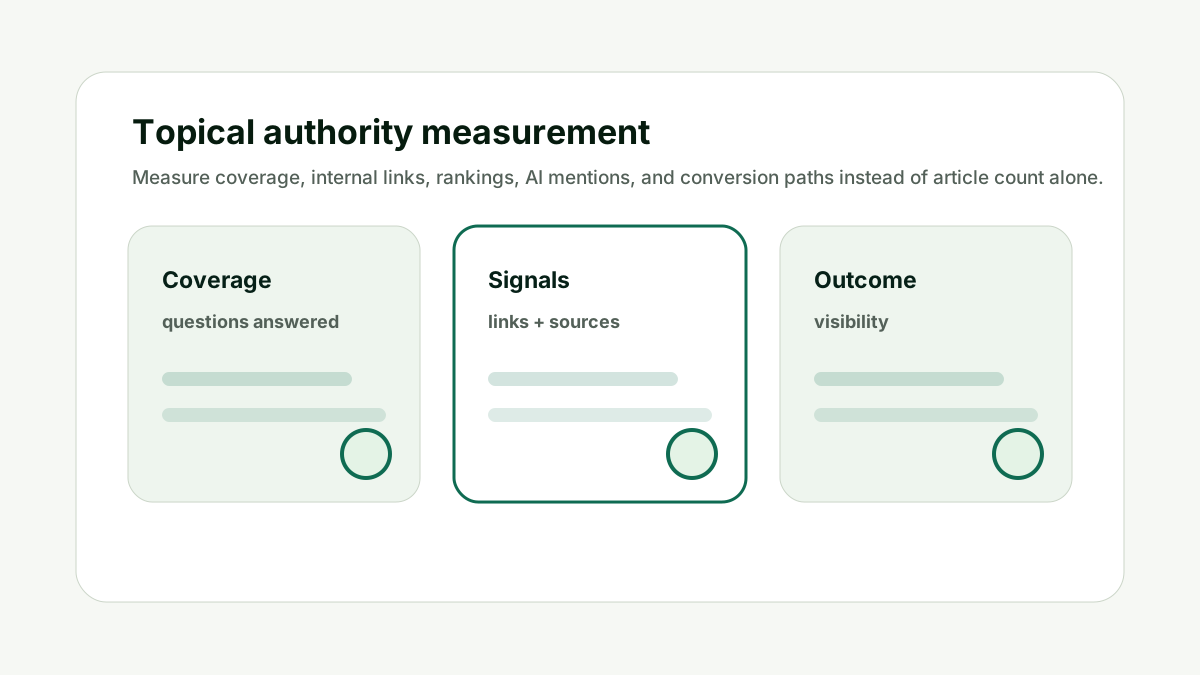
How This Fits the Wider SEO and AI Search Workflow
The useful way to think about Should I target one keyword per page or group keywords together? is that keyword grouping is only the first layer. The real objective is deciding page boundaries around intent instead of keyword count so the final site structure feels obvious to readers, search engines, and AI systems.
Google's SEO starter guide says site organization can help search engines and users understand how pages relate to the rest of a site. That is exactly why clusters need page ownership, internal links, and a clean hierarchy instead of isolated article ideas.
Google's helpful content guidance also pushes the same direction: pages should provide original, substantial, complete information. A cluster plan is only valuable if it helps the team create stronger pages, not more pages.
Use the keyword clustering helper for the first pass. Then pair the plan with the GEO / LLM SEO Planner when the cluster needs prompt coverage, the AI Citation Readiness Checker when the final page needs source proof, and the Indexability and Canonical Checker when multiple similar URLs already exist.
Use the helper to draft keyword groups, then ask whether one page can satisfy the whole group without becoming vague. Internal links should stay natural. Link to the next page only when it helps the reader move from diagnosis to action, from broad explanation to specific example, or from strategy to a tool that completes the job.
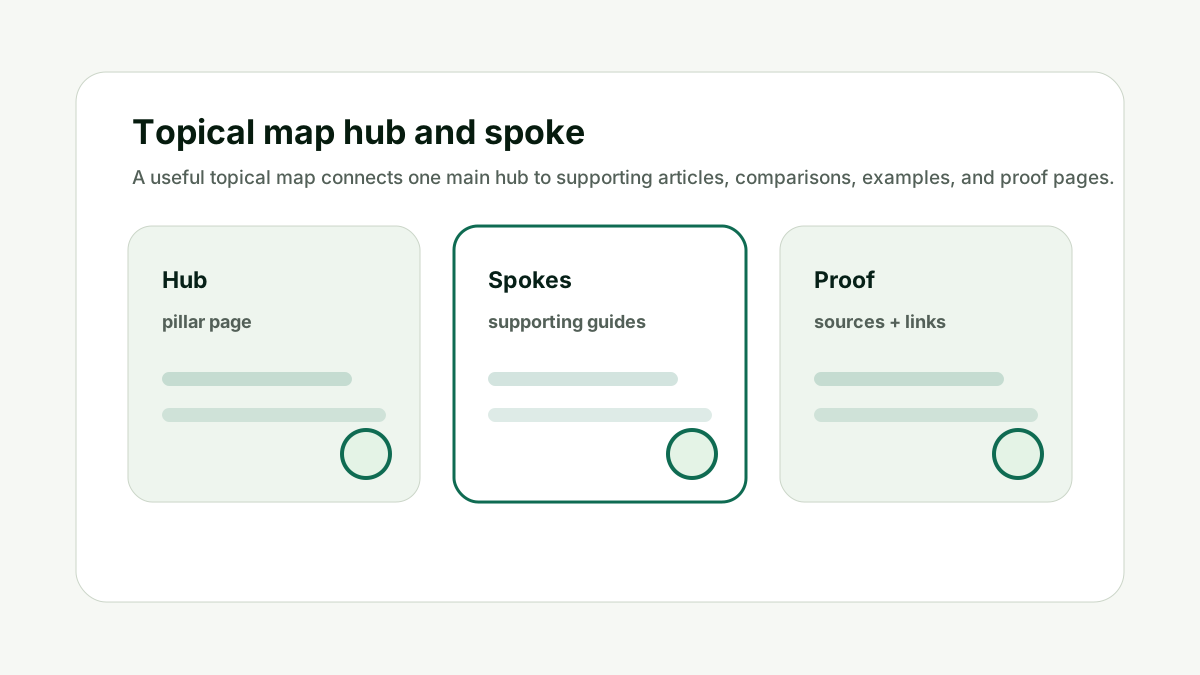
That is also how this work supports LLM visibility. A clear topical map gives answer engines a cleaner view of what your site knows, which pages are authoritative, and which sources or examples support the claims.
A Simple Worked Example
Suppose your list includes "topical map", "topical map SEO", "how to create a topical map", and "topical authority map". Those terms likely belong on one educational page because the reader is trying to understand and build the same thing.
Now add "topical map generator" and "topical map template". Those might deserve separate tool or template pages because the user wants an action asset, not only an explanation.
A clean site structure might have one guide explaining topical maps, one tool page helping create them, and one template page users can copy. Each page links to the others, but each has a distinct job.
That is the difference between grouping keywords and flattening intent. Group what belongs together. Split what needs a different experience.
Practical action checklist
- Group keywords that share the same search intent.
- Split when page format or user outcome changes.
- Use secondary keywords as sections and examples.
- Consolidate near-duplicate thin pages.
- Use internal links to show hierarchy.
What I Would Do Next
Choose one existing article that targets too many unrelated terms.
Separate its keyword list into same-intent and different-intent groups.
Rewrite the page brief around the strongest shared intent.
Conclusion
Should I target one keyword per page or group keywords together? is a useful question because it forces the team to decide whether it is building content for real page intent or simply publishing from a keyword export.
The practical answer is to cluster by intent, assign page ownership, review overlap, and build internal links that make the hierarchy obvious.
When the map is clear, every new page has a job. That is what makes the cluster helpful for users, search engines, and AI systems that need to understand the site.
FAQ
Is one keyword per page outdated?
It is too simplistic for most modern SEO work. Intent and page usefulness matter more.
Can one page rank for many keywords?
Yes, if those keywords share intent and the page answers the topic well.
When should I create a separate page?
Create a separate page when the query needs a different format, audience, funnel stage, or offer.
How do I know if pages are cannibalizing?
Look for pages targeting the same intent, overlapping headings, and unstable ranking ownership for the same query group.

Adam O'neil
1stpage Editorial Team
Our 1stpage editorial team combines hands-on SEO agency experience with evidence-backed search performance guidance. These posts are built from real search wins, audit-grade insight, and conversion-tested tactics designed to help agencies, founders, and search teams earn more traffic and trust.